The competition challenged participants to rethink the everyday architectural element of a handrail for one of the world’s harshest sites — the Black Angel Cliff in Greenland. Sheer rock walls, fierce winds, and sub-zero temperatures created an extreme design context where safety, endurance, and expression had to meet.
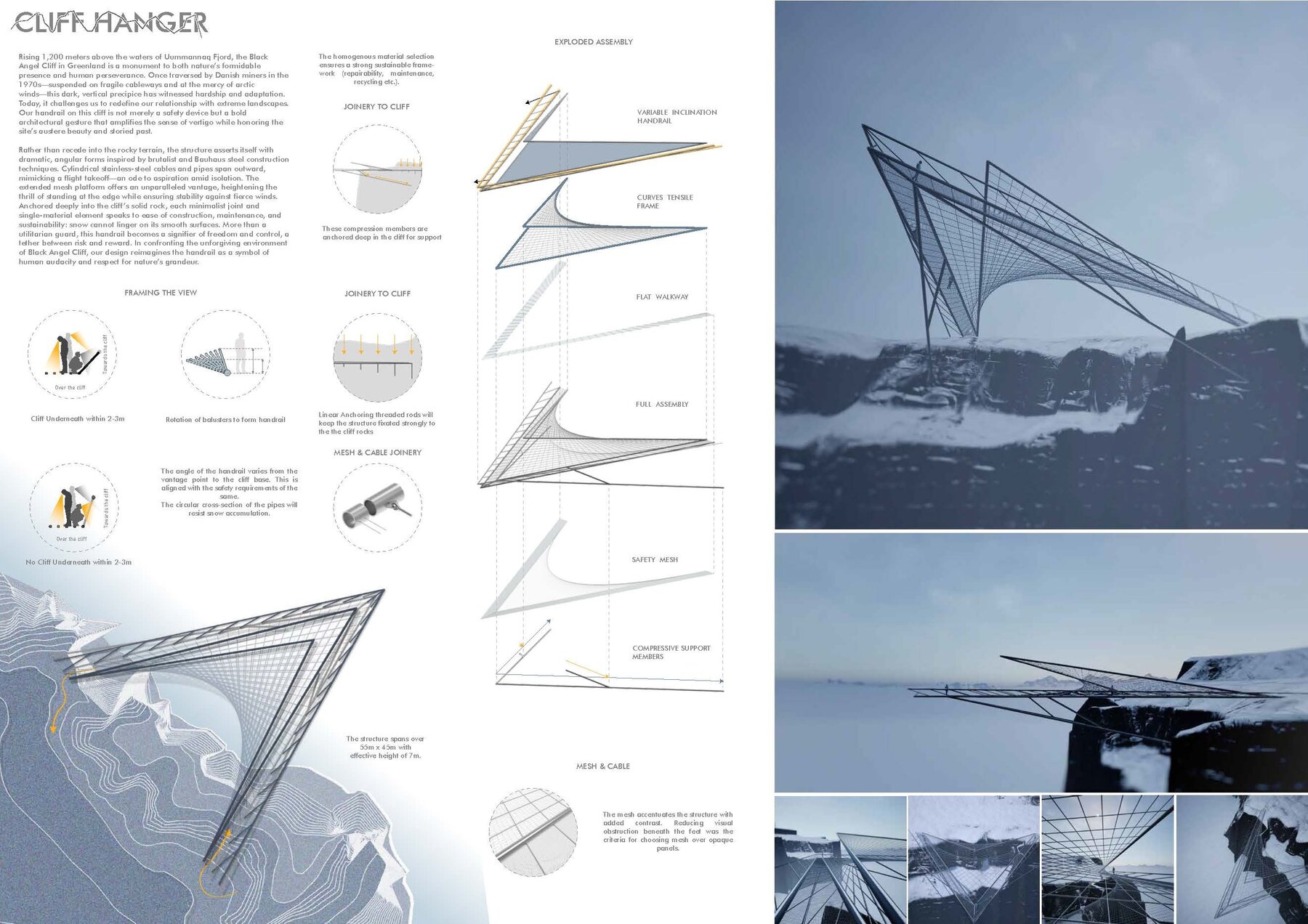
In their entry, Cliff Hanger, the handrail becomes a bold architectural gesture rather than a simple safety device. Inspired by Brutalist and Bauhaus steel construction, its angular forms declare their presence against the vast cliffside. Cylindrical stainless-steel cables and pipes extend outward, evoking the sense of flight, while an extended mesh platform brings visitors closer to the edge — intensifying vertigo yet ensuring stability against strong winds. Every detail was designed for durability, ease of construction, and resistance to snow and ice.
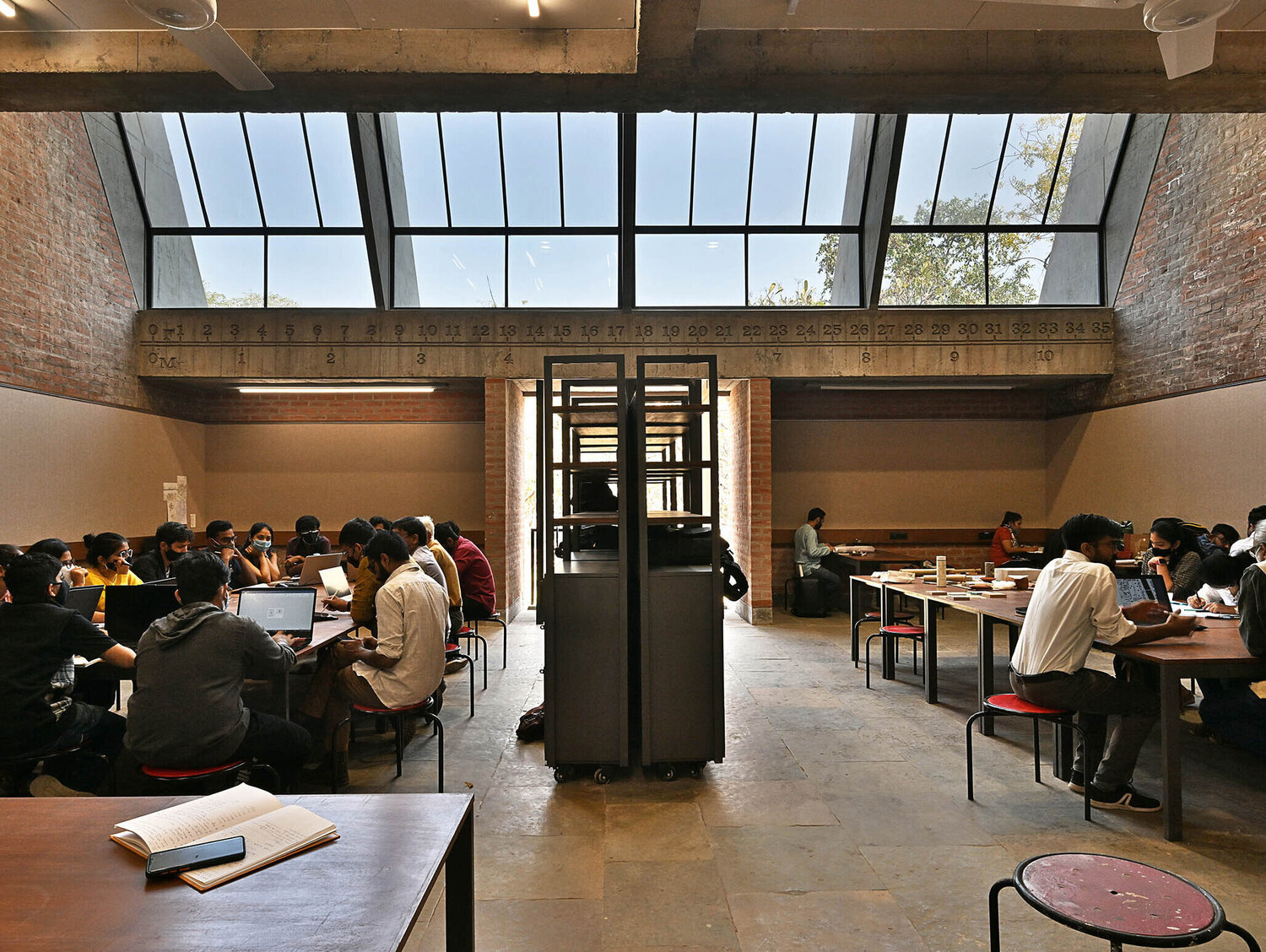
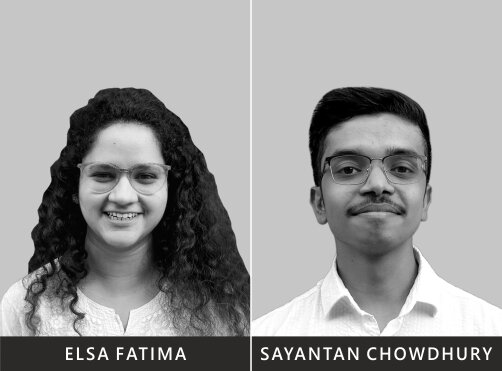
The project reflects the design approach fostered in CEPT’s Master’s in Computational Design and Fabrication (MCDF) programme, where students integrate computational thinking, structural experimentation, and material exploration. Elsa and Sayantan approached the competition not as a theoretical exercise but as a real-world challenge, confronting environmental extremity with innovation and respect for context.
Cliff Hanger stands as a reminder that even in unforgiving landscapes, design can connect safety and freedom, risk and reward — and inspire us to stand at the edge, looking outward.