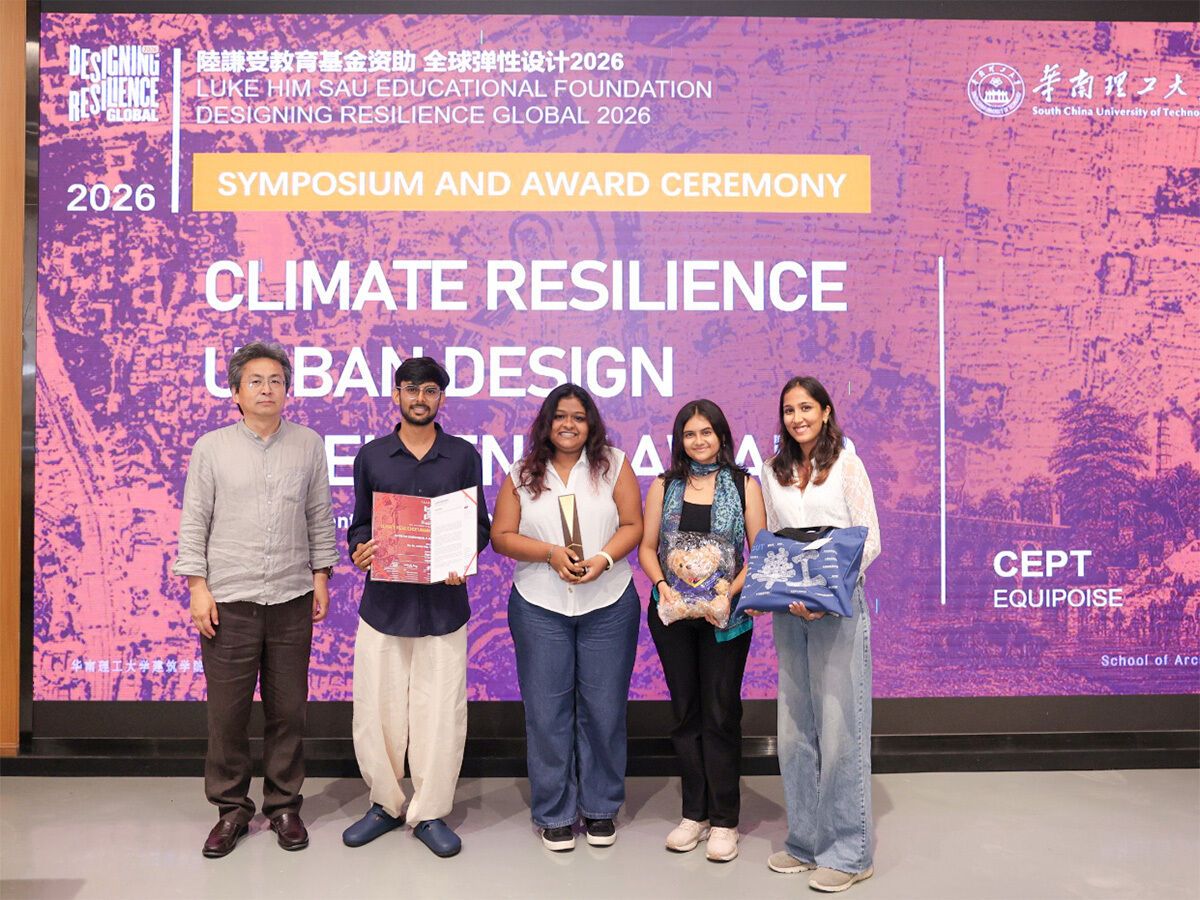
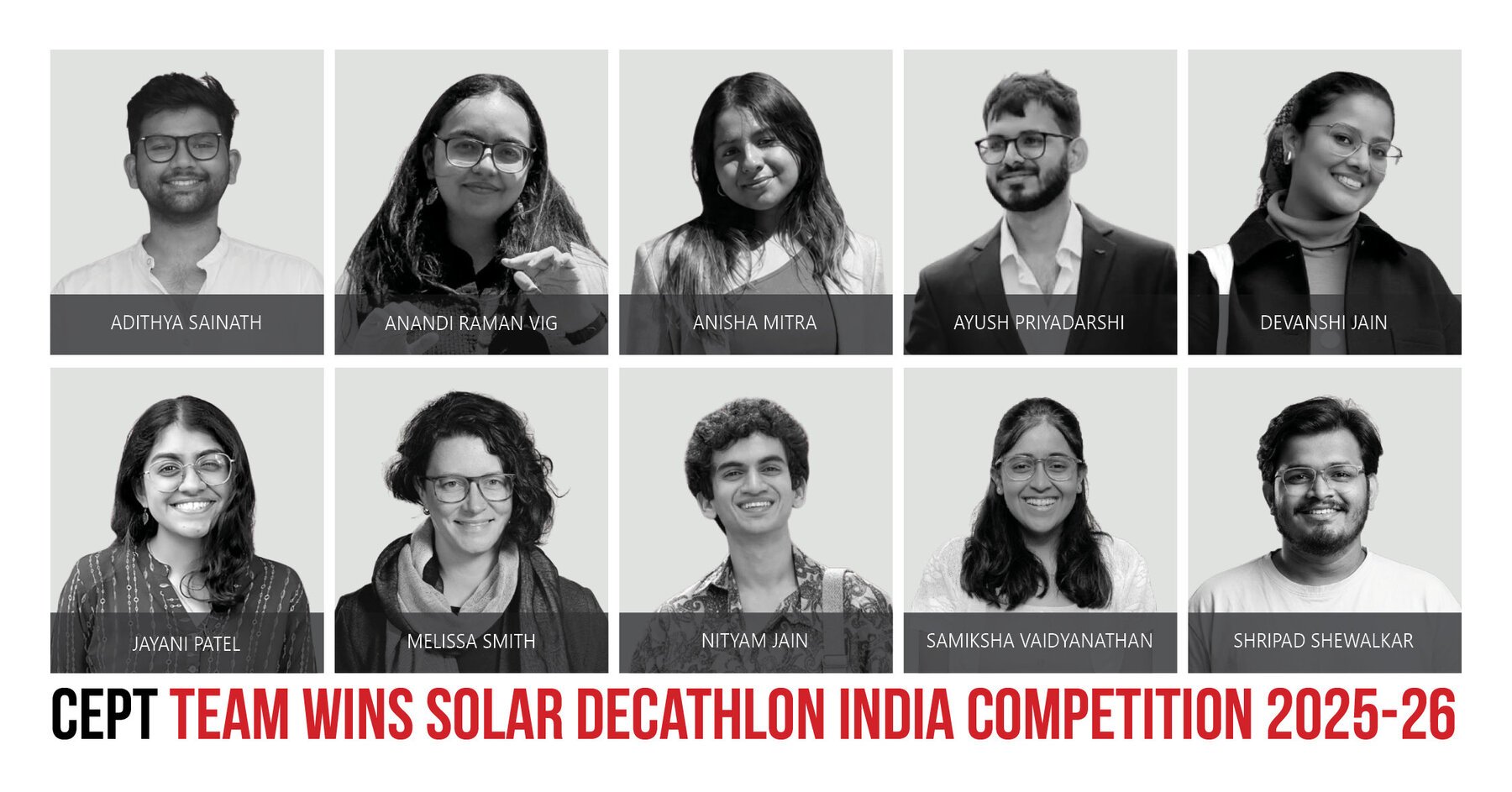
The project was guided by Melissa Smith, Adjunct Associate Professor, Faculty of Planning, CEPT University, with Samiksha Vaidyanathan (FP UG ’21), Bachelor’s in Urban Design (BUD), serving as the Student Lead.
The interdisciplinary team comprised Shripad Shewalkar (FT UG ’21), Bachelor’s in Construction Engineering (BCE); Ayush Priyadarshi, MSc Physics, IIT Roorkee; Anisha Mitra (FD UG ’21) and Anandi Raman Vig (FD UG ’21), Bachelor’s in Design (BDes); and Nityam Jain (FA UG ’21), Devanshi Jain (FA UG ’21), Jayani Patel (FA UG ’21), and Adithya Sainath (FA UG ’21), Bachelor’s in Architecture (BArch).
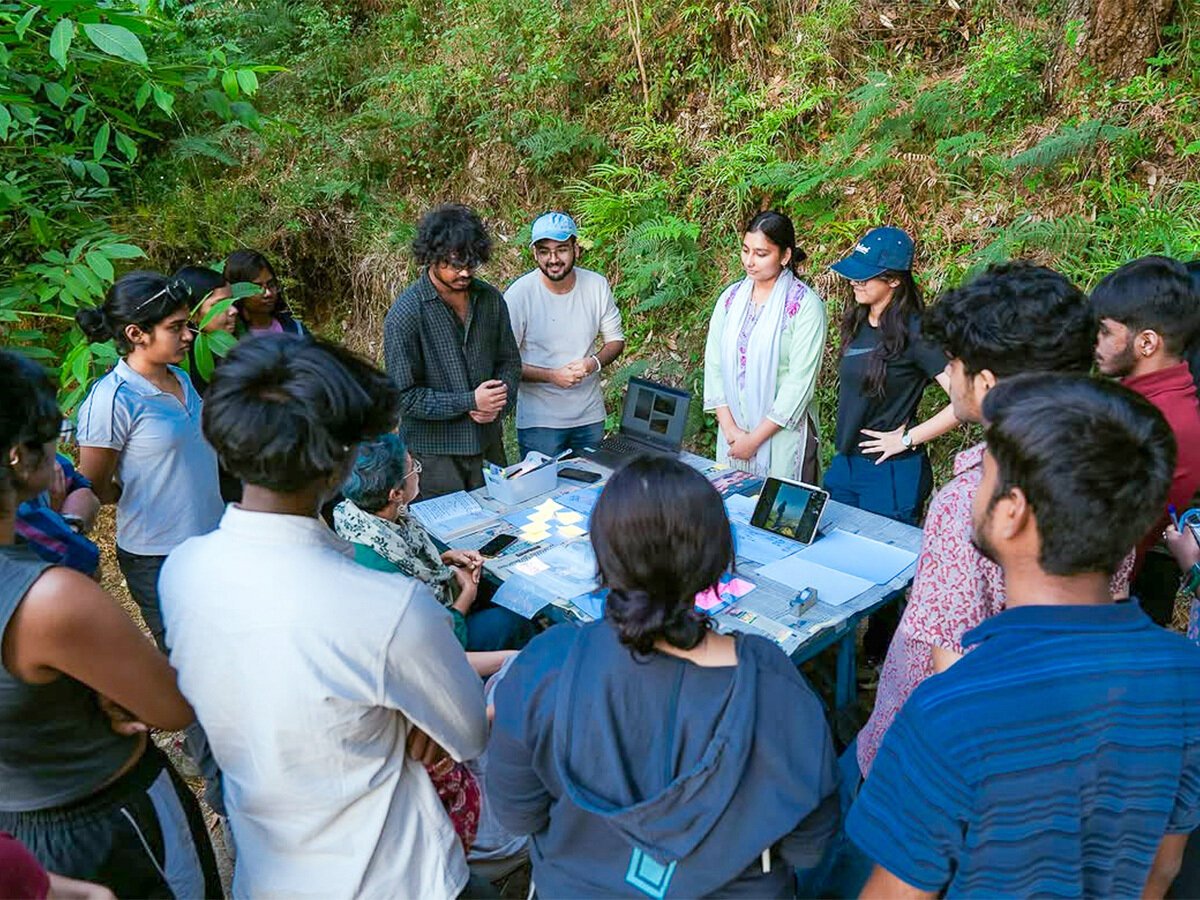
The collaboration brought together students from architecture, design, planning, construction engineering, and physics. Working across Ahmedabad, Delhi, Mumbai, Hyderabad, and Roorkee, the team coordinated through virtual meetings while balancing professional internships, academic commitments, and thesis work.
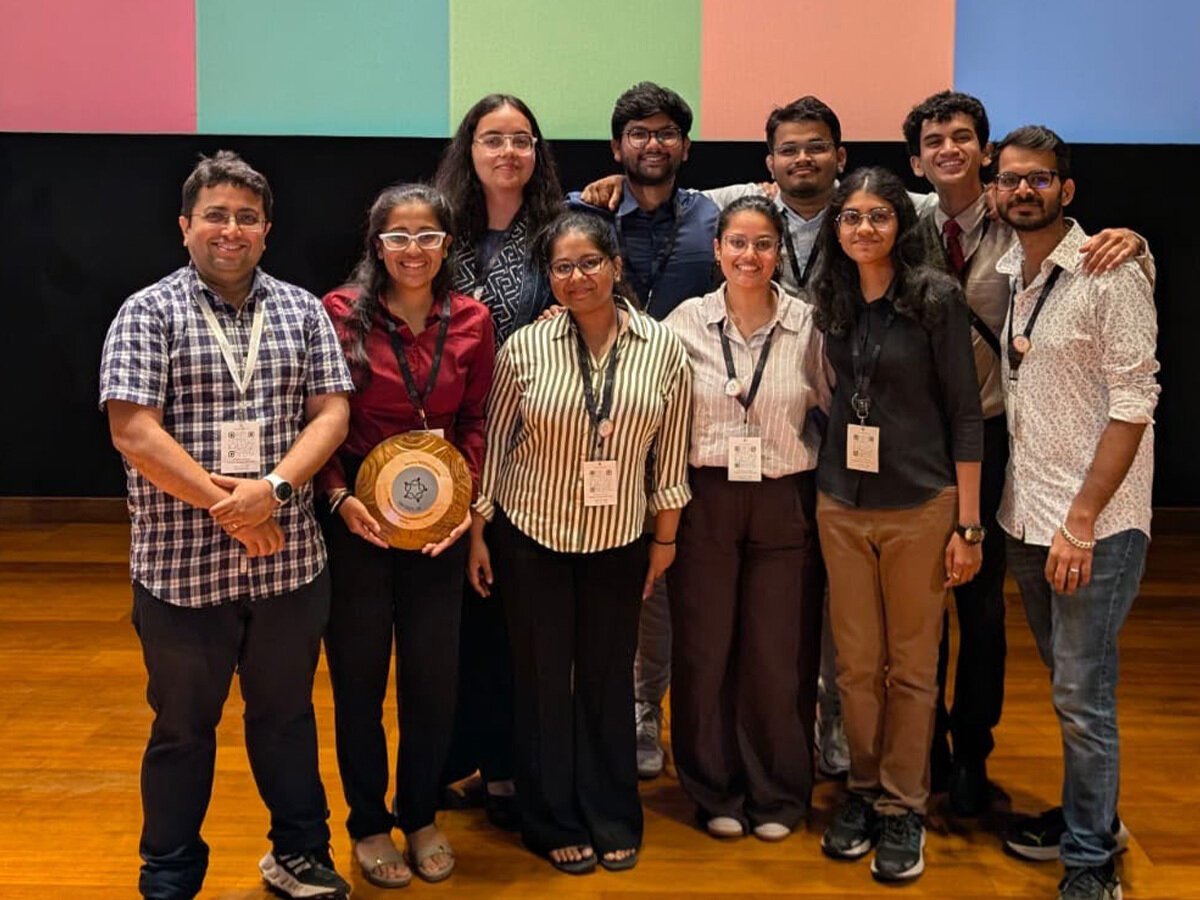
The project evolved through months of collaborative research, prototyping, testing, and refinement, demonstrating the value of interdisciplinary teamwork in solving complex environmental challenges.
About the Project
The team registered for the Solar Decathlon India competition in Nov ‘25 under the initial concept of Collapsible Indian Urban Furniture. As the project progressed, extensive field research, community engagement, user feedback, and prototype testing led the team to redefine the problem they wanted to solve.
Their research highlighted the severe heat stress experienced by households living under metal-sheet roofs. More than 20 million people in India live in homes with tin-sheet roofs, where roof surface temperatures can reach nearly 60°C during peak summer months. In poorly ventilated homes, trapped heat often makes indoor conditions even hotter than the outside environment.
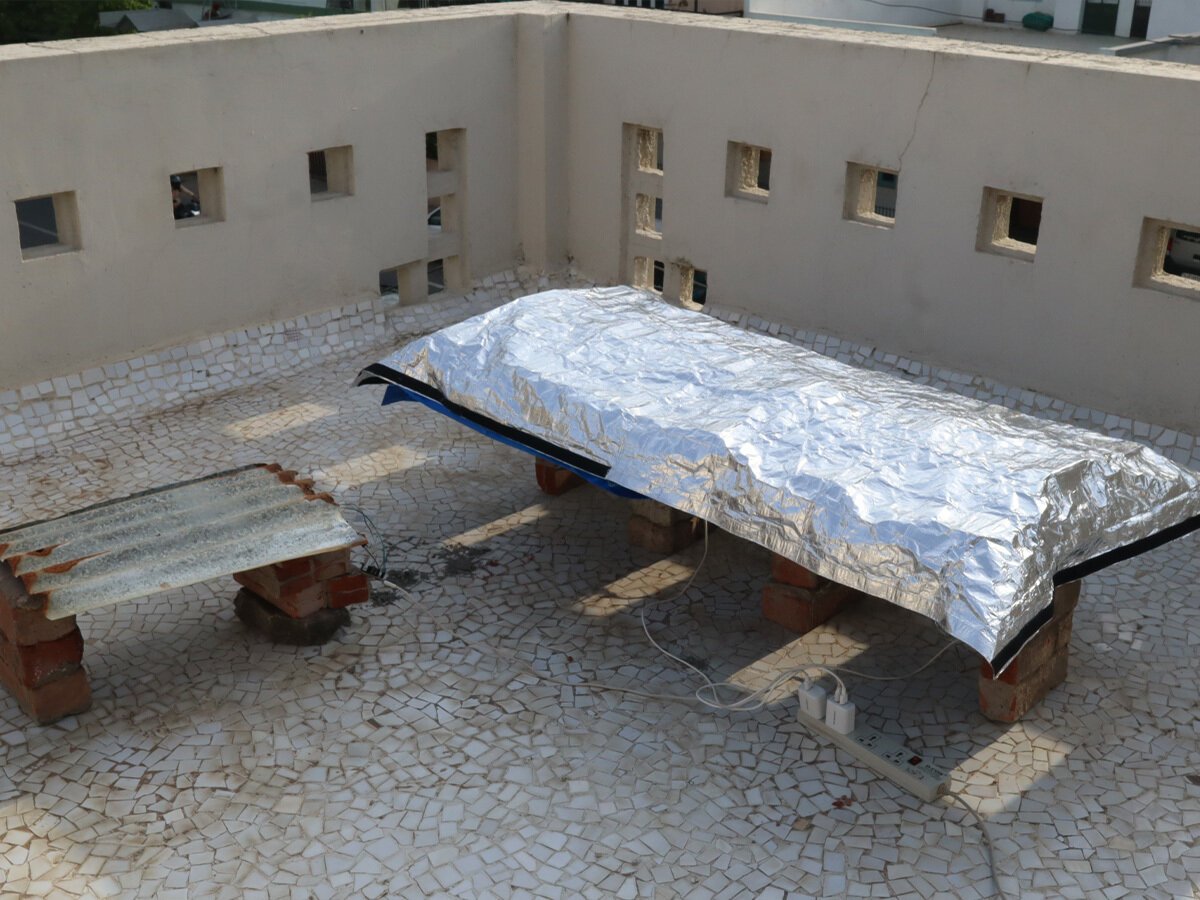
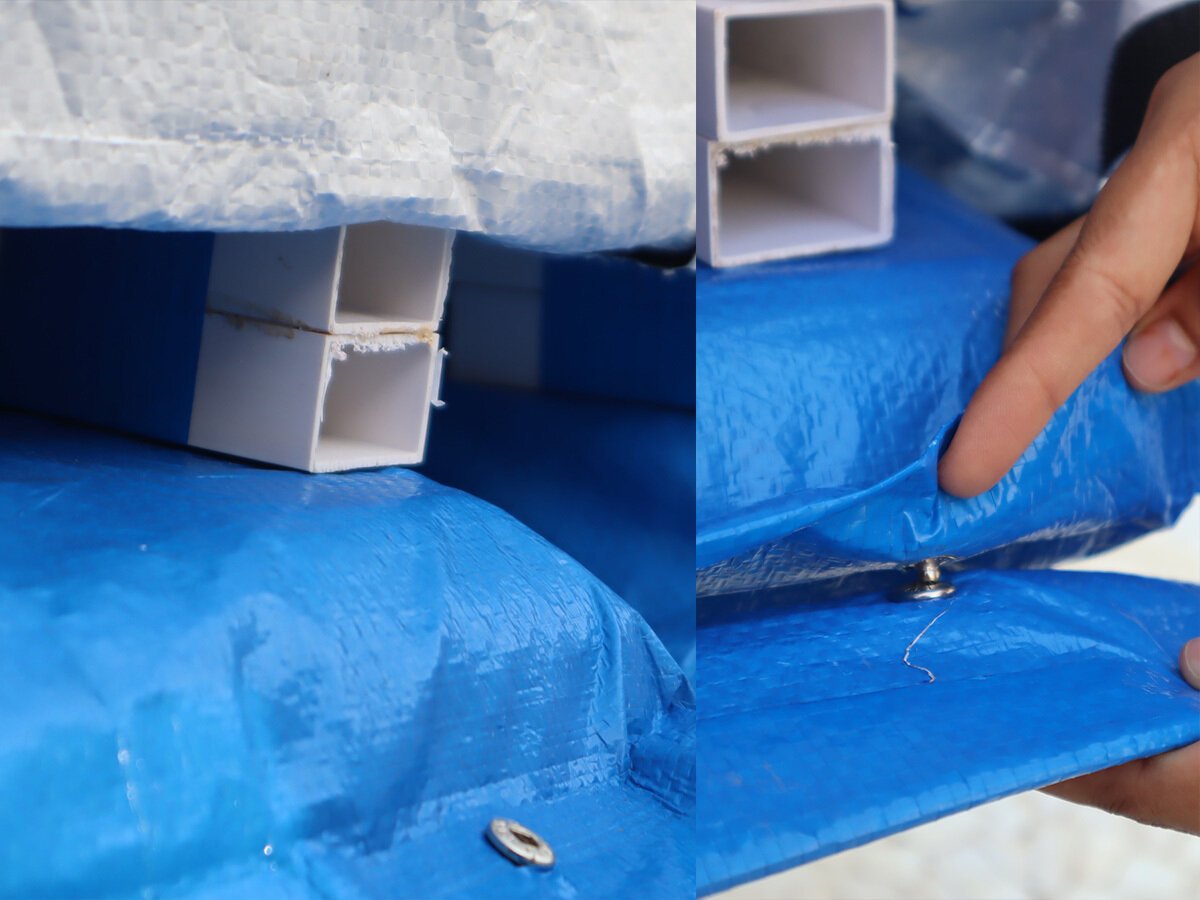
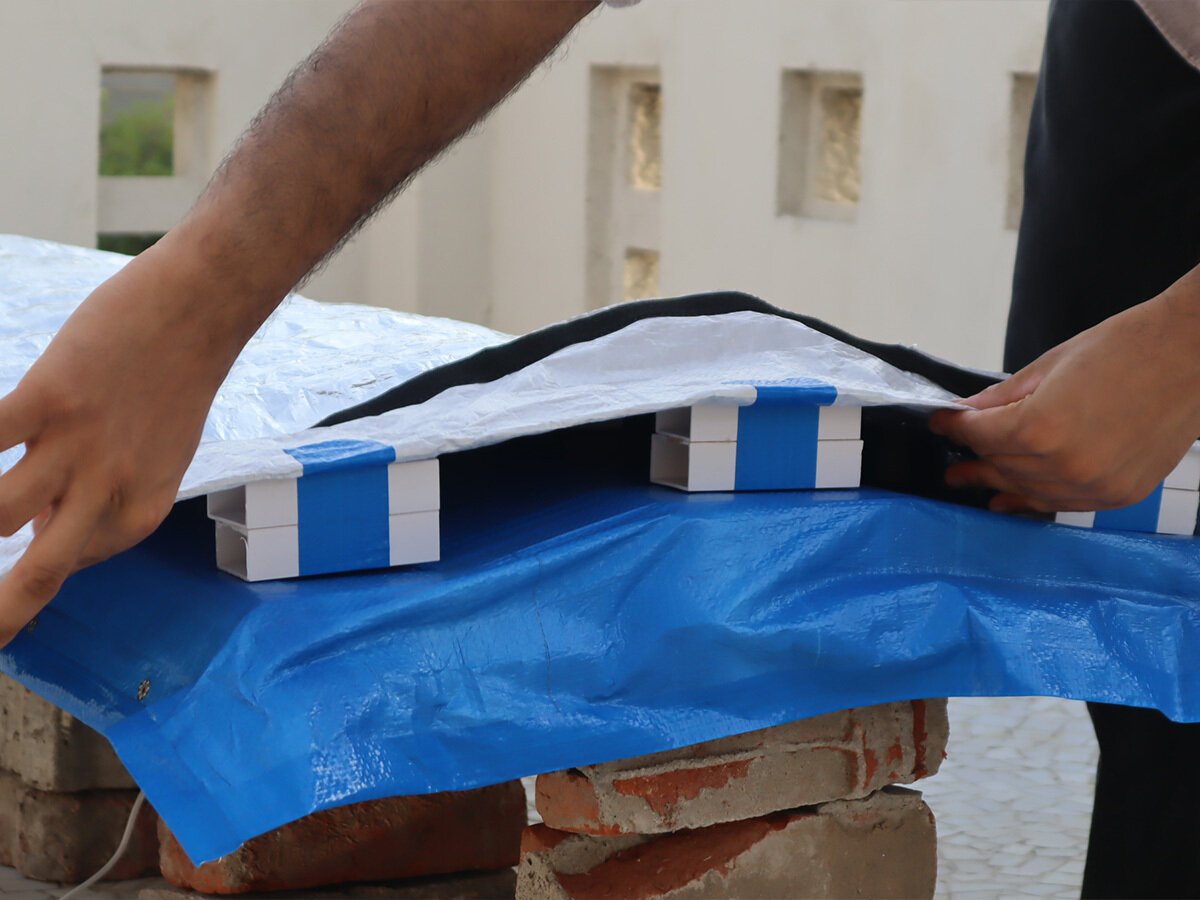
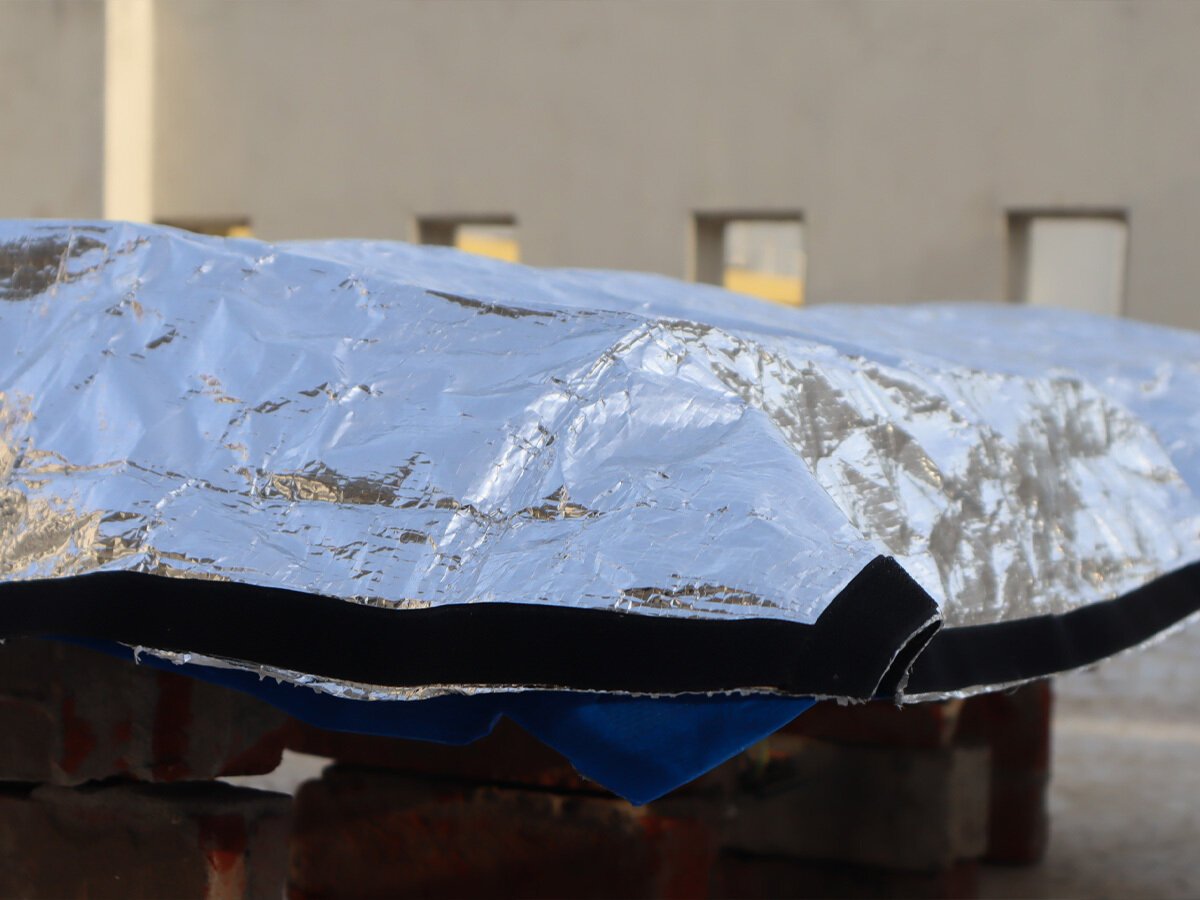
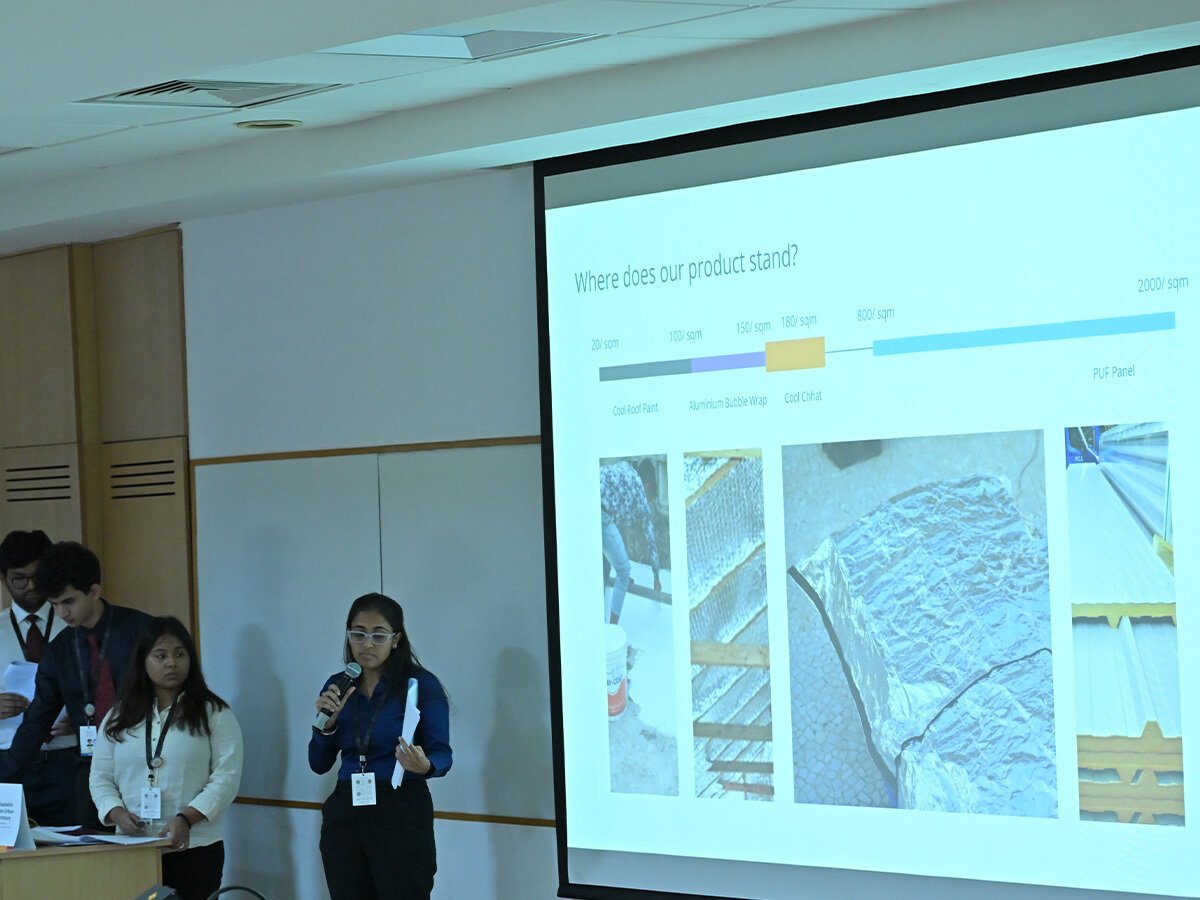
These findings led to the development of CoolChhat, a modular passive cooling roof retrofit designed specifically for informal settlements in the hot climatic regions of western India.
The system can reduce roof surface temperatures by up to 15°C and lower indoor temperatures by approximately 3 – 4°C, without requiring electricity or water. Costing approximately ₹35 per square foot, the solution uses air as its primary insulating medium and combines three integrated layers:
- A reflective top layer that minimises solar heat absorption.
- A ventilated air cavity that reduces conductive heat transfer.
- A sealed air layer that provides additional insulation.
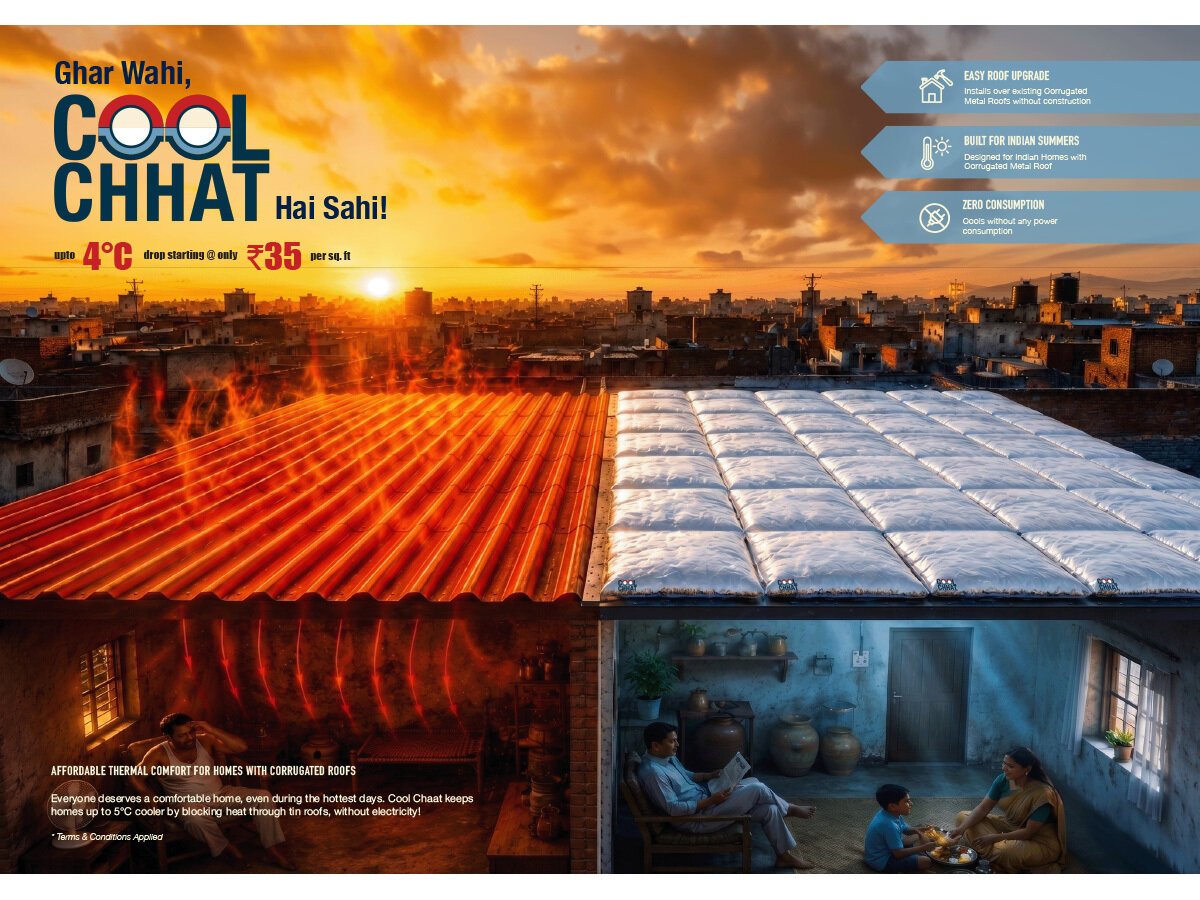
The project demonstrates how readily available and economical materials can be intelligently assembled into a scalable, climate-responsive solution. By integrating design thinking with technical innovation, CoolChhat offers an affordable intervention to improve thermal comfort for underserved communities while addressing the growing challenges of climate change.
Reflecting on the team’s journey, Anandi Raman Vig said:
“Beyond the trophy, what we are taking back is something bigger: a reminder that good design isn’t about holding onto your first idea. Most of the time, it’s about letting go of it, over and over again, until what remains can no longer be questioned. CoolChhat eventually became a product, but before that, it was simply a group of people showing up repeatedly, with immense passion and dedication.”
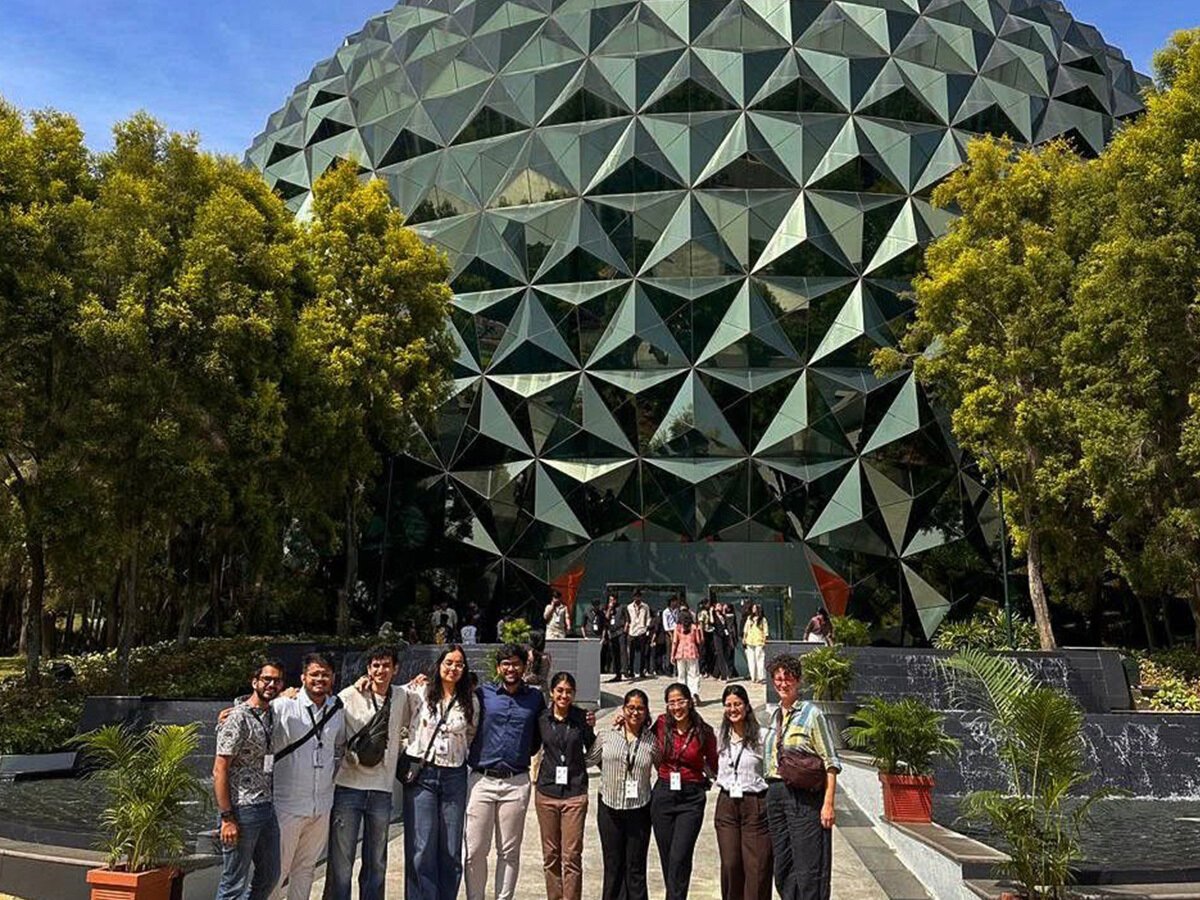
About Solar Decathlon India
Solar Decathlon India (SDI), the world’s largest net-zero building challenge, is a seven-month competition that brings together undergraduate and postgraduate student teams from institutions across India to develop innovative, market-ready solutions for net-zero energy and water buildings. The competition encourages participants to collaborate with industry partners and real estate professionals to design affordable, climate-resilient, and sustainable solutions for the built environment.
The 2025 – 26 edition of the competition witnessed participation from 179 student teams representing institutions across India, highlighting the growing national focus on sustainable design and climate-responsive innovation.
CEPT University congratulates the team on this significant achievement, which reflects the University’s emphasis on interdisciplinary collaboration, design excellence, and socially responsive innovation.