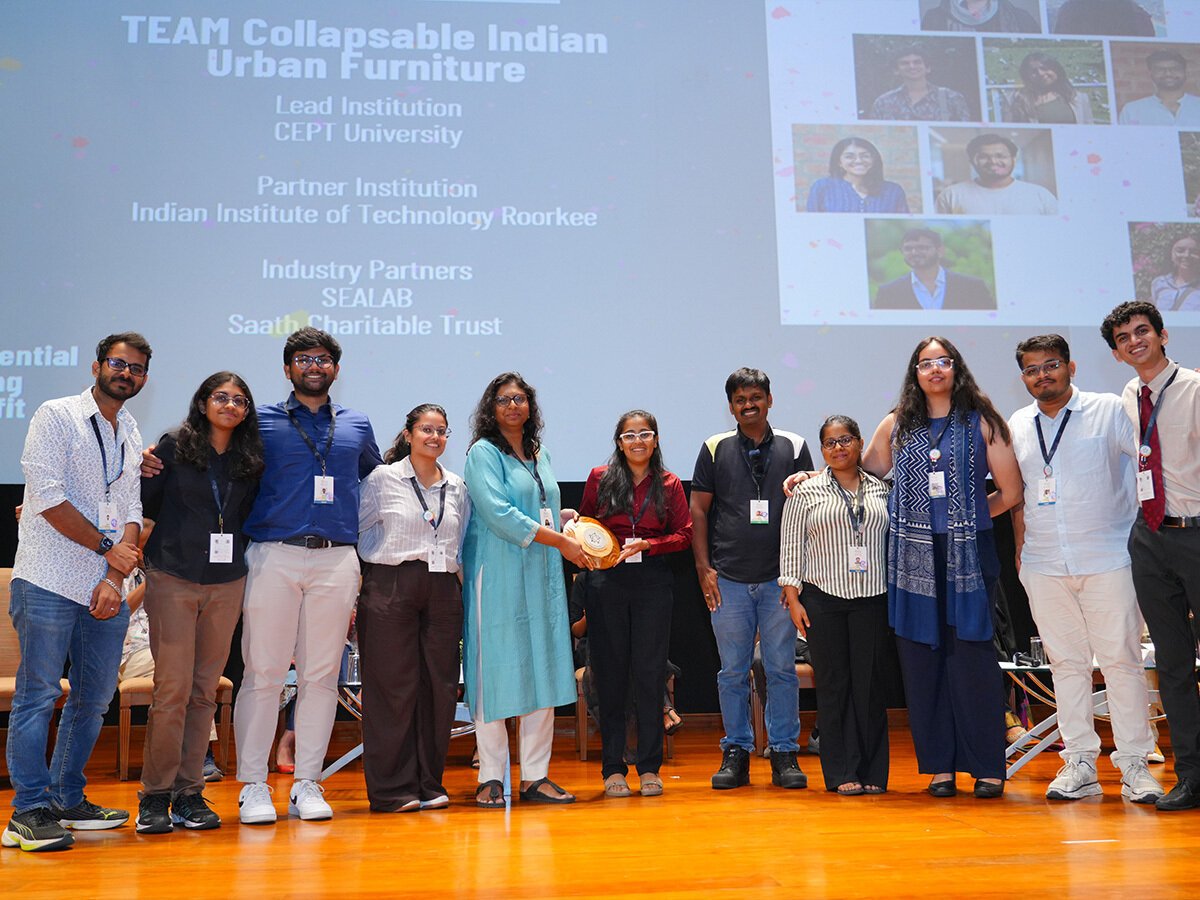
This year’s competition featured 33 teams from 10 markets across the Asia Pacific region. The finalists included teams from CEPT University in India, the University of Melbourne in Australia, and Chulalongkorn University in Thailand. They presented their work at the final jury round held on 11 Apr. The winning CEPT team, ‘Zoning Out Crew’, led by Rishi Kumar N, was invited to join the 2025 ULI Asia Pacific Summit in Hong Kong from 26 to 29 May. As part of their prize, the team received travel and accommodation support, ULI memberships, and the opportunity to engage with global leaders in real estate, planning, and urban innovation.
Their proposal, ‘Kai Tak 2050: The Active-Shared City,’ guided by Purvi Chhadva, Program Chair, Master of Urban Design (MUD), and Prof. Mona Iyer, Faculty of Planning, reimagines Hong Kong’s Kai Tak Waterfront as a next-generation ‘sharing city,’ where urban density, shared infrastructure, and community-led design drive innovation. Inspired by the historic Kowloon Walled City, the proposal weaves together mobility, public space, and shared infrastructure to create a dynamic, people-first ecosystem that is both socially and environmentally sustainable.
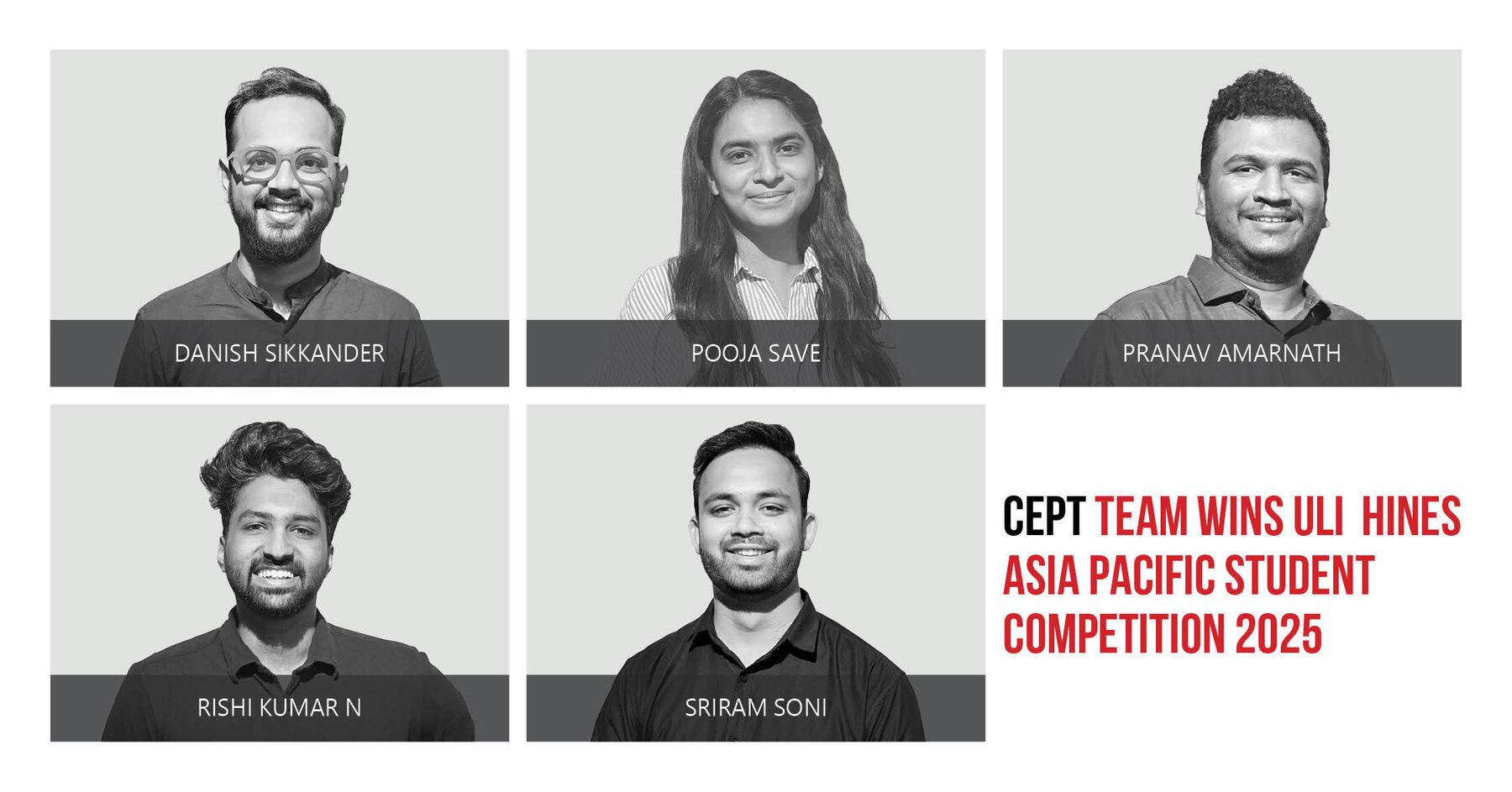
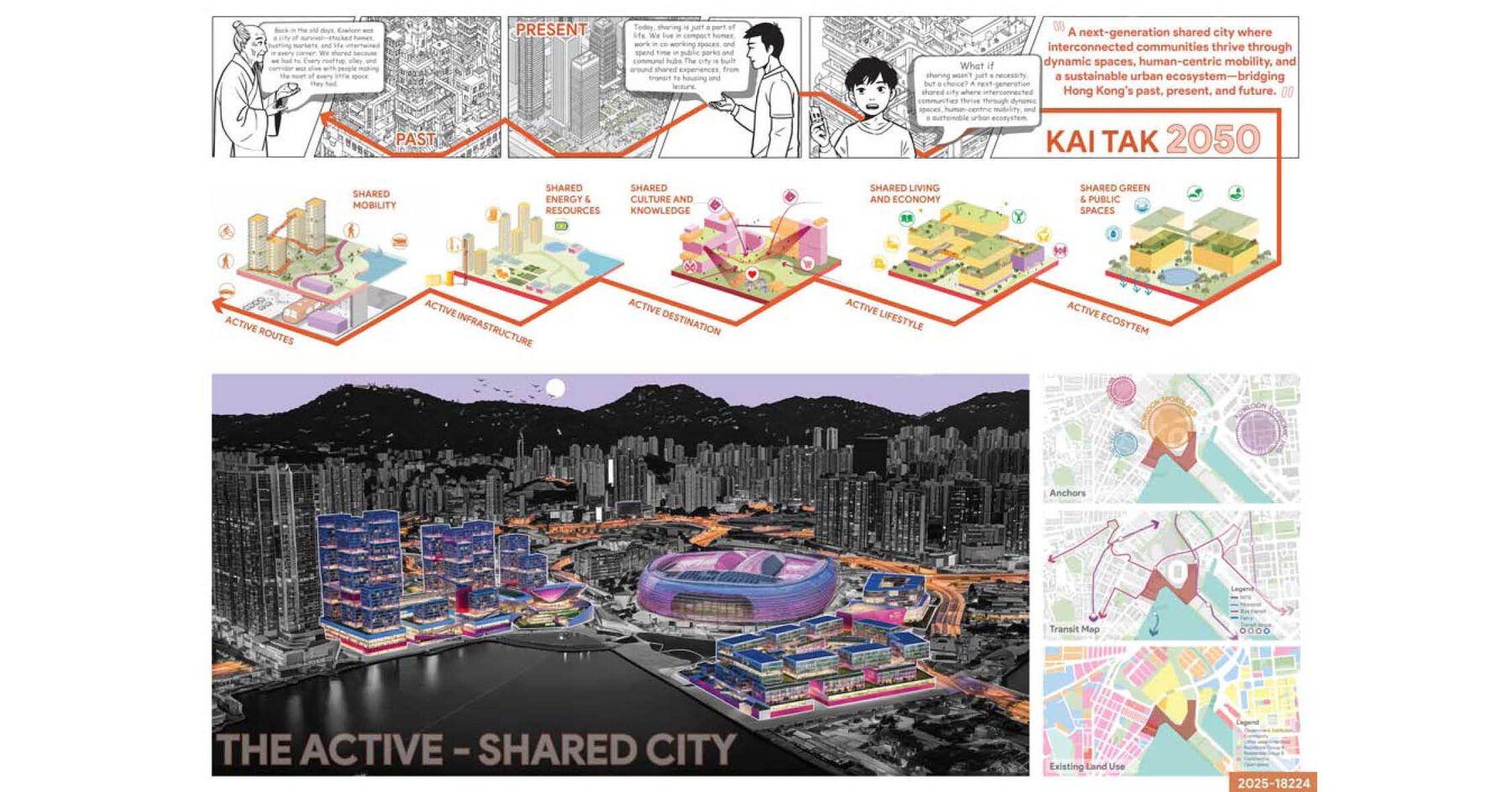
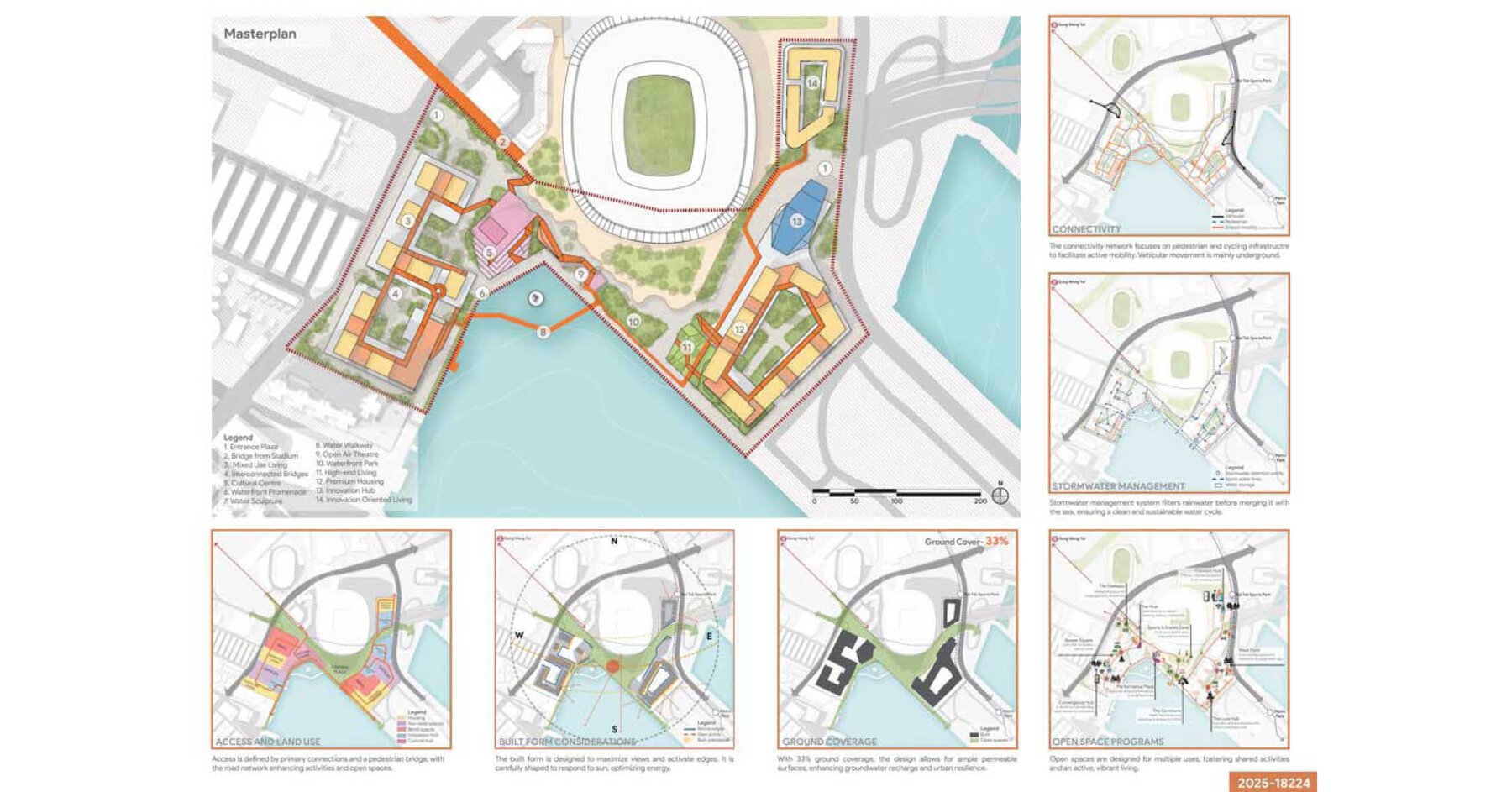
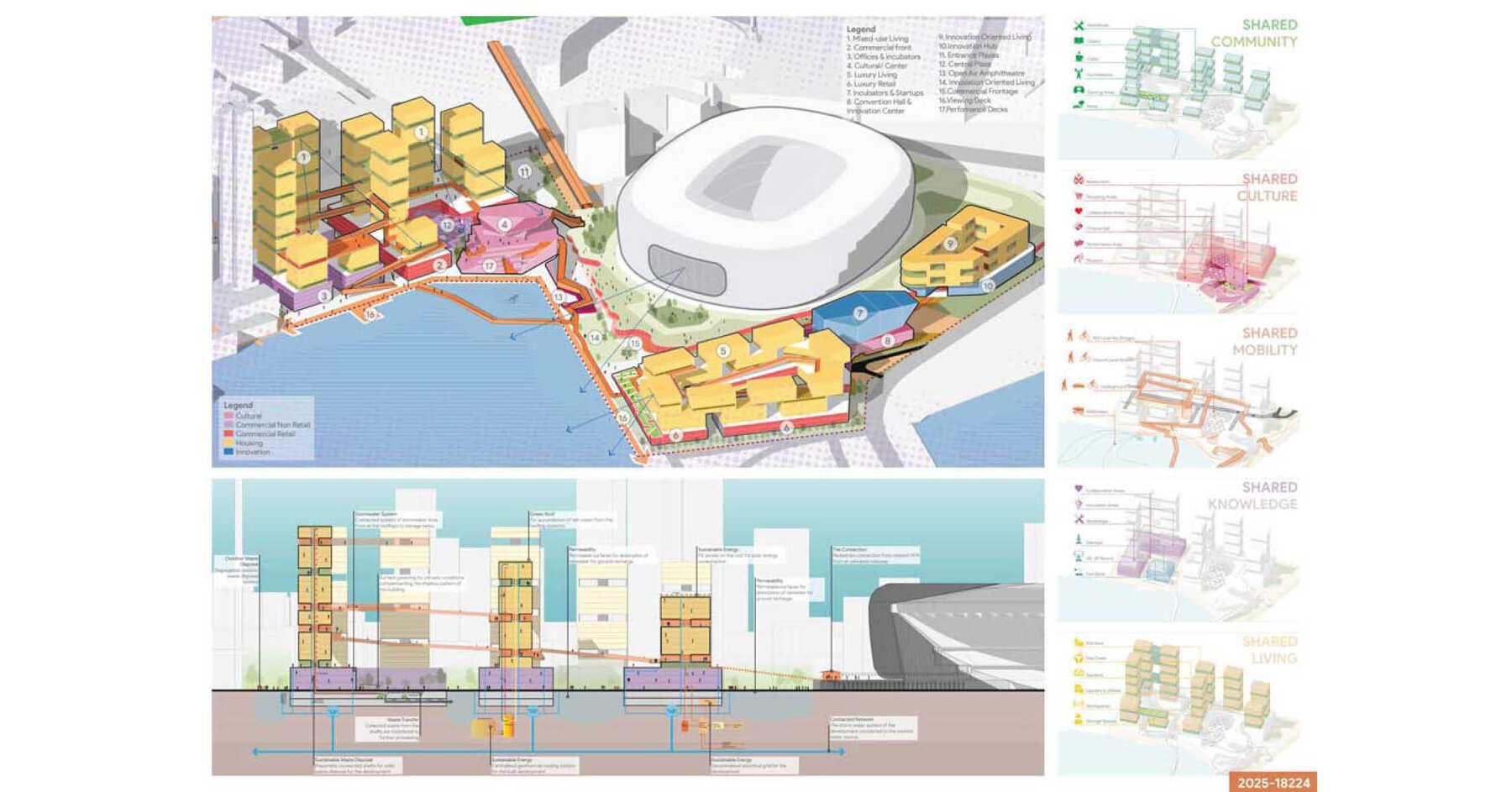
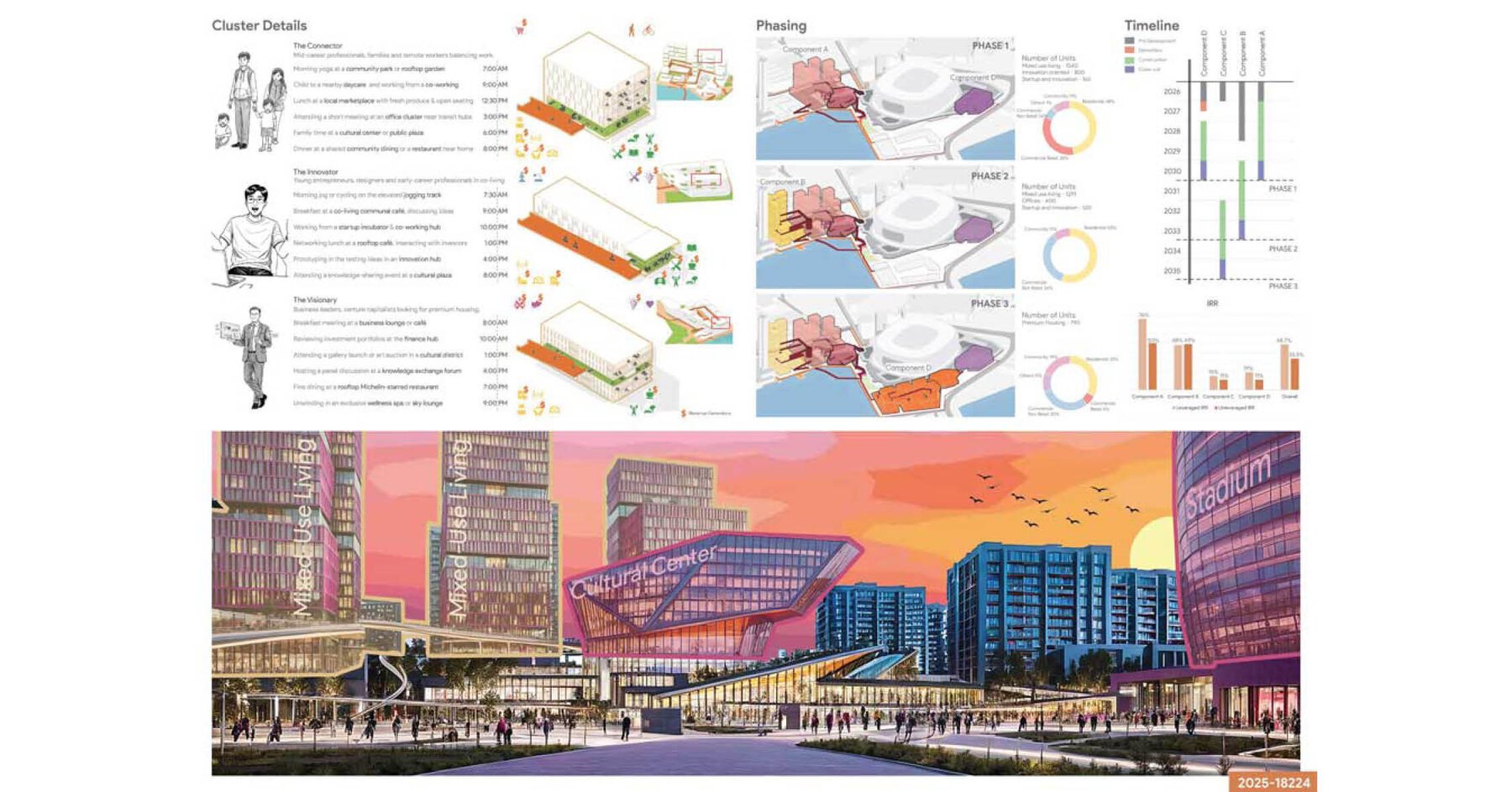
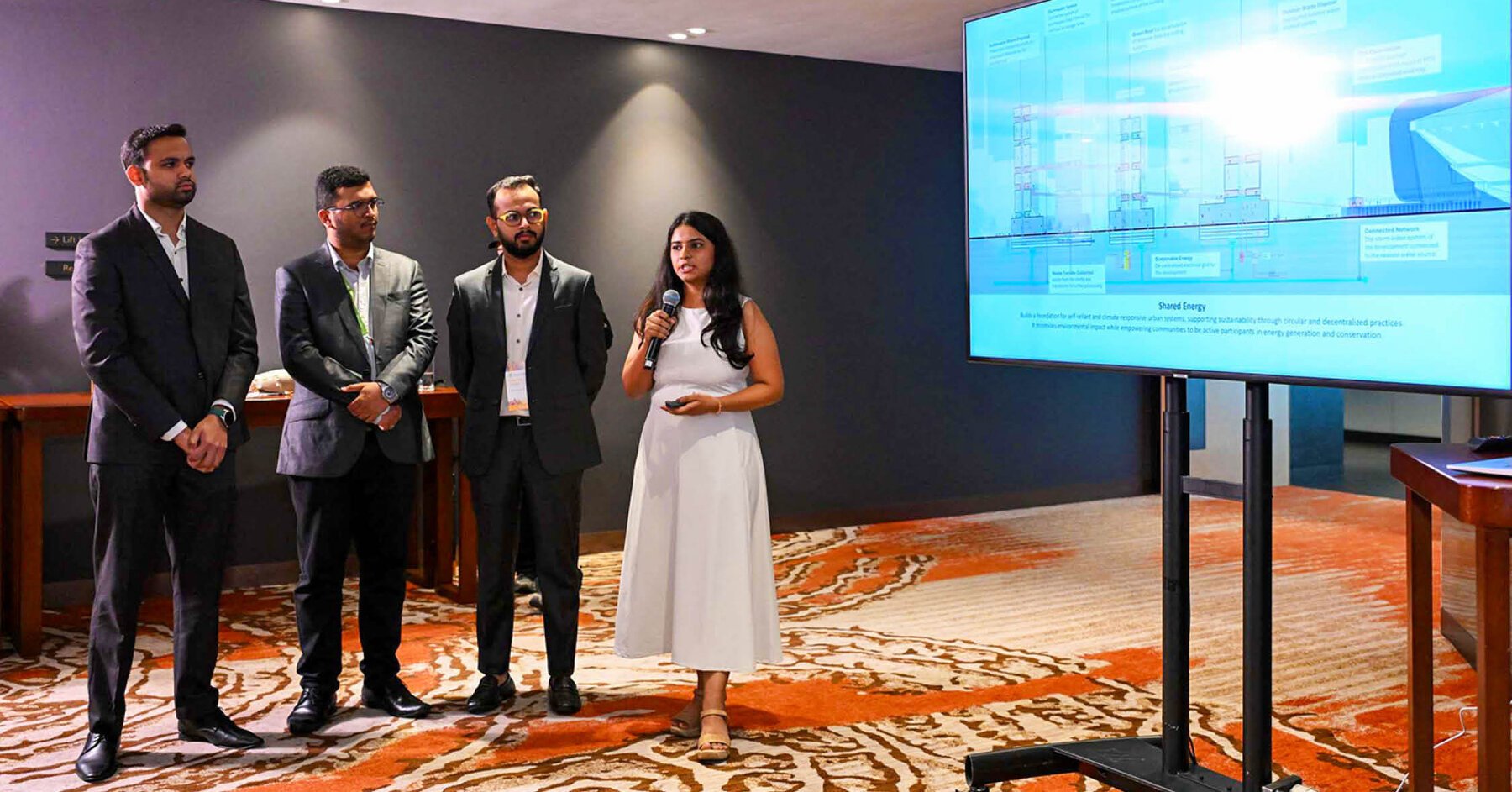
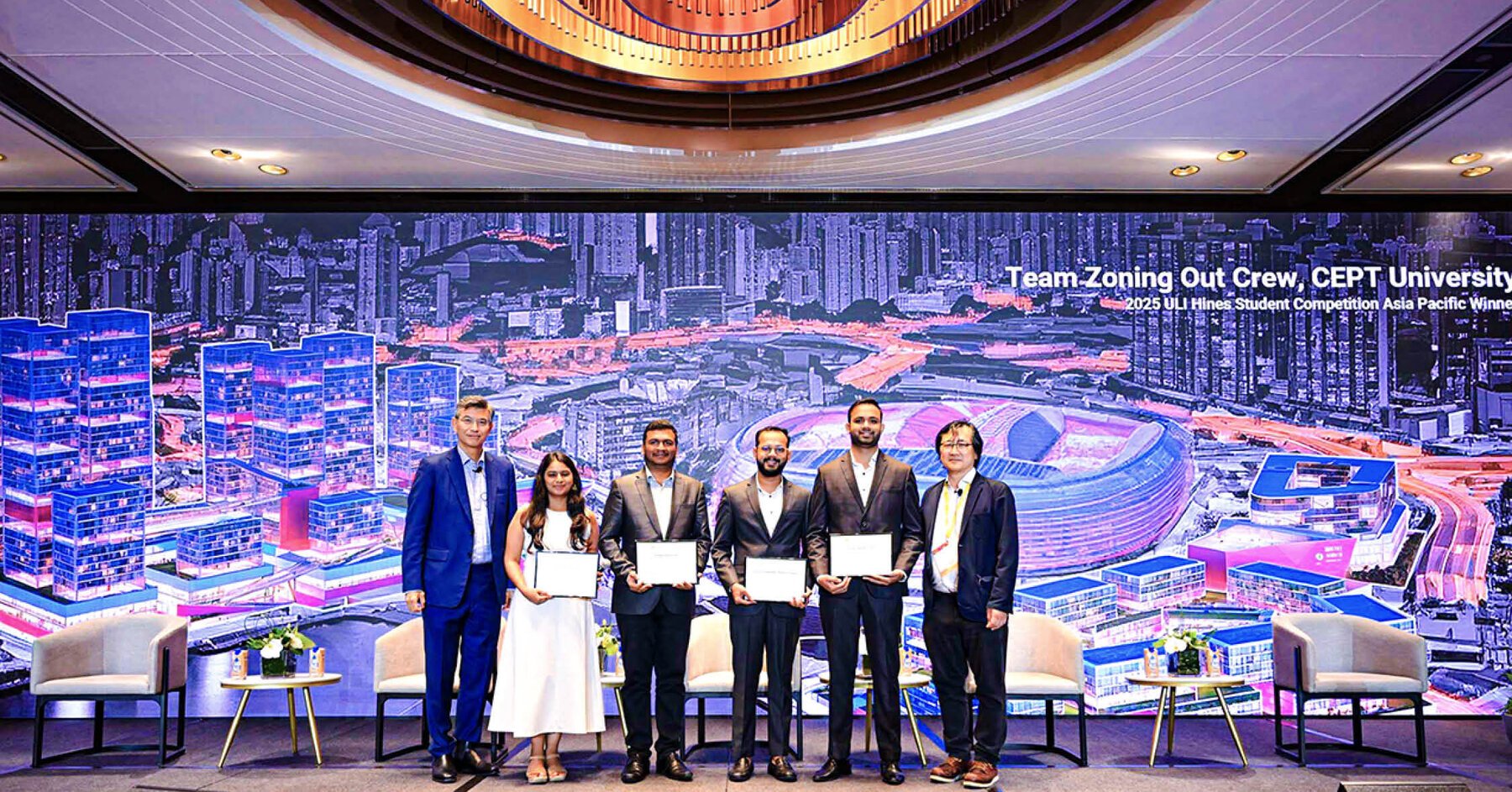
Emphasising the value of narrative and spatial storytelling in the design process, the team shared their experience of working collaboratively, thinking critically, and problem-solving to translate abstract ideas into workable plans. “It was rewarding to ensure our ideas could work practically, sharpening our understanding of how vision translates into reality. Together, we zoomed into the site, zoomed out to understand Hong Kong, and found joy in designing beyond convention.”
Praising the team’s exemplary performance, Prof. Barjor Mehta, President, CEPT University said, “This win is a proud moment. It reflects the strength of our interdisciplinary approach, real-world focus, and commitment to sustainable urban development.”
“This year’s winning submission from CEPT University offers a compelling vision for the future of living in high-density cities,” said Alan Beebe, CEO, ULI Asia Pacific. “Their ability to combine financial feasibility with community-first thinking demonstrates what is possible when bold ideas meet grounded execution.” Jon Tanaka, Head of Asia Pacific, Hines, said, “The CEPT University team’s proposal shows how thoughtful design can harness urban density to build resilient, inclusive, and economically vibrant communities.”
Now in its third year in Asia Pacific, the competition, organized by the Urban Land Institute (ULI) in partnership with Hines, a leading global real estate investment manager, offers students an opportunity to form multidisciplinary teams, hone interdisciplinary collaboration, and solve complex land use challenges. Last year, a team from CEPT participated for the first time and secured the runner-up position.