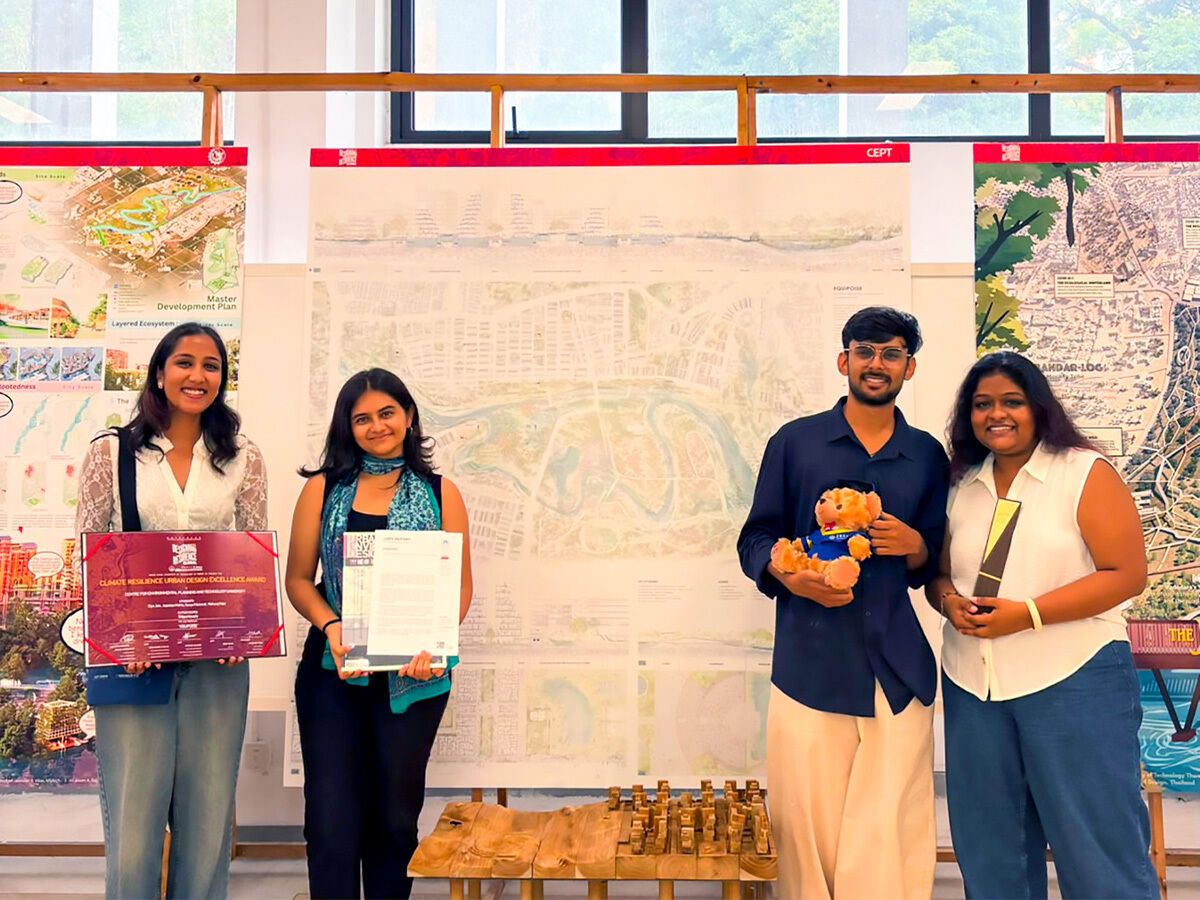
The competition brief prompted us to look at how our cities today navigate situations arising due to conditions of excess water, climate change and water scarcity and how they manifest in the urban and ecological conditions of our cities. Along with this, the continuous expansion of our cities has made land a contested element between the river, urban life and the fauna and flora, especially in the case of Vishwamitra river in Vadodara.
These conditions brought us to looking at restoring the blue-green networks of the city and reimagining how public spaces and dwellings within our cities can function — playing the roles of cultural, social and water infrastructural centers.
Furthermore, a relationship with the river and water management strategies was established — moving from the city level scale to individual societies and how collecting rainwater, managing stormwater and bio-filtering processes could make our cities resilient in situations of both flood and water scarcity.
The city starts living with the water wherein landscapes start to adapt to seasonal floods. Fragmented blue-green networks and water systems are reconnected across the city to improve water retention, infiltration, and biodiversity.
The river corridor begins to connect people, places, and ecosystems across the city, creating a shared grounds which supports both ecology and public life throughout the year.
About the Project
Equipoise
What if our cities don’t just survive water, but thrive because of it?
Rivers are not fixed in nature. They are shaped by cycles of expansion and retreat, continually redefining the landscapes they traverse and the lives they sustain. Drawing from this condition, the proposal positions the Vishwamitri River as the organising framework for Vadodara and conceives the city as a landscape capable of accommodating its seasonal rhythms.
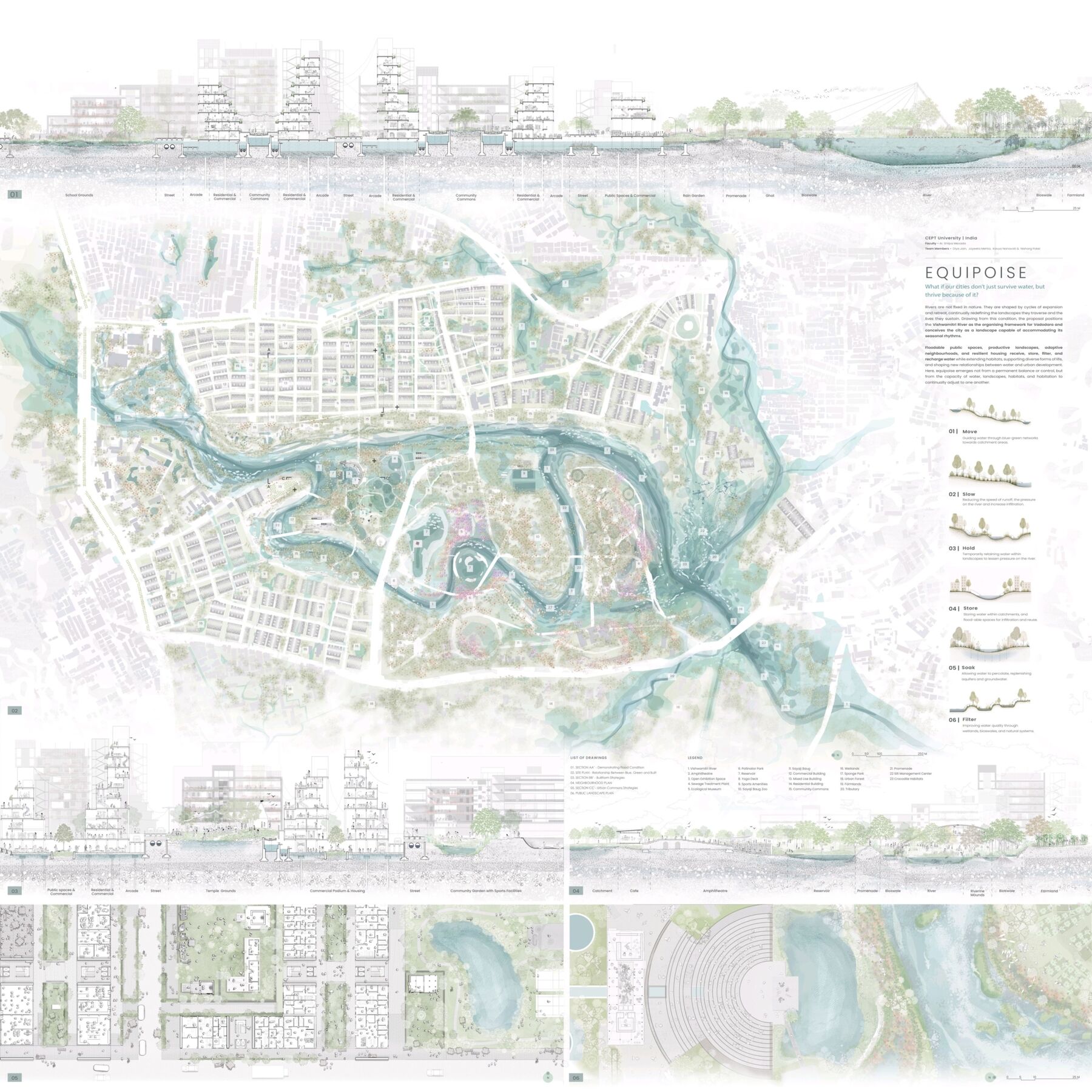
Floodable public spaces, productive landscapes, adaptive neighbourhoods, and resilient housing receive, store, hold, move, filter, soak and recharge water while extending habitats, supporting diverse forms of life, and shaping new relationships between water and urban development.
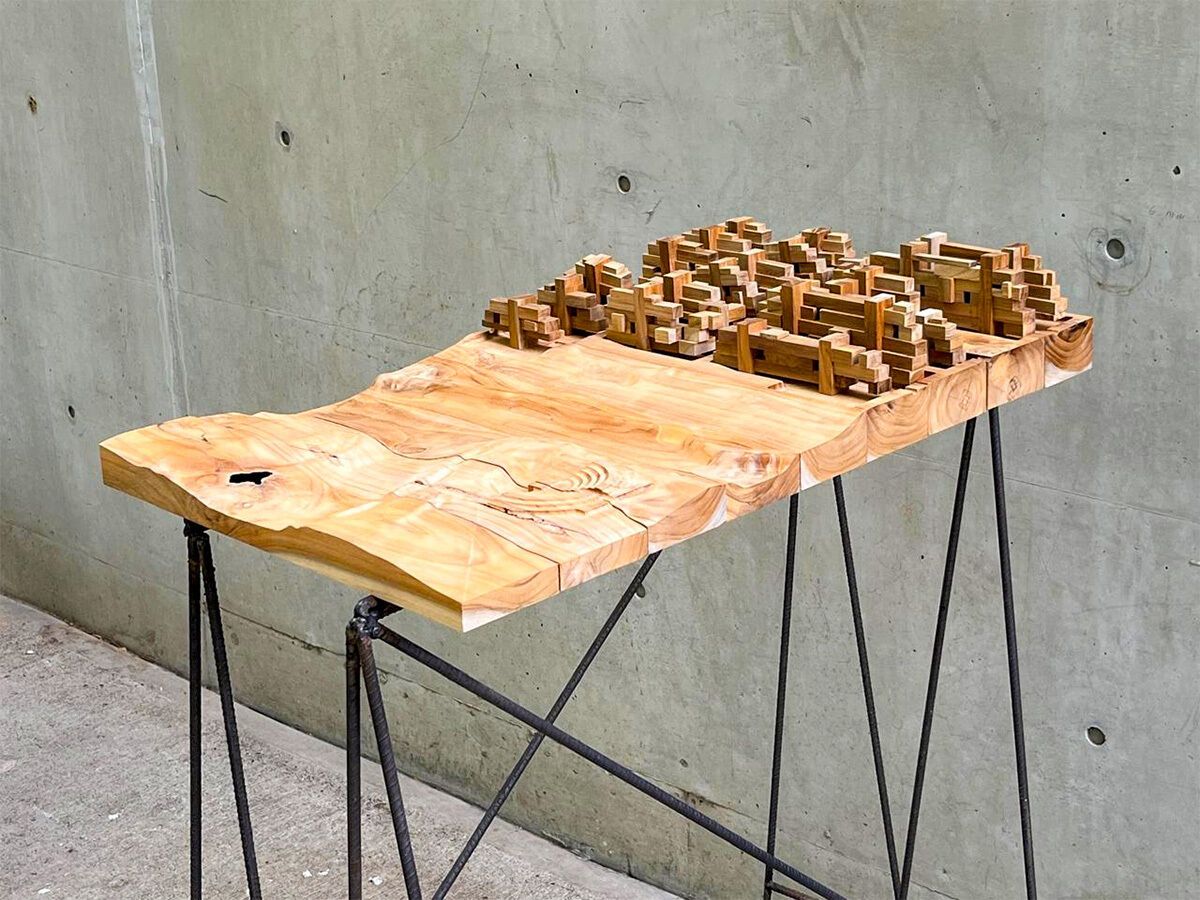
The proposal is an interwoven system where water, people, and nature strengthen one another. The city doesn’t just survive water, but one starts thriving because of it.
Jury Note:
In Equipoise, we found one of the most comprehensive urban design approaches in the competition. The project moves convincingly from the territorial scale to the city, area, and neighborhood scales, while maintaining a consistent understanding of water, land, movement, and human activity. This multi-scalar thinking gave the proposal both depth and clarity.
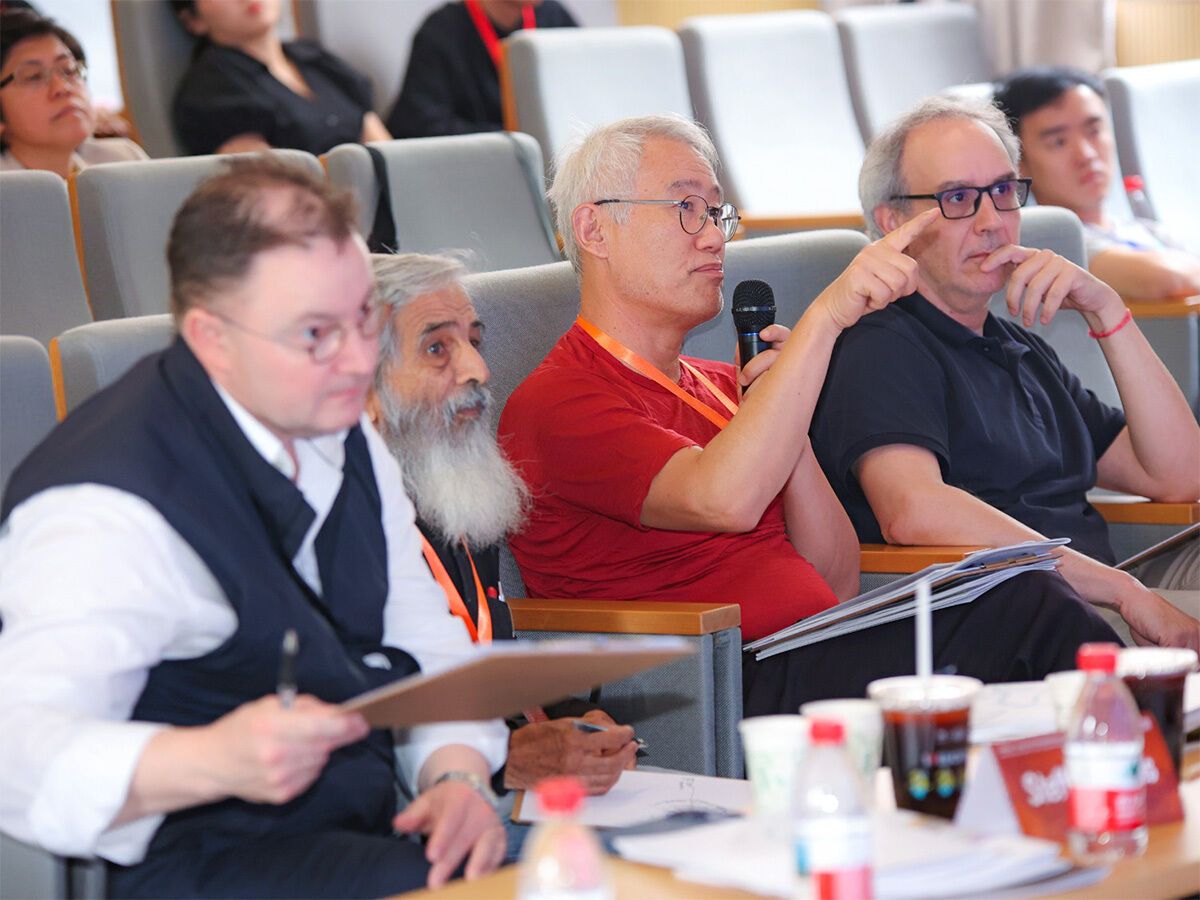
We were particularly impressed by the use of sections to connect the larger environmental reading of the territory with specific site conditions and design interventions. The project does not treat resilience as a fixed master plan, but as a dynamic framework that can respond to changing water conditions, ecological processes, and future transformation. This made the proposal feel strategic, flexible, and well grounded.
We recognize Equipoise as a compelling contribution to resilient urban design, distinguished by its territorial awareness, ecological sensitivity, and dynamic urban strategy
About Designing Resilience Global 2026
The Designing Resilience Global (DRG) initiative focuses on the rapid urbanization processes and the resulting complexity of contemporary urban conditions.
The design competition positions the city and design practice as key drivers of resilient change, calling for a re-evaluation of existing methods and the development of new paradigms capable of addressing the challenges of global development and contemporary urbanism. Adopting a city-region perspective, the competition acknowledges that the environmental impacts of rapid urbanization and climate change extend beyond administrative boundaries, requiring integrated and scalable design responses.
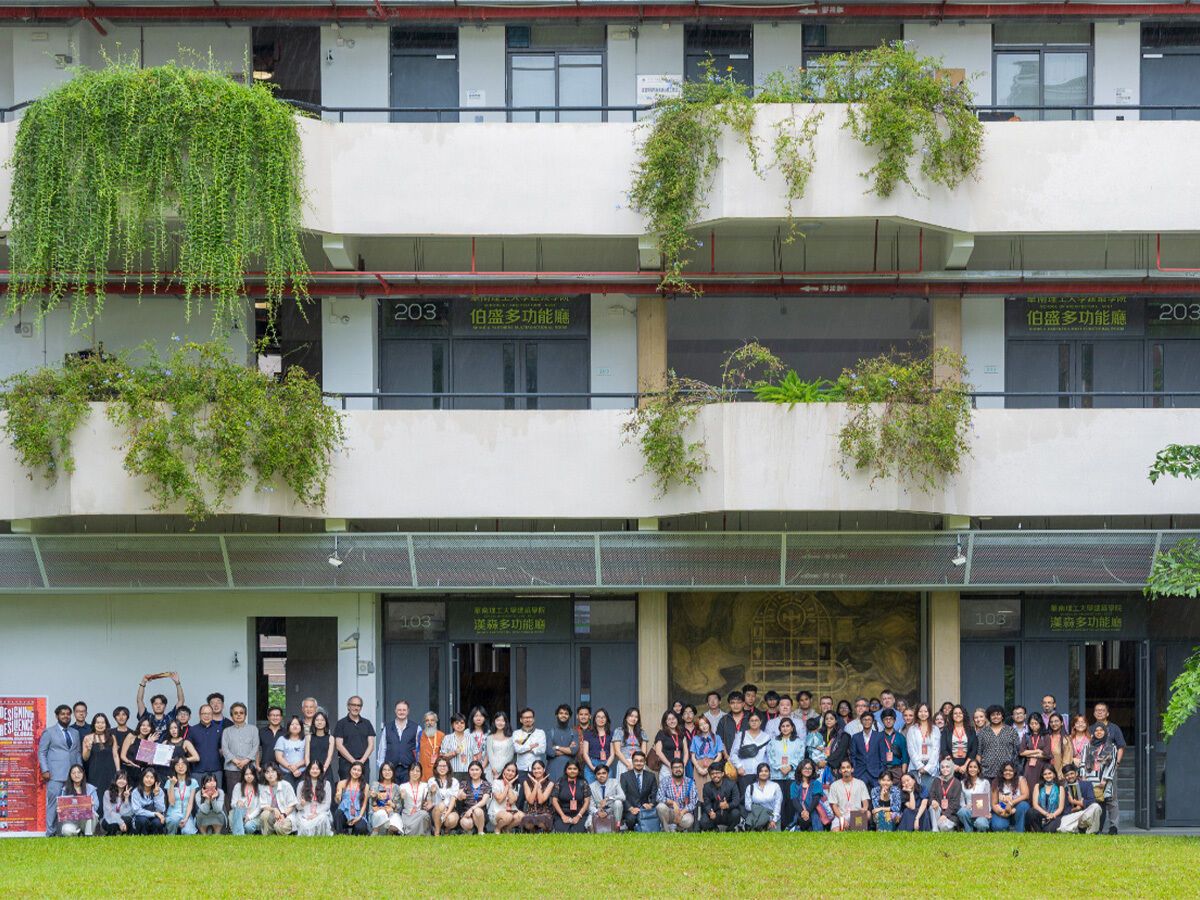
The 2026 edition of the competition witnessed participation from 80+ students from 13 countries.