[ ] – A syntax of Algorithmic Proliferation

- aaron abraham thomas
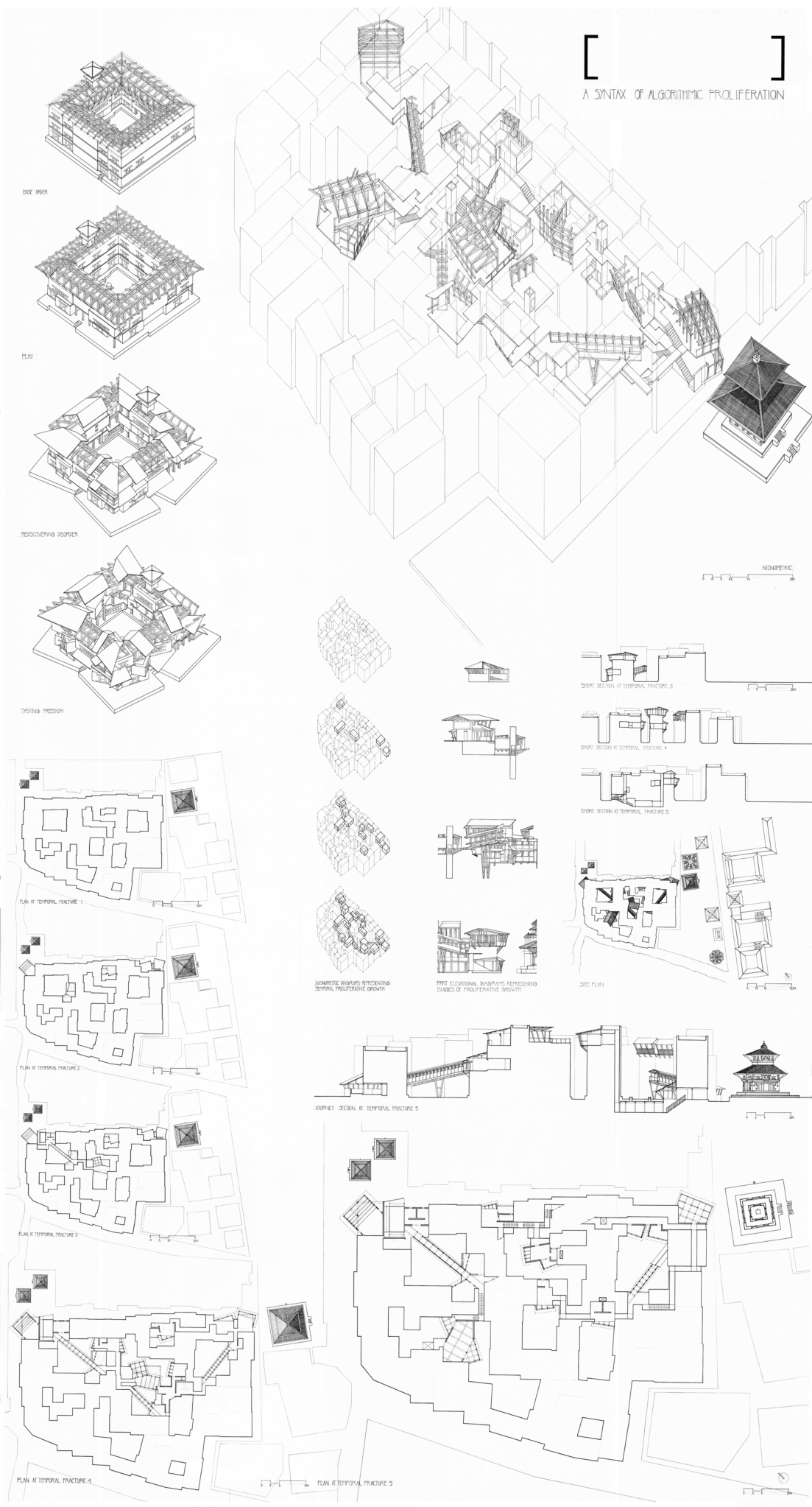
A 2‑dimensional intersection of representation and narration, where the entire learning of 16 weeks is collapsed onto a 3’x6’ feet handmade panel. The panel is a combination of detailed technical drawings to convey aspects of the design and diagrams to convey the process of discovering the design proposal.
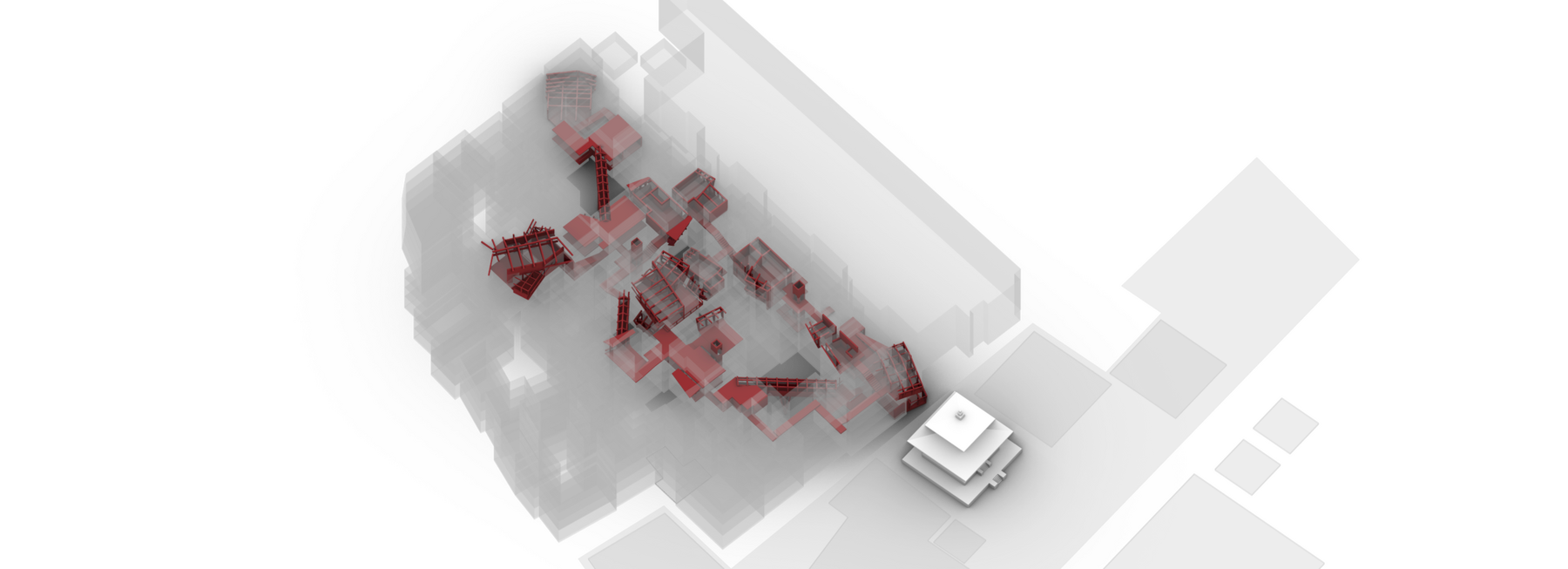
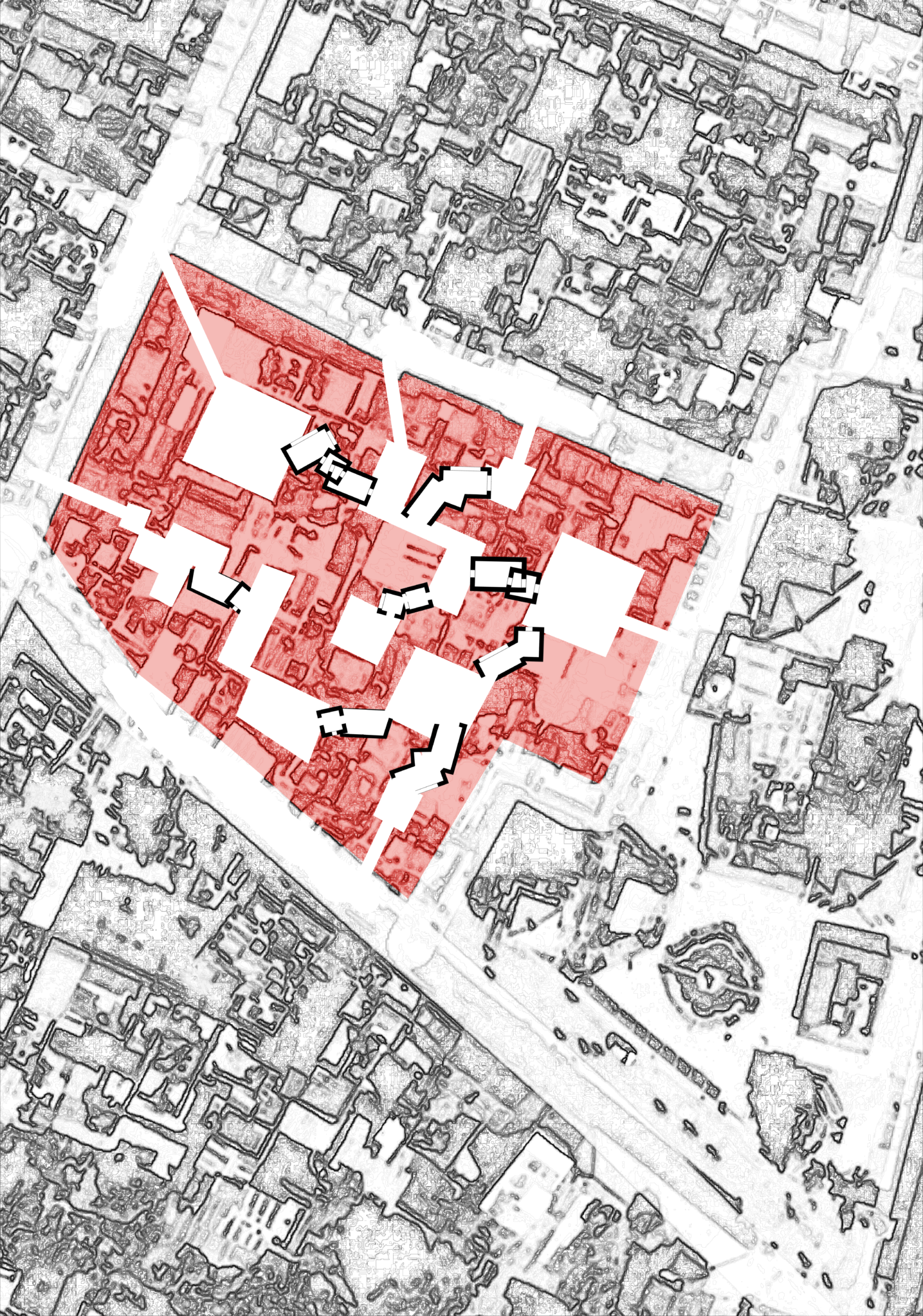
Digitized renditions of an abstract nature, to understand and convey the integration of the project with its “site”. The violent and subversive propensity of the project necessitates its color of red, whereas the context itself is rendered in a glass-like transparency, to convey its purpose as a medium of growth for proliferation.
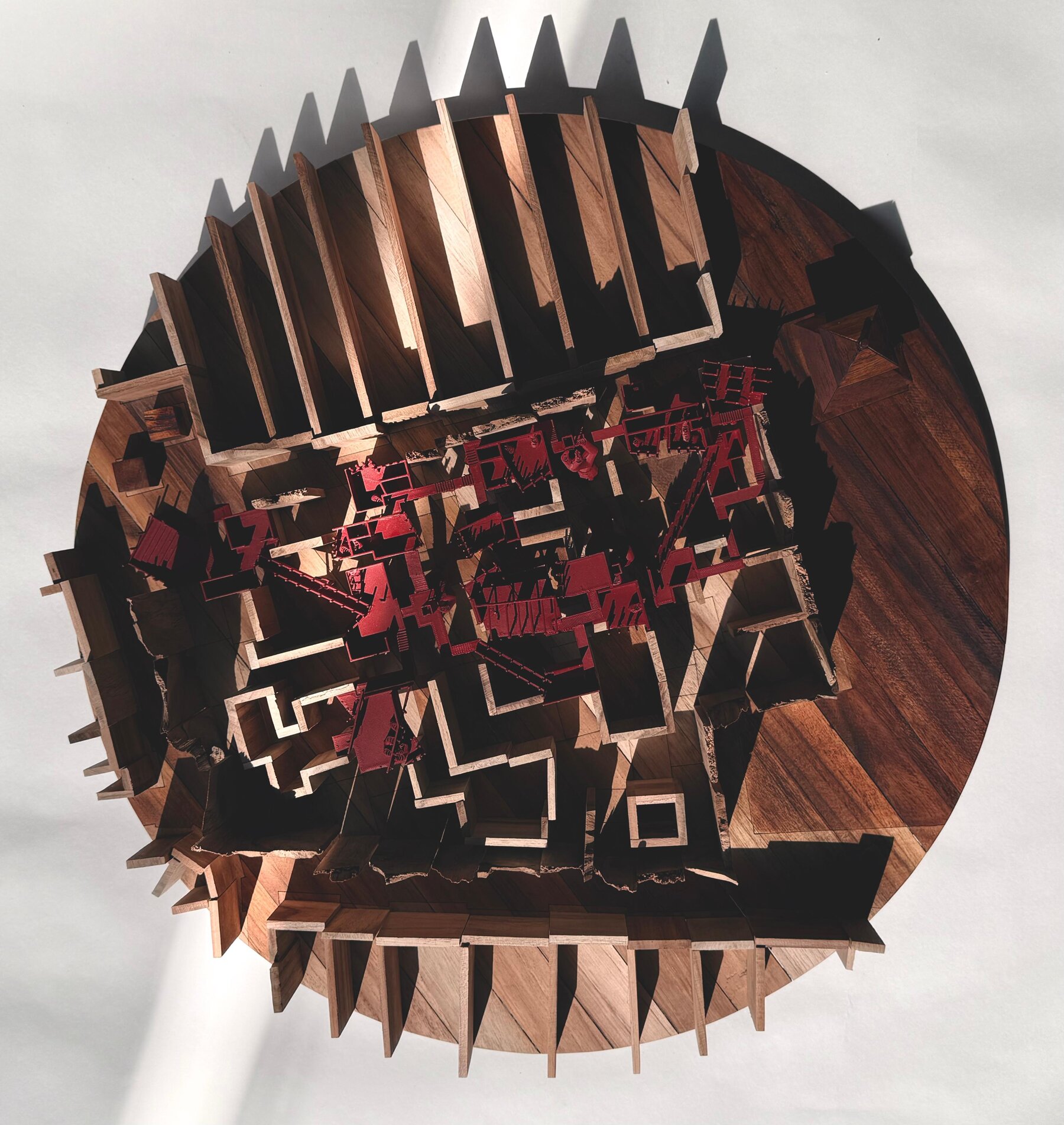
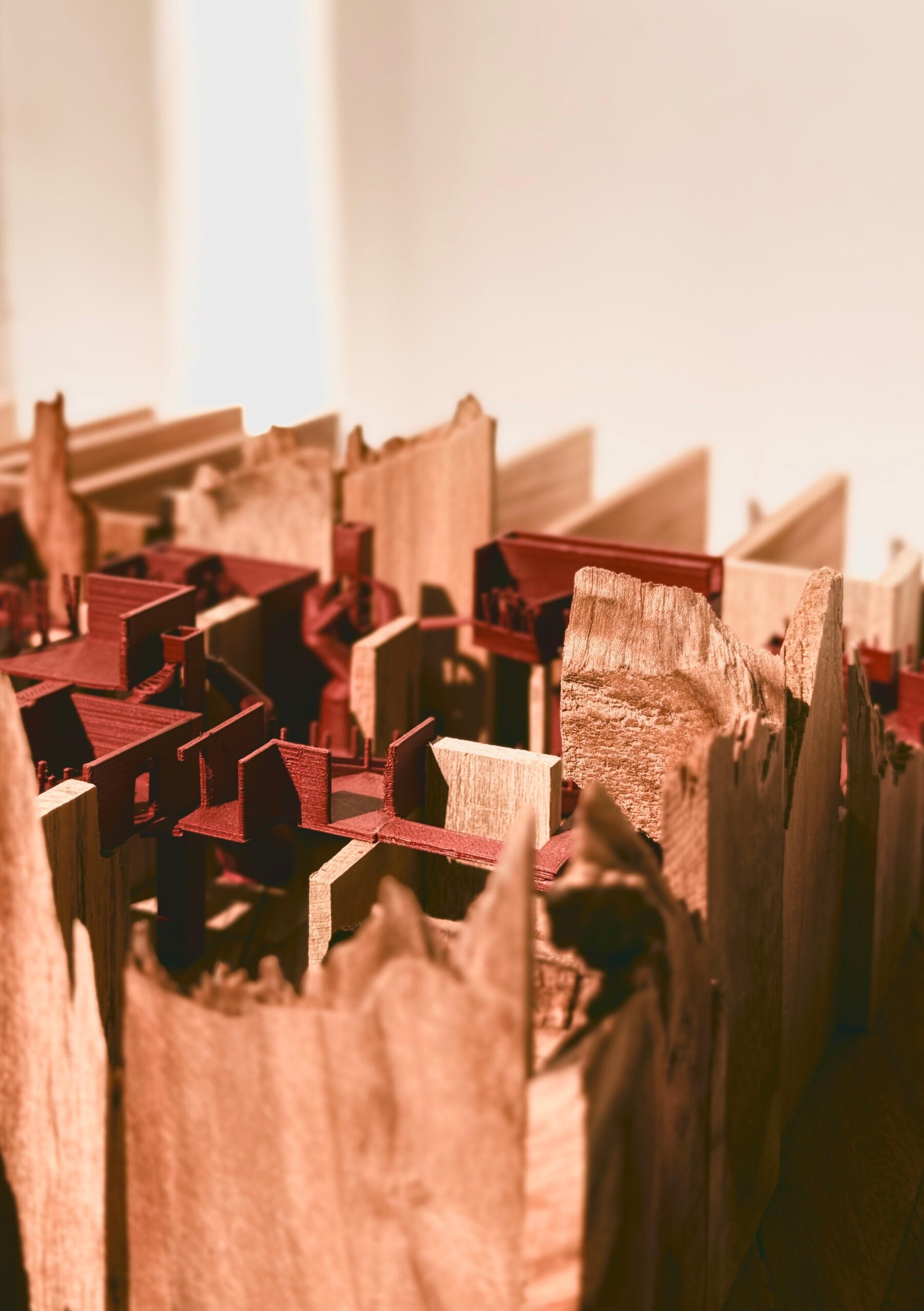
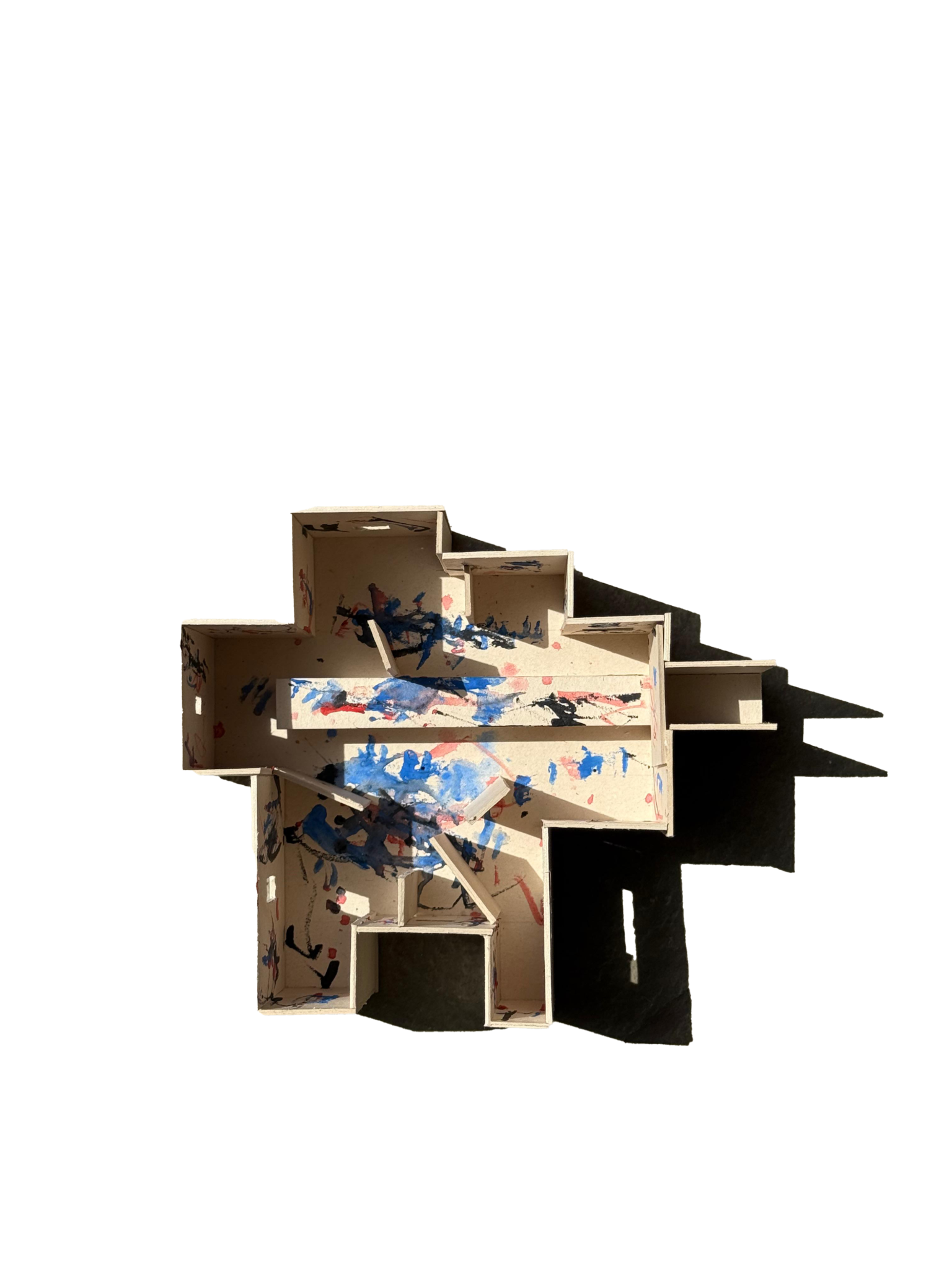
A plan view of the 200 scale model. The model is a 3d exploration of representation, with abstract qualities layered on interpreted reality. The model is made with a
combination of natural and artificial materials, with most of the base being made of Teak wood and the project itself being sculpted in the mechanisms of 3D printing.
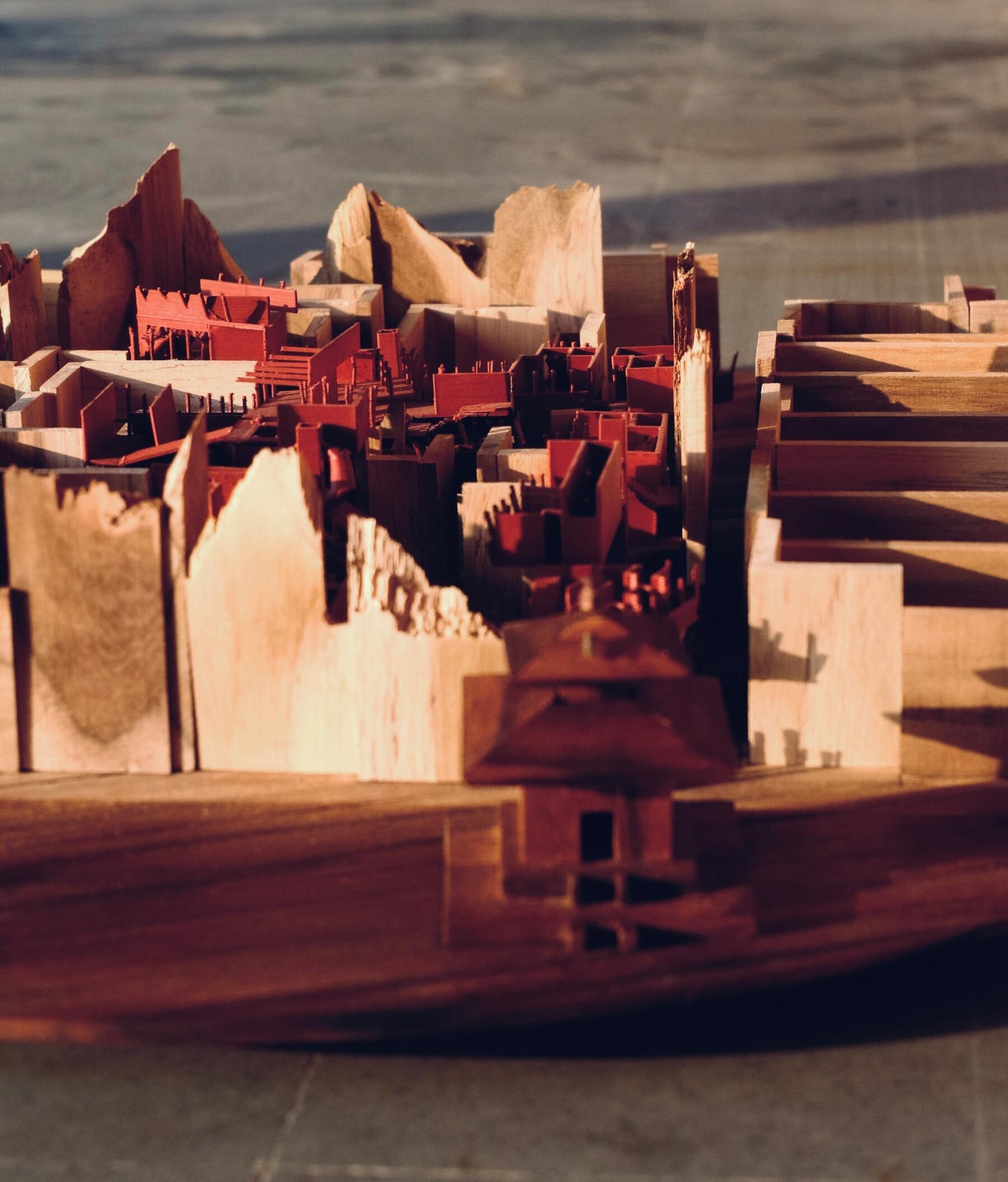
Partial views of the model, representing the fragmented and incomplete nature of the project.
The questioning of one’s own existence, with arguments of relevancy and the ability to affect change, is an intrinsic characteristic of the amalgamative entity categorized as “youth”.
This questioning and its eventual, non-responsive echo catalyse a majority of “youthful” action.
As was the case in the Nepali valleys at the foothills of the Himalayas, this action is often informed by a subversive propensity.
Accepting these realities as a conceptual “site”, the proposal utilises a syntactic-algorithmic method to create a system of proliferation. The rhizobium-like algorithm is imbibed with deep consideration for its site, which includes intricacies of the built and the unbuilt.
Furthering this idea, fragments of the youth center are not borne out of singular architectural action. They are part of a larger collective agency, with the eventuality being that each space in the system is designed through participatory action. This generates a language of architectural and spatial exploration which constantly adapts in time. Furthermore, spaces of the youth center are not built together at a singular point in time. Rather, they follow a system of cause and effect which is rooted in the availability of space in the site. This leads to a more cyclical reading of unfolding, meaning that each space is built at a different point in time. However, such a system would descend into chaos if not for a governing syntax. In this case, the syntax is not a mere set of rules. It is a living entity of culture and socio-political history, which is the Newari craft. Elements of Nepali architecture, which include a specific variety of brackets, columns, beams, windows and the roof, maintain cohesivity throughout the system. With chance folded gently into its logic, the project realizes an eventuality of a youth non-center- a place where the idea of a singular, centralised entity dissolves into an ecosystem of infinitely smaller, non-centric parts - each one contributing to a whole that is anchored in the past, looking to the future, always unfinished, and always questioning its own existence.
The design approach primarily revolved around discovering and developing new methods of Seeing. These ways of Seeing ultimately birthed new pathways of understanding leading to unprecedented observations. Going into the specifics of my project, it helped me understand the process of developing a syntax or “code”, which was employed to capture an architectural system evolving and reforming in time. This aided in an admittedly unpredictable but exhilarating design process, which went from looking at the system as a purposeful “whole” to an ecosystem of infinitely smaller parts.
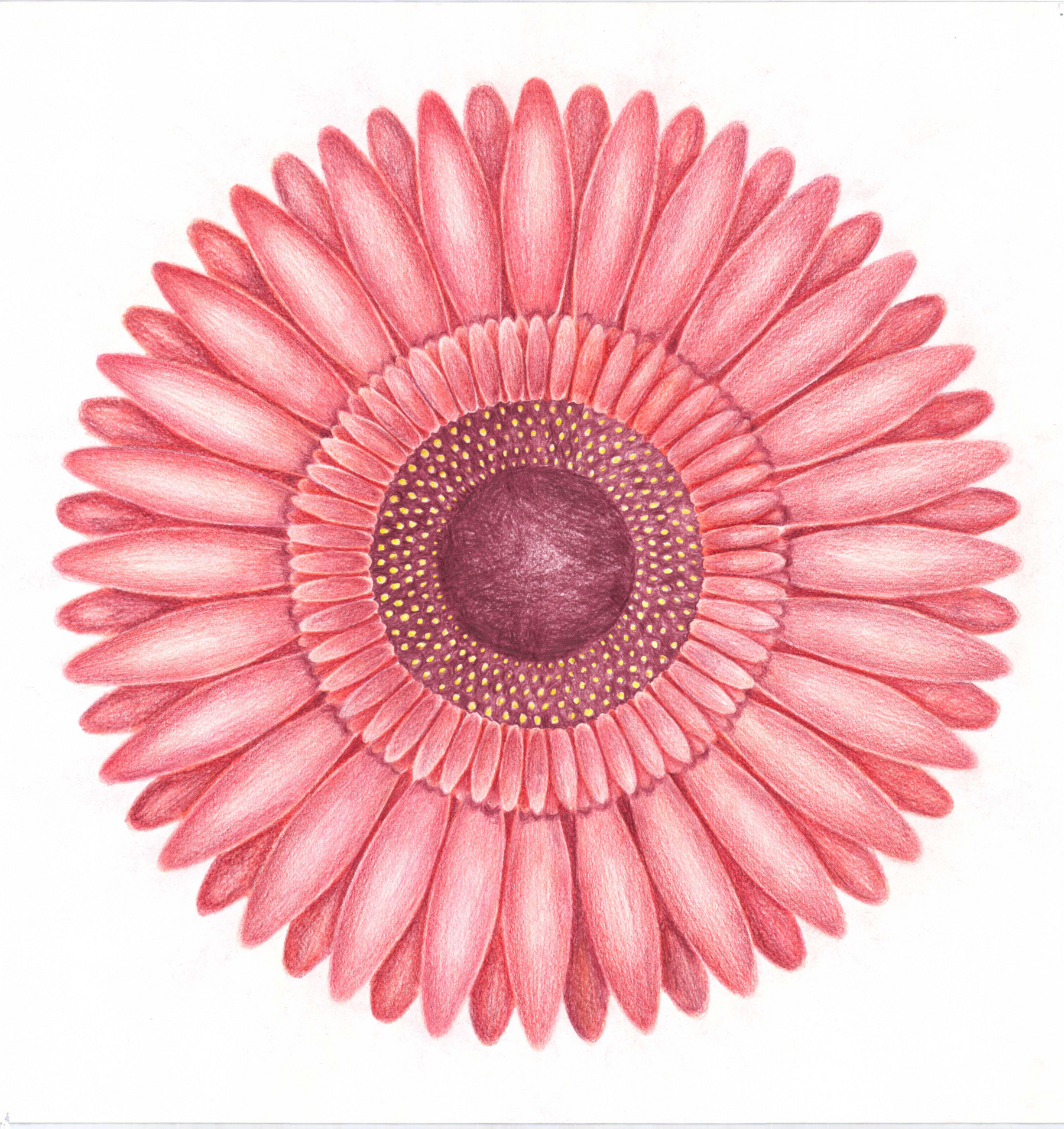
The germination of the process. Drawing large scale illustrations of a chosen flower (Gerbera Daisy) helped introduce the kind of thinking and ideas that would govern the eventual design process.
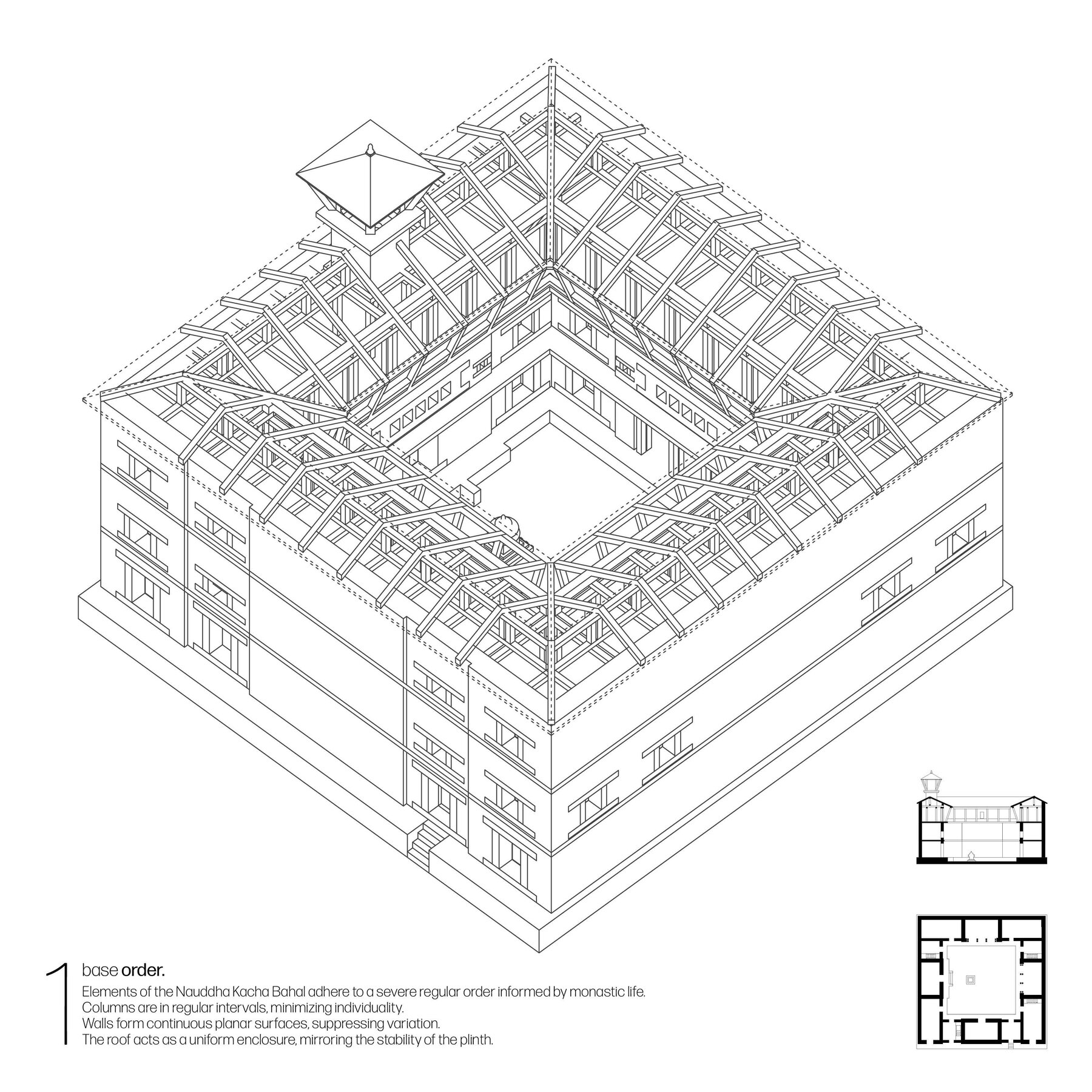
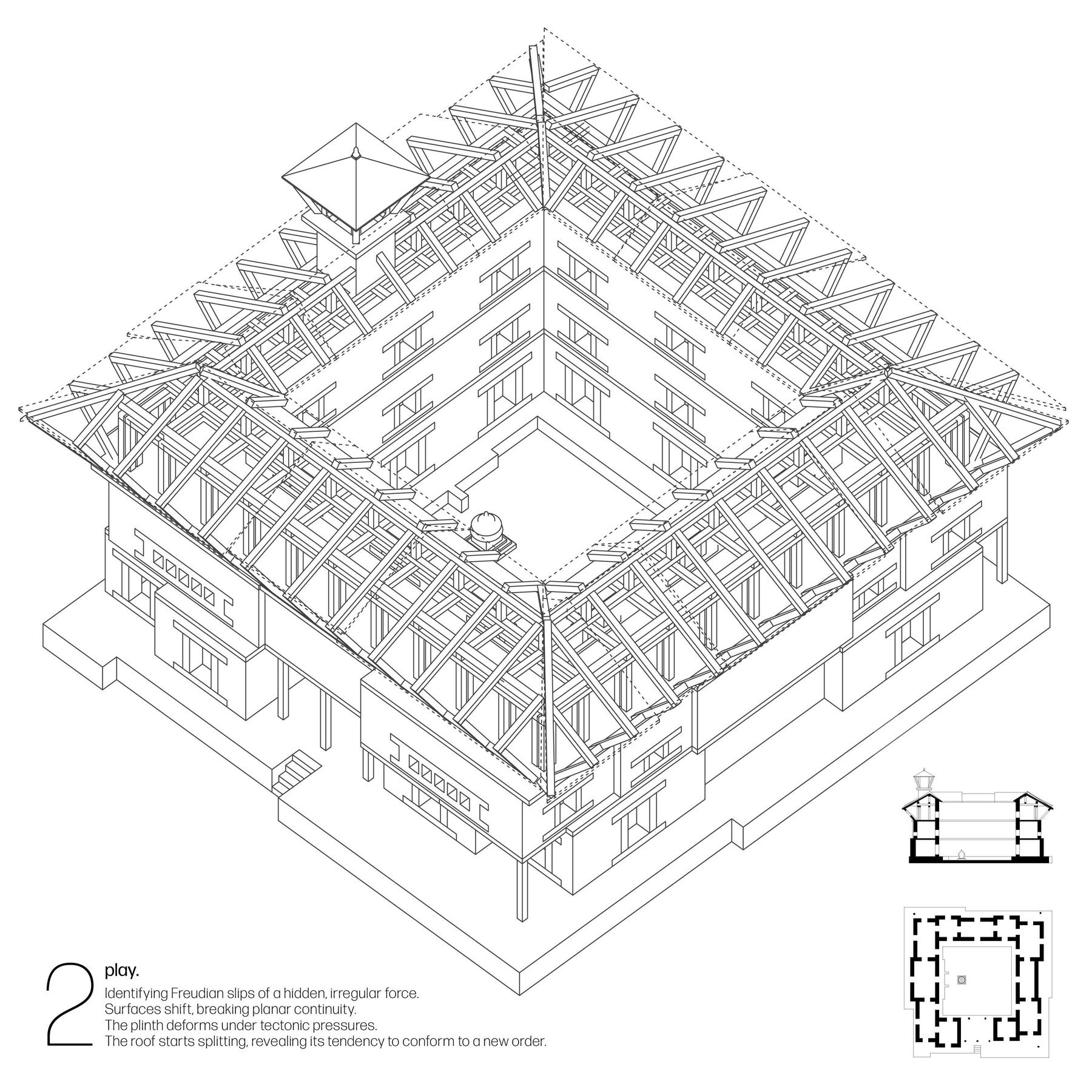
The germination of the design. Through the exercise named as “Frames of infinite subversion”, a deliberate violent action resulted in the birth of the concept,
which later informed my project itself. The Gestalt of these four sequential “frames” provided formal elements and principles to support the internal logic of the eventual project and also mediated for a better understanding of the core principles that govern the syntax of architecture.
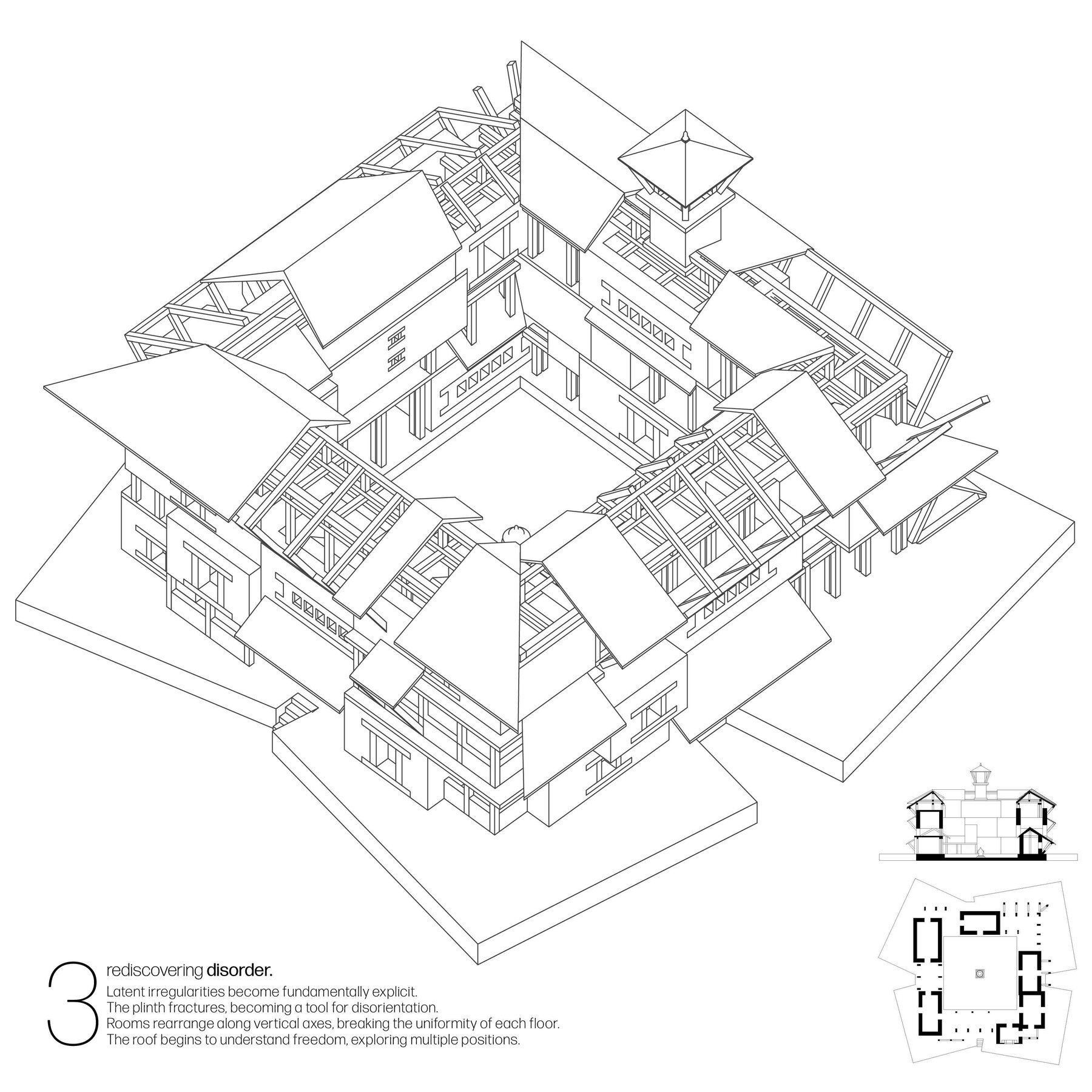
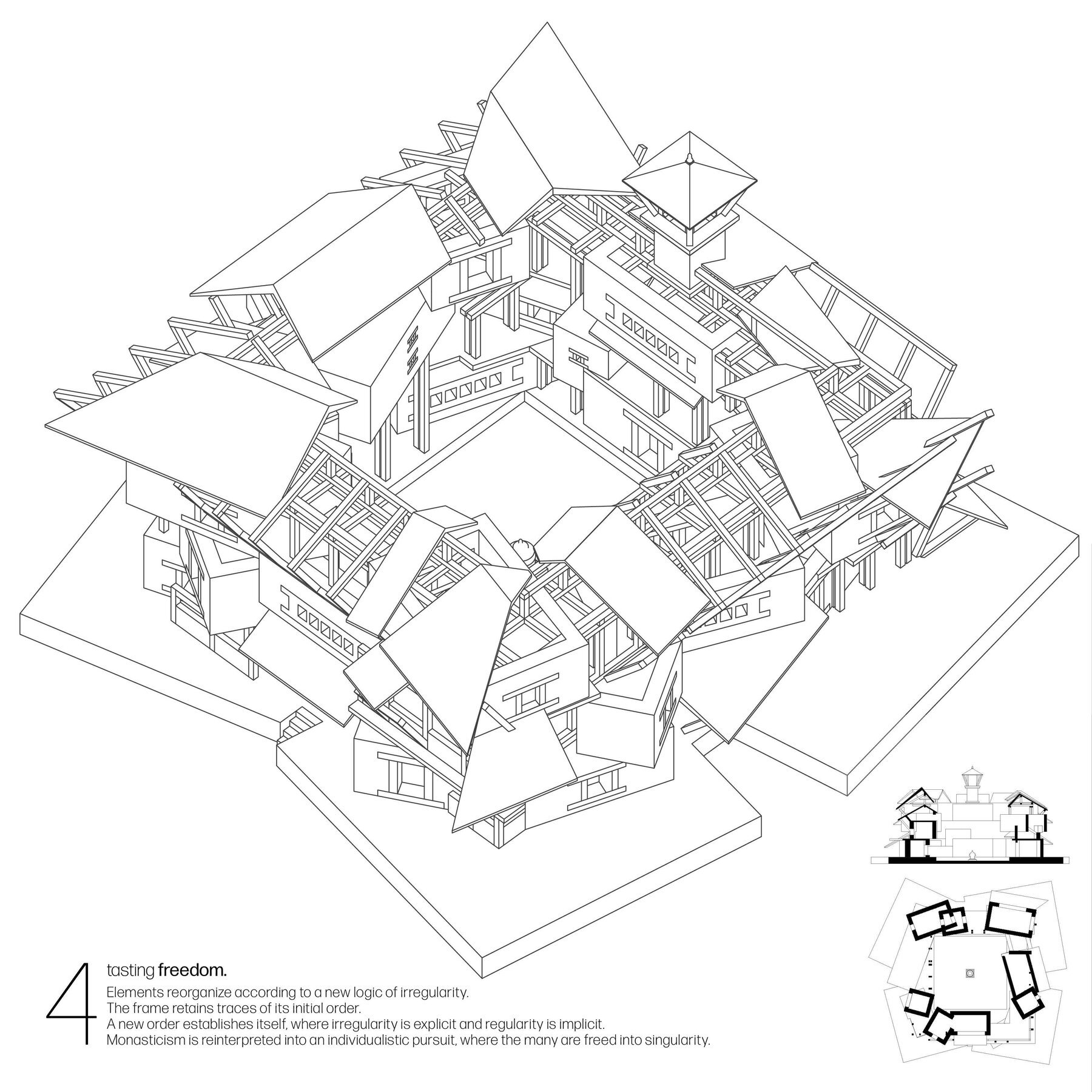
An initial process model. Viewed as a purely notional model, it attempted to capture an abstract quality of agency, inspired by the protests in Nepal. This primal urge of fierceness was balanced with an aspect of funnelling subversive energies into a more wholesome direction, as would suit the programmatic propensities of a Youth Centre.
An initial collage attempting to merge the elements of the final frame of the “Frames of Infinite Subversion” with the chosen site, which was a group of buildings situated next
to the Patan Durbar Square. The collage additionally helped to form connections between the site, program and the concept, furthering formal exploration.
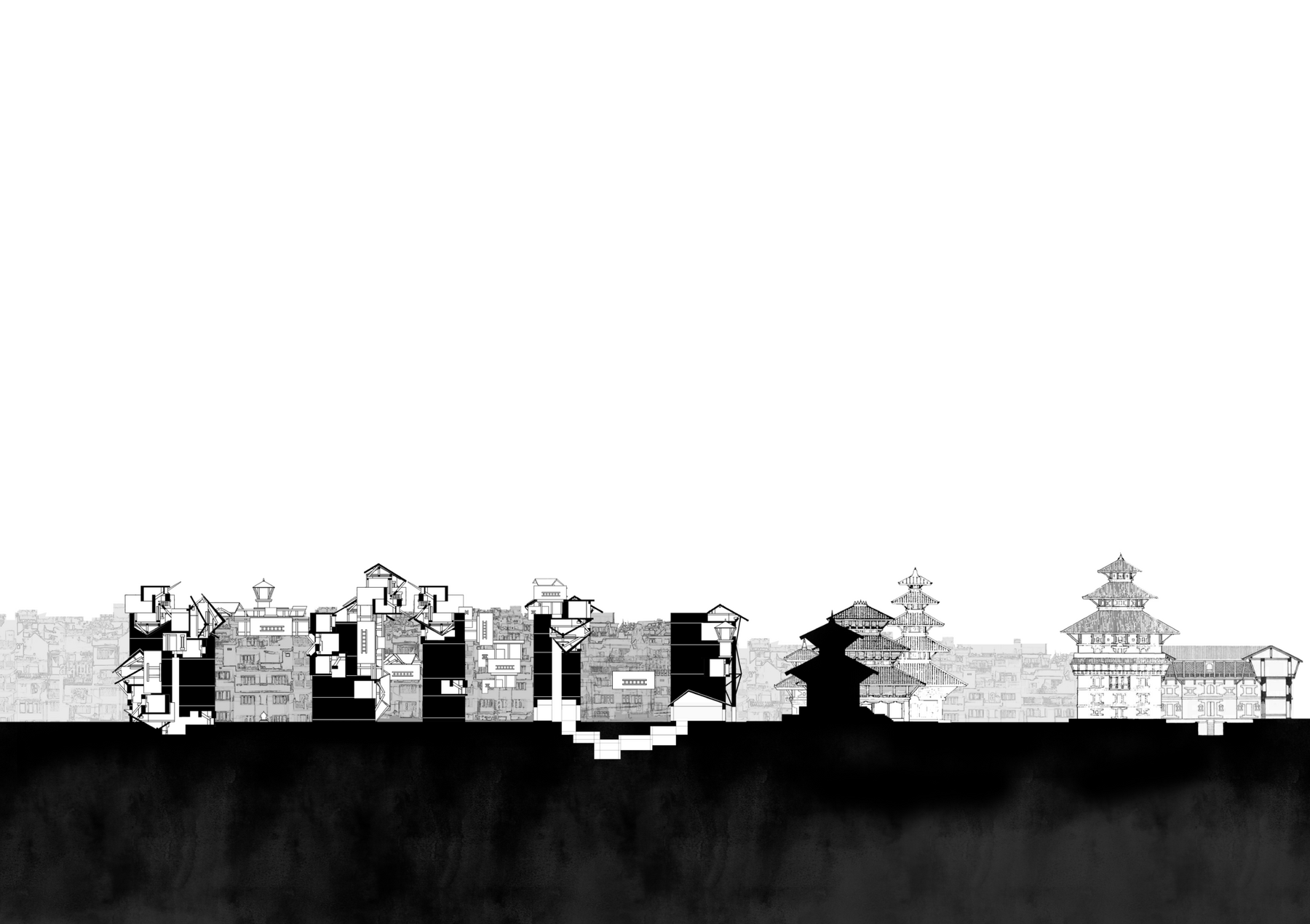
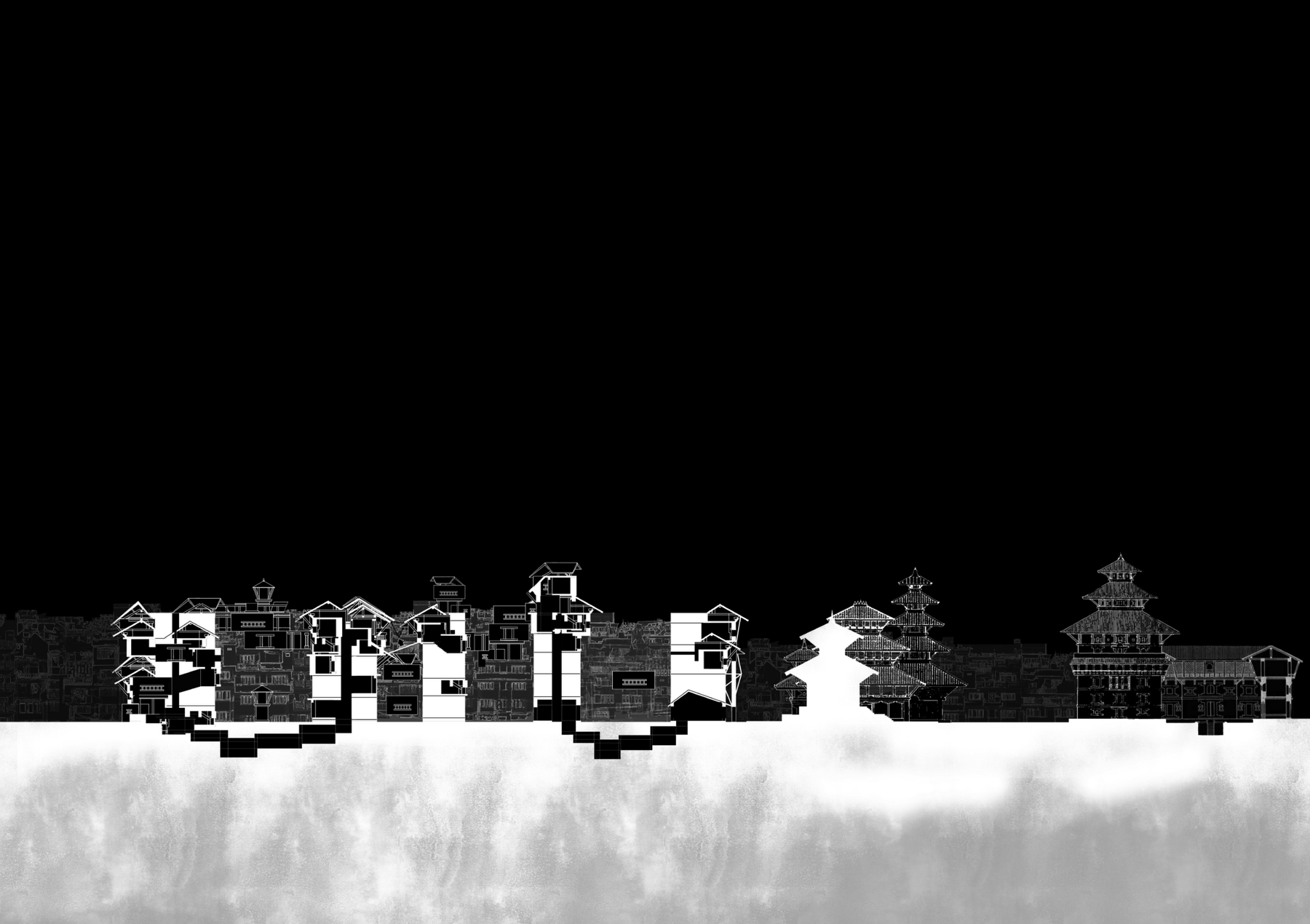
Sectional collages establishing the sectional nature of the project. Through these collages, there was a subconscious attraction towards iterating the design strategies through the sections rather than the plans.
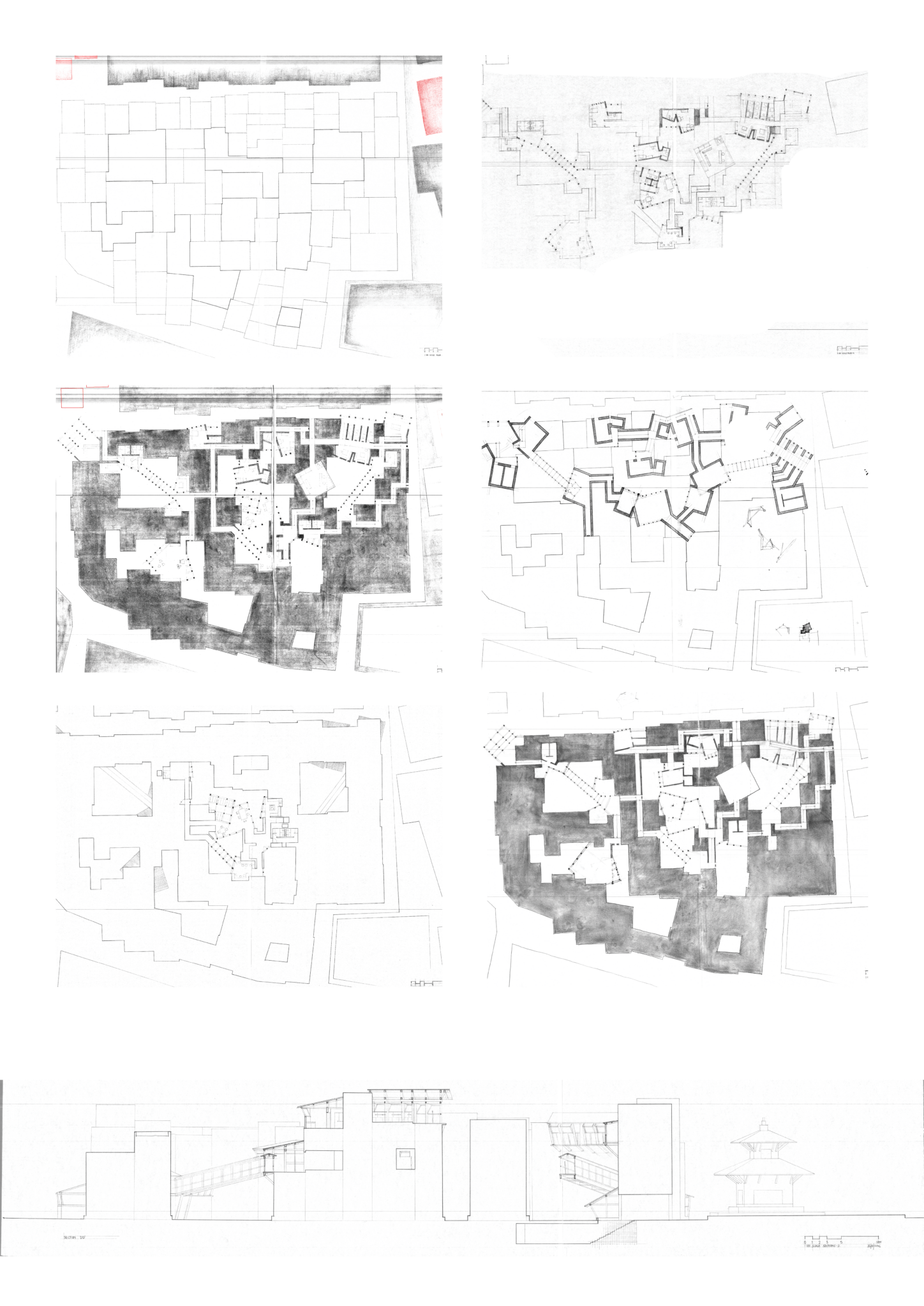
Iterations on tracing. The physical act of iterating on a tracing undoubtedly contributed to the eventual outcome that manifested itself as the “design”. Through iterations of form, space and order, the eventual system was materialized, with a conscious effort to maintain clarity of intention and concept.
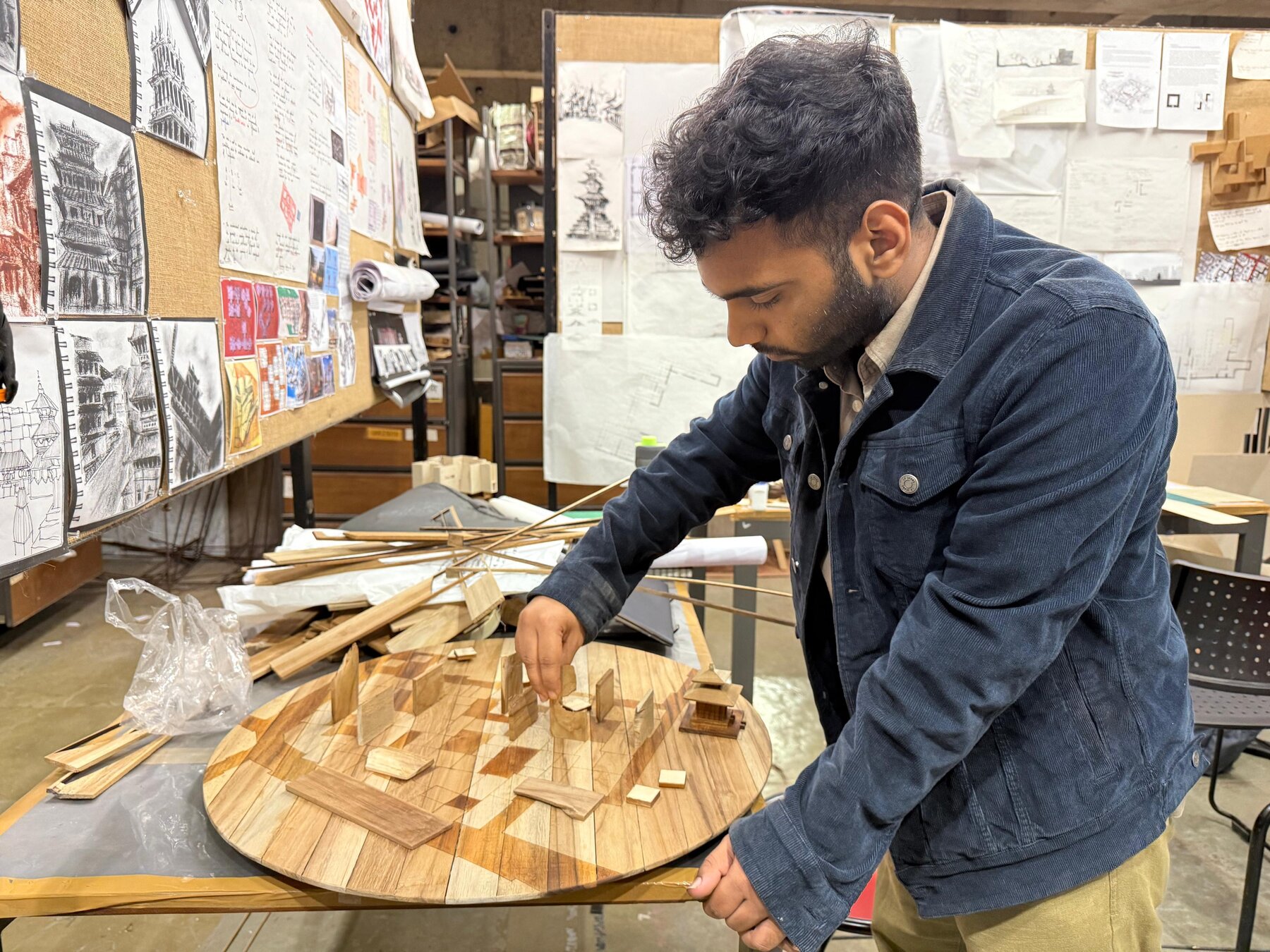
Awards
- CEPT Excellence Awards CEPT Excellence Award Monsoon 2025 CEPT University
- aaron abraham thomas