LIMINAL WATERS — People. Pisces. Plants

- nandhini menon
About the project
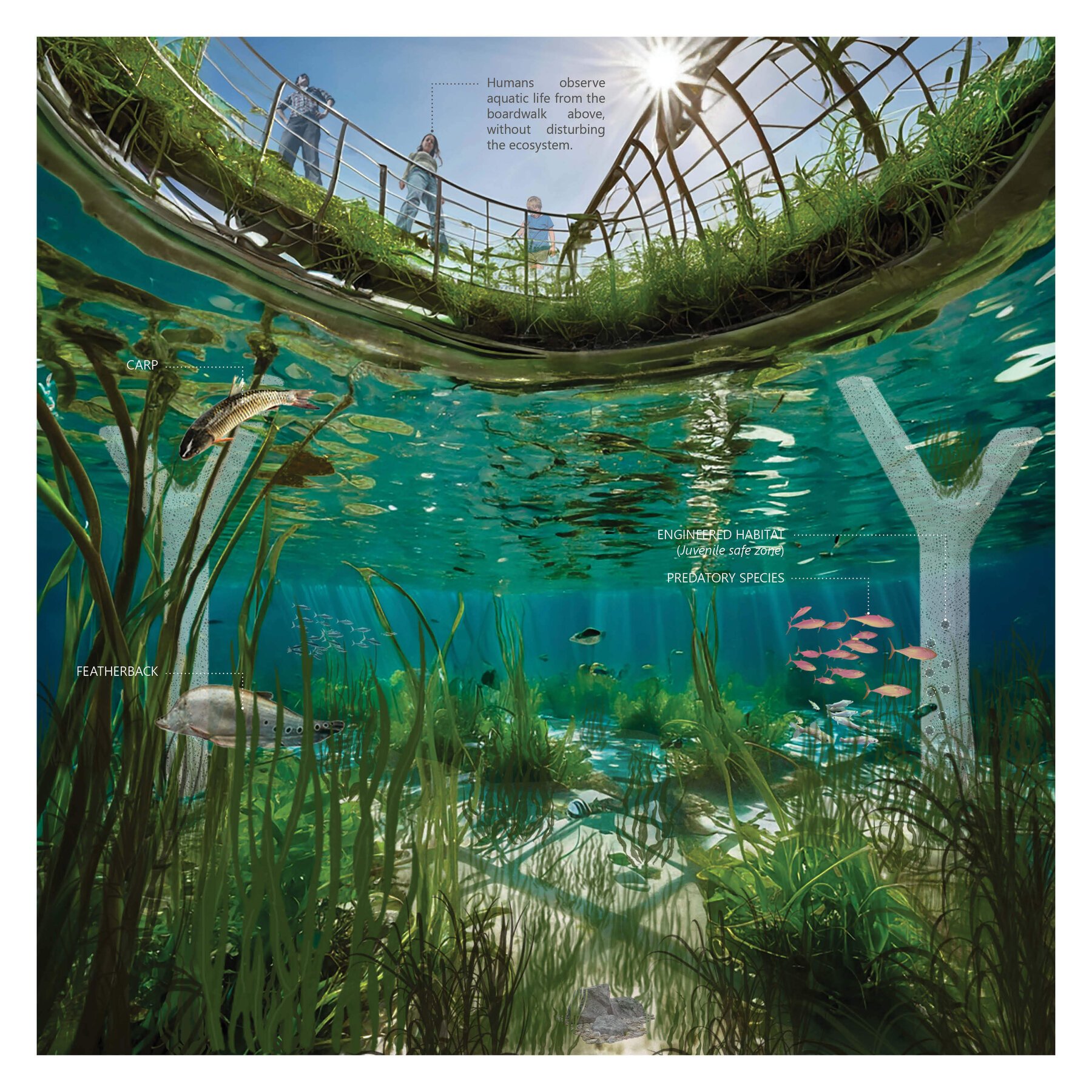
This project envisions an ecologically immersive interface between humans and the wetland at Goverdhan Sagar Lake, responding to habitat degradation and declining fish populations. Anchored in the idea of fish as primary stakeholders, the design reimagines the lake edge through bioengineered habitats, rewilded thresholds, and movement systems inspired by aquatic behavior. Elevated boardwalks, forested trails, and seasonal micropools choreograph human experience while protecting sensitive ecological zones. Engineered fish habitats—designed to biodegrade and regenerate over time—support breeding, vegetation growth, and long-term resilience. Educational decks and urban-edge interventions bridge everyday life with ecological awareness. Together, these elements create a responsive, adaptive landscape that celebrates seasonality, foregrounds coexistence, and enables humans, plants, and pisces to thrive within the lake’s evolving liminal environment.
Approach
The project employs an iterative, ecology-led design approach, positioning fish and wetland processes as the primary drivers of spatial organization. Movement systems, trails, and boardwalks are choreographed based on fish behaviour, habitat preferences, and seasonal hydrology, ensuring human access is guided rather than imposed. Each design iteration progressively refined circulation, zoning, materiality, and planting strategies through continuous calibration between ecological sensitivity and spatial experience. Arrival zones, forested trails, micropools, and elevated walkways were strategically placed to minimize disturbance while enhancing ecological function. Seasonal transformations, particularly post- and pre-monsoon shifts, were integral to design decisions, shaping adaptive landscapes rather than static edges. Through transects, habitat modules, and immersive trails, the approach foregrounds coexistence, allowing humans, habitats, and hydrological cycles to function together within the fragile threshold of the lake ecosystem.
Output
The project delivers a resilient, inclusive lakefront that balances ecological restoration with everyday public use. For the local community, it creates accessible yet sensitive spaces such as shaded seating plazas, forested trails, and information decks that encourage regular engagement without compromising lake health. Educational infrastructure, such as interpretive exhibits, immersive boardwalks, and habitat-viewing zones, builds awareness of aquatic ecology and fish biodiversity, fostering environmental stewardship. Strategically placed urban-edge interventions activate previously neglected buffers, strengthening social life and community belonging. Ecologically, bioengineered fish habitats and rewilded edges enhance breeding conditions, biodiversity, and long-term ecosystem stability. By directing human movement above and around sensitive zones, the project enables meaningful interaction while allowing the wetland below to regenerate, adapt seasonally, and support sustainable livelihoods linked to the lake.
- nandhini menon
Gallery
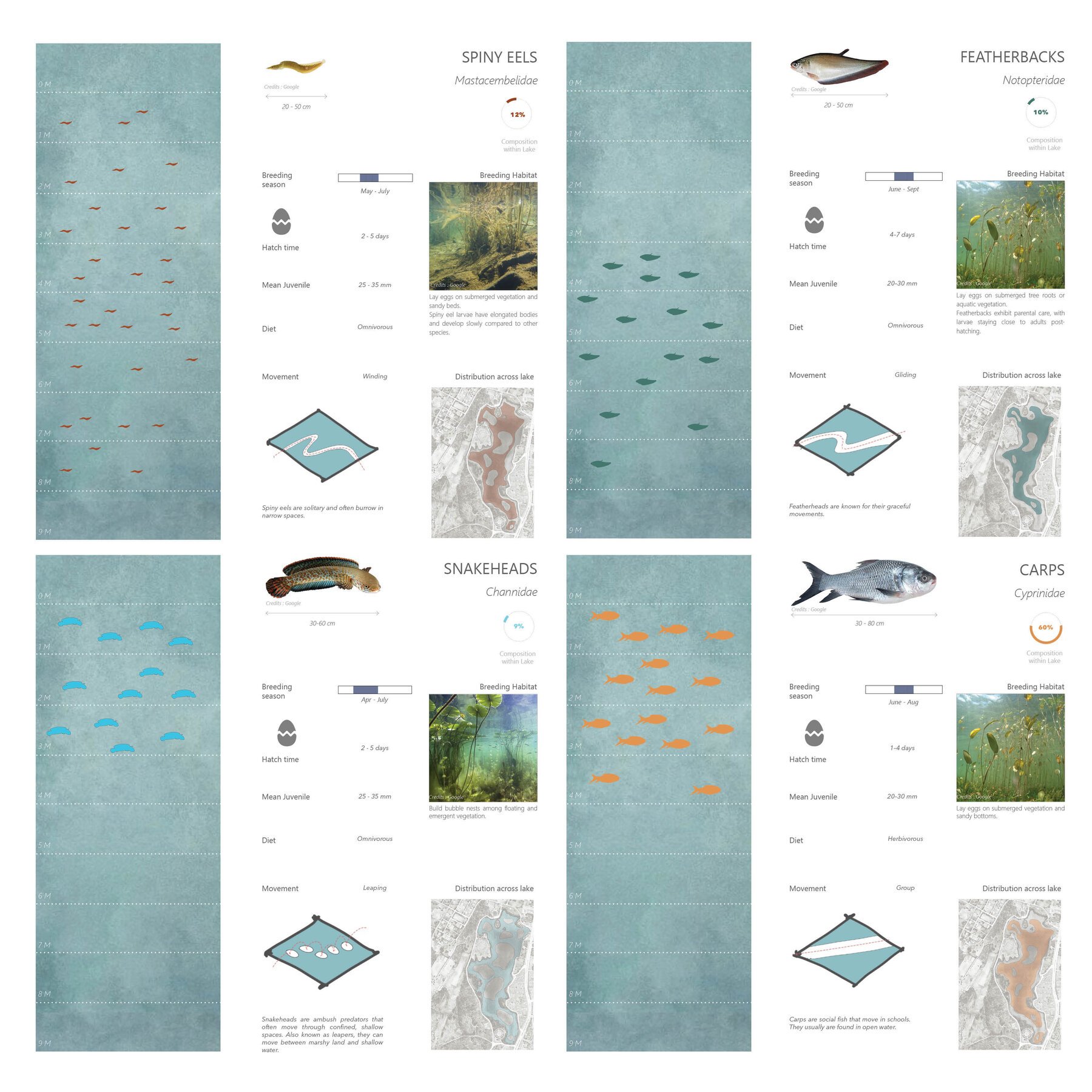
Initial study of the fish types in Goverdhan Sagar lake
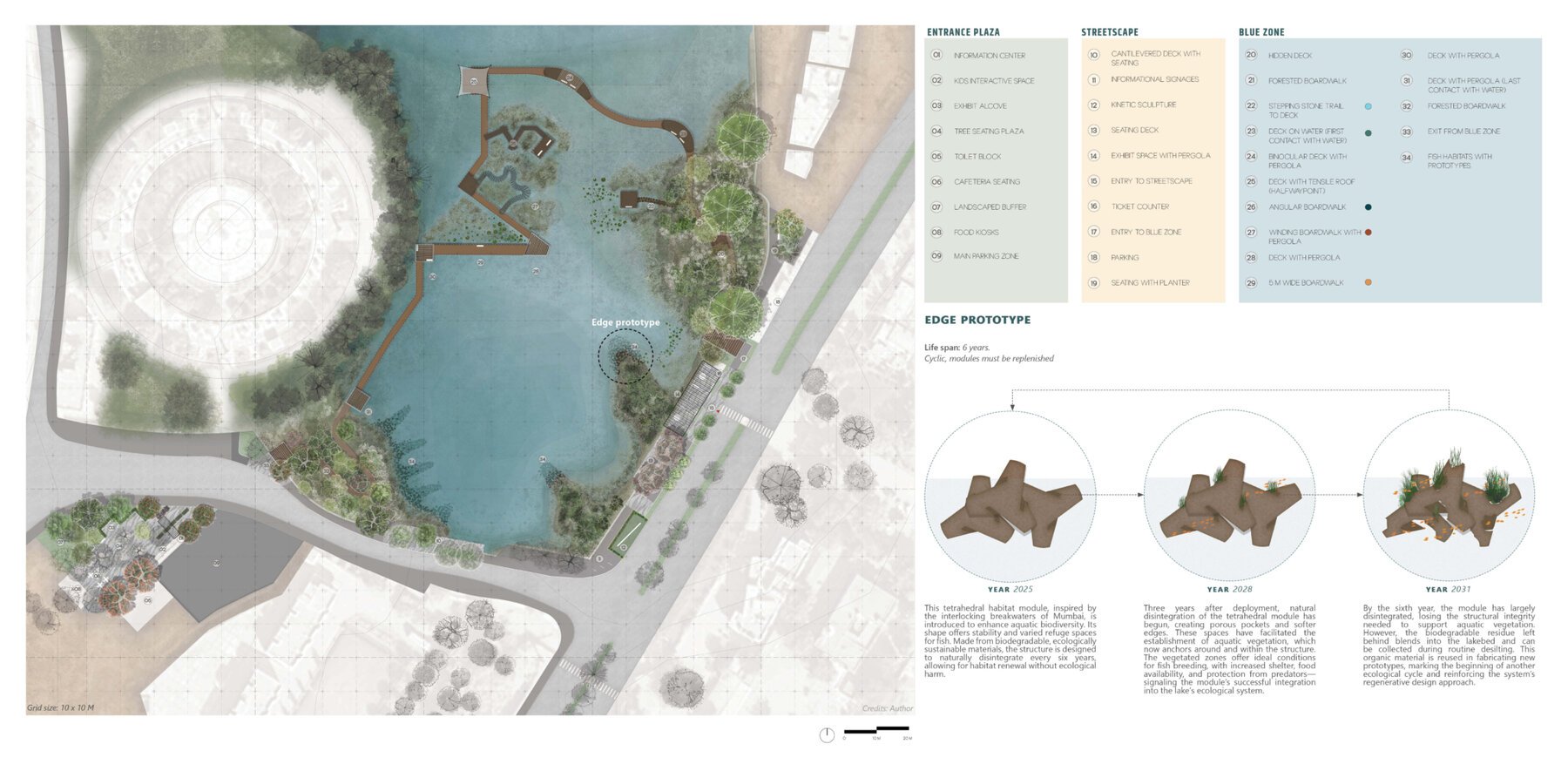
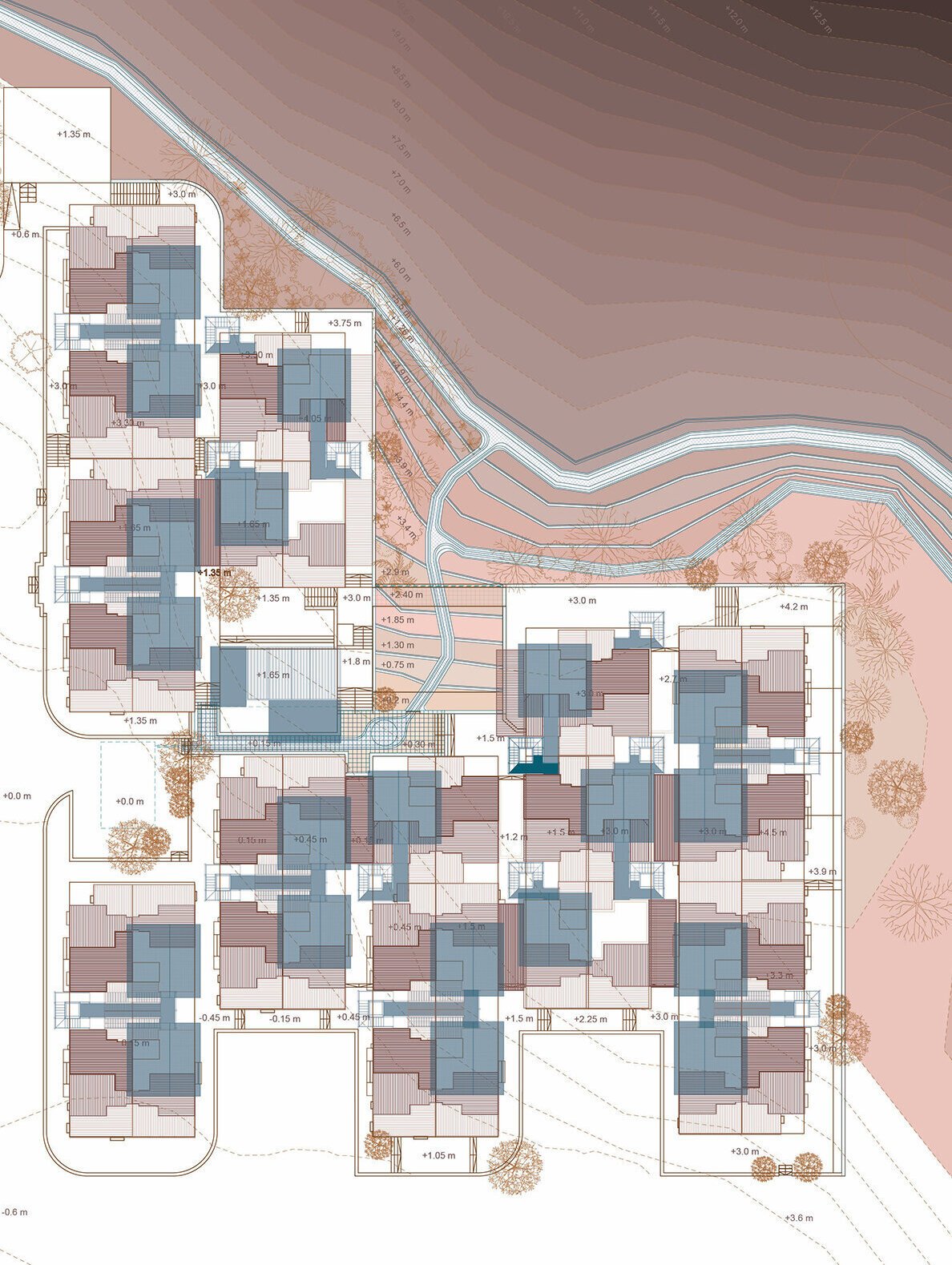
Design Plan and Edge prototype evolution
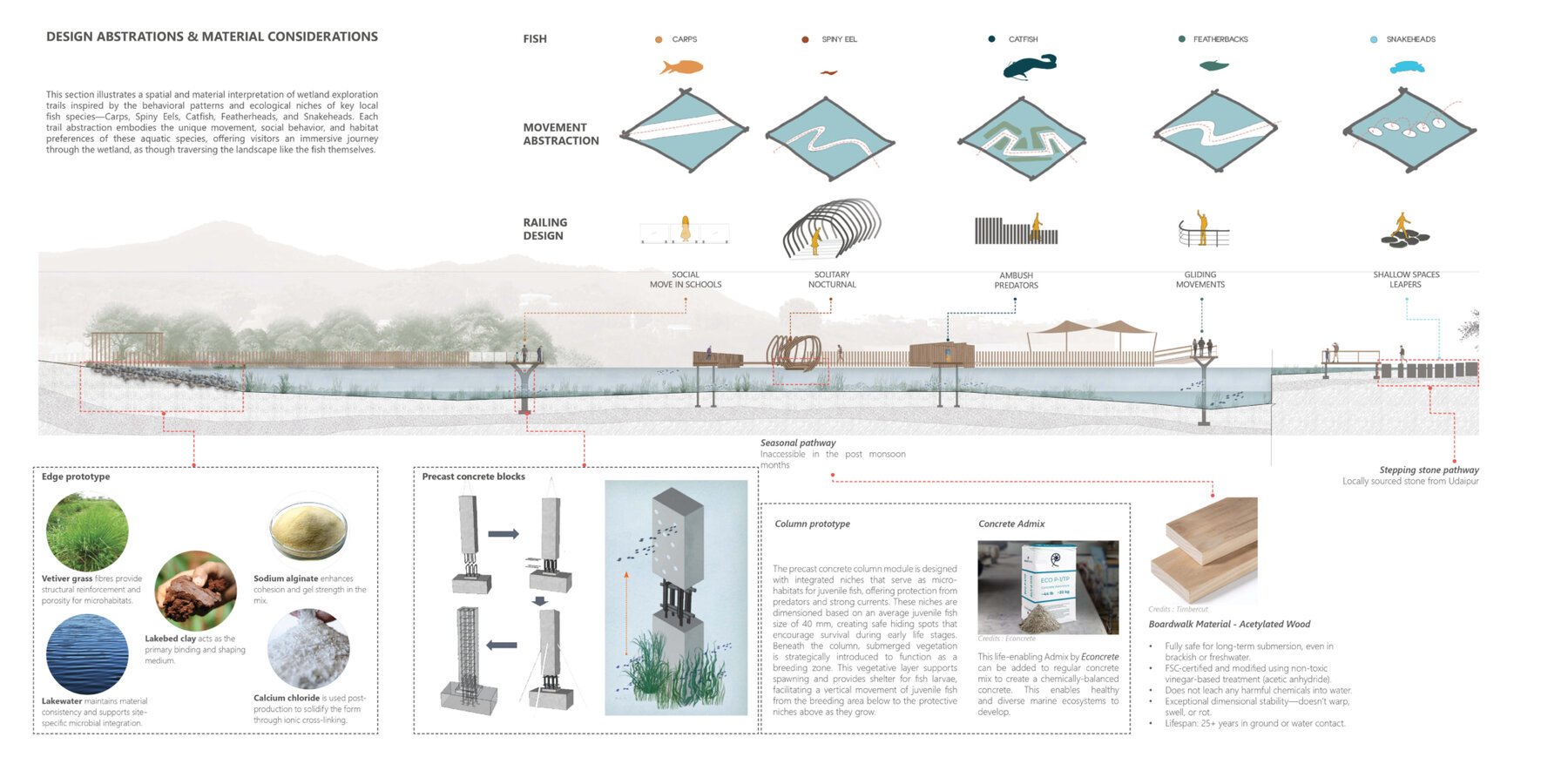
Design Abstraction and material consideration
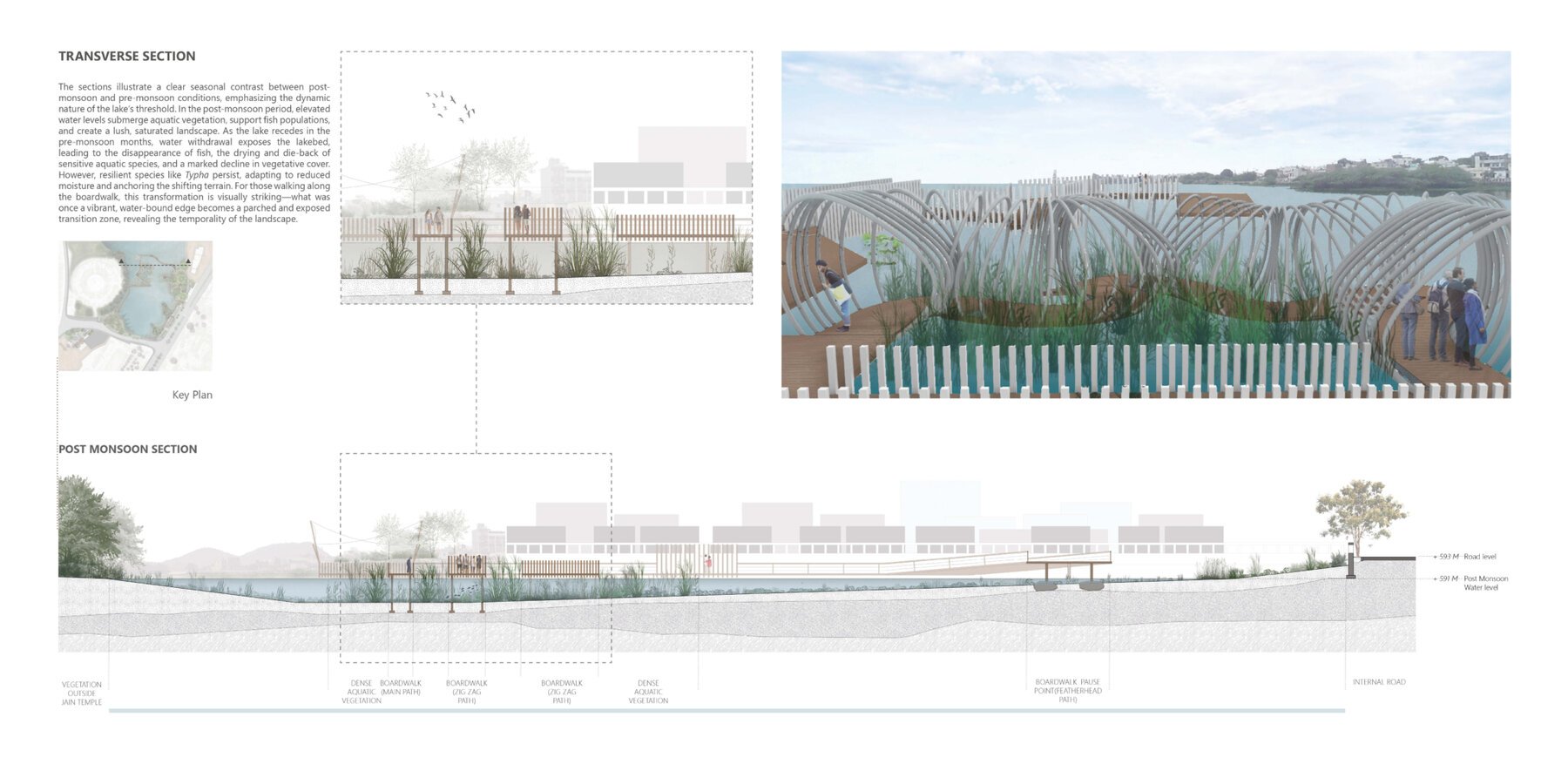
Section and View