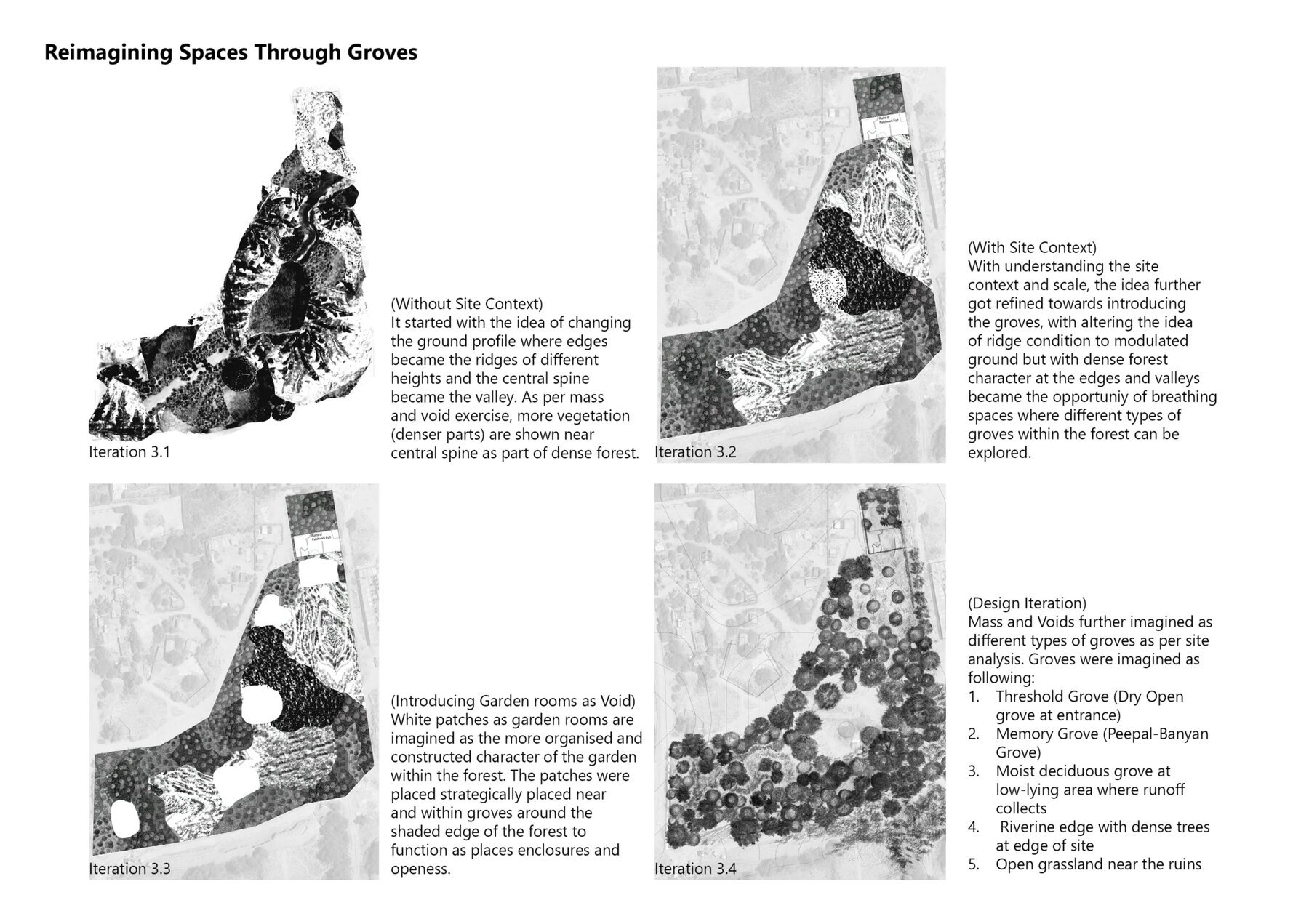
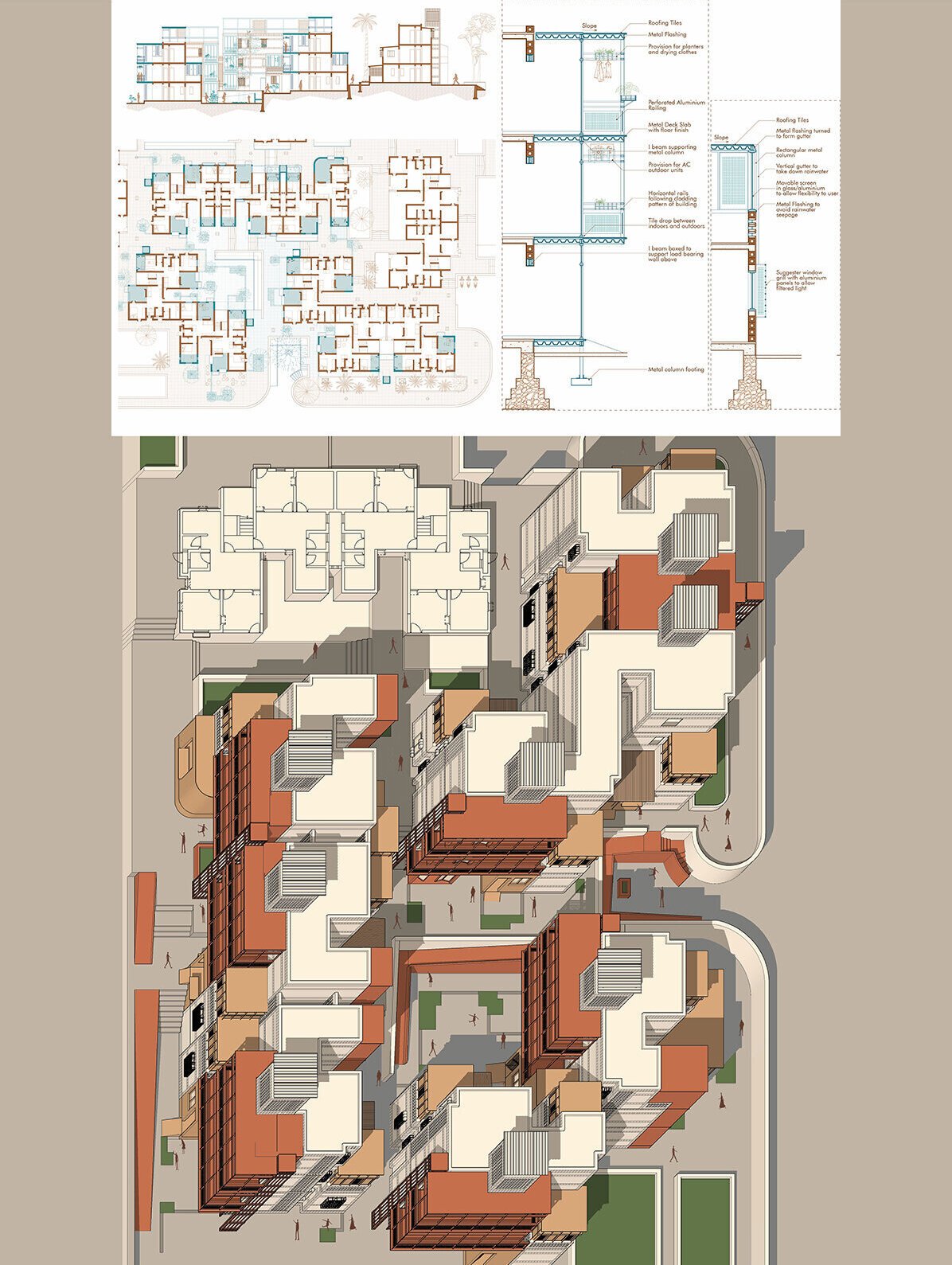
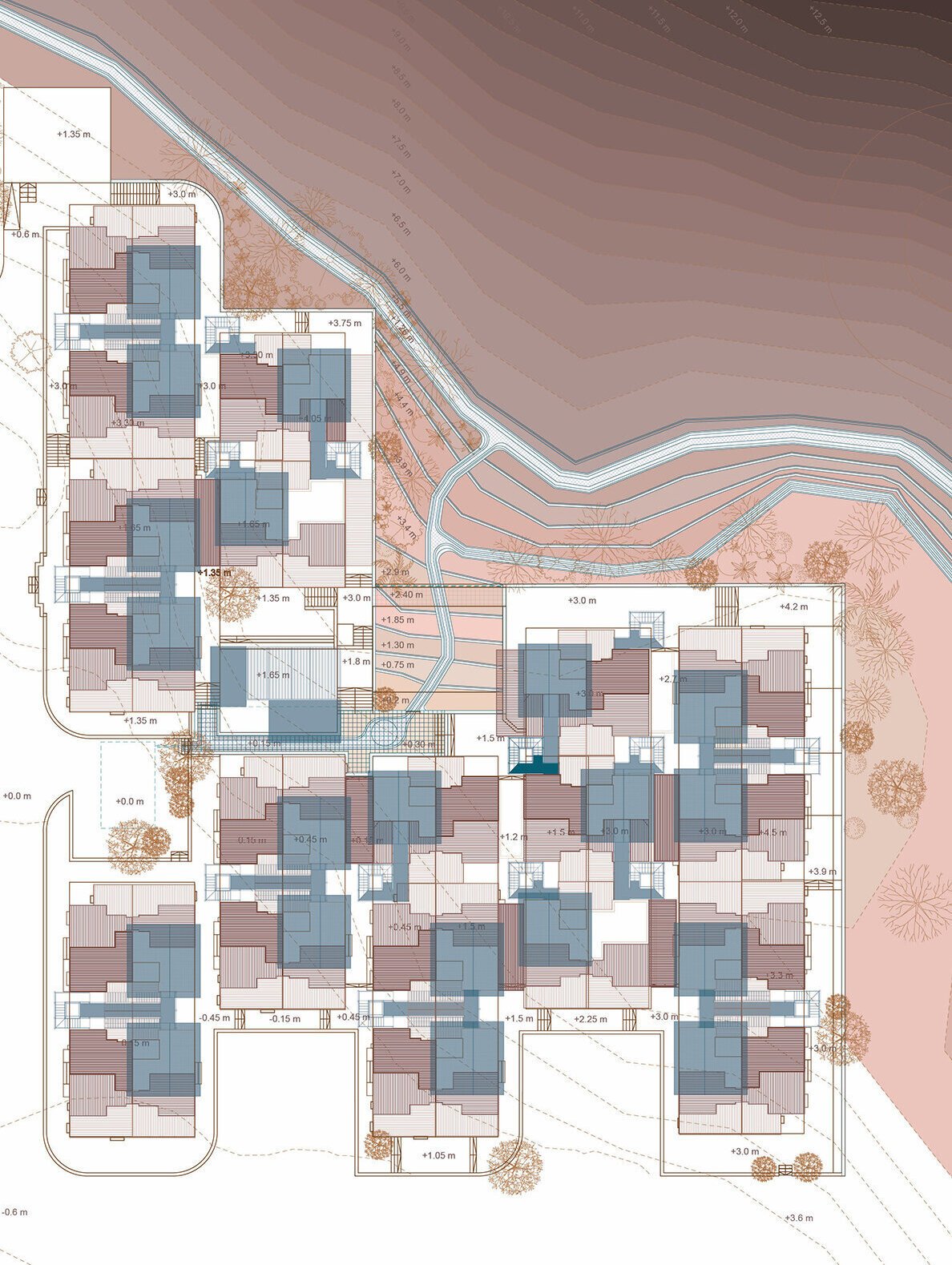
Reimagining Spaces through Groves

- aishwarya sunil patil
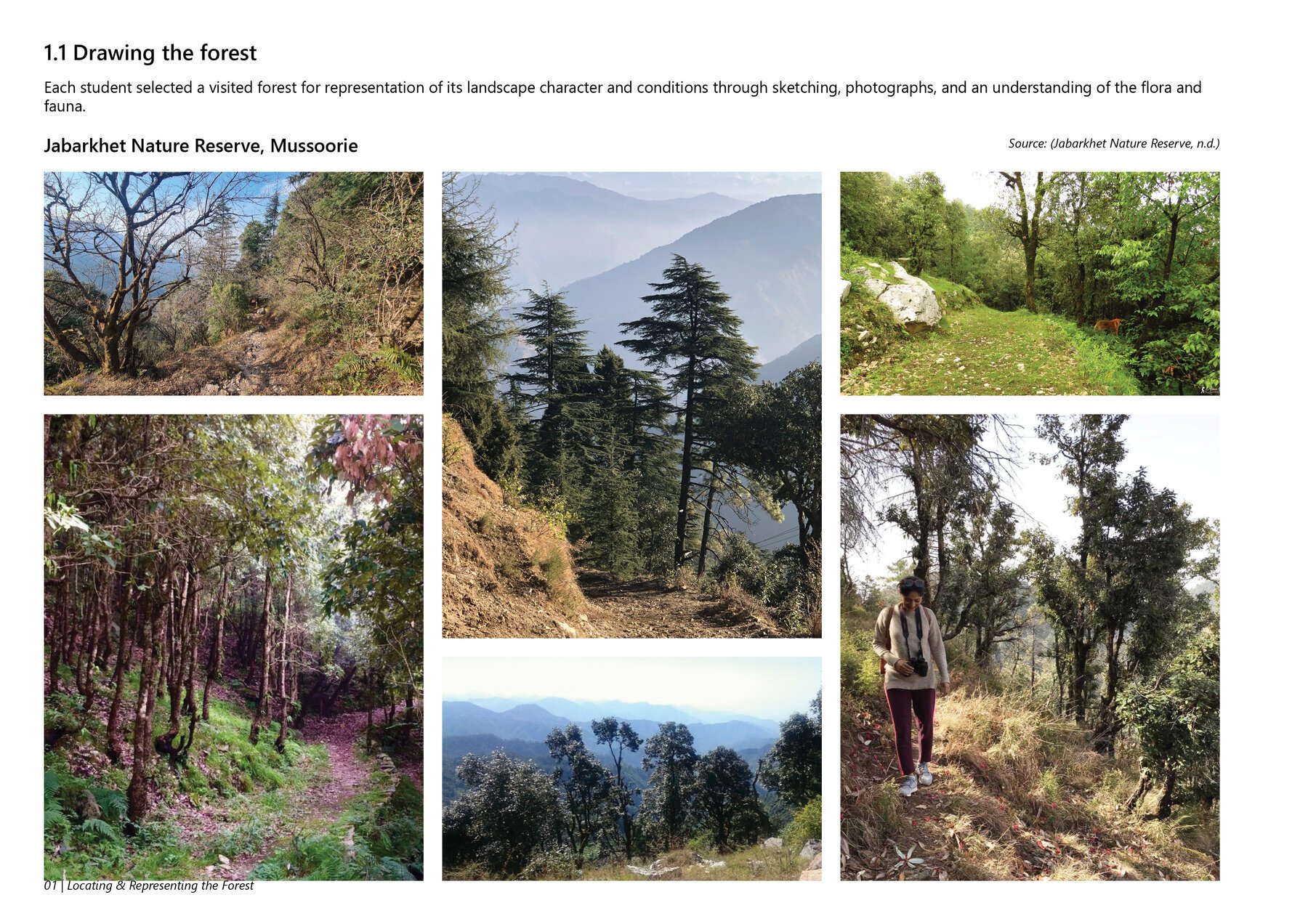
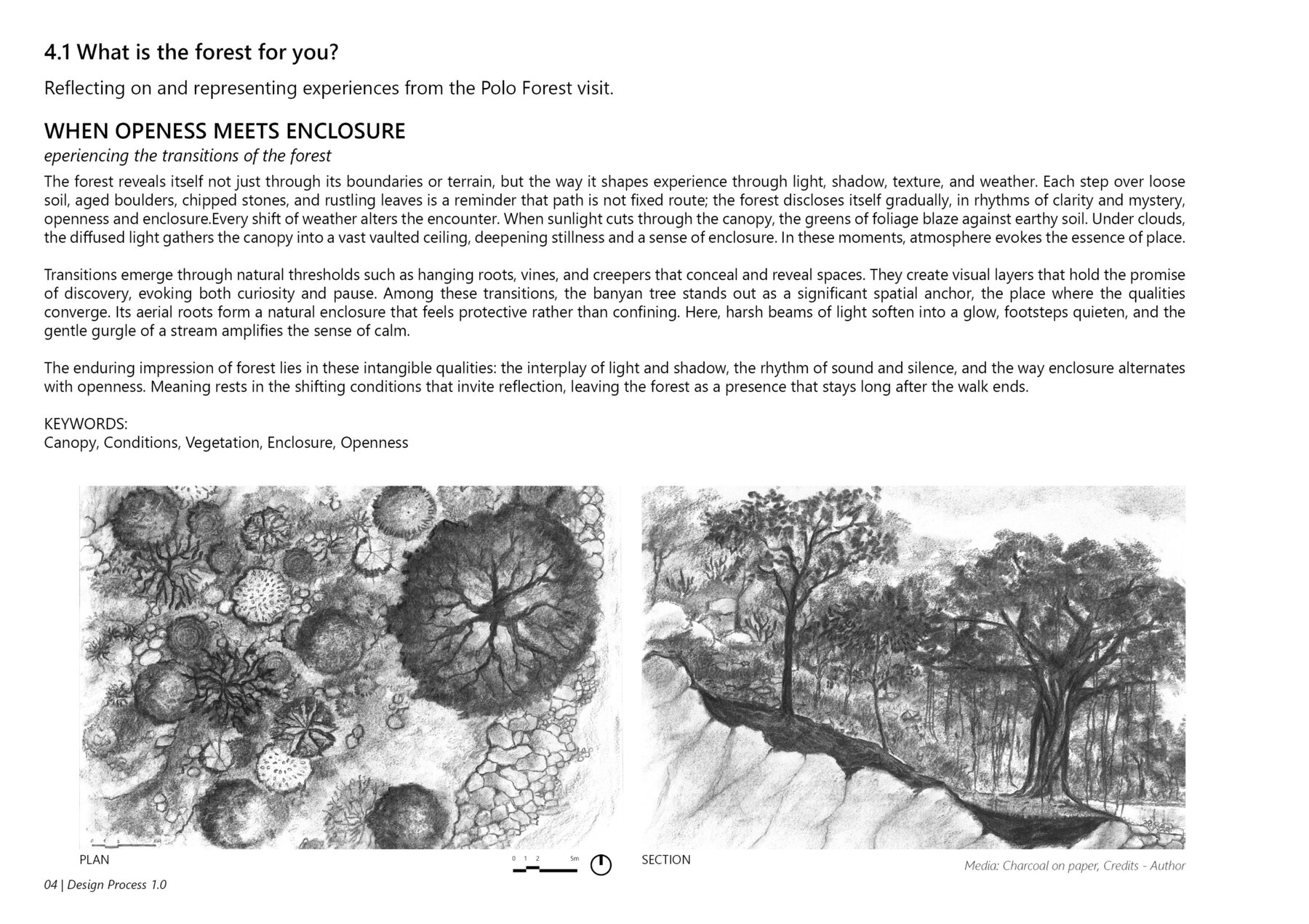
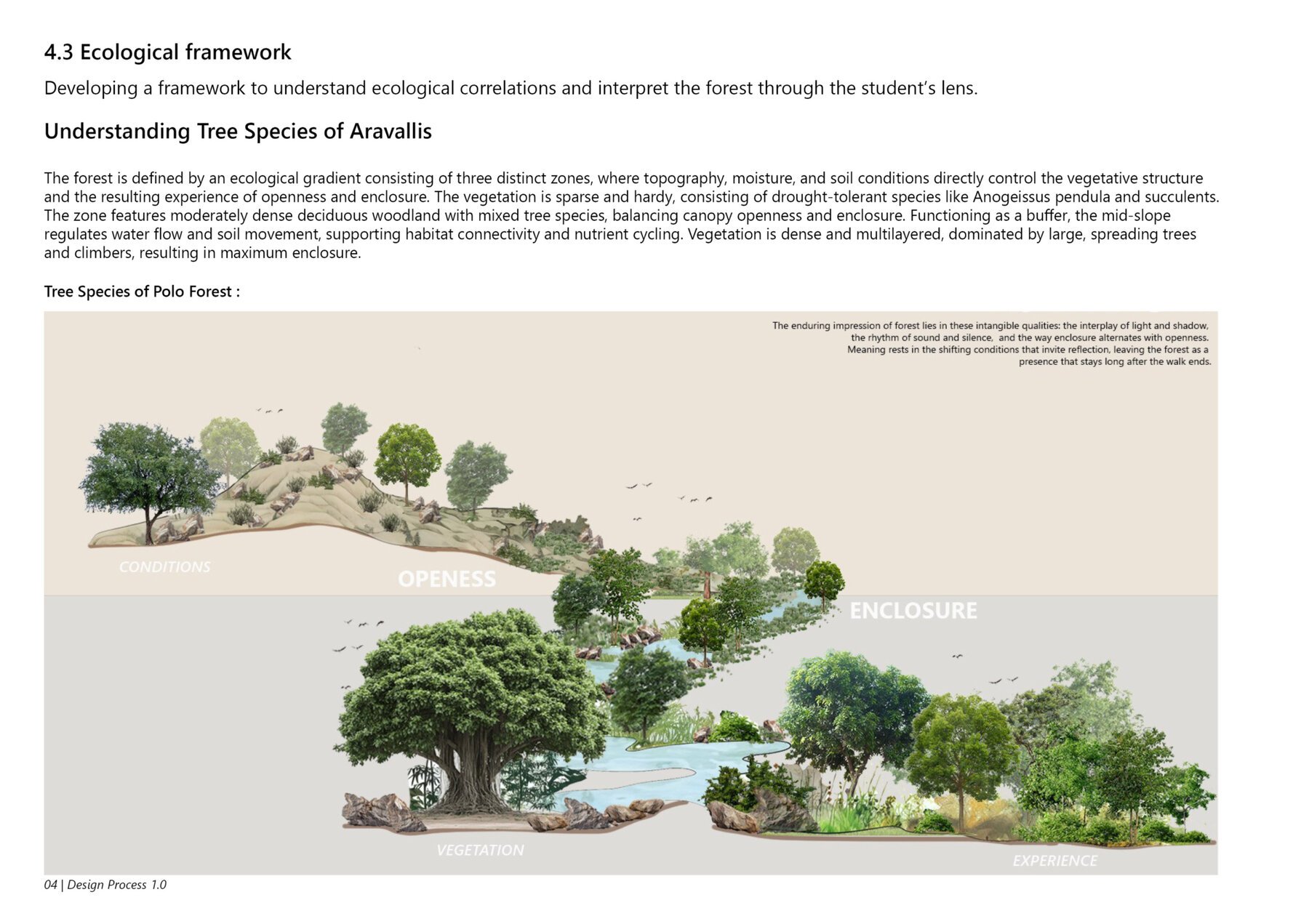
"One Forest" is a landscape architectural exploration that begins with the deep reading and representation of the forest as a complex, multi-dimensional entity. The study transitions from the primary documentation of the Polo Forest analyzing its geological grain, hydrological systems, and ecological gradients to a design intervention on an urban site in Ahmedabad. The project, titled Reimagining Spaces through Groves, uses collage and mass-void methods to translate the experiential qualities of the forest into a spatial framework. The design modulates enclosure and openness, placing "garden rooms" as intimate voids within dense groves. These rooms serve as controlled transitional spaces, orchestrating a journey from the expansive open woodland to the quiet, protective heart of the site, thereby re-establishing a lost ecological connection between the city and the river.
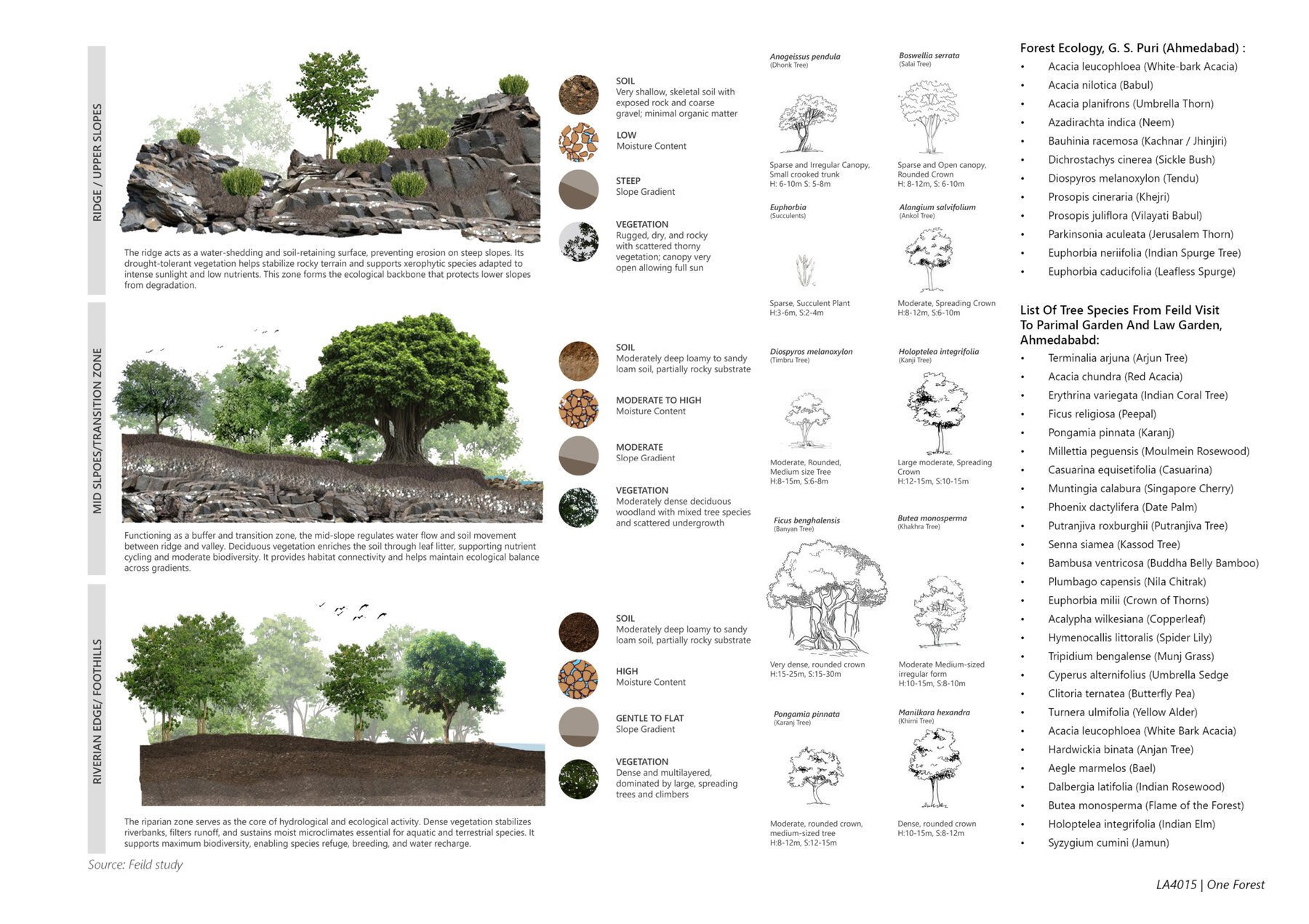
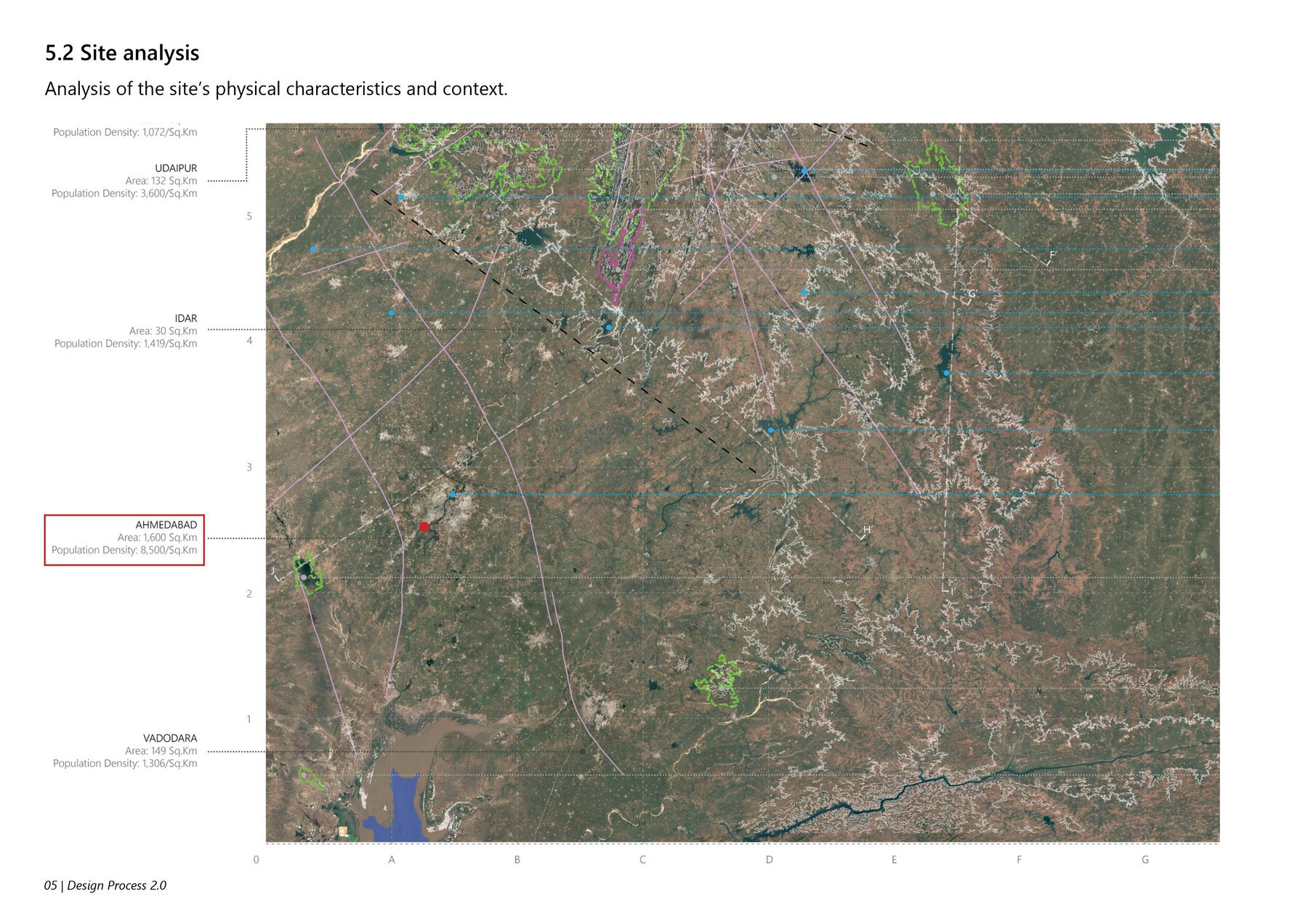
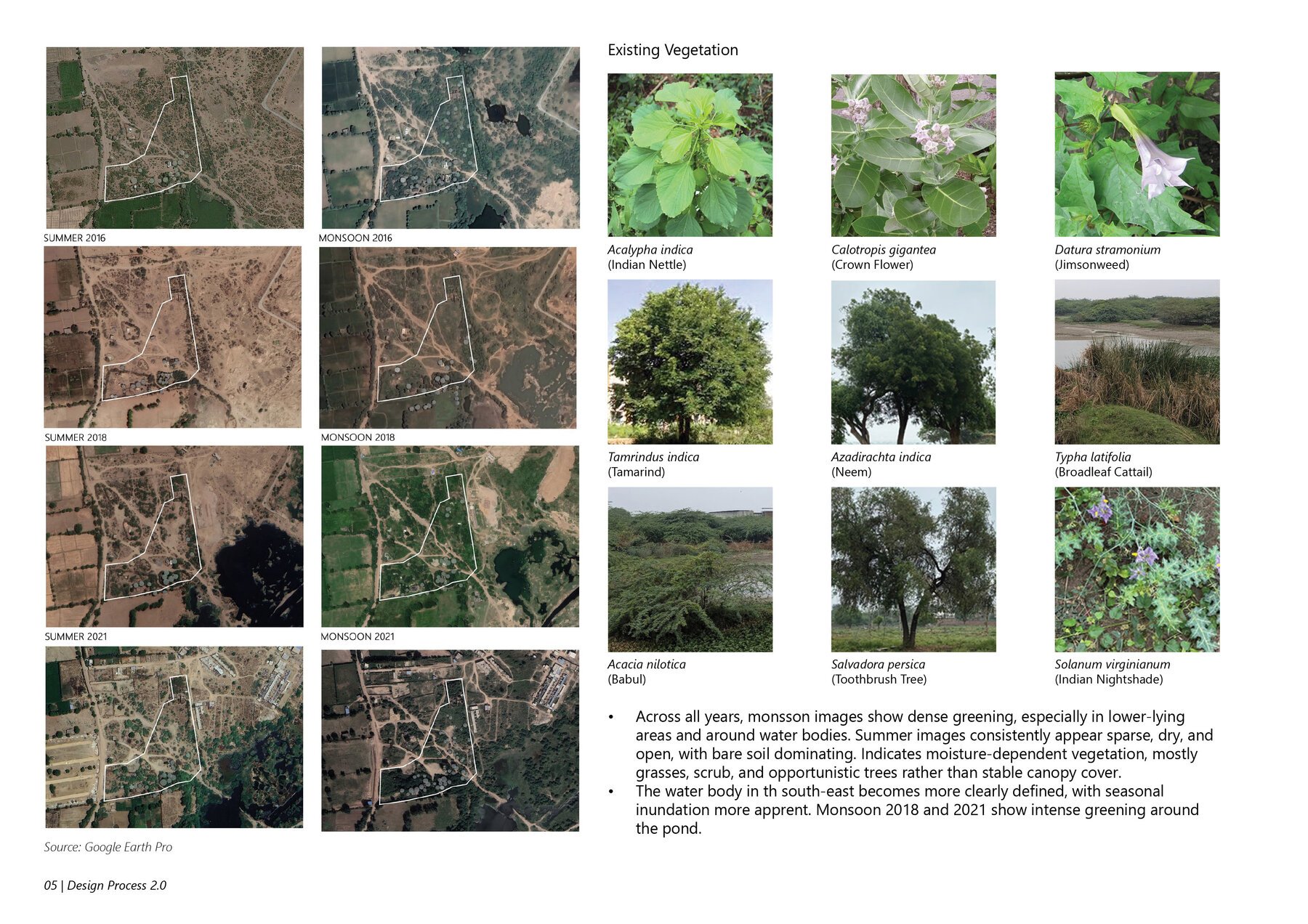
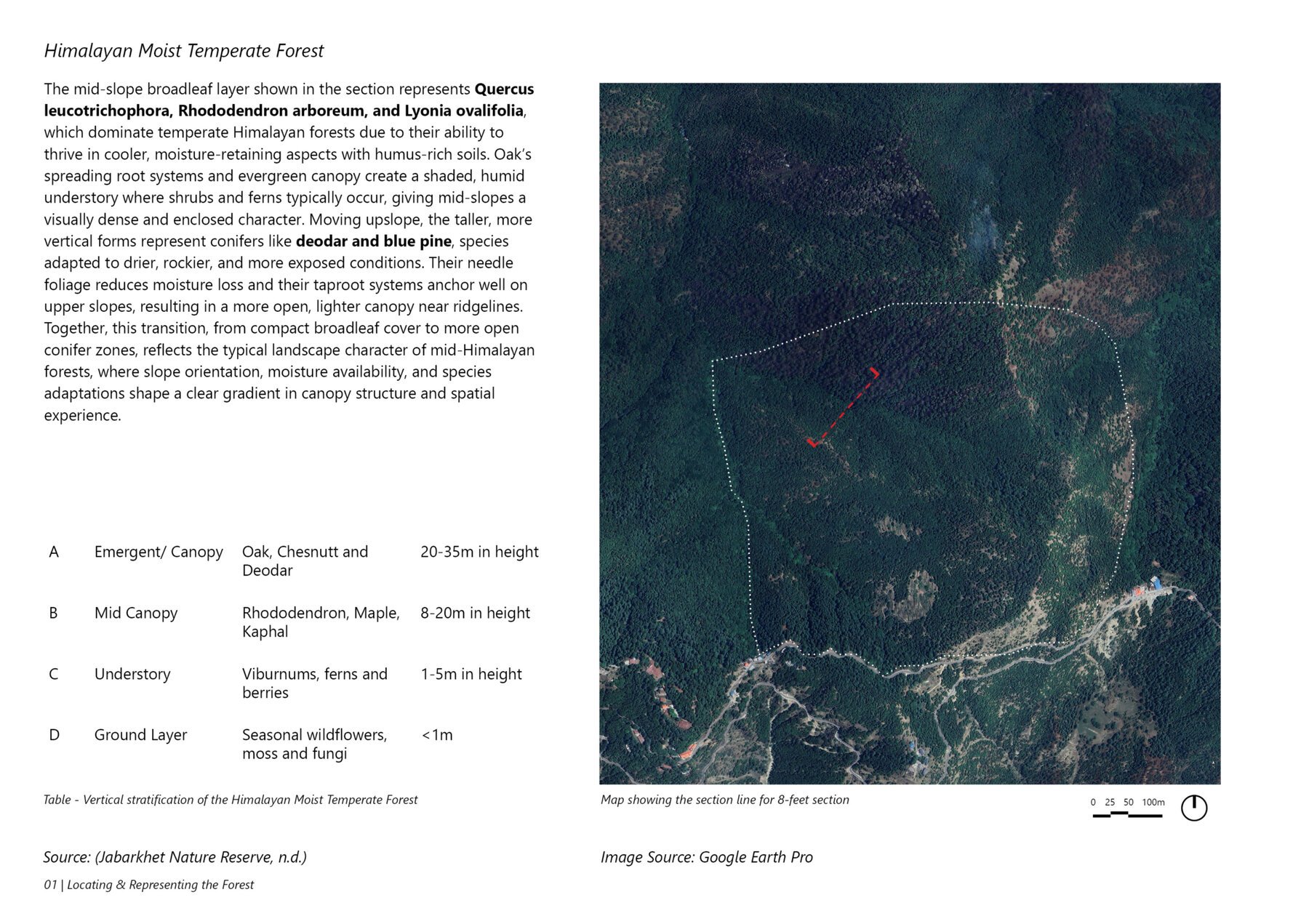
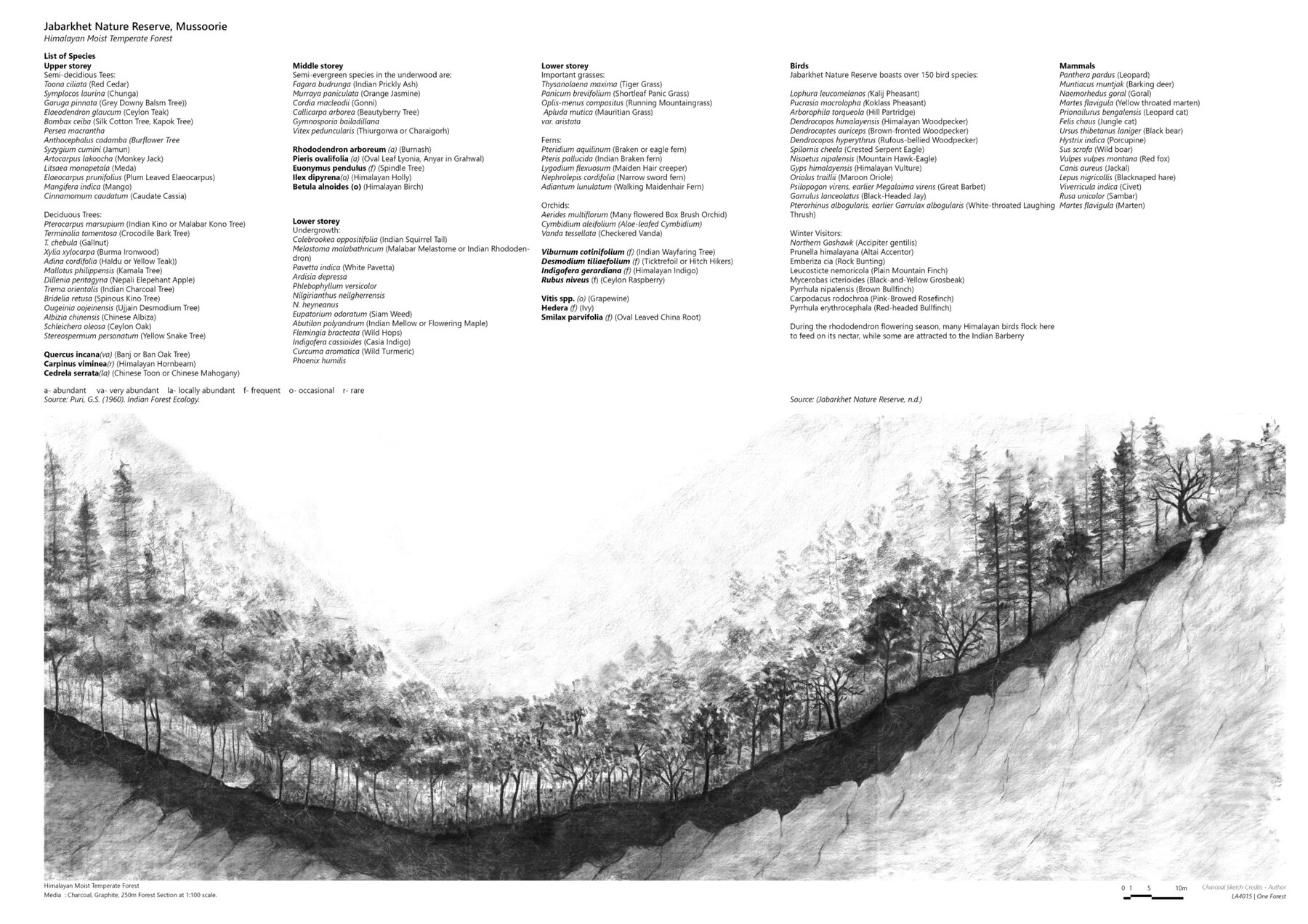
The project follows a two-part methodology: "Reading & Representing" and "Imagining & Constructing". It begins by decoding the forest as a multi-dimensional entity not just a rational relationship of soil and climate, but a primeval space deep in the human imagination. Initial research involves primary documentation of the Polo Forest, analysing ecological gradients, species distribution, and terrain conditions. This is followed by a study of "Forest & the City," exploring how urban expansion along the Aravalli range has impacted ecological continuity in cities like Ahmedabad and Delhi.
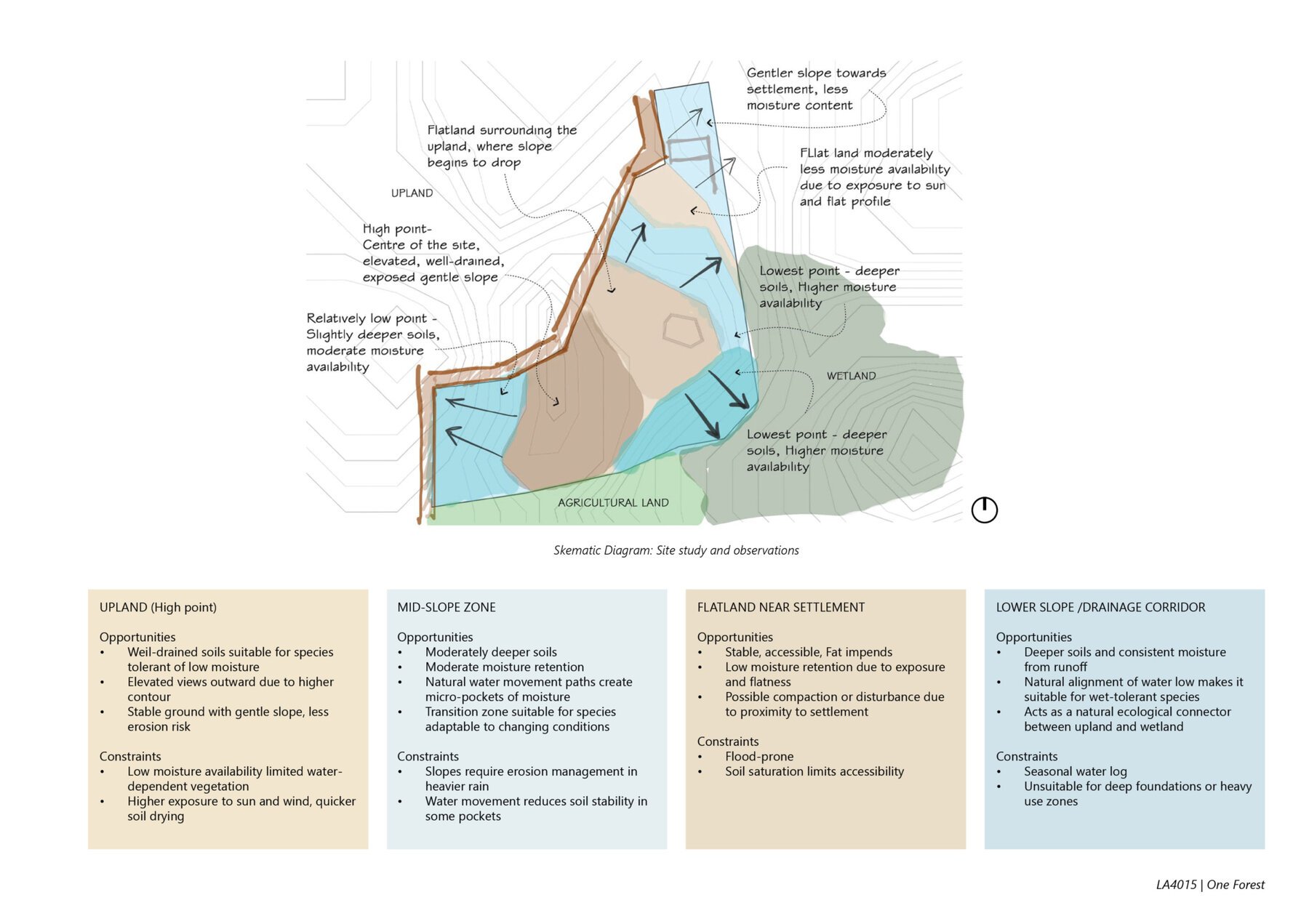
The design process uses collage and mass-void drawings as a method to translate experiential qualities into spatial frameworks. By analysing the site context (Fateh Baugh Fort), the approach focuses on leveraging existing vegetation and topographical opportunities, such as upland drainage corridors and historical ruins, to create a structured landscape response.
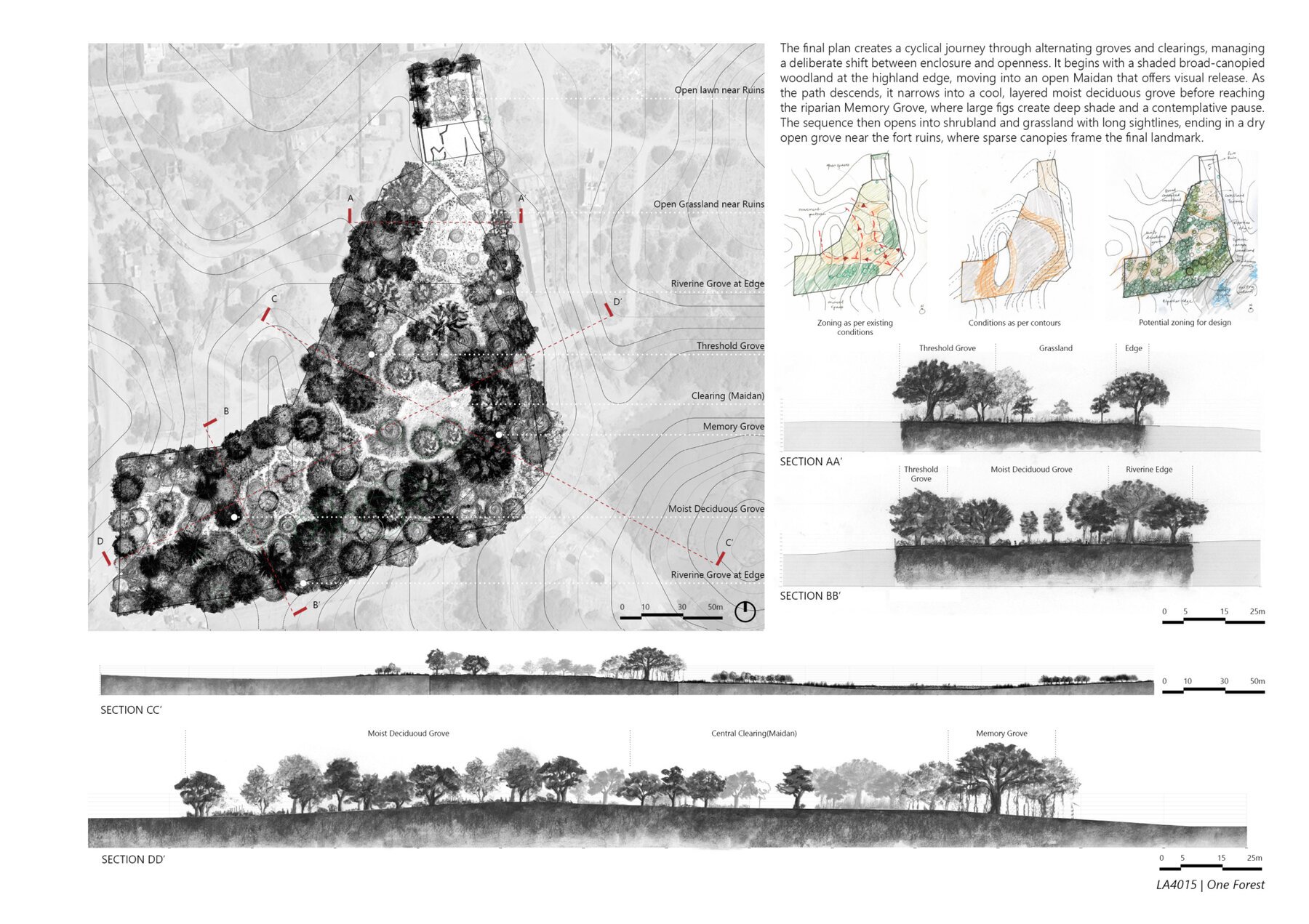
The final output, titled Reimagining Spaces through Groves, is a landscape strategy that modulates spatial enclosure and light through varying vegetation densities. The design is structurally defined by "groves," which alternate between the quiet, protective order of organized plantings and the rugged wilderness of the surrounding forest edges. A key intervention is the creation of "Garden Rooms" which are intimate, white-patched enclosures strategically placed near the shaded forest edge.
These rooms serve as controlled transitional spaces, orchestrating a journey from expansive open woodlands and sunlit upland plateaus to the compressed, quiet heart of the site. Technical outputs include detailed plans and sections that zone the site from dense boundary forests to sparse upland groves. Additionally, the project reinforces the site's wetland as a hydrological core, integrating existing plant communities like Neem and Butea to define a clear ecological and experiential sequence.
- aishwarya sunil patil
Gallery