This project explores how neighbourhood parks can evolve into productive public landscapes by integrating food systems, community engagement, and ecological processes. Located at AUDA Garden in South Bopal, Ahmedabad, the proposal reimagines the park as a Food Commons where accessibility, affordability, and availability of food become spatial drivers.
Through survey analysis, case studies, and site mapping, the project identifies opportunities to enhance biodiversity, social interaction, and climate resilience. Word abstractions translate emotional and social intentions into spatial strategies, informing program zoning and experiential journeys. A modular kit-of-parts framework allows flexible adaptation across contexts, creating layered spaces for participation, learning, and celebration.
The design ultimately positions the park as a living infrastructure that supports community well-being, ecological regeneration, and shared urban stewardship.
The project adopts a layered design methodology combining research, abstraction, and spatial experimentation. It begins with case study analysis and a city-wide survey to understand community needs and identify site selection criteria. Word abstractions translate objectives such as accessibility, affordability, and availability into emotional and experiential frameworks that guide spatial thinking. Program zoning explores user journeys through immersion, exploration, participation, and reflection, shaping the spatial structure of the park. Performance parameters assess microclimate, biodiversity, engagement, and spatial hierarchy to refine design decisions. A modular kit-of-parts system translates abstract characters into tangible spatial components, enabling flexible combinations and adaptability. This process integrates ecological systems, social programs, and sensory experiences to create a responsive and resilient public landscape.
The project proposes a multifunctional Food Commons that transforms AUDA Garden into a productive and socially inclusive landscape. The design creates interconnected zones for growing, learning, gathering, and reflection, supported by modular spatial components derived from the kit-of-parts framework. Ecologically, the proposal enhances biodiversity through diverse planting systems, composting cycles, and climate-responsive spaces. Socially, it strengthens community participation through collaborative growing spaces, seed libraries, and shared programs. Spatially, layered engagement and seamless transitions create a dynamic user experience across seasons. The project demonstrates how neighbourhood parks can function as living infrastructures that support food security, ecological regeneration, and community well-being, offering a replicable framework for productive public landscapes in urban contexts.
- yugma barad
Gallery
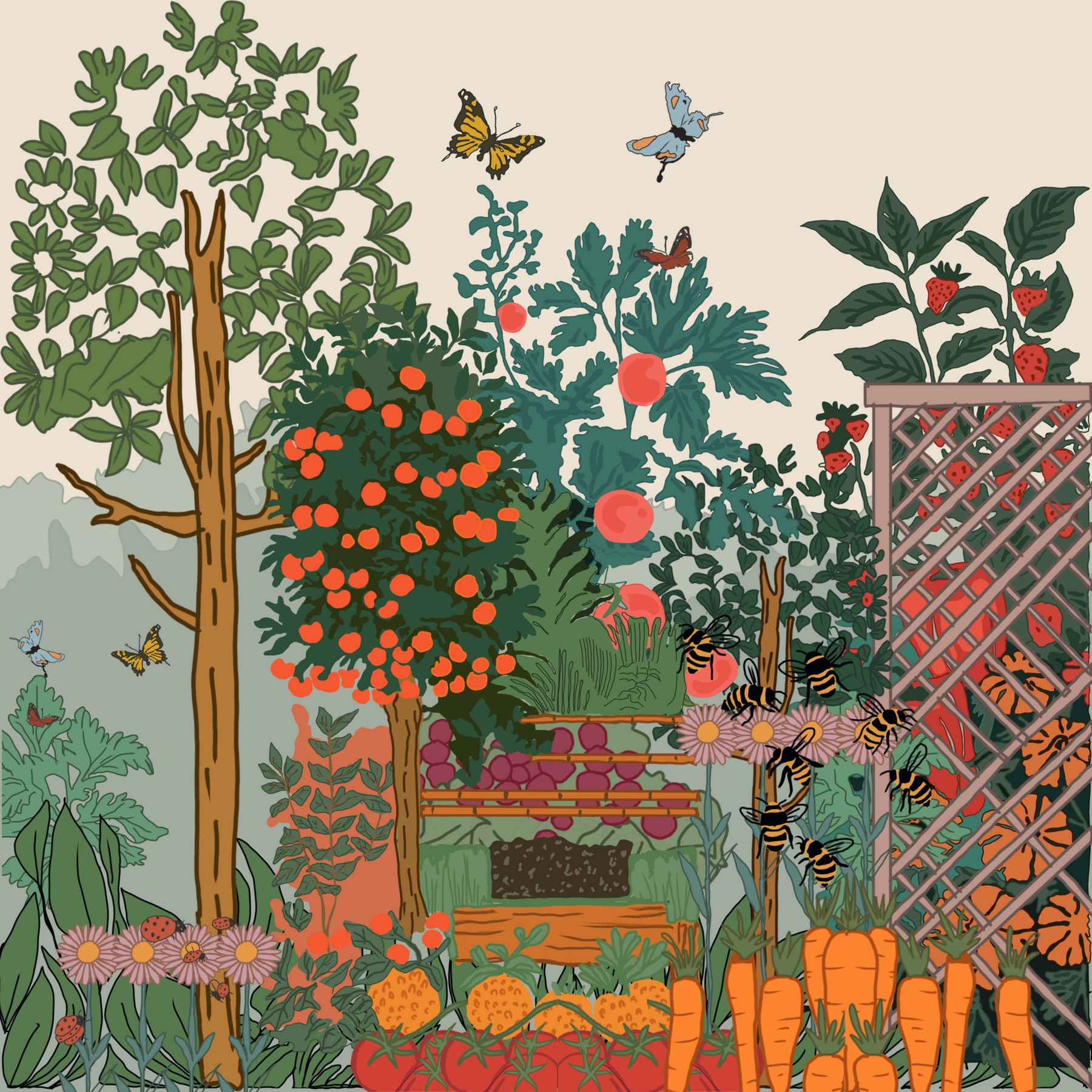
The illustration captures the sensory richness and ecological diversity envisioned within the Food Commons. Layered vegetation, edible planting, and pollinator activity depict the park as a vibrant productive ecosystem where ecological processes and everyday human interactions coexist to create a resilient and immersive environment.
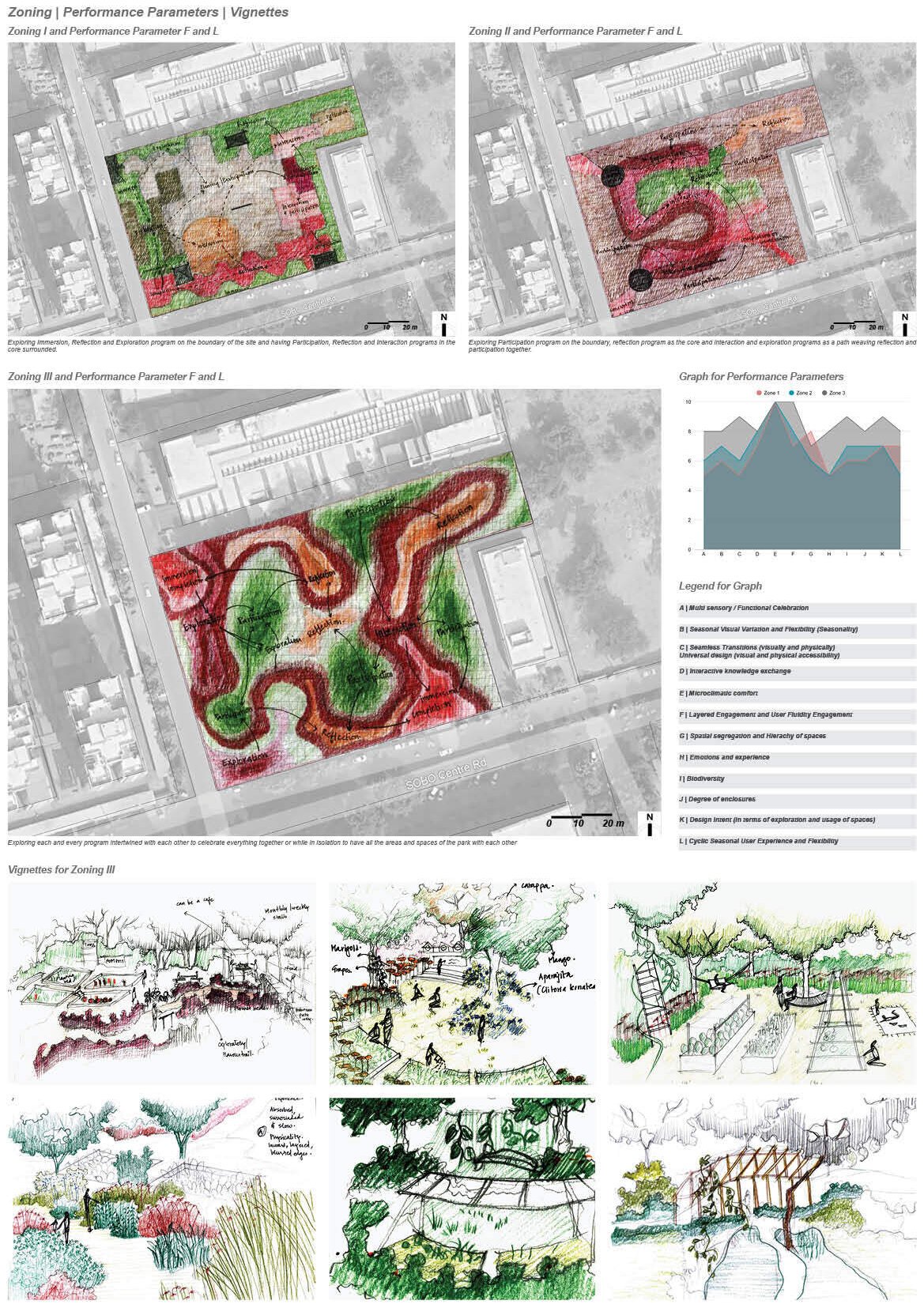
This sheet explores the spatial organization of programs through zoning iterations and performance parameters. It demonstrates how activities such as participation, reflection, and interaction are distributed across the site while responding to microclimate, engagement intensity, and spatial hierarchy to create a balanced experiential landscape.
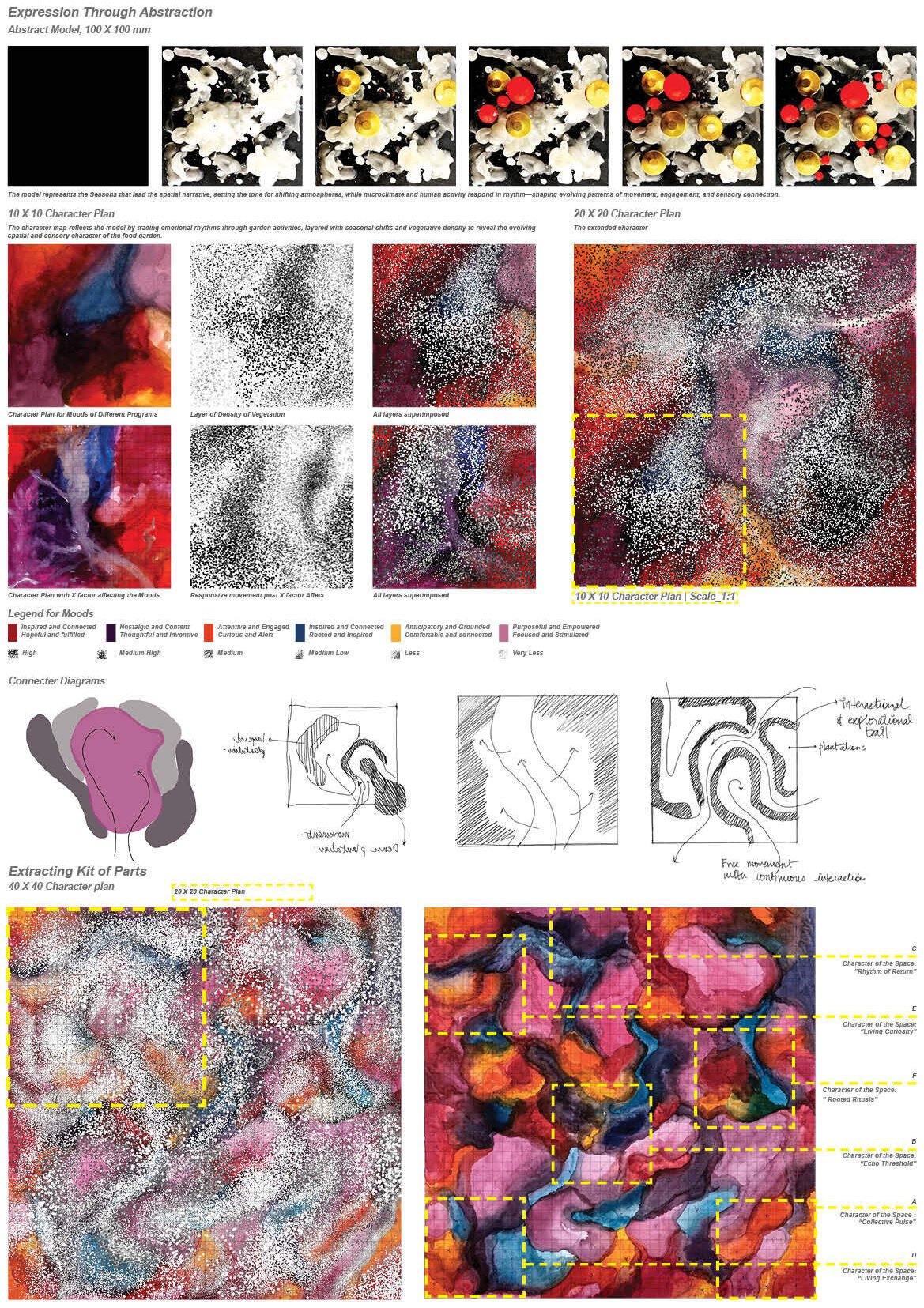
The abstraction studies translate emotional and experiential qualities into spatial logic through character plans, density mapping, and connector diagrams. These explorations reveal how mood, movement, and ecological layers inform the emergence of spatial characters that guide the design framework.
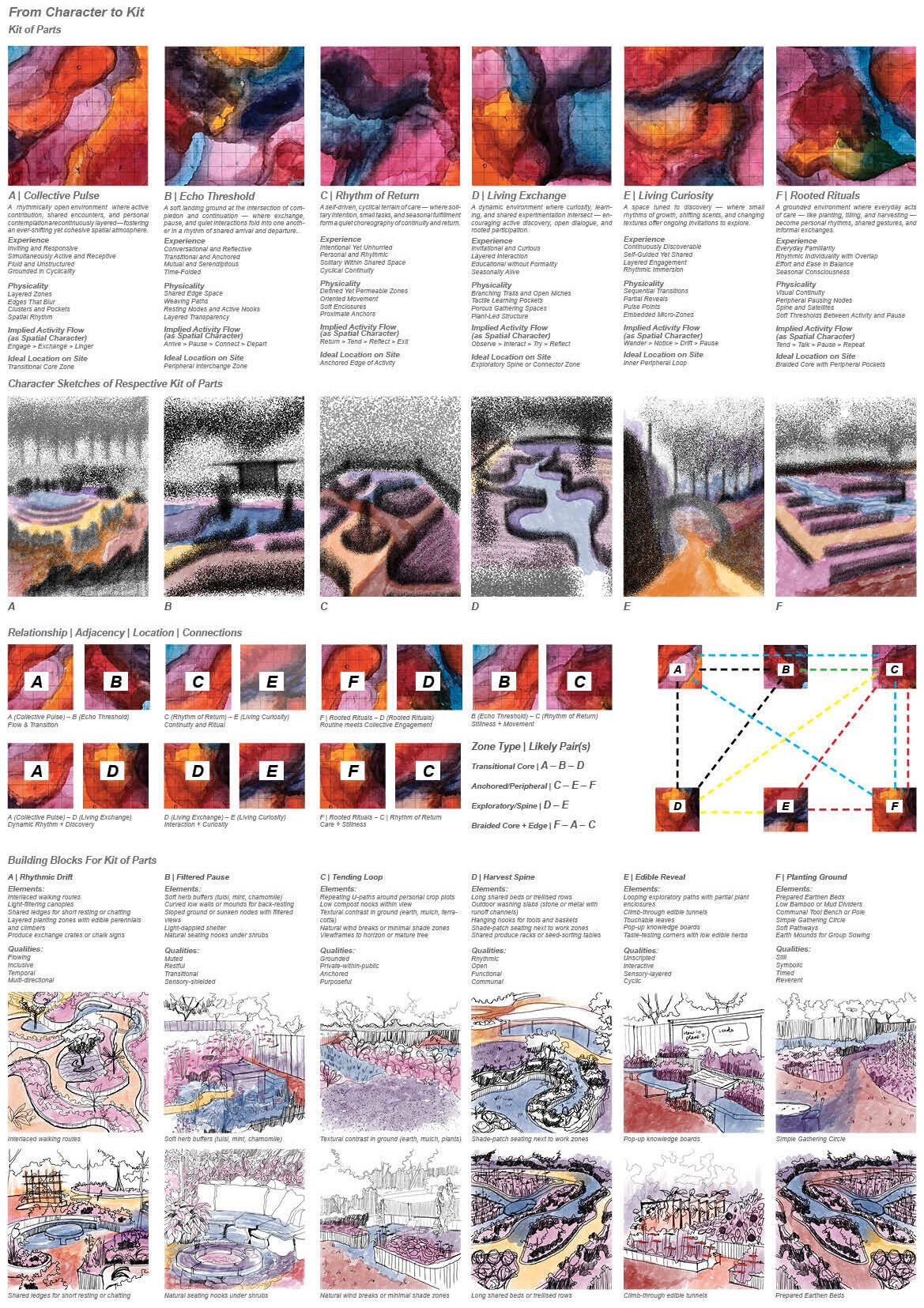
The drawings demonstrate how abstraction and kit-of-parts strategies are translated into site-specific interventions. Layers of performance mapping reveal gradients of engagement, ecological intensity, and spatial hierarchy, shaping a cohesive and responsive landscape structure.
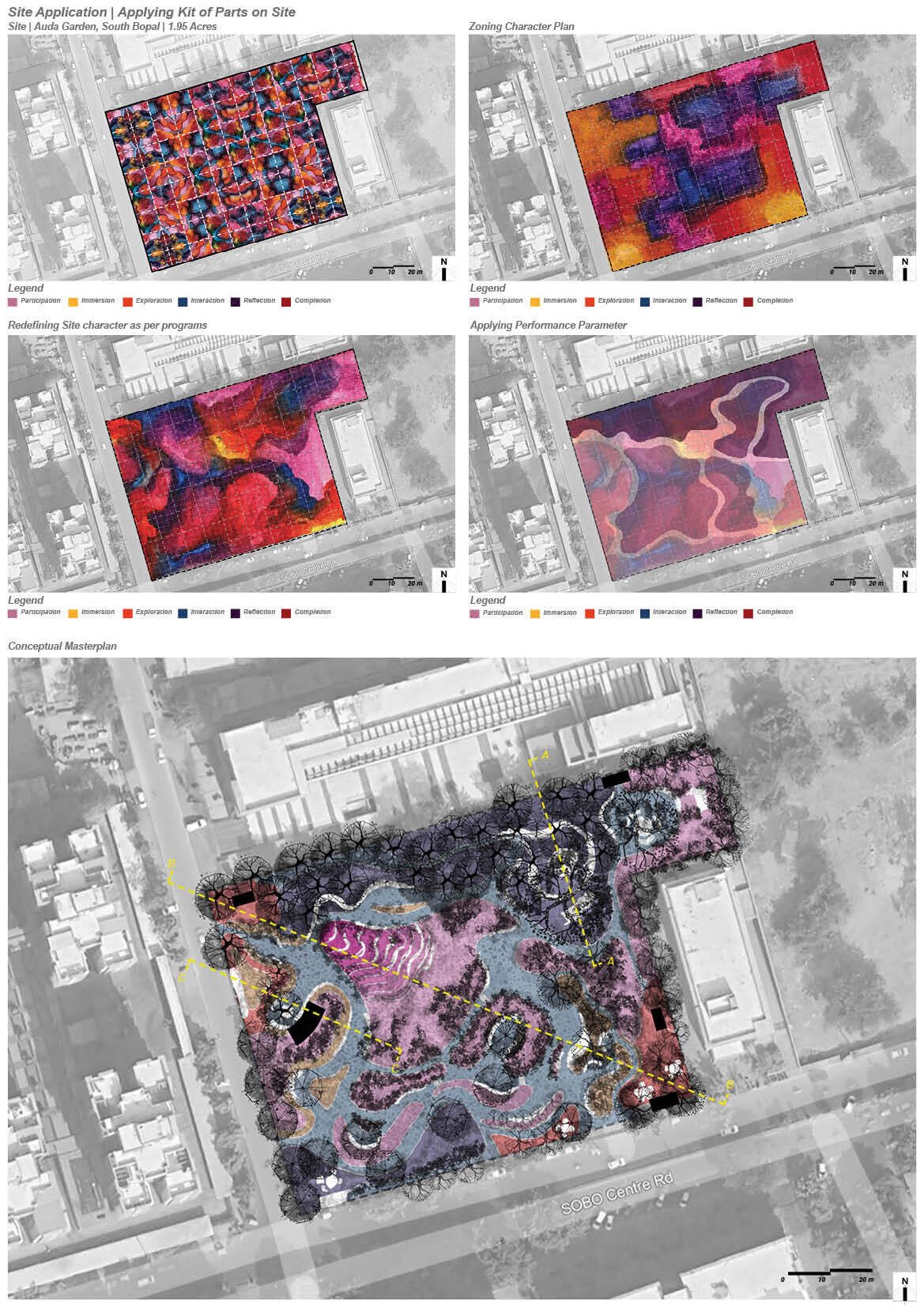
The conceptual masterplan synthesizes program zoning, ecological systems, and circulation into a unified spatial framework. It illustrates how diverse programmatic zones interconnect to support growing, learning, gathering, and reflection, positioning the park as a multifunctional productive landscape.