The Weeping Bridge — Harvesting Lives from the Leaks of Industry

- aditya shankarasubramanian
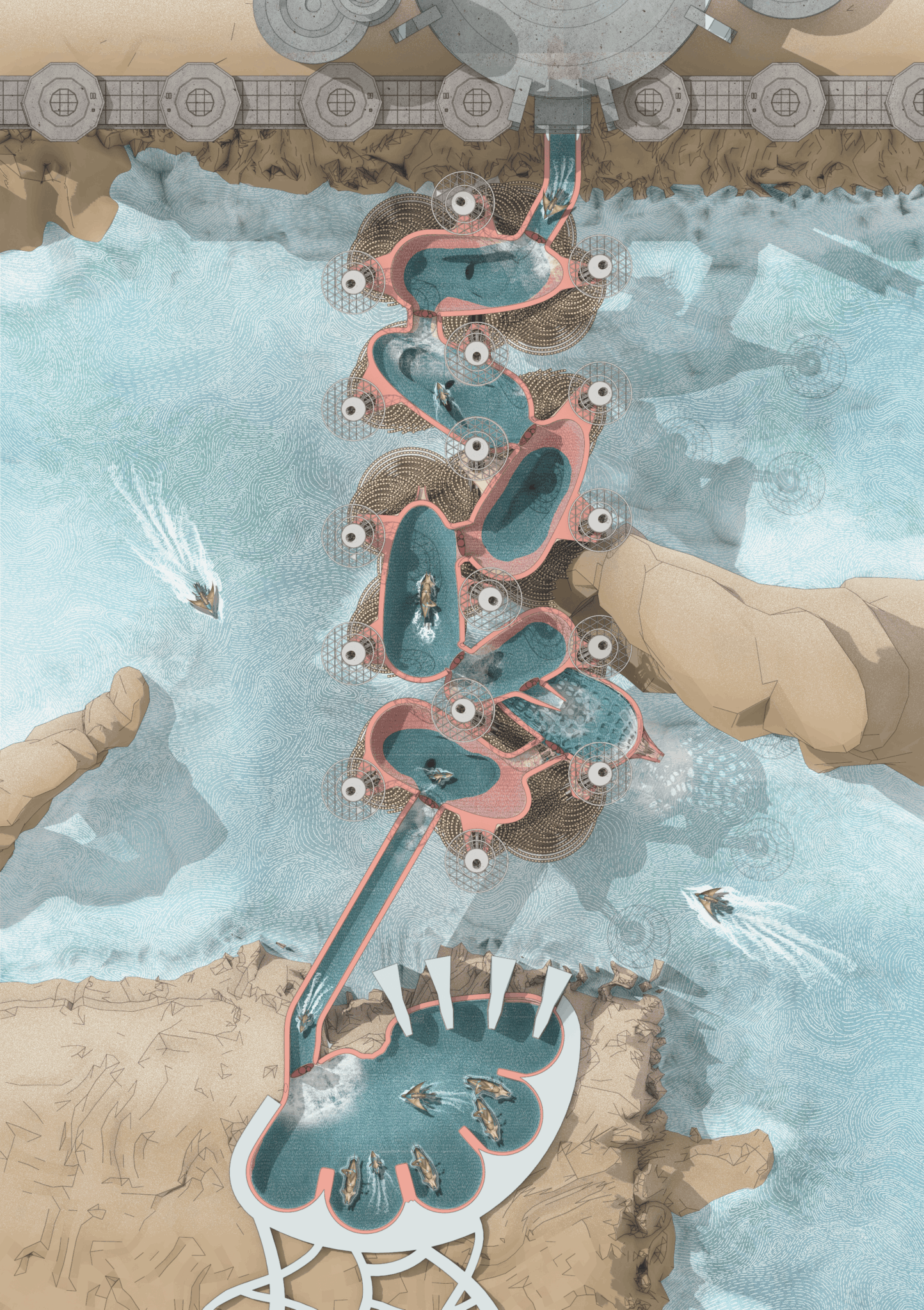
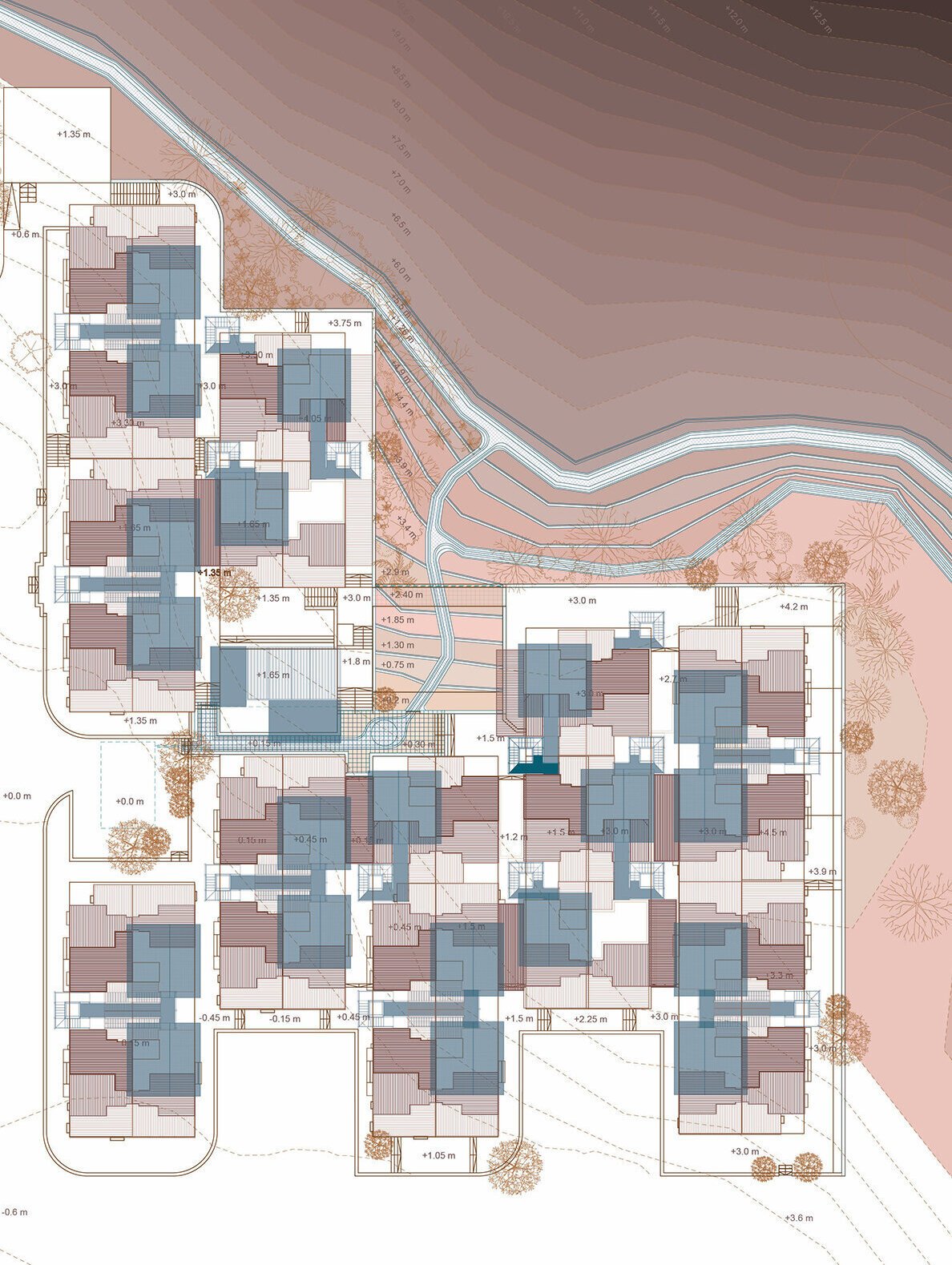
Plan View
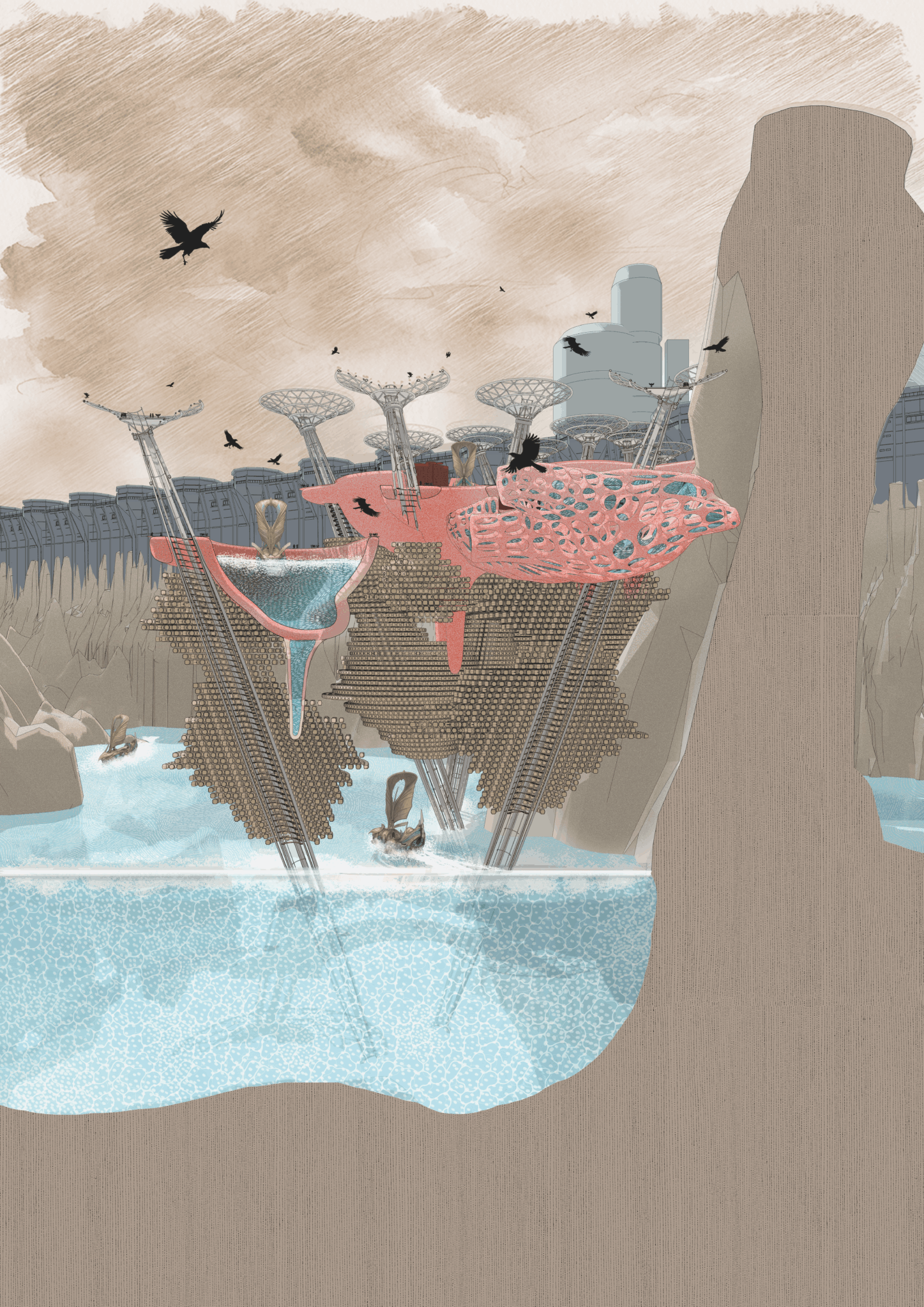
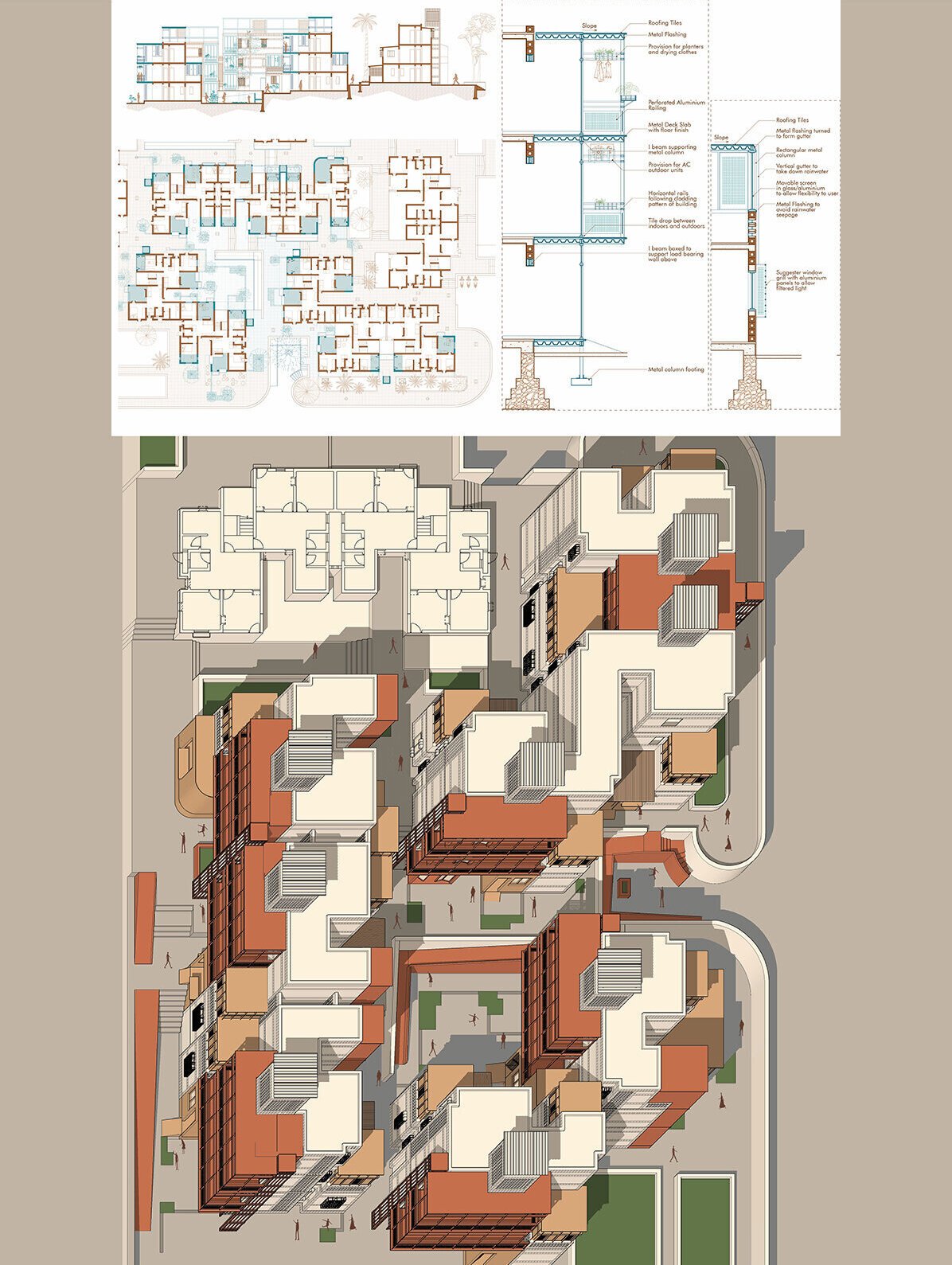
Section Perspective
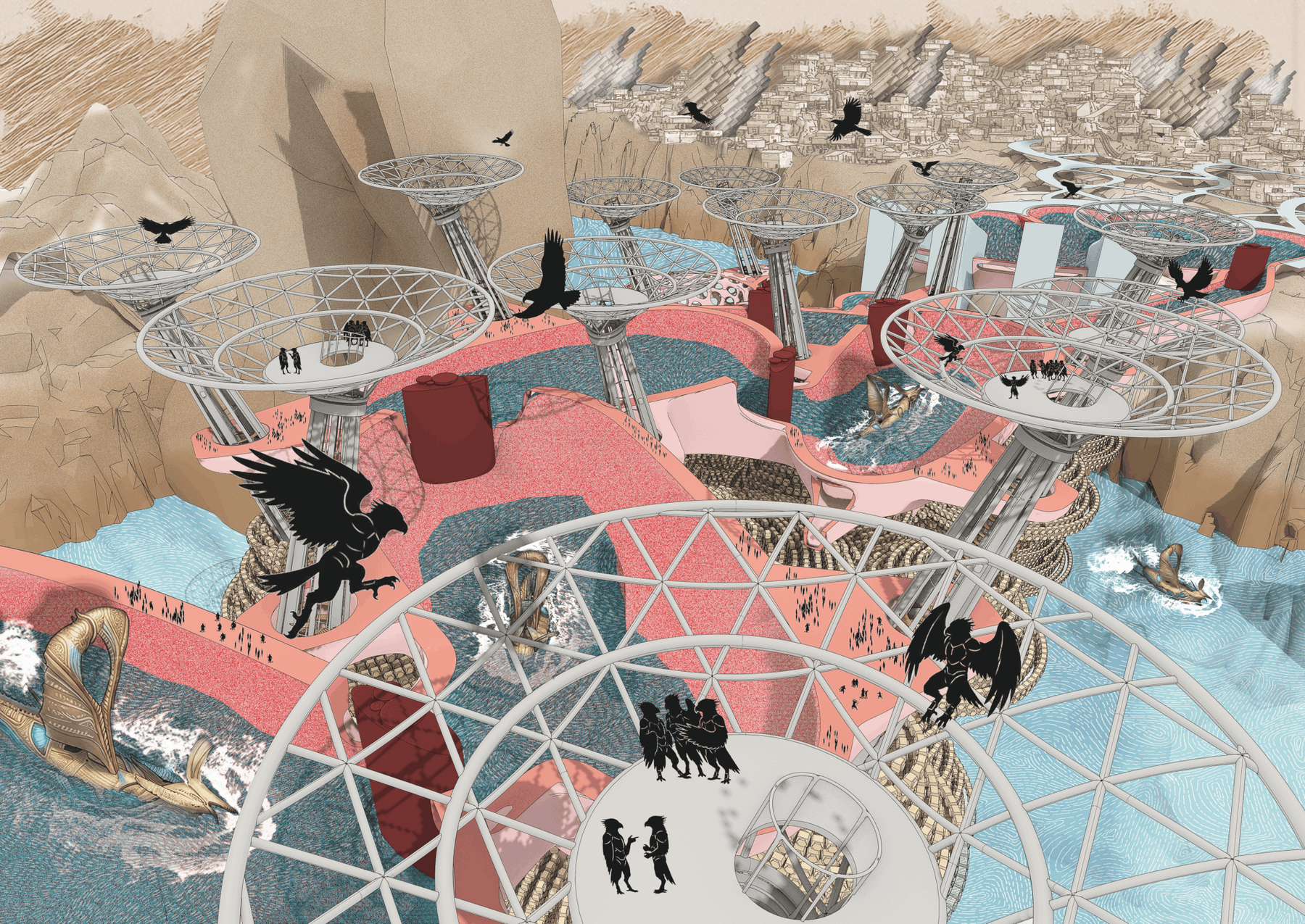
Aerial Shot
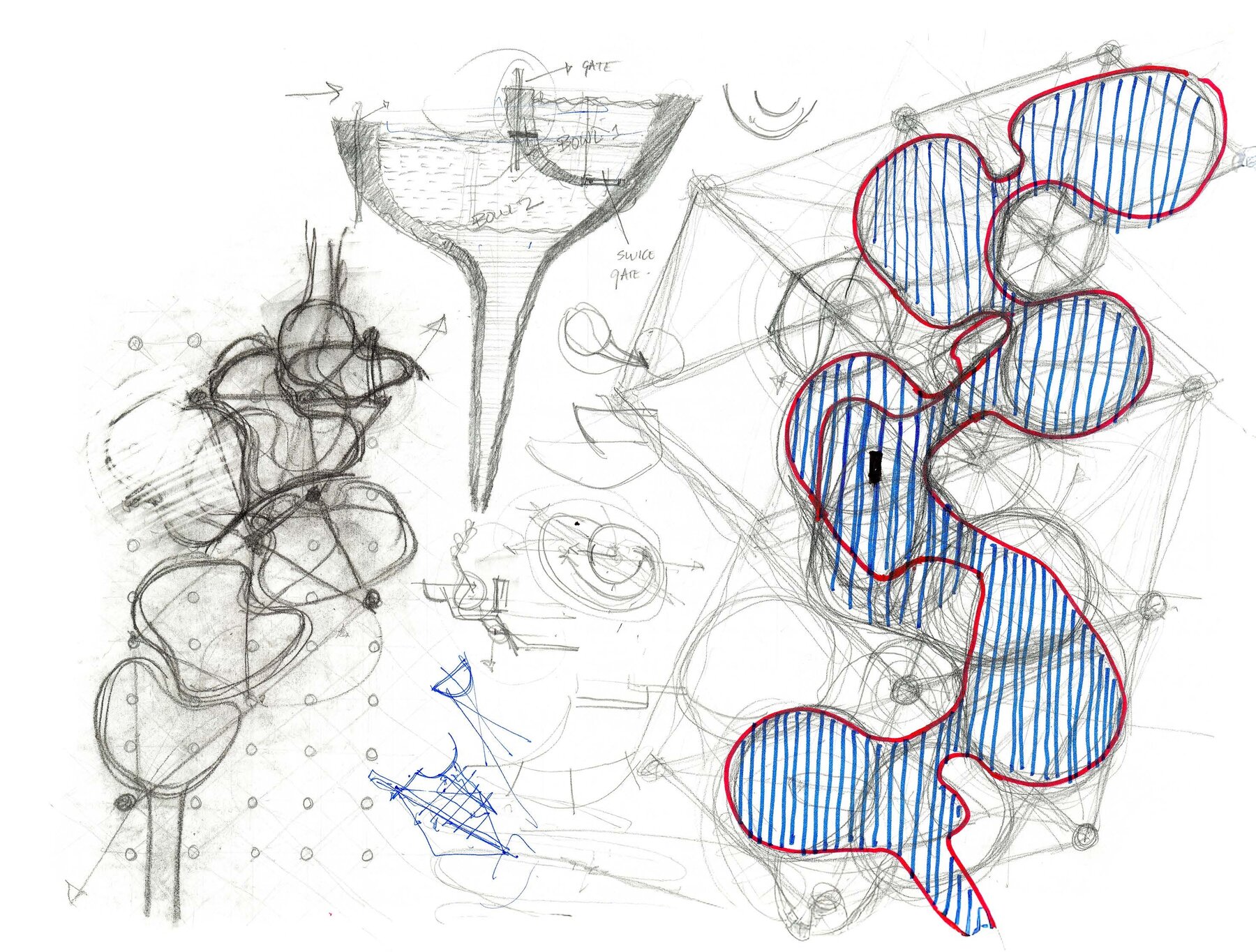
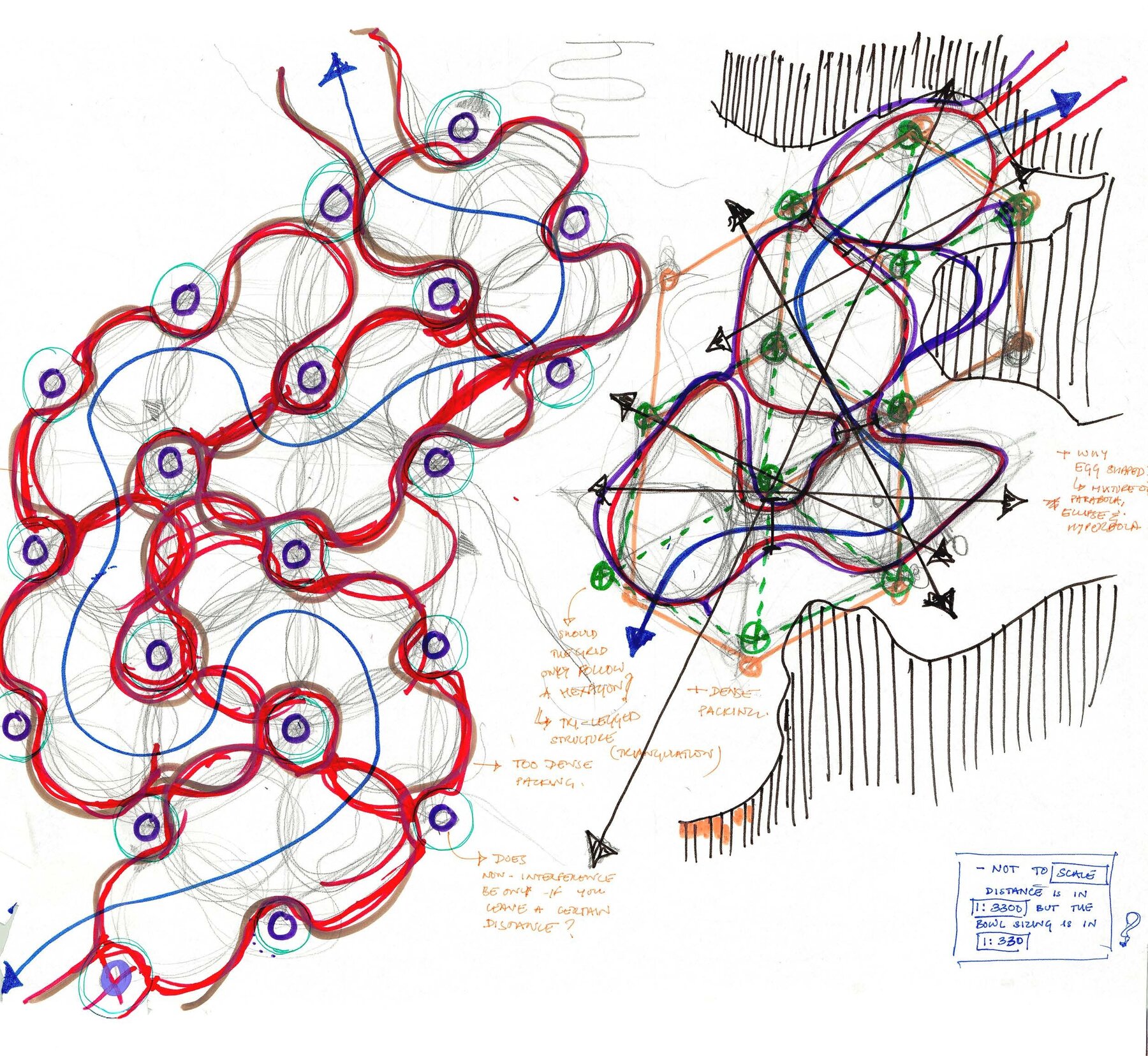
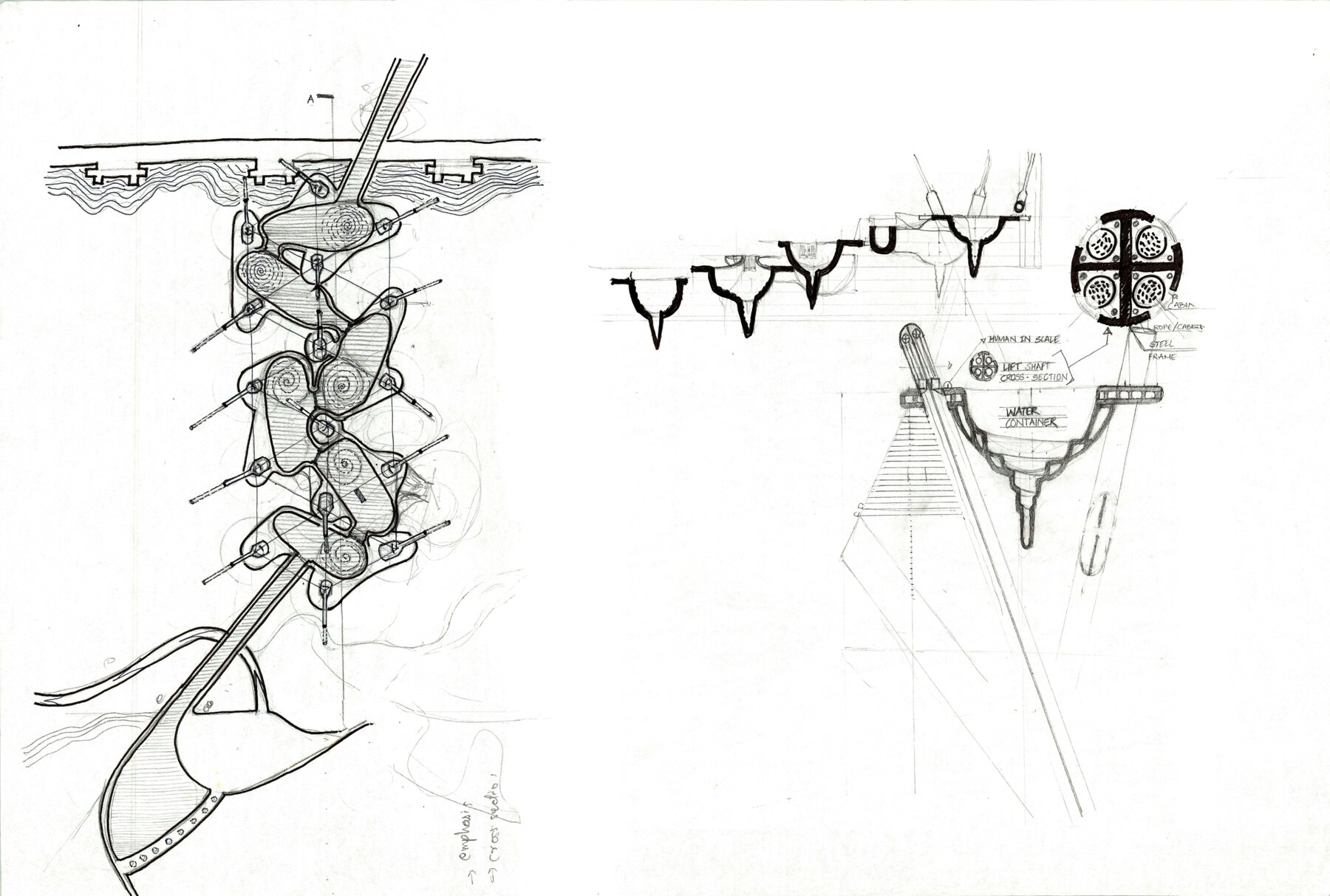
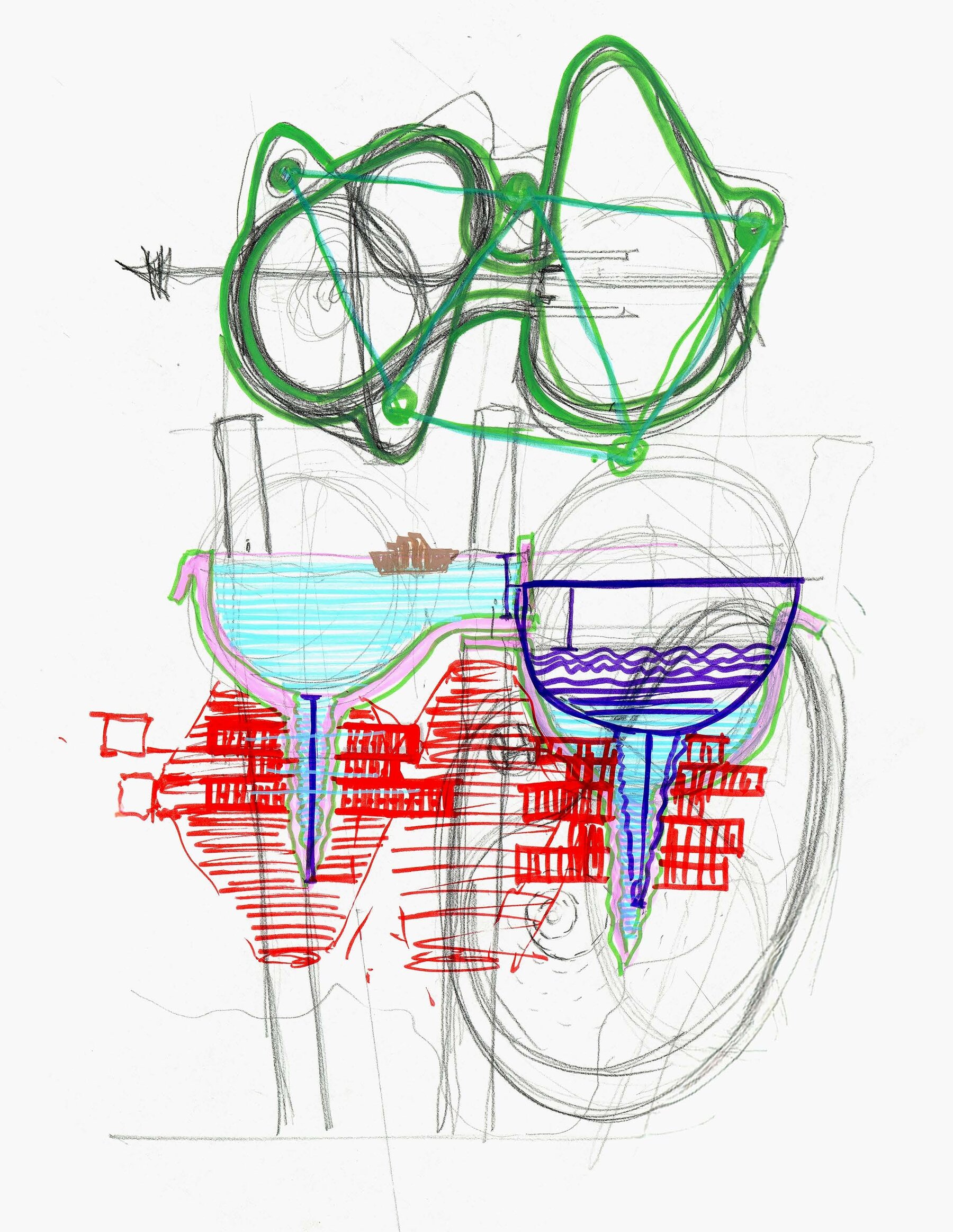
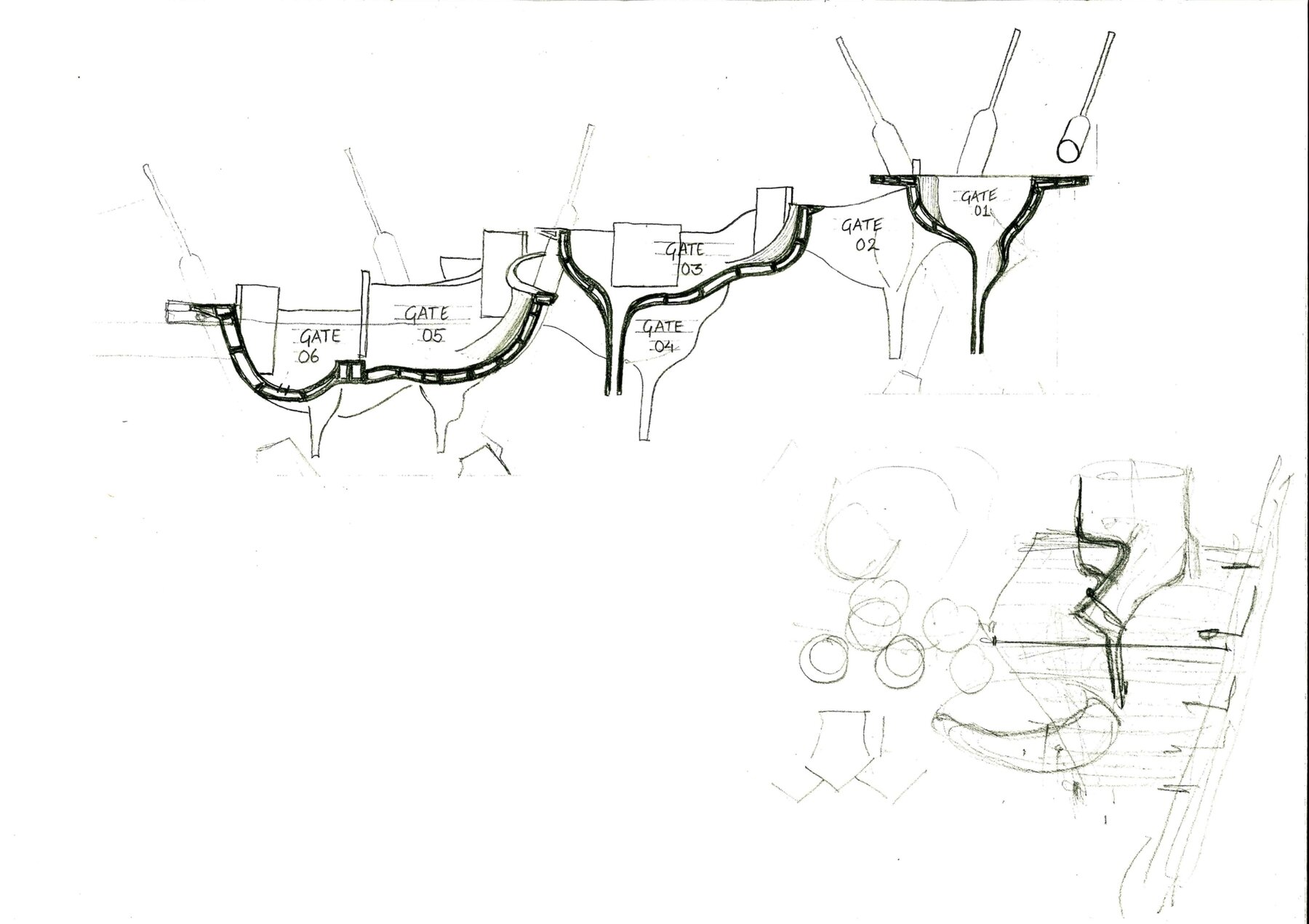
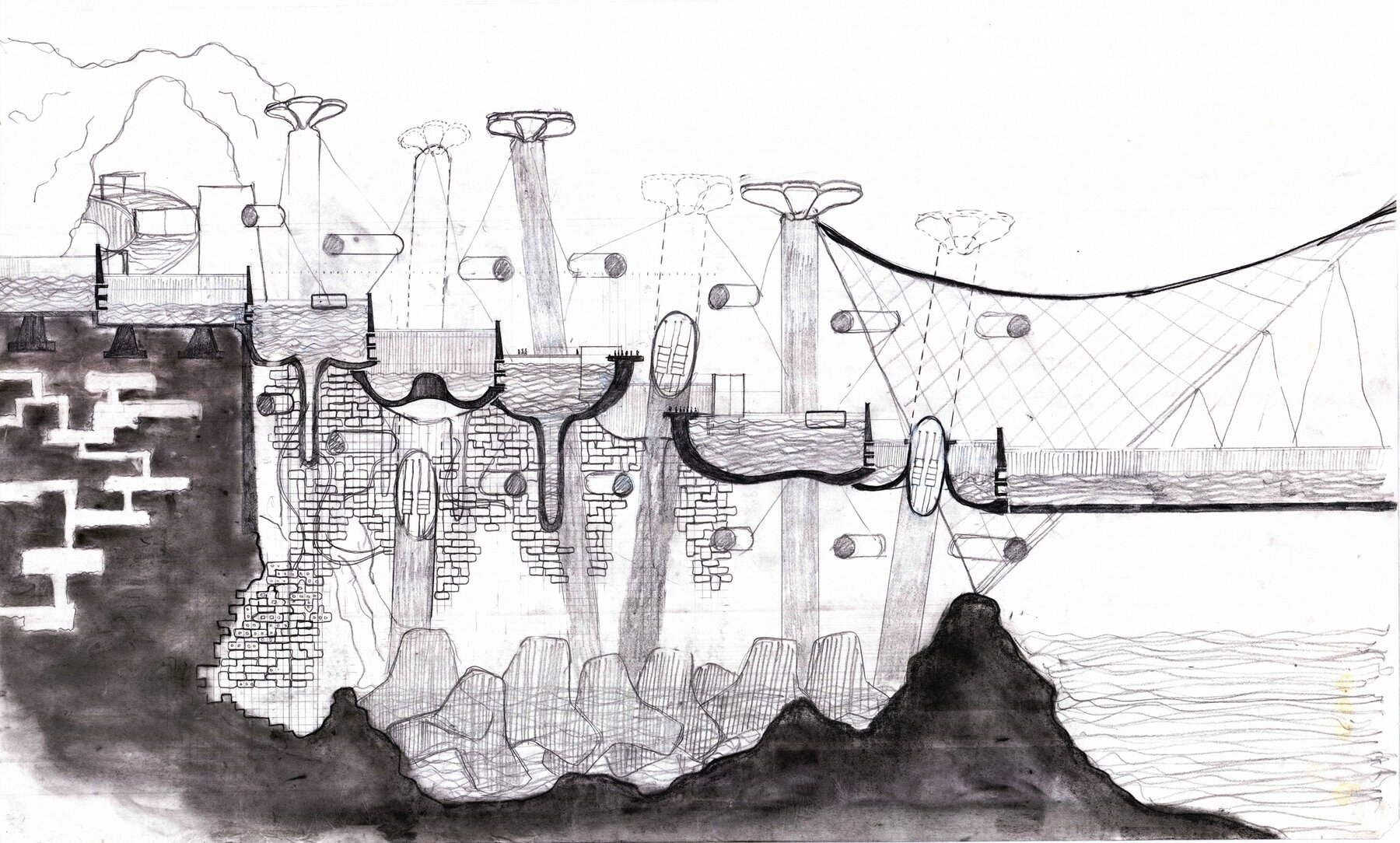
Situated within the speculative world of Maya, The Weeping Bridge is an infrastructural response to the critical topographical and socio-economic rift between the looming industrial capital, Dhaara, and the war-torn ruins of Seema, located in the deep valley shadow below. Bridging this steep, precipitous drop over a short, compressed distance, the project functions as an aerial shiplock system designed to transport heavy logistics for post-war reconstruction. Departing from terrestrial canal locks, the design employs a cascading series of 'floating bowls,' their geometry strictly derived from the turning radii of freight vessels. These containment units are suspended via a pseudo-tensegrity system of oblong structural masts. However, the project’s core lies in its material volatility. The bridge’s monolithic shell undergoes "Tectonic Leaching"—a chemical reaction where the structure exudes mineral byproducts as water permeates its surface. These crystallised, stalactite-like formations become the catalyst for habitation. A vertical informal settlement of modular pods clings to the bridge’s underbelly, harvesting this "weeping" water for sustenance. The result is a stratified cross-section of civilisation: elite avian perches on top, industrial trade in the centre, and a parasitic, yet thriving, migrant ecology clinging to the structure below.
The design methodology necessitated a multidisciplinary synthesis, dissolving traditional boundaries between architecture, geology, and biology. My approach treated the infrastructure not as a static artefact, but as a dynamic, metabolising entity. This required navigating distinct scales simultaneously: from the macro-mechanics of the aerial shiplock system to the micro-chemical processes of 'Tectonic Leaching.'
By simulating how materials decay and crystallise, the project investigates 'Infrastructural Exaptation'—the capacity of a rigid system to inadvertently evolve into a biological host. The massive, engineered bowls facilitate global trade, while their calculated entropy sustains a localised, parasitic housing ecology. Through this exploration, I learned that true resilience is not found in resisting nature, but in designing systems capable of embracing entropy. The project stands as a testament that architecture must be flexible enough to host unintended, symbiotic ecologies within the shadows of progress.
The outcome of the project is Nexis, a lightweight, modular table system developed by focusing on a single core element and expanding it into a flexible, scalable system. The design enables multiple configurations, particularly two- and three-table island clusters that support both focused individual work and informal collaboration. Minimal structural profiles and carefully refined proportions help reduce visual clutter while maintaining strength and stability.
Designed through a studio-led collaboration with Godrej Design India, the system evolved through multiple rounds of iteration, testing aspects such as ergonomics, mobility, material efficiency, and spatial adaptability. Nexis responds to the dynamic needs of contemporary workspaces by allowing easy reconfiguration and movement. The final system integrates clarity, functionality, and adaptability, offering a versatile solution that encourages openness, improves spatial efficiency, and enhances cross-team interaction while maintaining a strong and cohesive design identity.
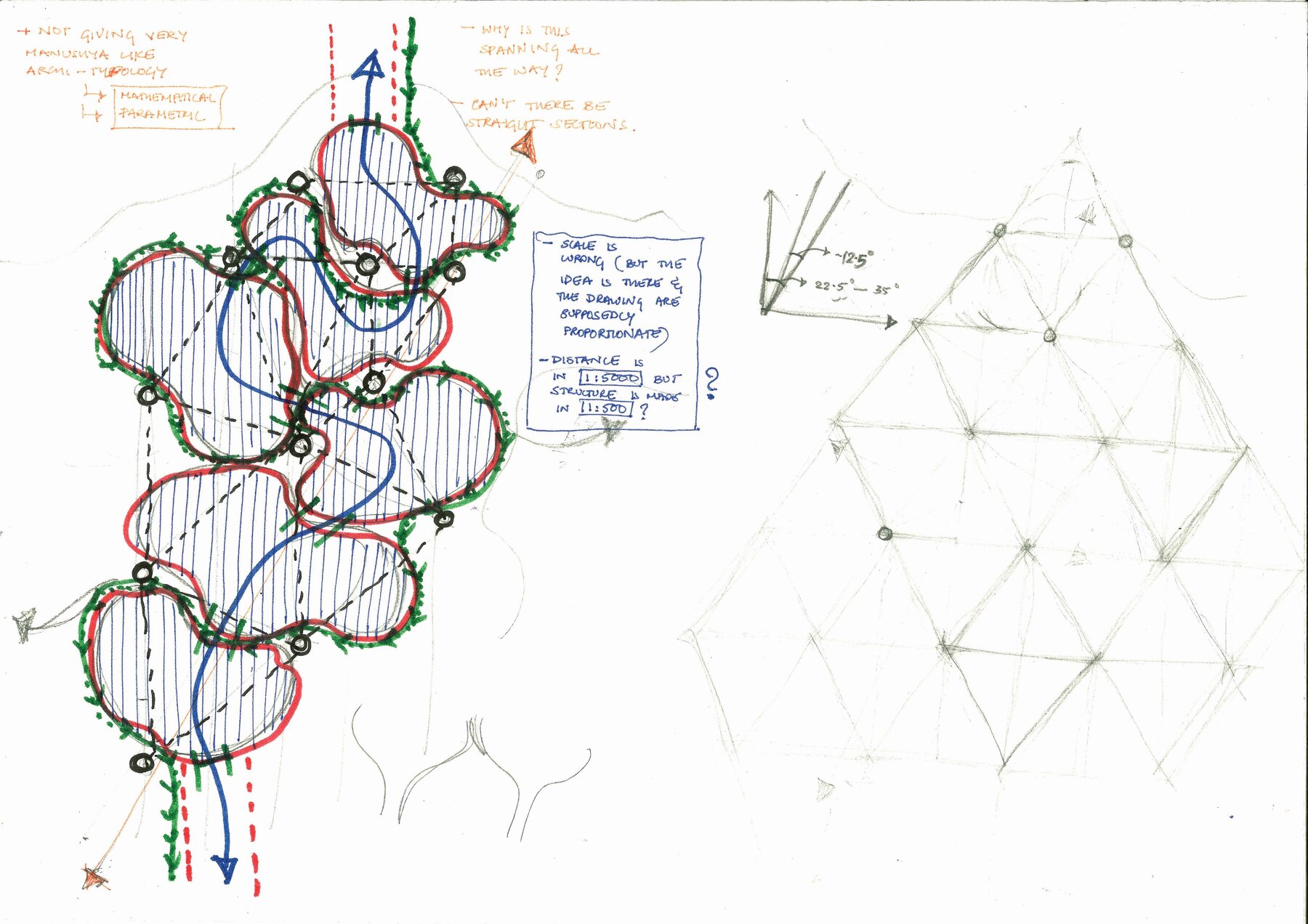
Awards
- CEPT Gujral Foundation Award CEPT Excellence Awards Monsoon 2025 CEPT University
- aditya shankarasubramanian