Threads Through Time: Weaving Heritage, Culture and Ecology into a Living Landscape

- jayesh rajebhosale
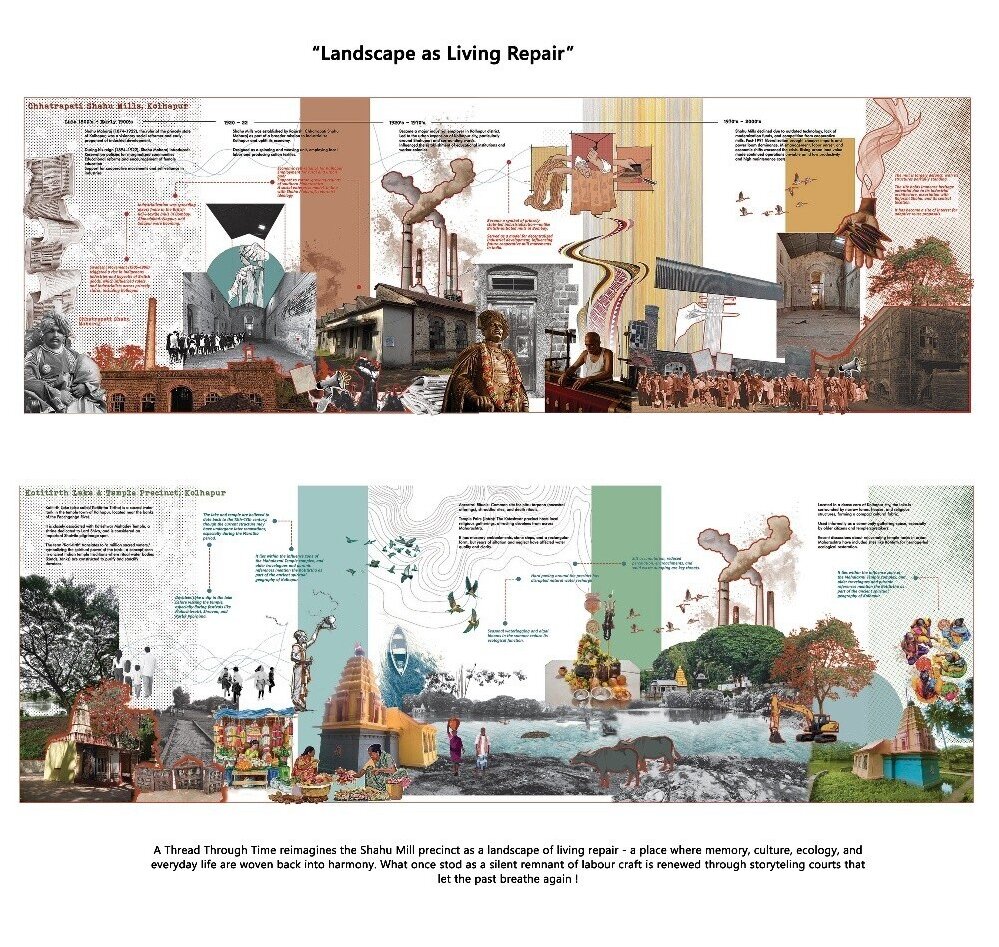
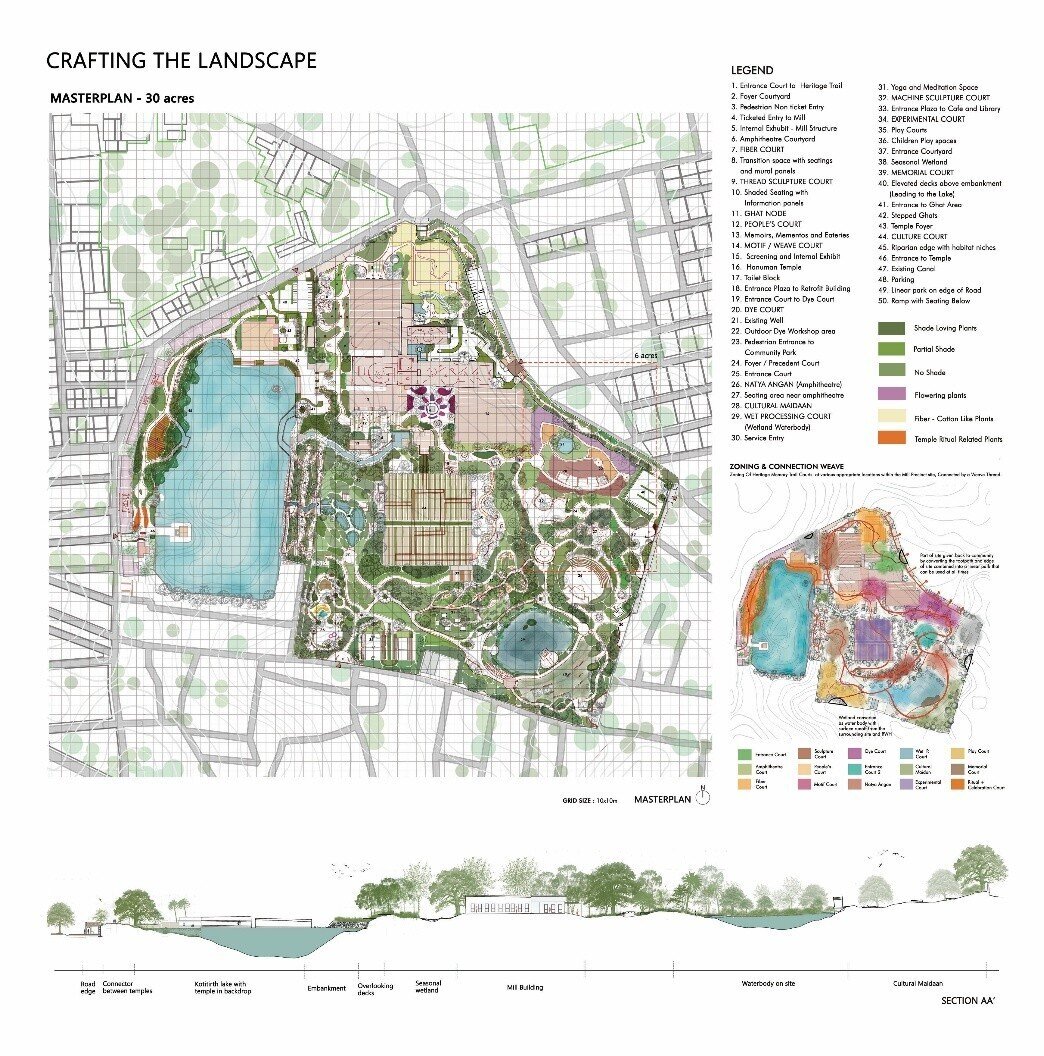
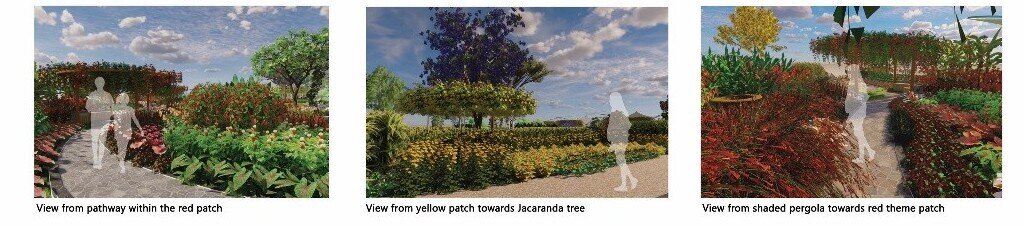
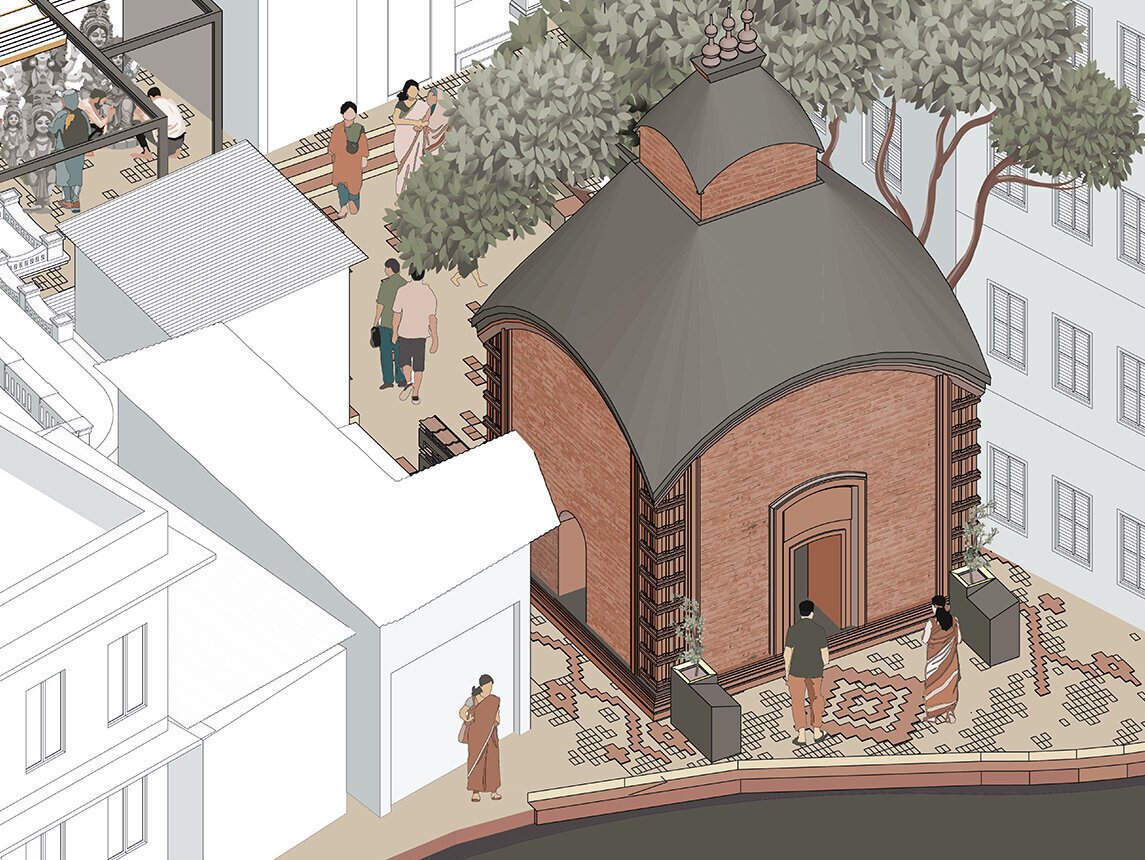
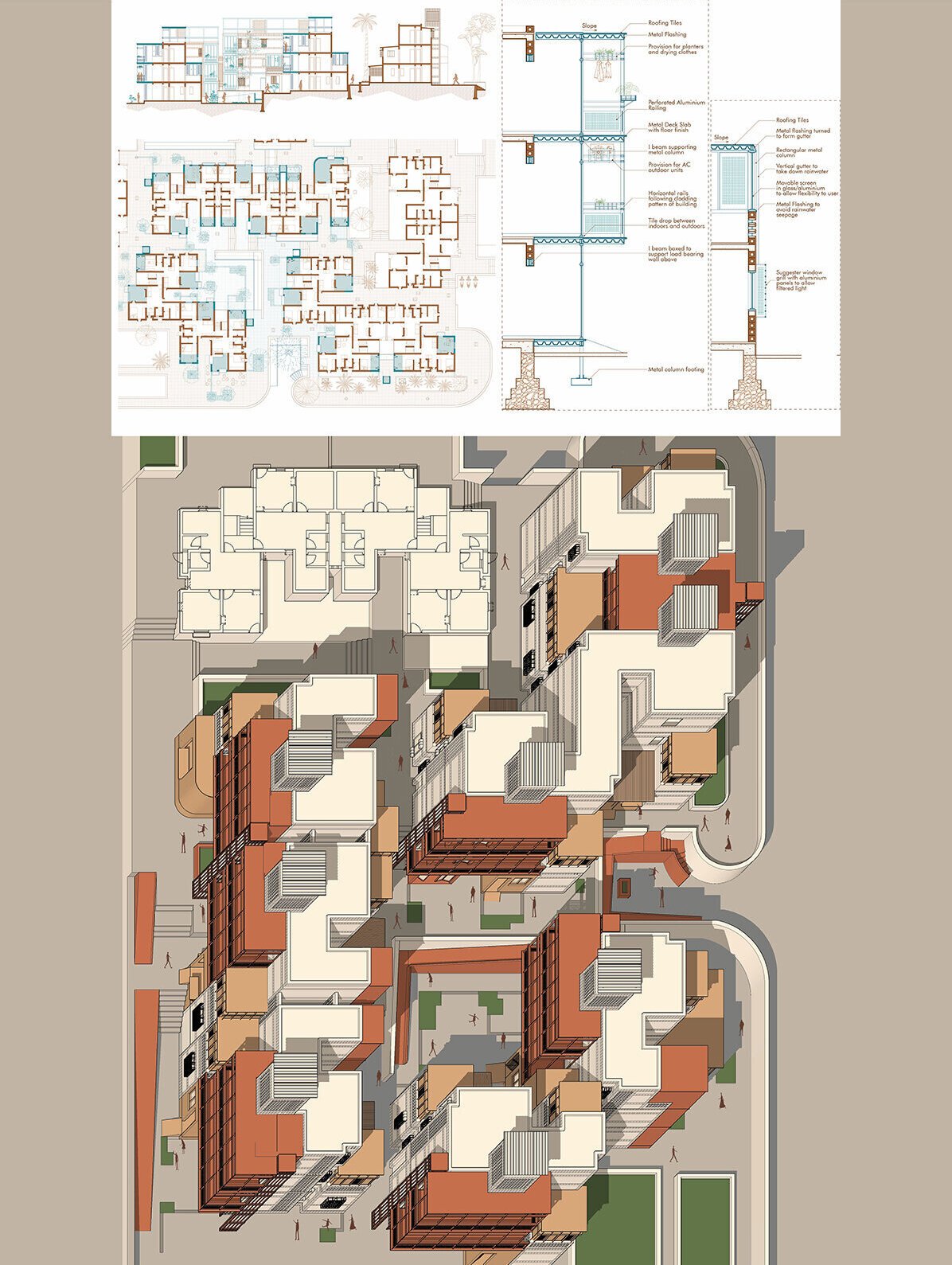
The Shahu Mill–Kotitirth Lake precinct project reimagines a once-vital industrial and cultural landscape in Kolhapur as a regenerative public realm shaped by memory, ecology, and everyday life. The 38-acre site is structured through a network of storytelling courts, a heritage trail, and a cultural commons that supports gathering, performance, and community engagement. Ecological strategies restore the environmental and ritual significance of the place through native planting, pollinator habitats, constructed wetlands, and the revitalisation of the Kotitirth lake edge. Working across multiple scales, the design interweaves labour histories, sacred geographies, and urban nature to create a resilient and inclusive landscape framework. Industrial remnants are retained as spatial anchors, allowing new programs to emerge while reinforcing the site’s identity. The proposal positions landscape as both a carrier of collective memory and an active ecological system, transforming a fragmented precinct into a vibrant cultural and environmental resource for the city.
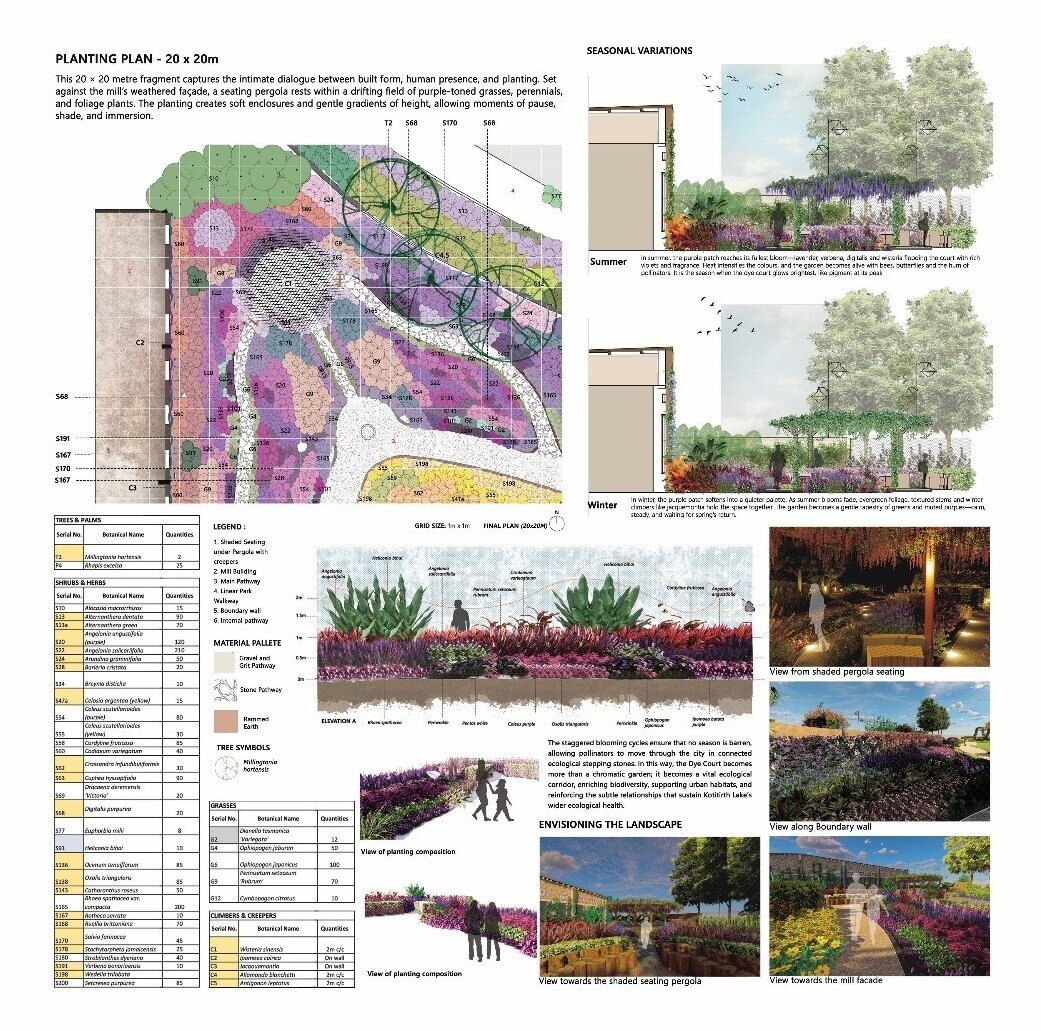
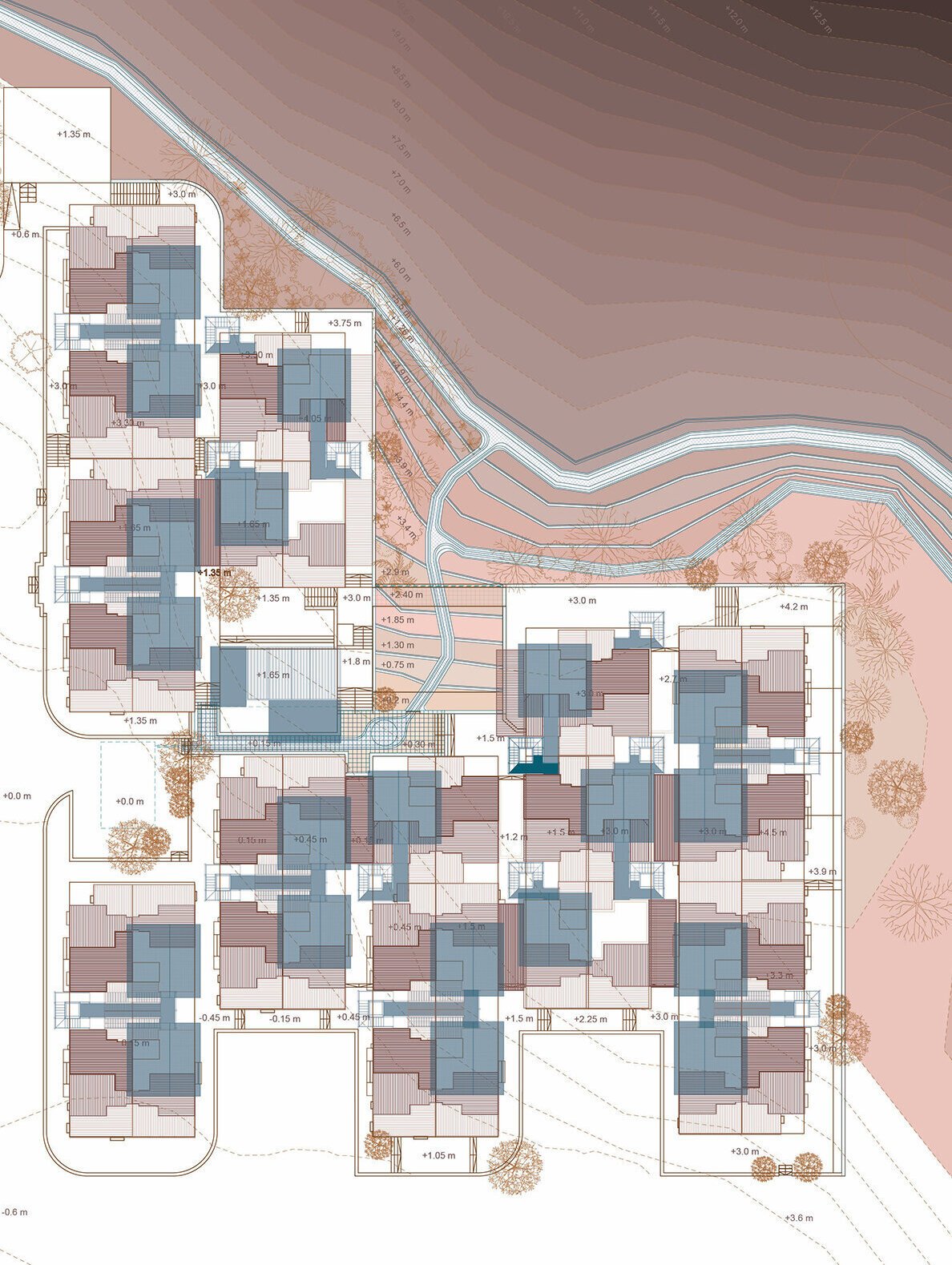
The project adopts a systems-led and time-based approach to landscape, reading the site as an evolving palimpsest shaped by ecological processes, cultural practices, and patterns of everyday use. Mapping becomes a primary tool of inquiry; tracing hydrology, vegetation dynamics, movement networks, and memory layers to reveal latent relationships and opportunities for regeneration. Rather than imposing a fixed masterplan, the design develops as a framework that enables succession, adaptation, and multiple temporalities to coexist. Planting is treated as a spatial and performative medium that structures microclimate, habitat, and public experience, while water systems drive ecological repair and ground the project in seasonal cycles. Working across scales, the project positions landscape as living infrastructure that is both culturally embedded and environmentally responsive.
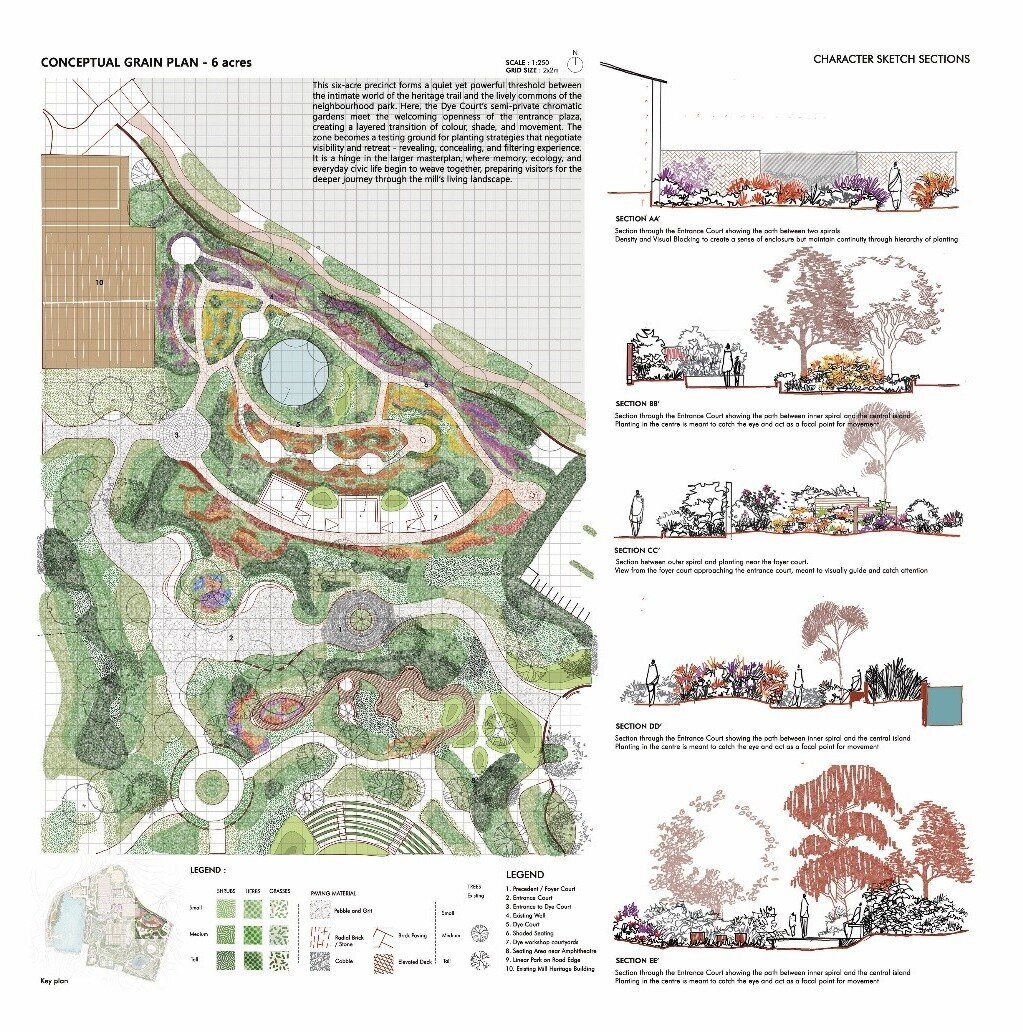
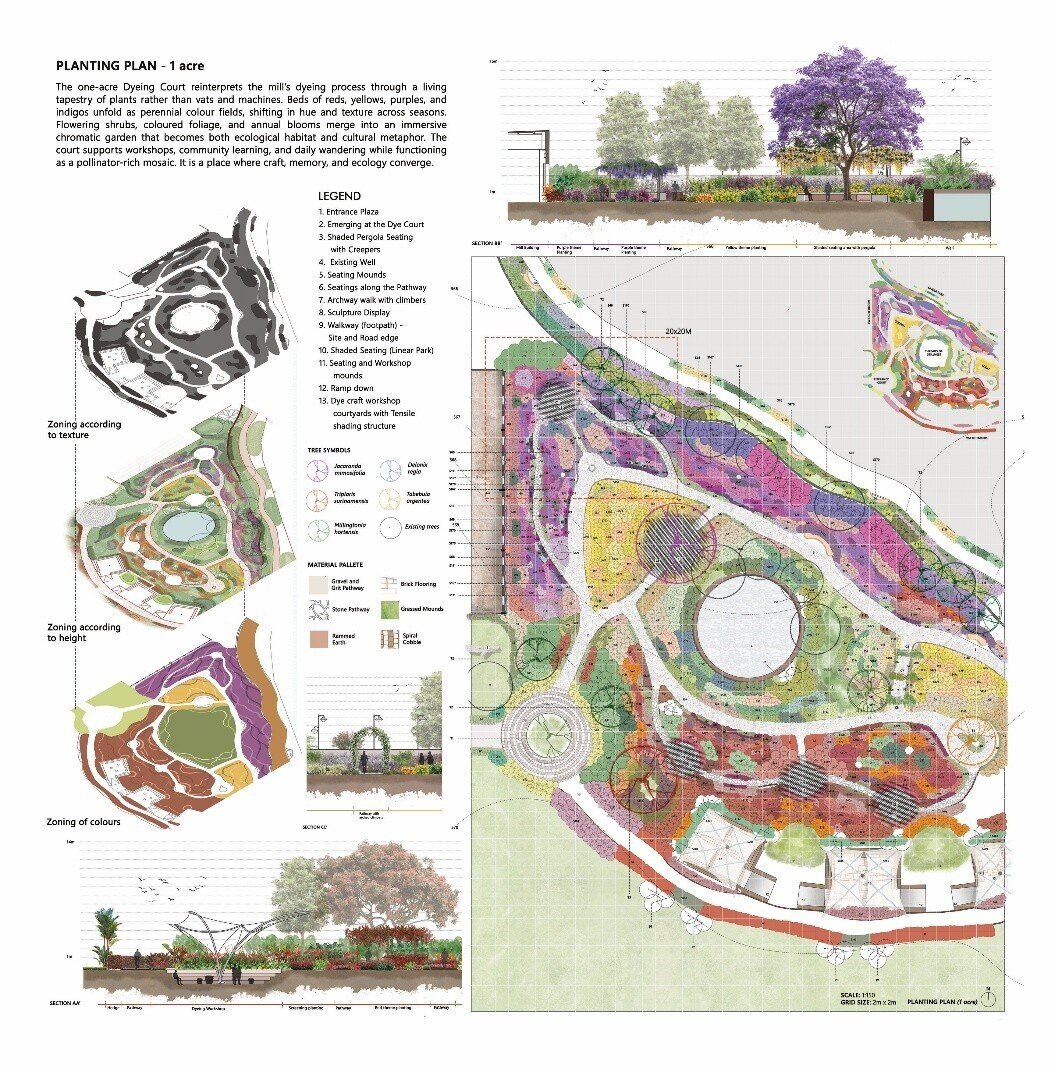
The project proposes a multi-scalar landscape framework that brings together ecological restoration, public life, and cultural memory. A connected system of heritage trails, habitat corridors, and water-sensitive strategies creates a resilient structure that can grow and change over time. Native and adaptive planting supports biodiversity, improves microclimate, and creates diverse spatial experiences. Productive and community spaces are linked by slow movement routes and gathering areas, encouraging everyday interaction with living systems. Existing industrial and cultural elements are retained as anchors for new programs, allowing the site to evolve without losing its identity. Through mappings, sections, and visualisations, the design presents landscape as a dynamic and time-based process, shaping a public realm where ecological and social systems support one another.
- jayesh rajebhosale
Gallery