Voices of the Ecotone — Life at the edges of Aghanashini

- neha niranjan
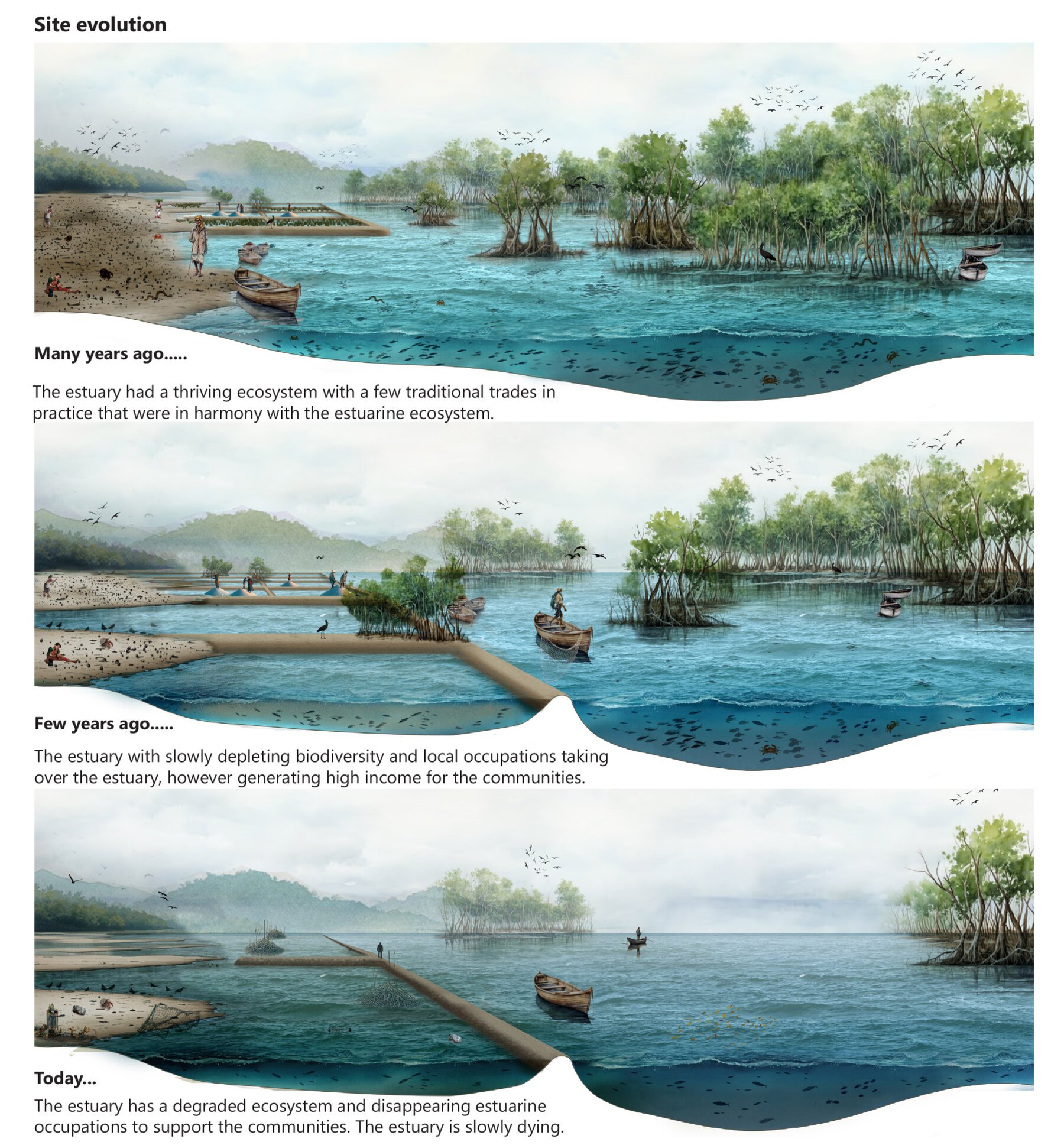
The Aghanashini estuary is the most important out of the
4 major estuaries in Karnataka due to its rich biodiversity
and high productivity over the years.
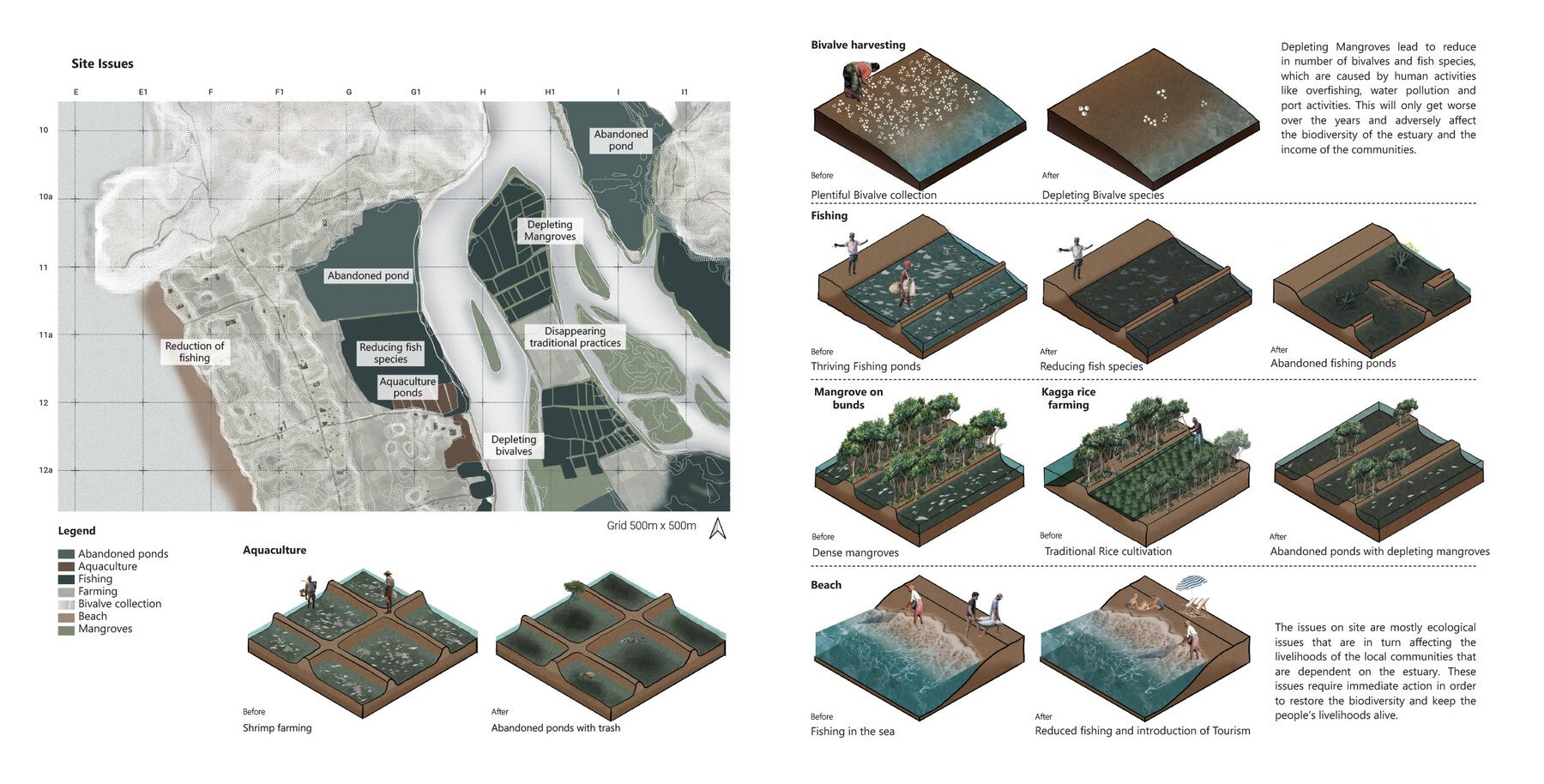
The ecologically rich Aghanashini estuary faces threats from
degrading water quality, declining marine species, and
poor occupational practices, which is also vital for local
livelihoods, leading to community displacement and loss
of traditional practices. The aim is to restore biodiversity,
while also creating sustainable livelihood opportunities
that will in-turn keep the estuary thriving.
The estuary is equally as dependent on its people, as they
are on it. This river has remained a free flowing river
because of the continuous efforts of these communities and
NGOs. Hence, it is an urgency to solve these ecological and
livelihood issues in order to keep the estuary from being a
miracle of the past.
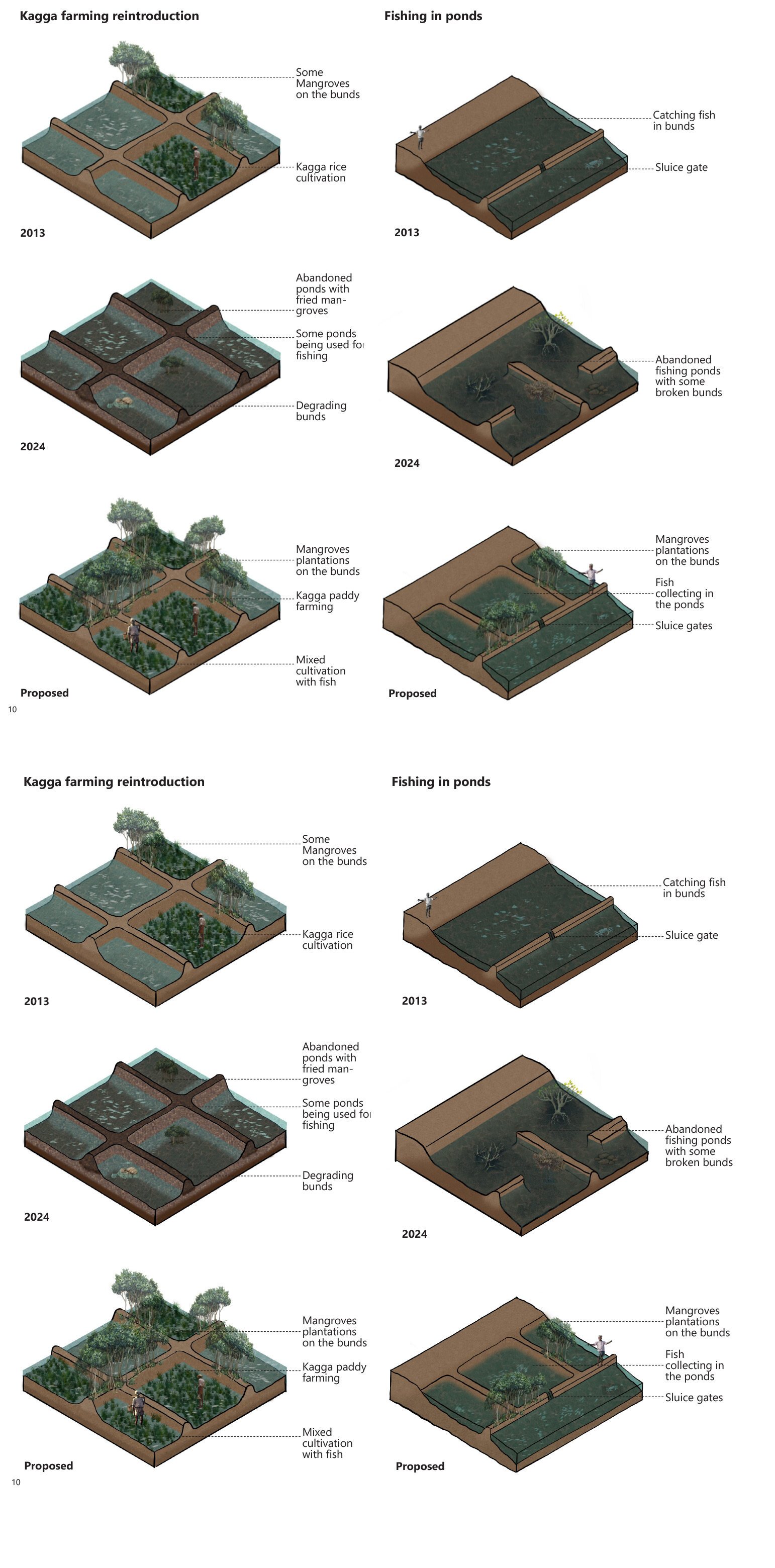
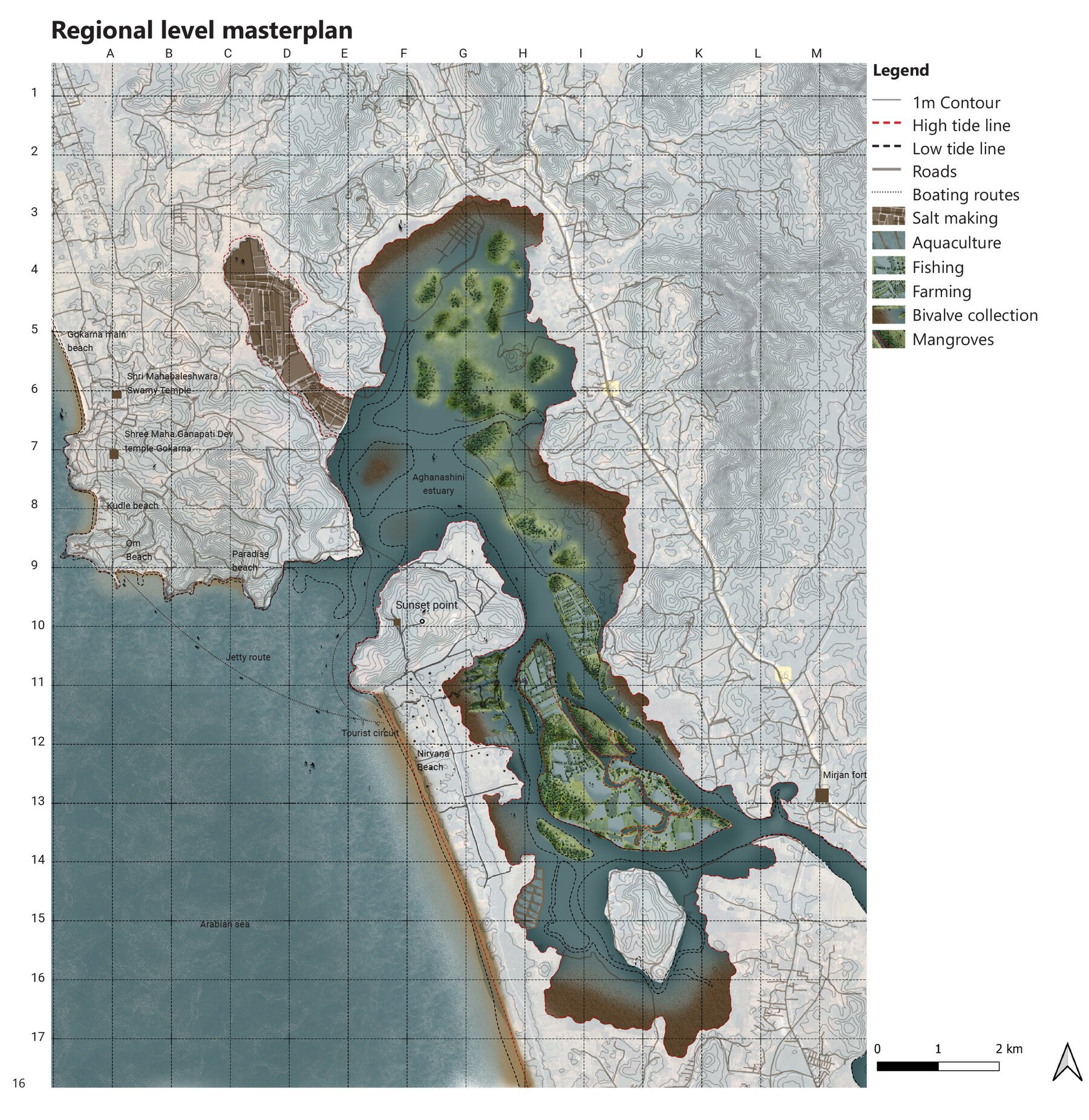
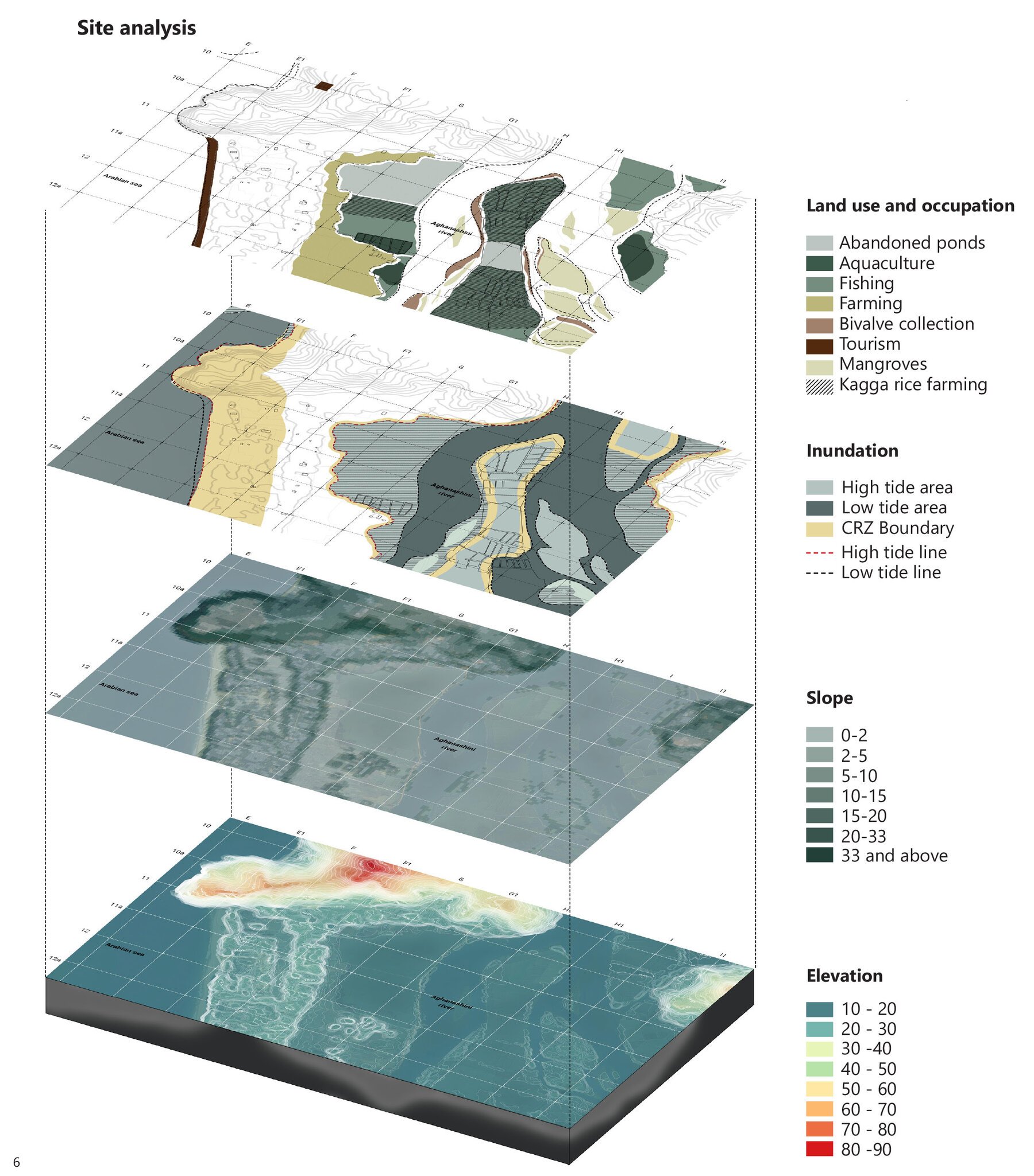
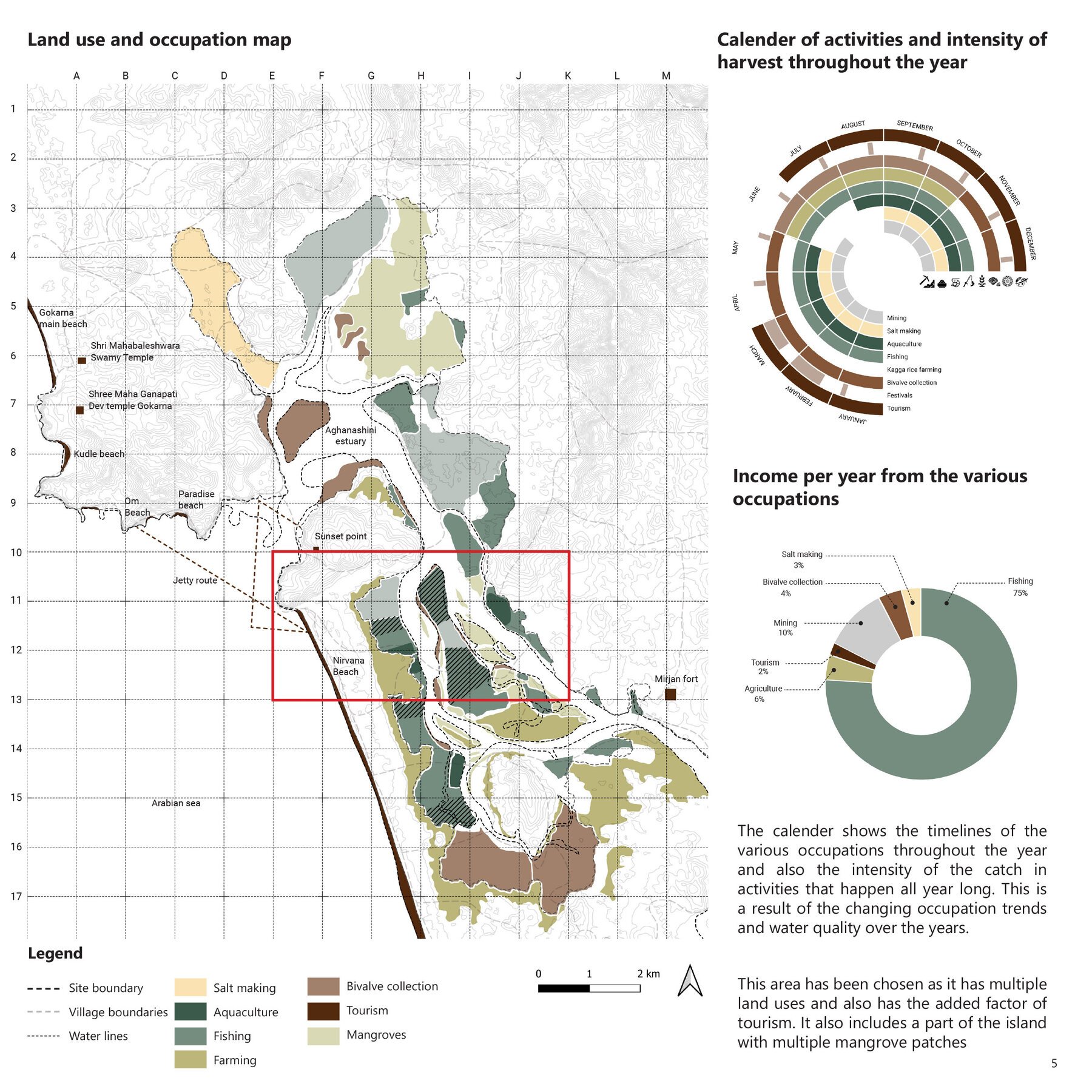
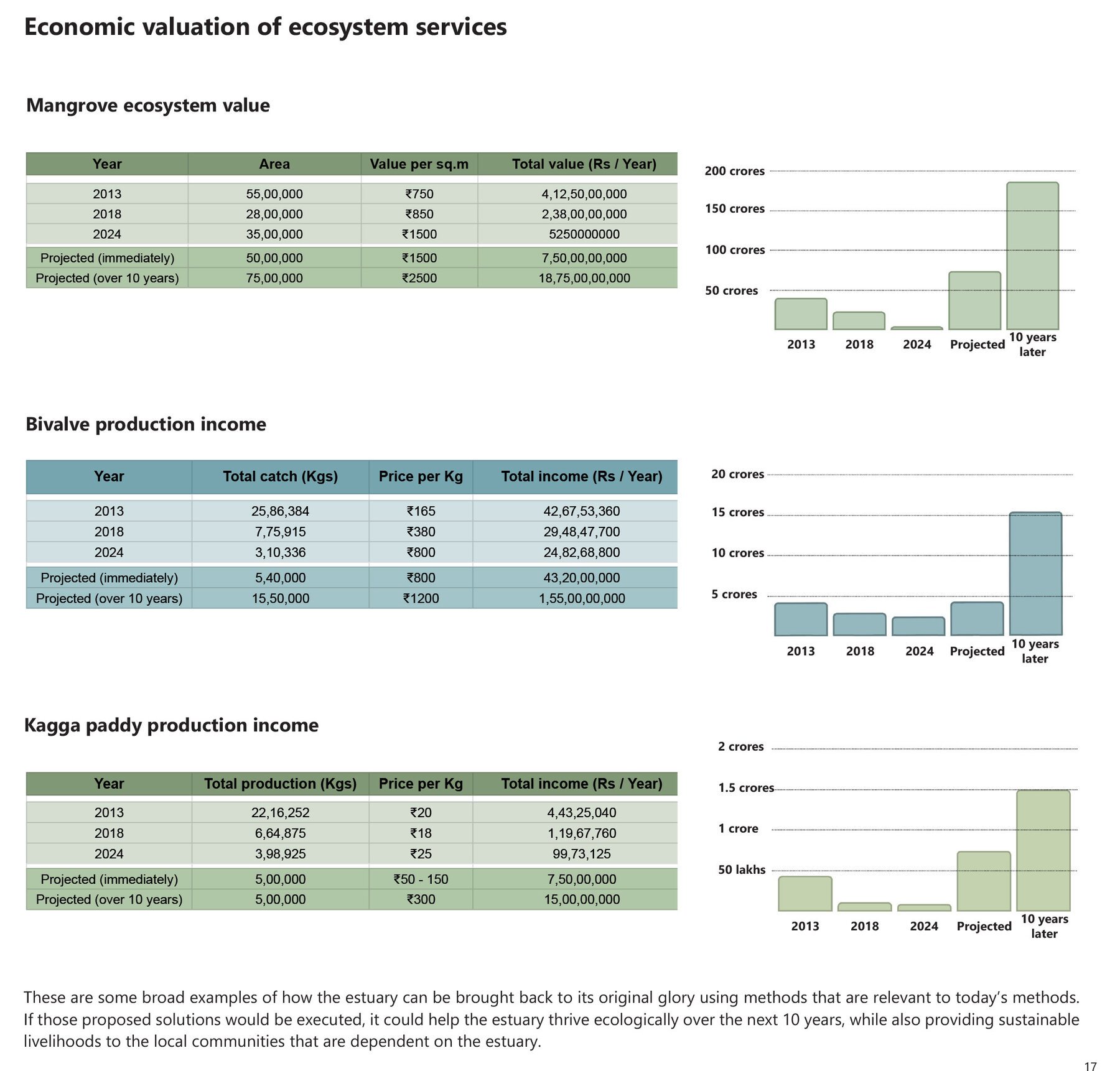
This study adopts a multilayered approach to examine the ecological and community dynamics that shape the culturally and economically rich Aghanashini estuary. It begins by establishing the ecological significance and functional value of estuarine systems. Spatial maps of physical layers and two decades of economic productivity data were then compiled to understand long term environmental patterns. These layers were analyzed to identify links between specific commercial activities and the zones in which they occur, revealing the ideal ecological conditions that have historically supported endemic practices. A comparative assessment of temporal data highlighted a marked decline in traditional occupations, native flora and fauna, and the cultural identity of the estuary. The findings informed the development of context sensitive strategies aimed at revitalizing these endemic practices. The study ultimately proposes strategies to restore ecological balance, strengthen livelihoods, and sustain the estuary’s identity amid contemporary economic and ecological pressures.
The study proposes a two stage strategic framework consisting of an ecological layer and an economic layer. The first stage focuses on restoring ecological balance through a detailed analysis of the factors contributing to biodiversity decline. It outlines step by step interventions tailored to the endemic practices that define the existence and productivity of the Aghanashini estuary, ensuring that restoration efforts are both site specific and sustainable.
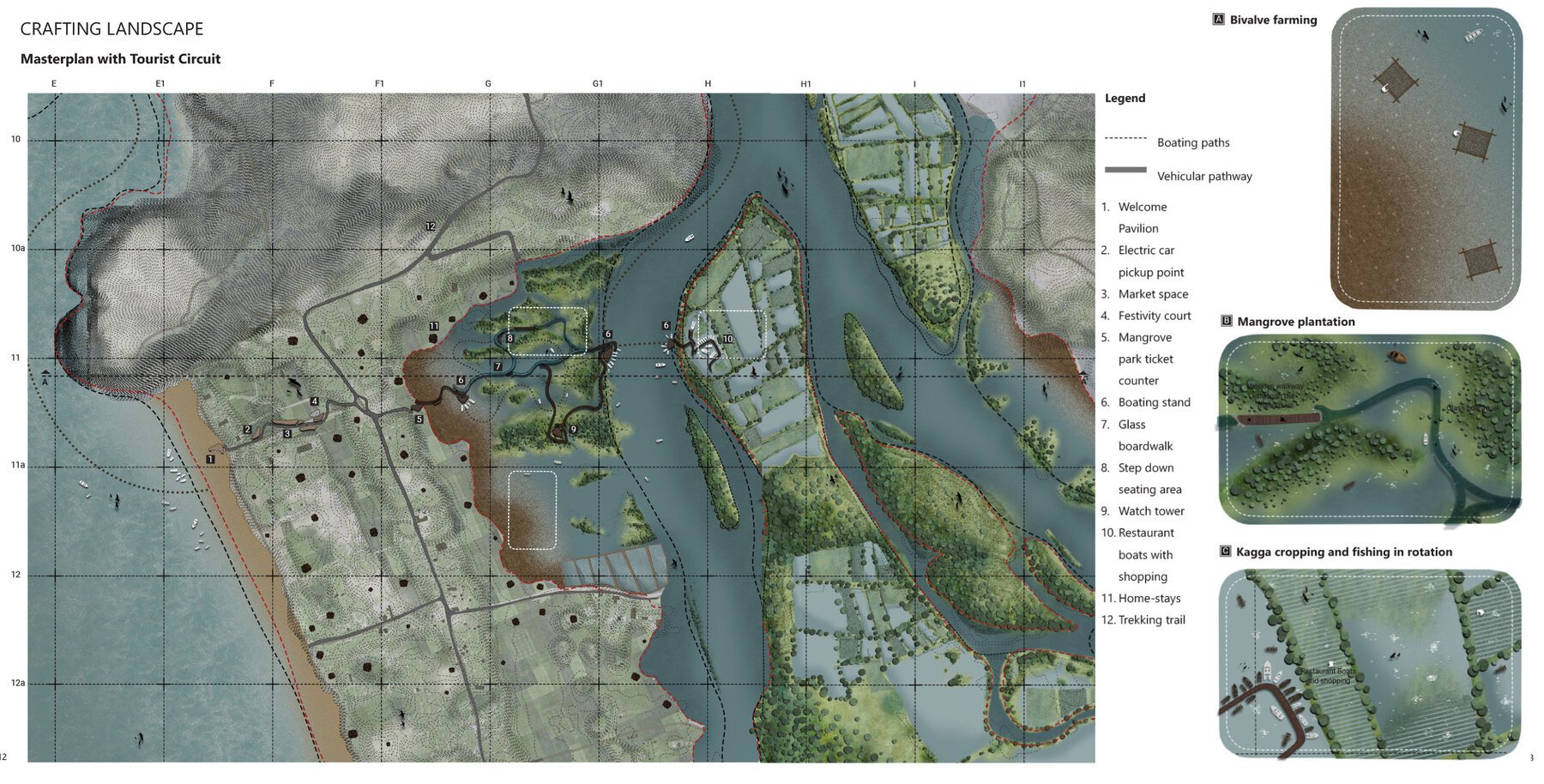
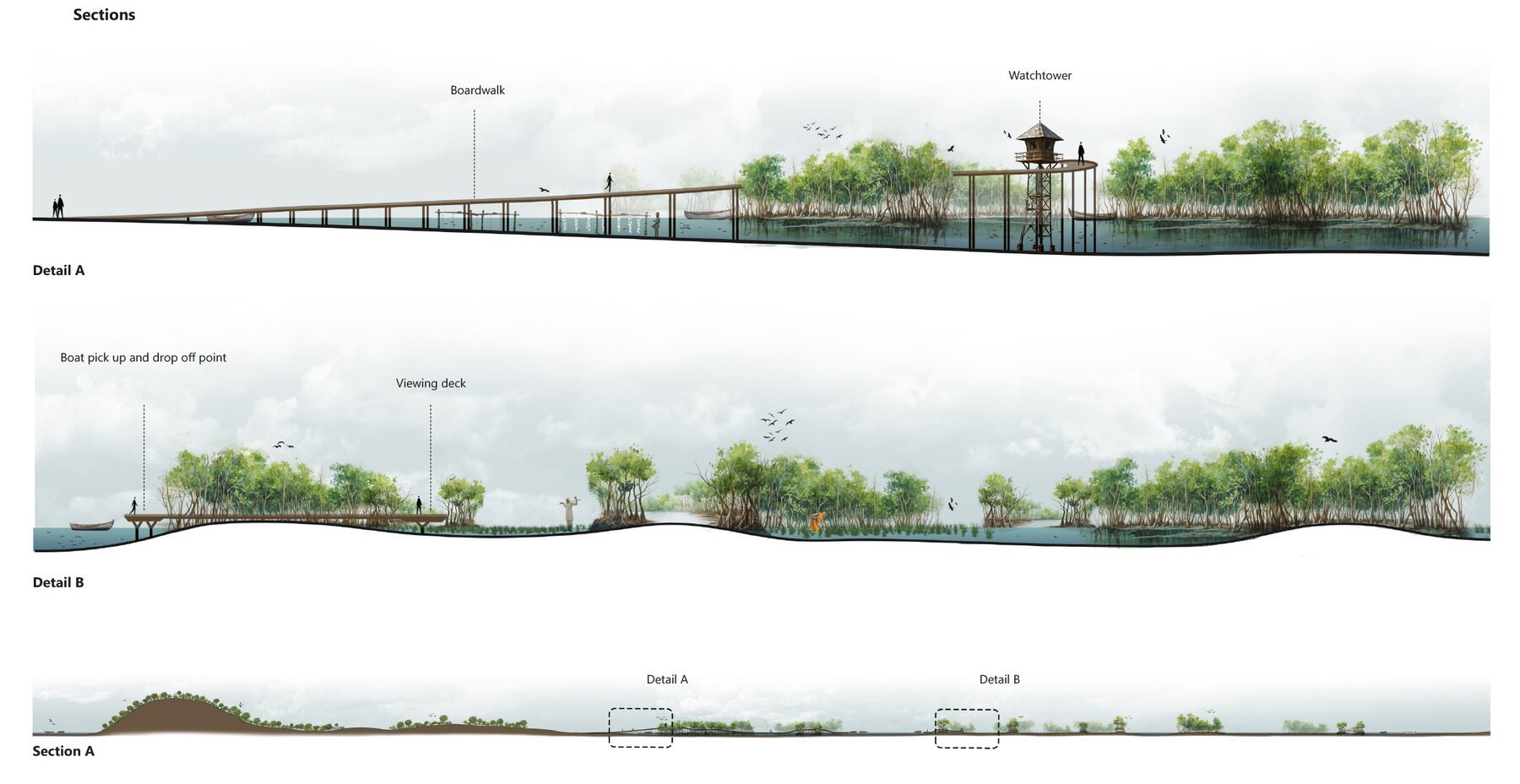
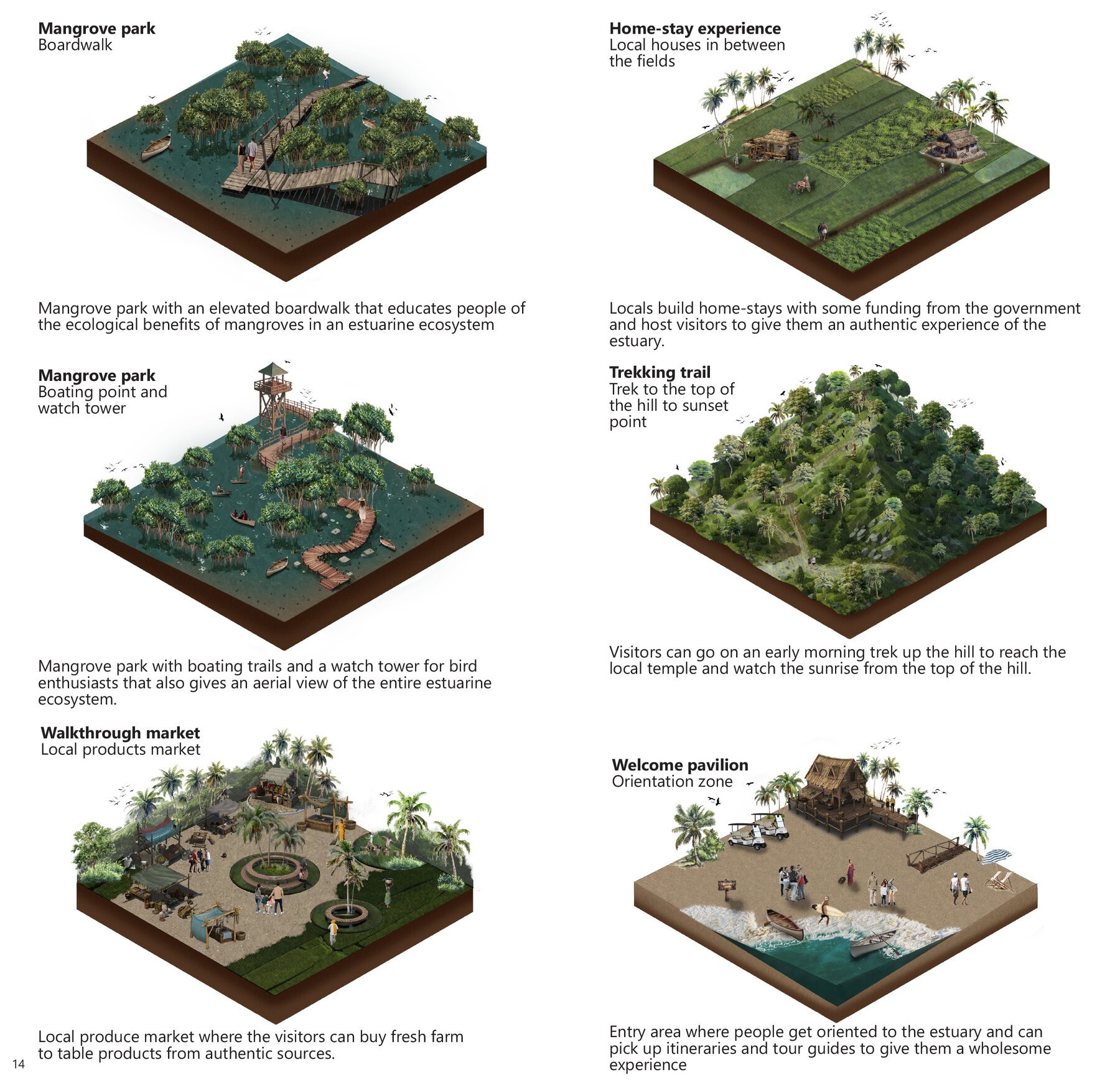
The second stage builds upon this restored ecological foundation by introducing a carefully planned tourism circuit. Designed as a supplementary economic model, this phase promotes eco tourism to generate additional revenue alongside existing endemic practices. By aligning conservation with livelihood opportunities, the strategy brings in revenue while promoting cultural practices. Together, these layers create a regenerative cycle in which ecological restoration supports economic resilience. This creates a sustainable livelihood module while restoring biodiversity in the Aghanashini estuary.
- neha niranjan
Gallery