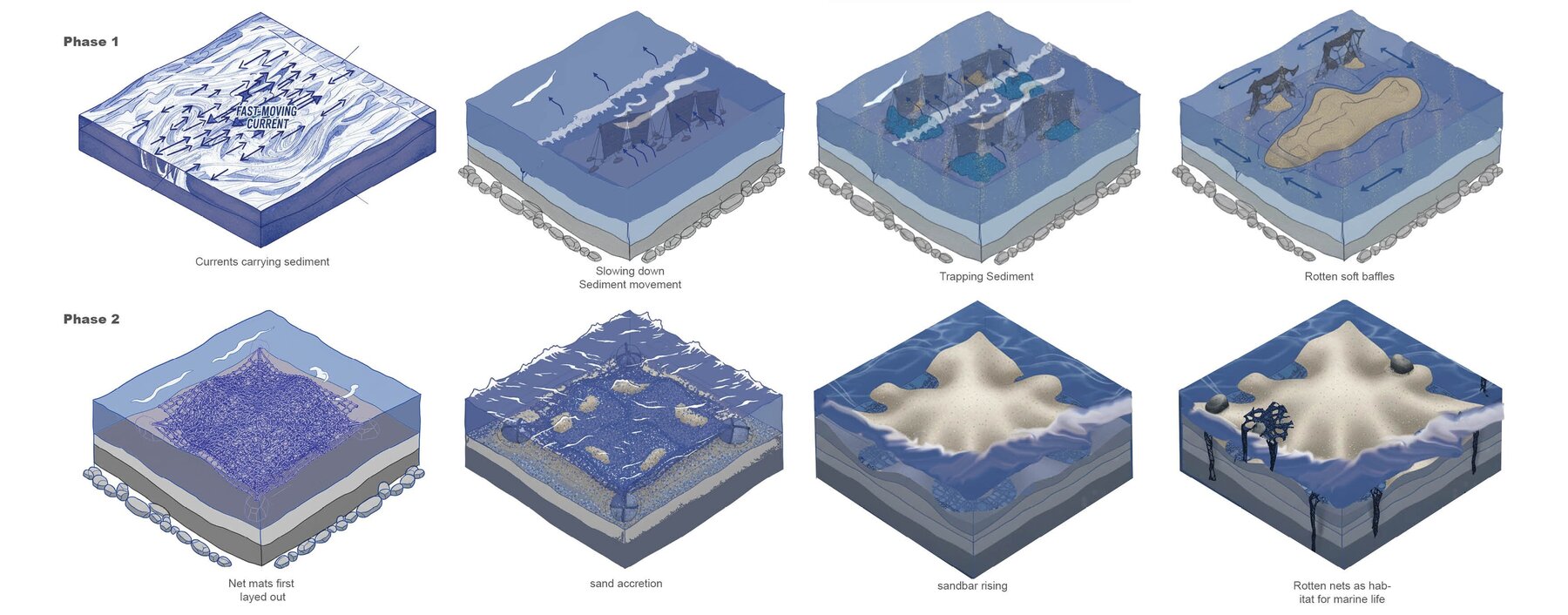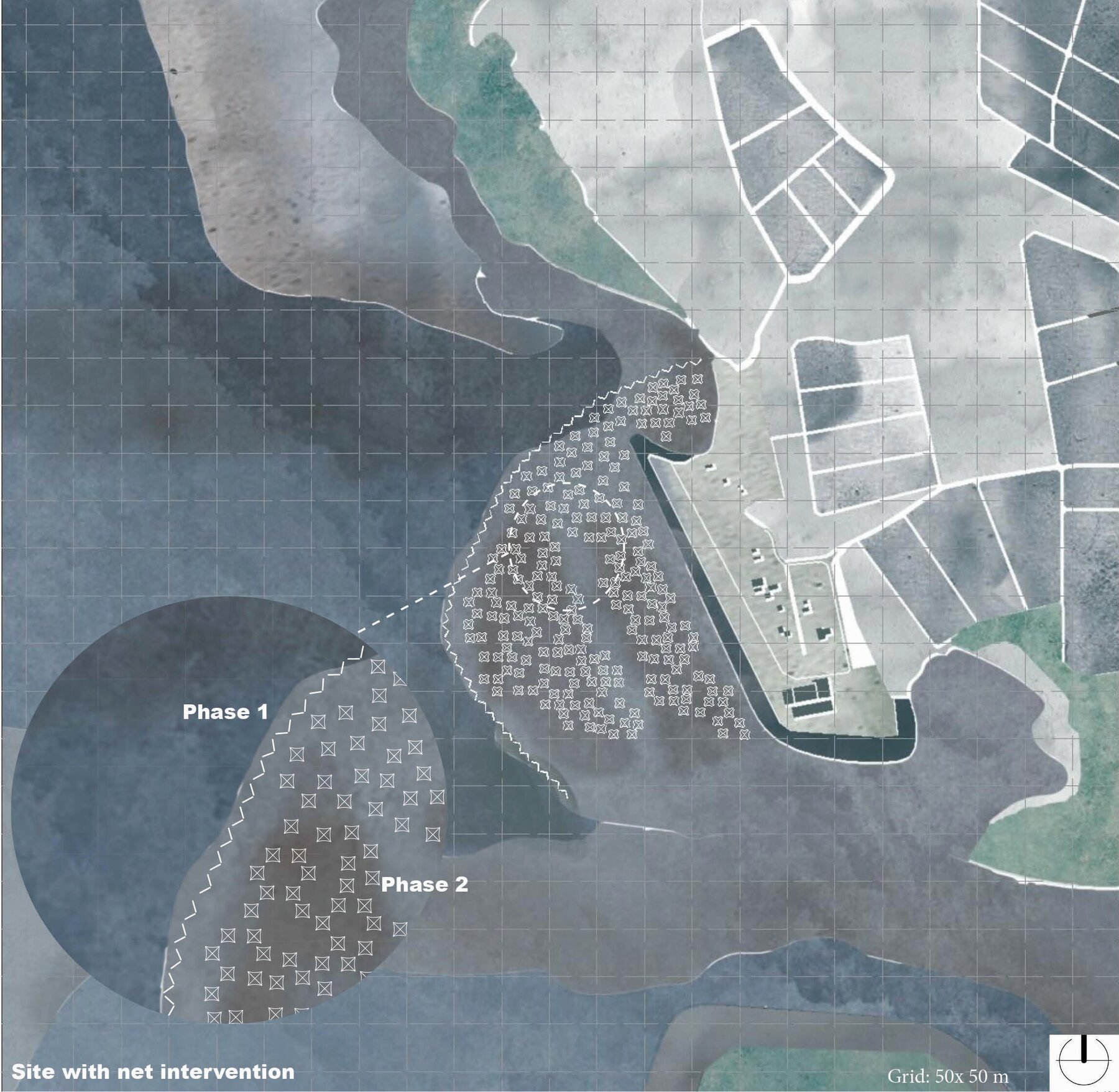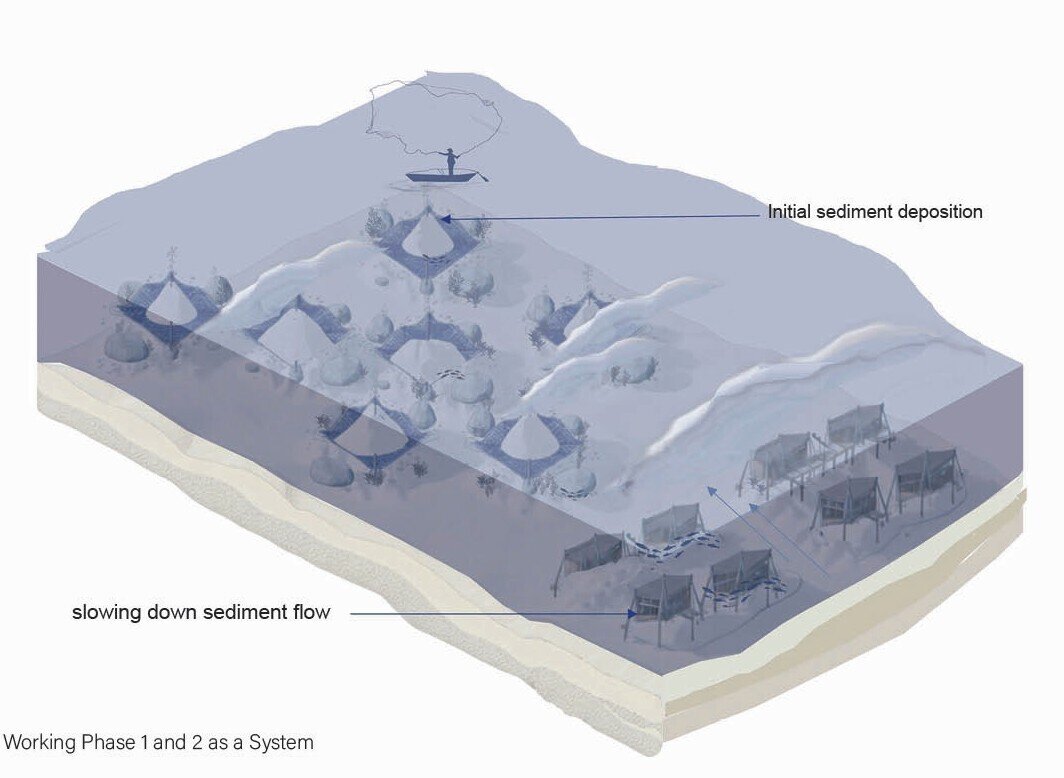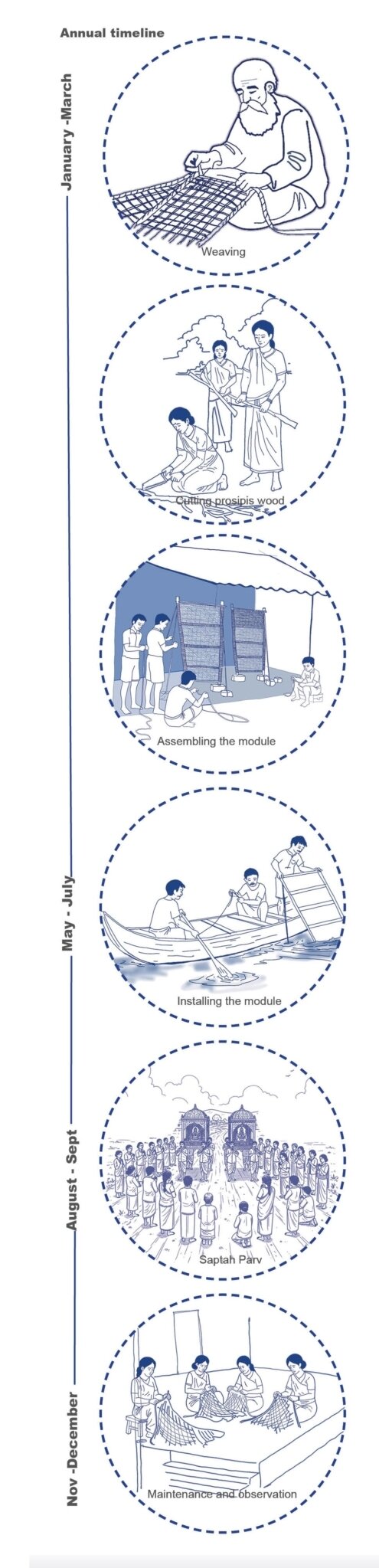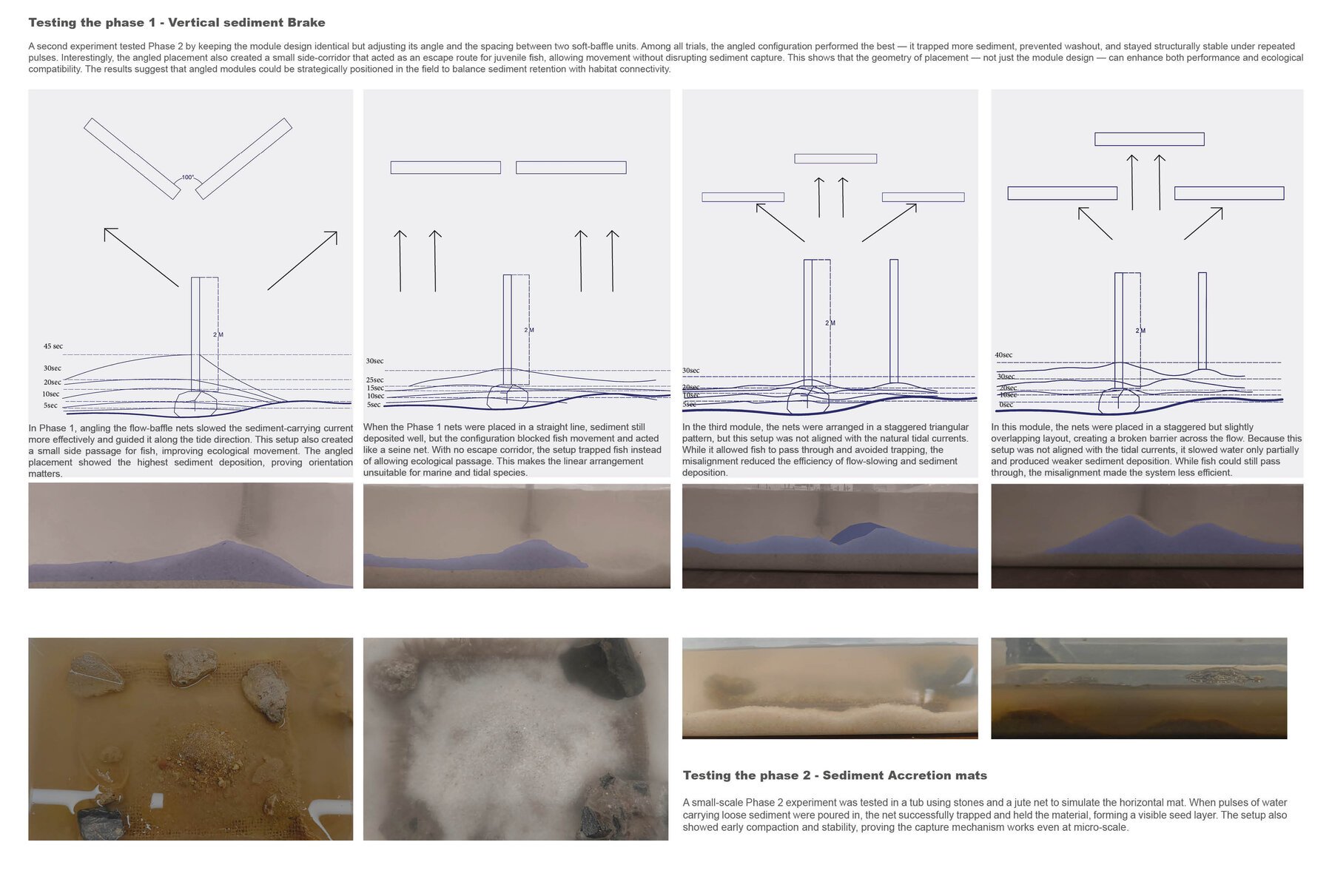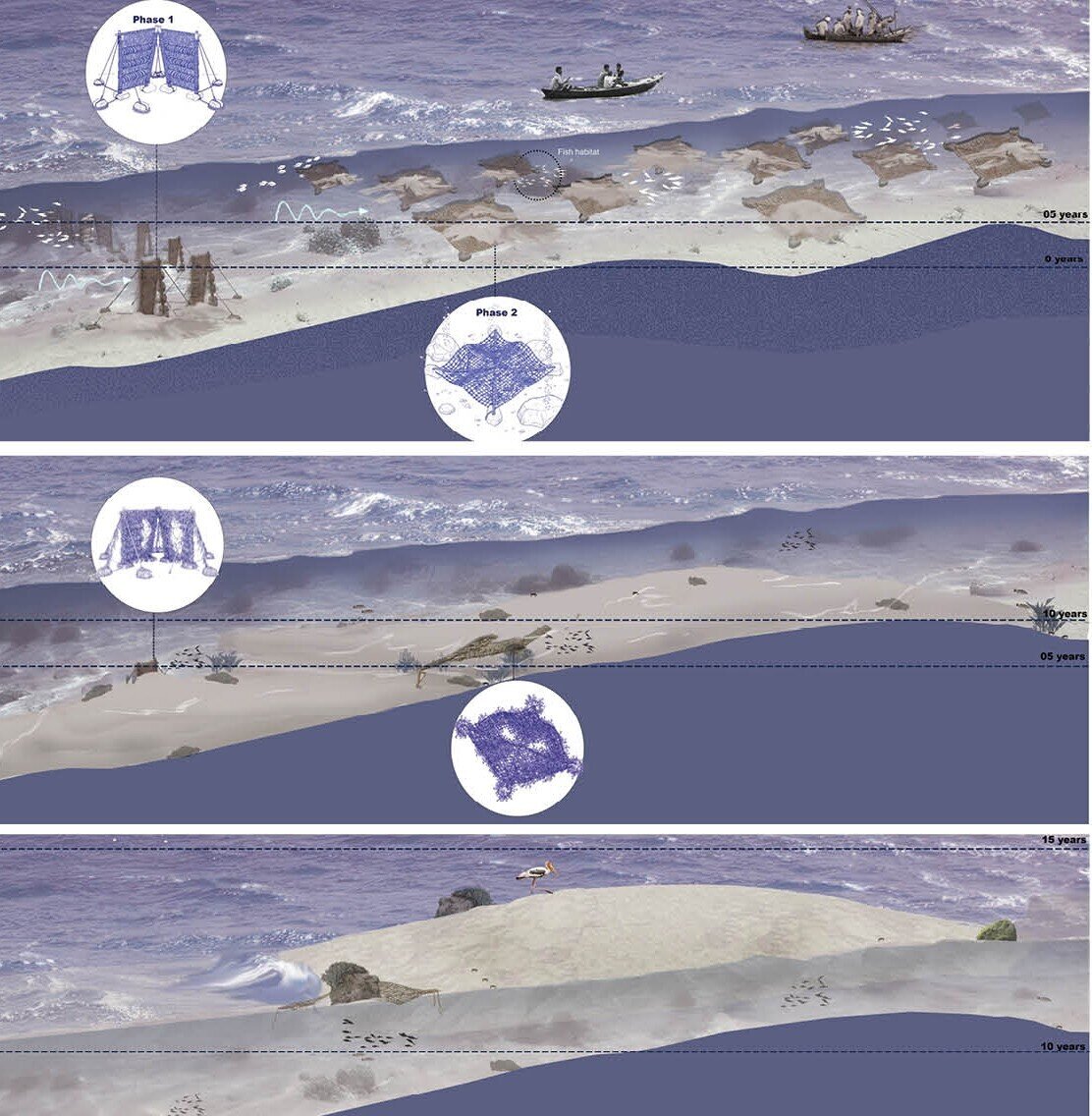
The regrowth of the Hinglaj sandbars is not merely an ecological process but a powerful cultural opening. These shifting formations regulate tidal movement, create fish nurseries, and quietly sustain the fishing economies that depend on them. Rather than imposing rigid infrastructure, the proposal imagines a regenerative system shaped by the community itself. Simple, locally built sediment-trapping frameworks woven from coir, jute, and amabdi brushwood are placed within tidal channels to gently slow currents and encourage sand deposition. The act of weaving, already embedded in fishing practice, extends into ecological stewardship, transforming everyday skill into environmental care.
Through cooperative fish nurseries, adaptive net systems, and collective mangrove regeneration, Hinglaj’s estuary can evolve as a living, self-renewing landscape. The design opportunity lies in positioning residents not as beneficiaries but as active custodians where restoring sandbars, reviving mangroves, and sustaining livelihoods become one interconnected, community-led system of resilience
The project adopts a process-based approach that works with tidal rhythms rather than resisting them. Instead of fixed engineering solutions, it introduces modular, porous structures that can be installed, adjusted, and repaired by local fishing communities. These woven sediment traps function as catalysts initiating sand deposition, stabilizing emerging sandbars, and gradually shaping new ecological ground.
The strategy operates across scales: at the micro level, slowing currents and supporting fish nurseries; at the estuary scale, influencing sediment dynamics and edge conditions; and at the social scale, embedding stewardship within daily livelihood practices. Adaptability is central structures respond to seasonal shifts, monsoon surges, and long-term morphological change. By aligning ecological regeneration with existing skills such as net-weaving and cooperative fishing, the approach transforms restoration into a continuous, community-led practice rather than a one-time intervention.
The project output is a living, adaptive estuarine system rather than a fixed physical object. It produces stabilized and gradually expanding sandbars through community-installed sediment-trapping frameworks that work with tidal currents. Over time, these structures catalyze natural deposition, support mangrove colonization, and strengthen fish nursery habitats.
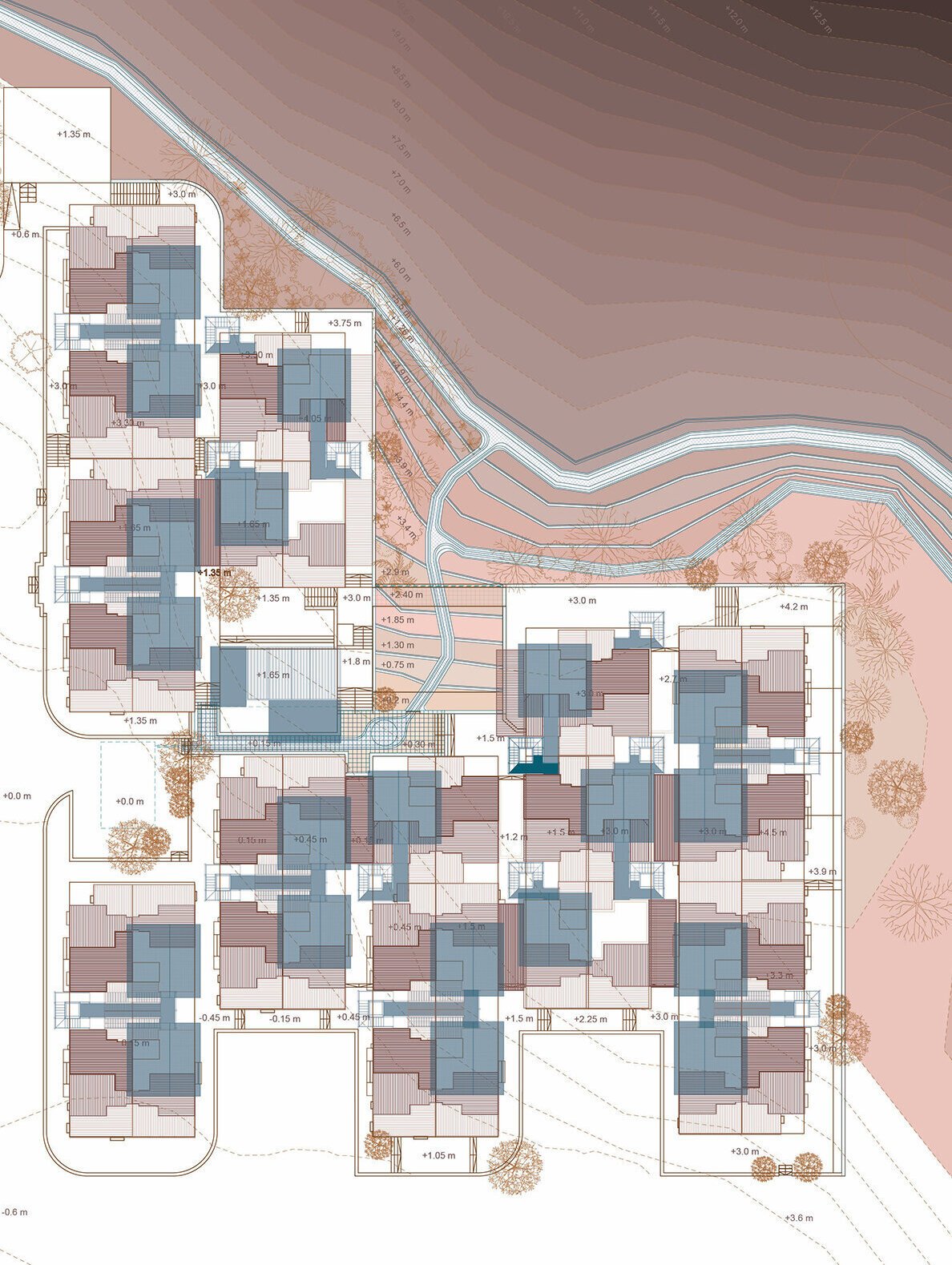
Spatially, the outcome is a layered landscape of porous barriers, regenerating sand edges, cooperative fish nursery zones. Socially, the project establishes local stewardship networks training fishing communities to install, maintain, and adapt woven sediment systems seasonally. Ecologically, it enhances biodiversity, improves tidal flow balance, and reduces erosion without relying on hard embankments.
The final output is therefore both material and cultural: a regenerative coastal infrastructure built from local materials and skills, where sandbars become productive ecological grounds and fishing livelihoods are reinforced through collective environmental care.
- durva kamat
Gallery
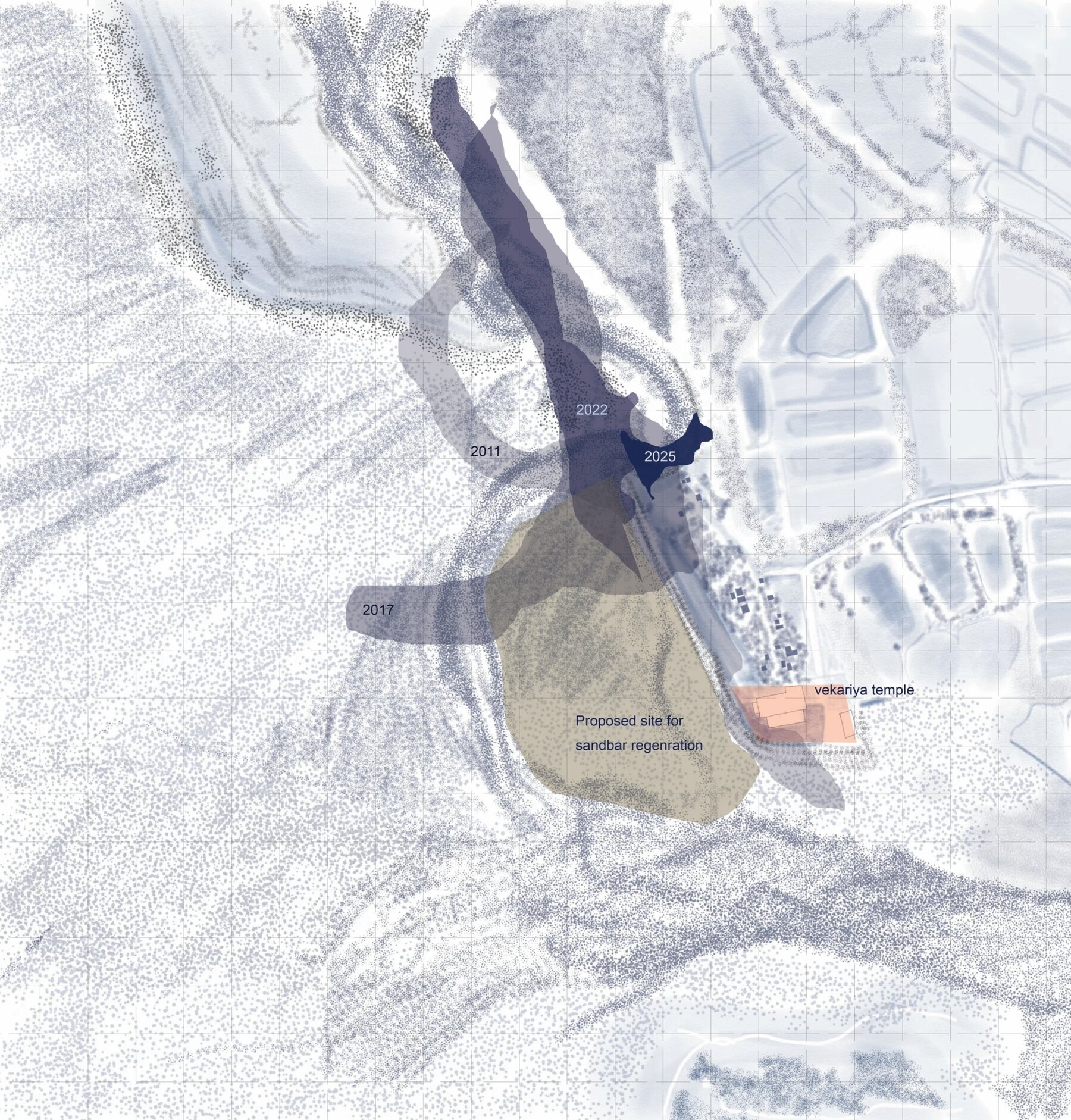
Vekariya Sandbar Temporality
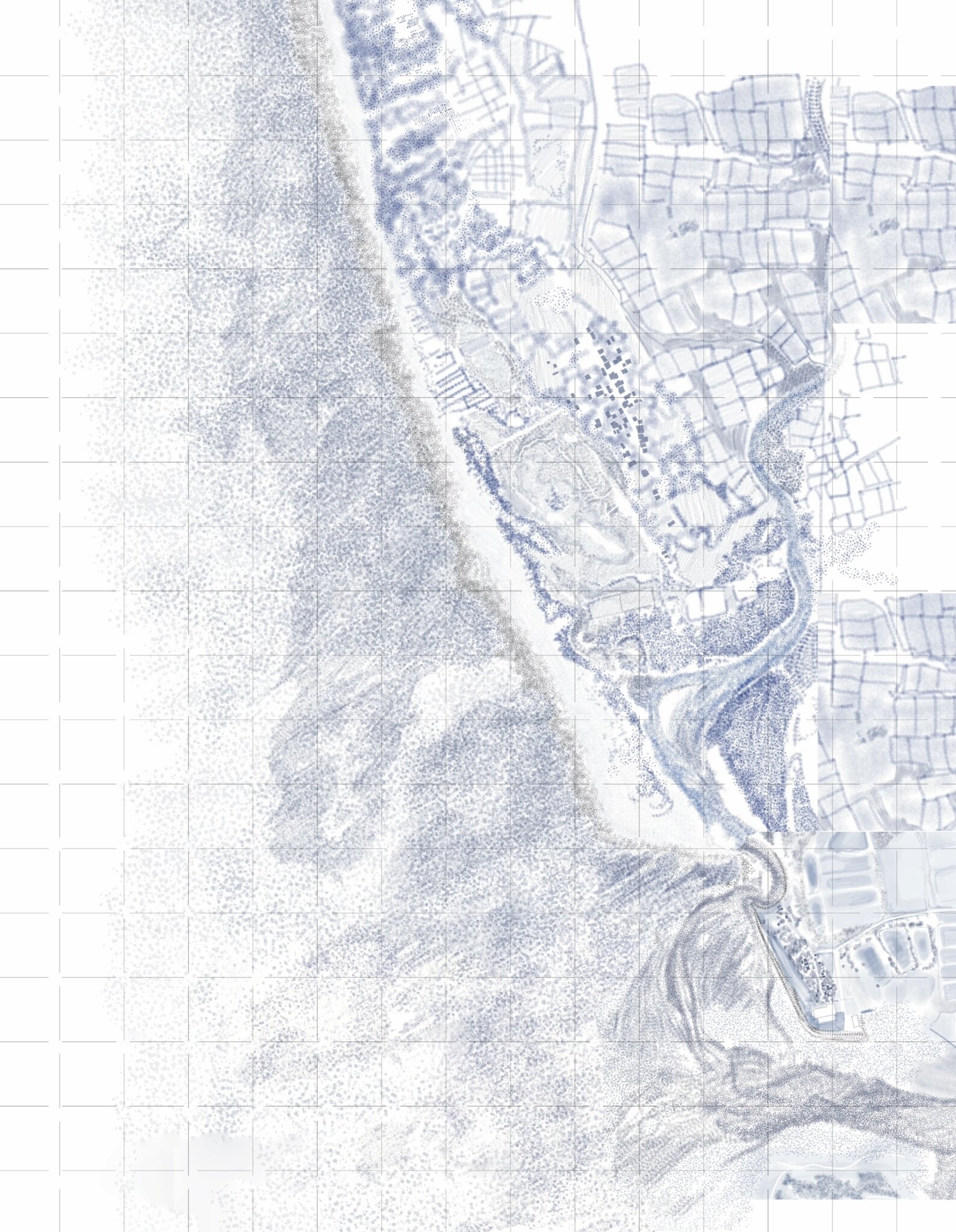
Site Coast Drawing