40.30.20 Horizontal Pivot Window

- jacob babu alappatt
- reshma m
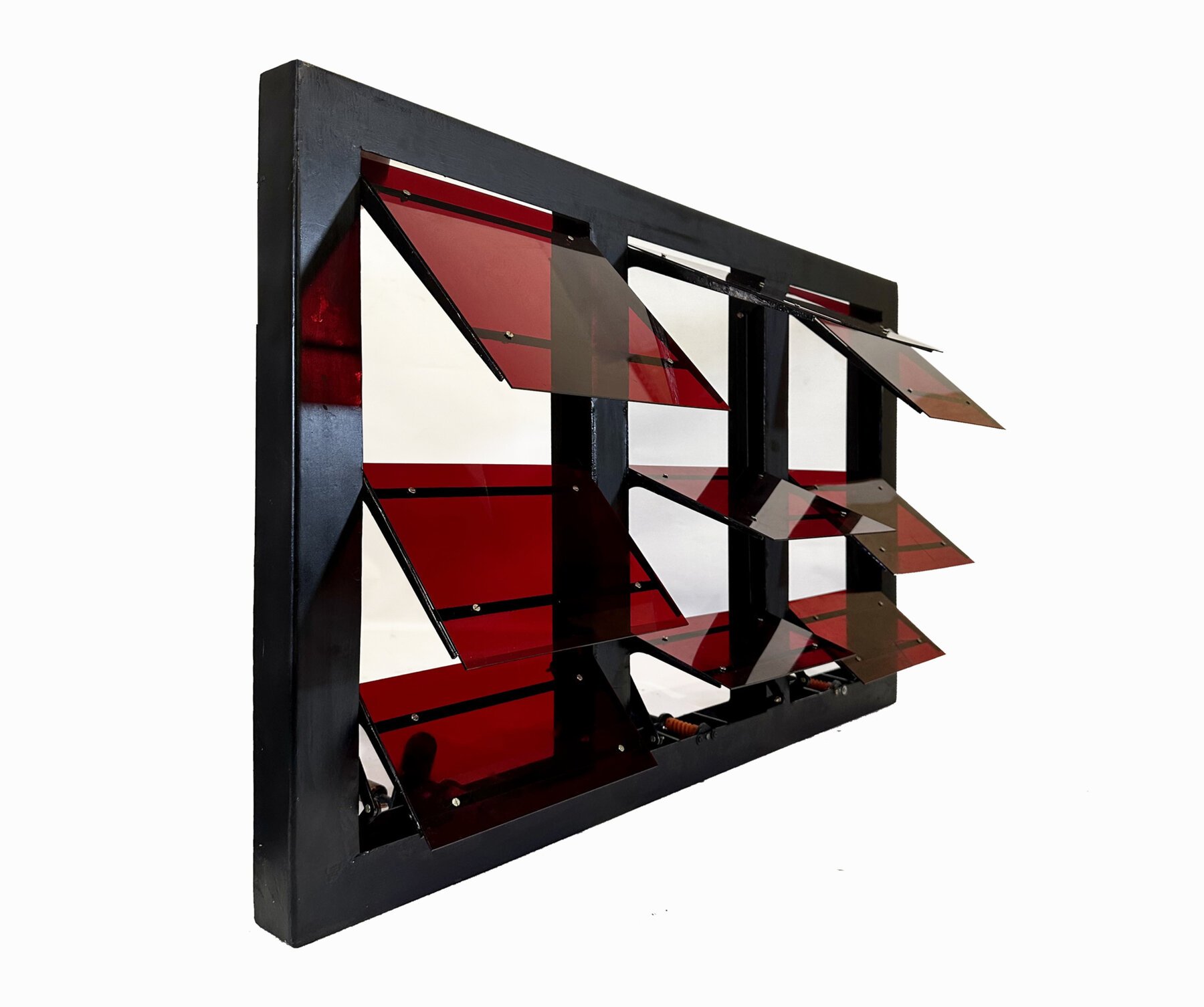
Side
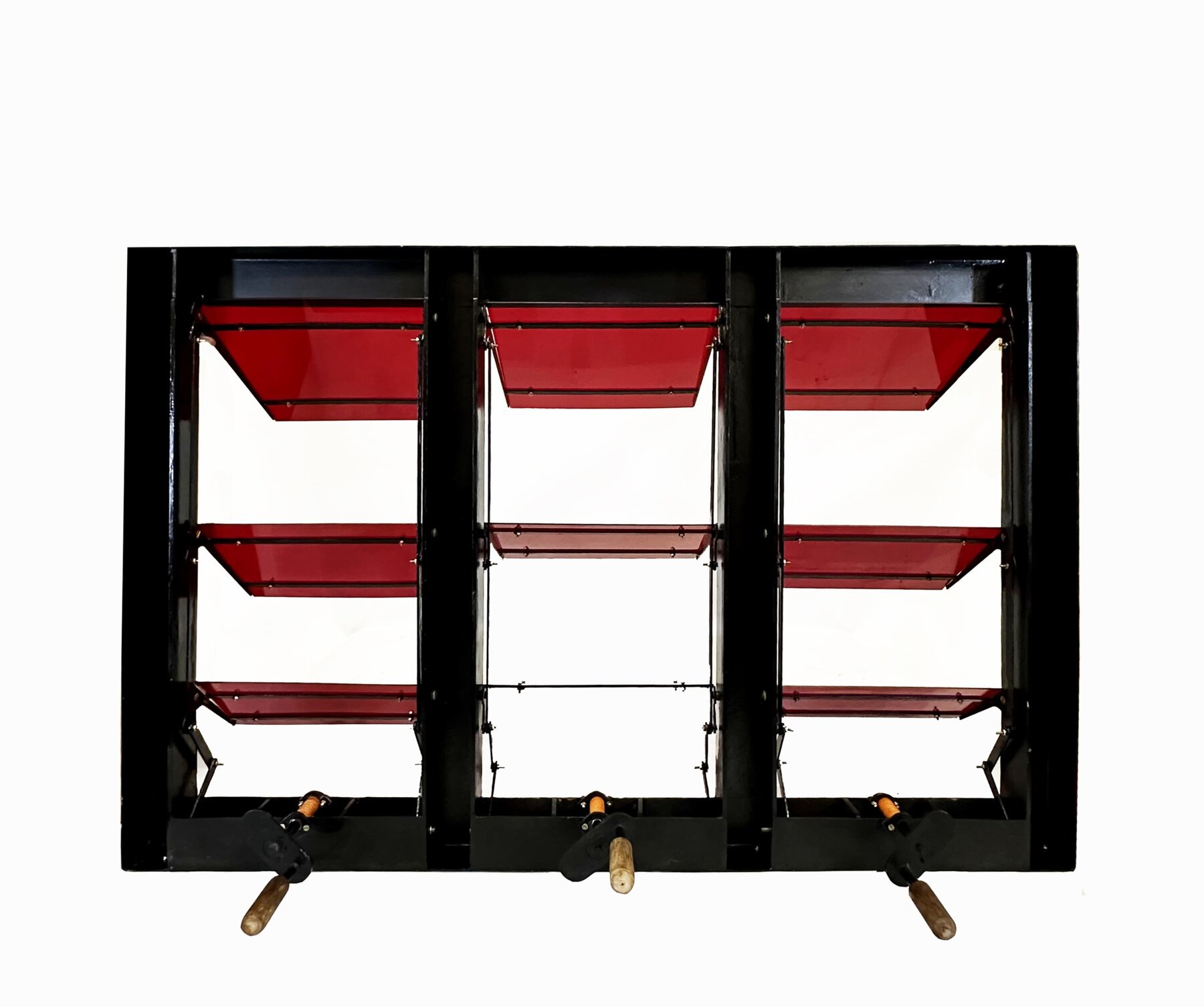
Back
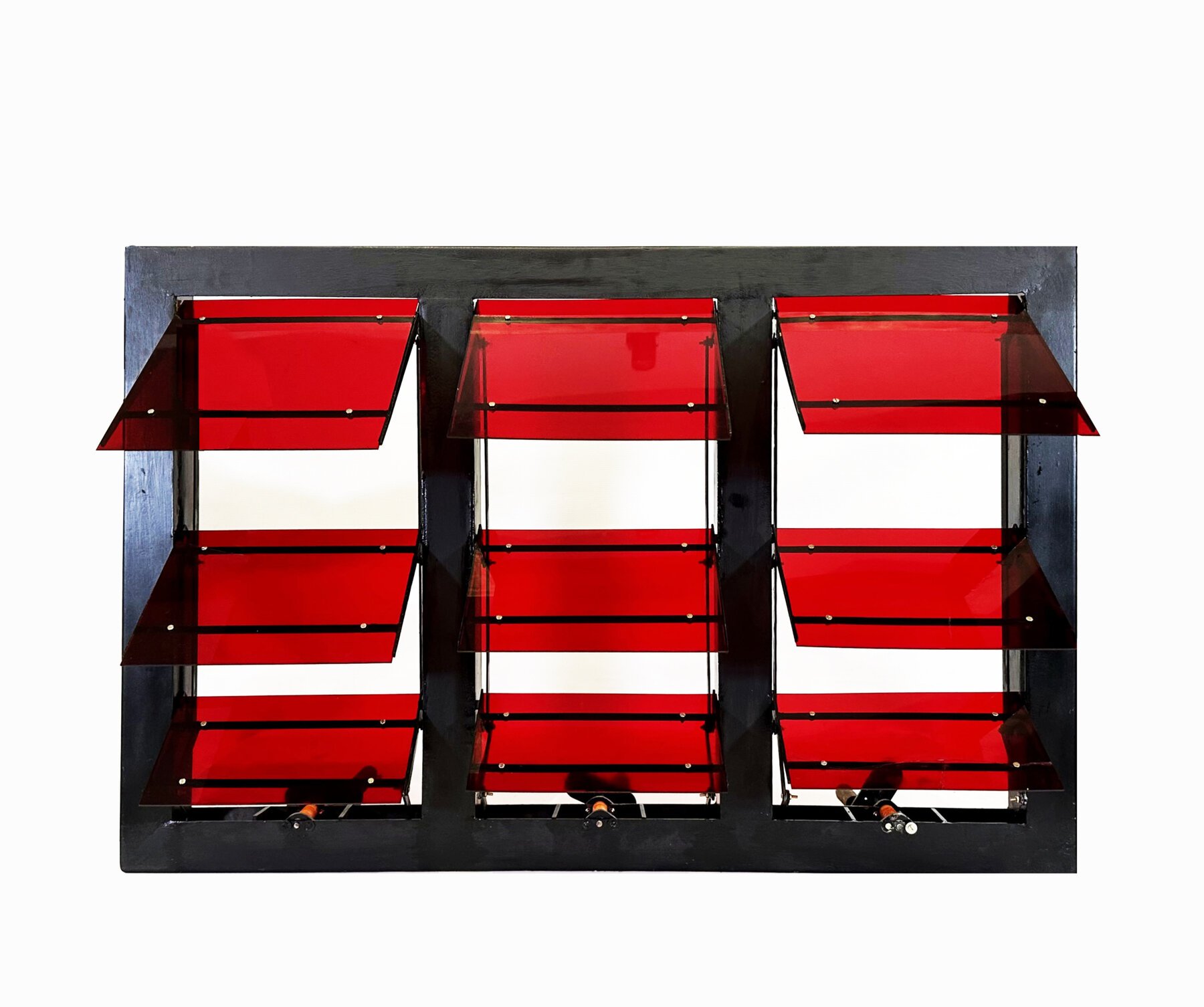
Front
About the project
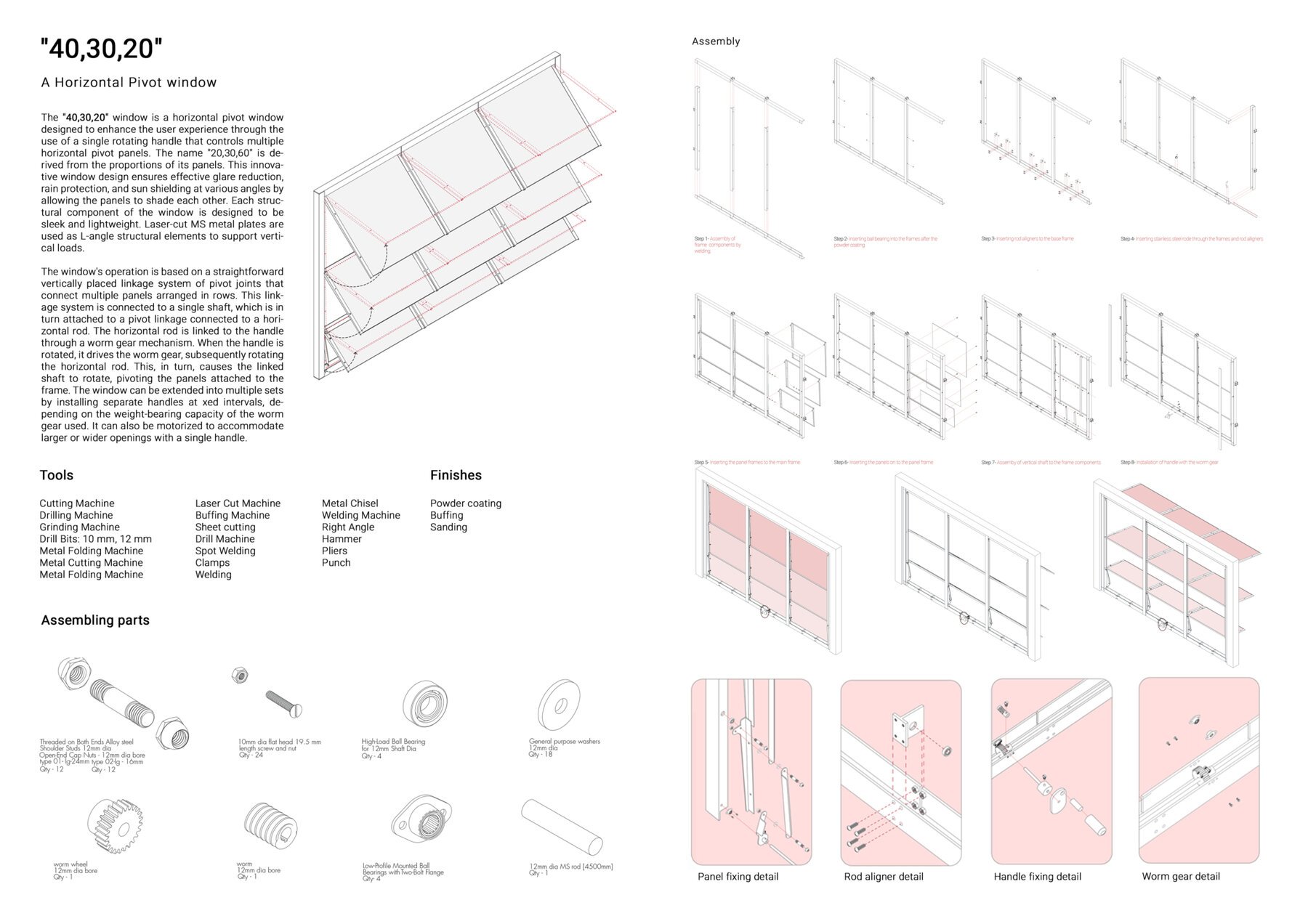
The 40.30.20 window explores how an opening can function as an integrated system rather than a singular building component. Conceived as a horizontal pivot window, the design uses one rotating handle to simultaneously operate multiple panels, establishing a direct relationship between user action and environmental response. The name derives from the proportional sequencing of its panels 40, 30, and 20 which enables a cascading shading effect. Each panel shades the next, reducing glare, limiting rain ingress, and controlling solar exposure at varying angles. The project investigates how proportion, movement, and material performance can work collectively to enhance comfort while maintaining openness. Rather than treating shading as an applied layer, the window embeds climatic control directly into its geometry and operation.
Approach
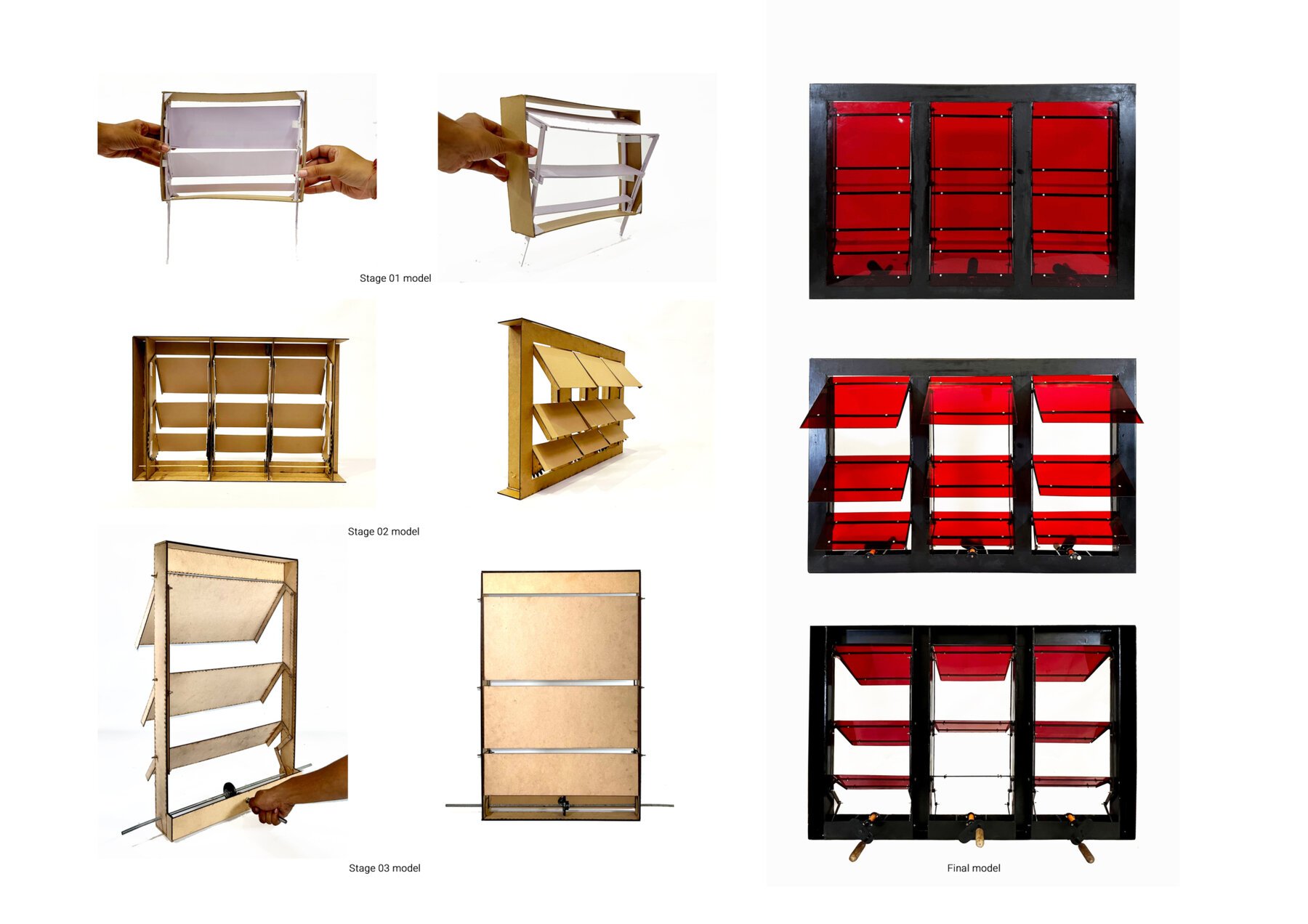
The design approach focused on system integration, where structure, movement, and climate responsiveness are developed as a single operable logic. The pivot mechanism is consolidated along the edges of the window frame to minimise visual obstruction and allow smooth panel rotation. Structurally, the panels are designed with a minimal cross-section, relying on edge-supported cantilever action to reduce material use while maintaining stability. Material choices remain flexible, allowing users to select glazing types based on contextual needs. However, the system is optimised for opaque or translucent panels to enhance shading and thermal performance. Bright-coloured surfaces further contribute to passive cooling by reflecting light. Through iterative testing, the window evolved as a precise balance between performance, usability, and constructability.
Output
The final outcome is a scalable window system capable of responding to varied architectural conditions. It can be applied to vertically large openings by segmenting the panels while still allowing a fully open condition. Horizontally, the system can be repeated to form a responsive façade element, enabling controlled ventilation, shading, and visual connection. The clarity of the mechanism ensures ease of use, while the proportional logic produces a dynamic façade expression that shifts with operation. As a result, the 40.30.20 window functions not only as an opening, but as an active environmental mediator, translating climatic demands into a legible architectural system suitable for multiple spatial and facade applications.
- jacob babu alappatt
- reshma m
Gallery
Side
Back
Front