From Subjects to Citizens- The Making of Modern Jaipur through Educational Institutions (1850s – 1980s)

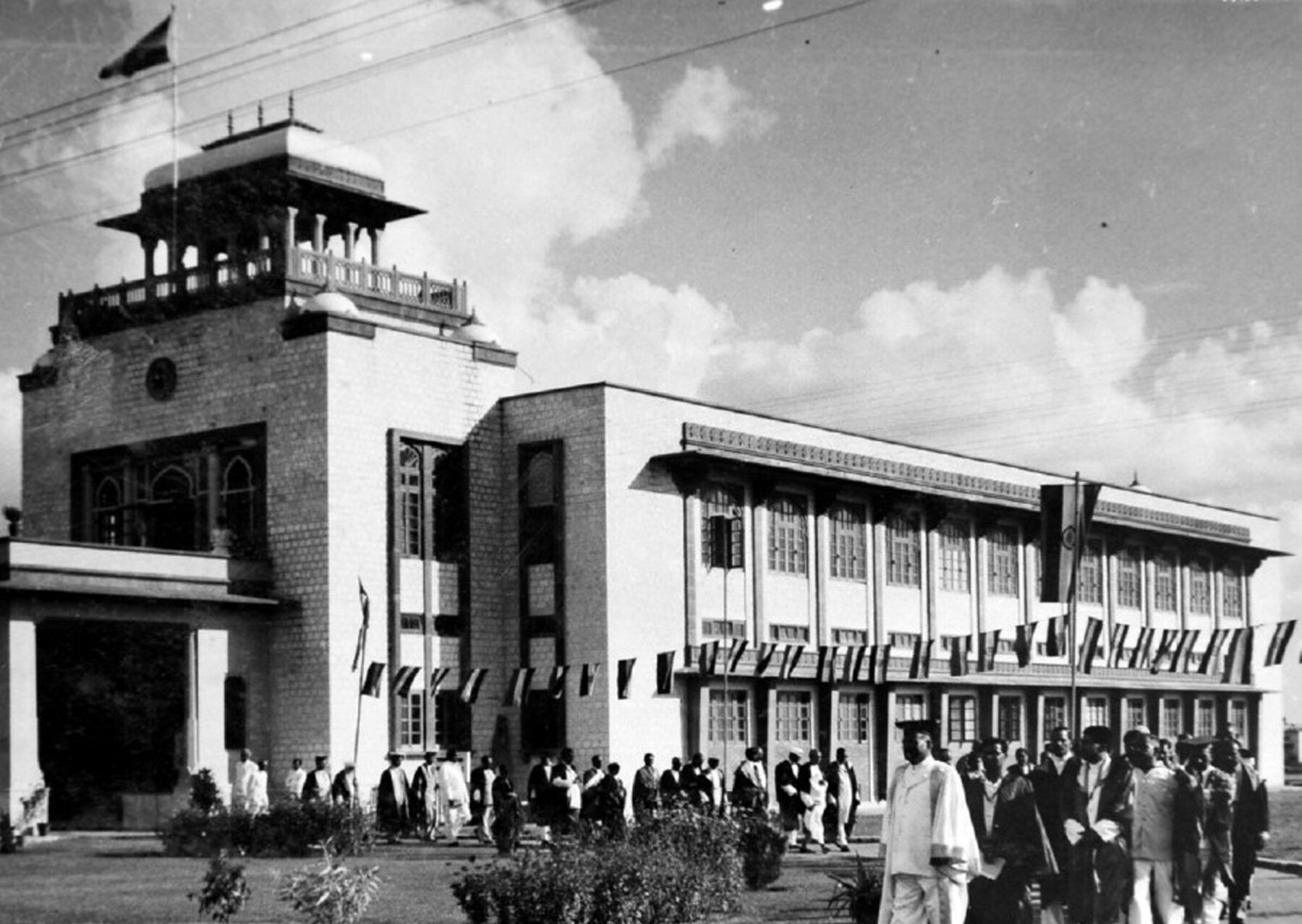
About the project
The project investigates how educational institutions shaped the making of modern Jaipur from the mid-nineteenth century to the postcolonial decades. Treating schools and universities not as background infrastructure but as active political agents, the project examines how architecture, governance, and student life together produced shifting forms of authority and citizenship. Through a close study of royal colleges and the University of Rajasthan, it traces transitions from Company to Crown rule, from princely sovereignty to democratic statehood, and from imperial subjects to national citizens. Drawing on architectural analysis, institutional archives, maps, and oral histories, the project reveals how modernity in Jaipur was not simply imported but locally negotiated. It foregrounds everyday “sarkari” architecture as a critical archive through which colonial legacies, postcolonial continuities, and democratic aspirations were materially staged.
Approach
The project adopts an interdisciplinary and bottom-up approach that treats educational institutions as material and political artefacts. It combines architectural analysis with archival research, policy documents, institutional records, maps, photographs, and oral histories to reconstruct how schools and universities functioned within changing regimes of power. Drawing is used as a method of inquiry to read plans, sections, and spatial sequences alongside governance structures and student life. Rather than focusing on iconic buildings or elite architects, the study centres on everyday state architecture and regional institutions. By tracing continuities across colonial, princely, and postcolonial periods, the project reads architecture as an active medium through which authority, modernity, and citizenship were negotiated. This method allows the project to move between spatial form, institutional practice, and political imagination, revealing how education shaped both the built environment and social life in Jaipur.
Output
The project results in a research-driven narrative that combines analytical writing, drawings, archival material, and visual documentation. Its primary output is a critical architectural history that repositions educational institutions as central to understanding Jaipur’s modernity and India’s transition from empire to republic. The work produces interpretive drawings of campuses and buildings, mapping spatial hierarchies, planning logics, and stylistic continuities across time. Archival photographs, plans, and institutional records are curated to reveal how everyday state architecture materialised political ideas. Together, these outputs contribute a regional, institution-focused perspective to architectural history, offering an alternative to dominant narratives centred on iconic modernist projects. The project is designed to function both as an academic study and as a public-facing resource that foregrounds the significance of ordinary educational buildings in shaping modern civic life.
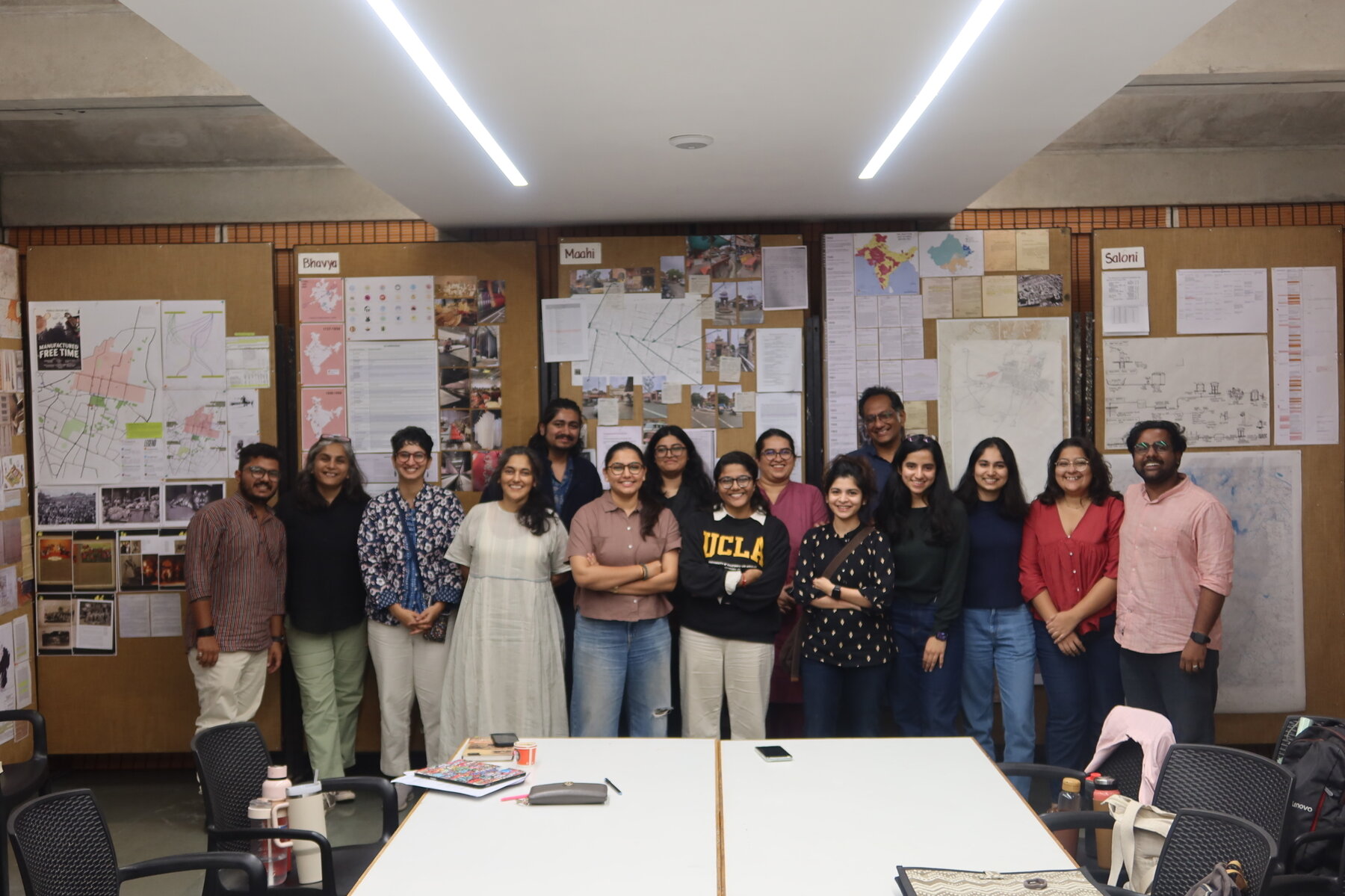
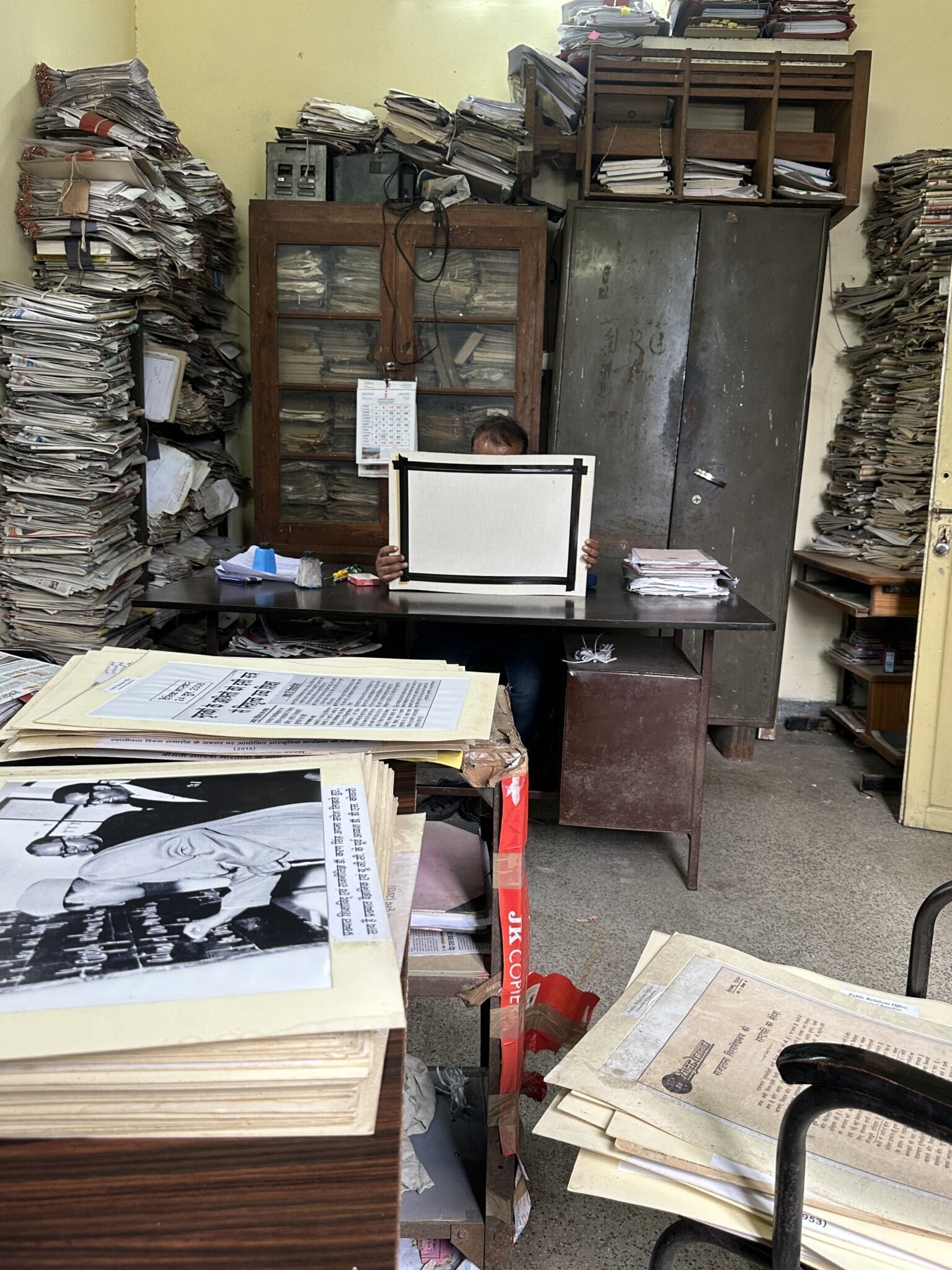
Collecting archival images from the public relations office in the University of Rajasthan
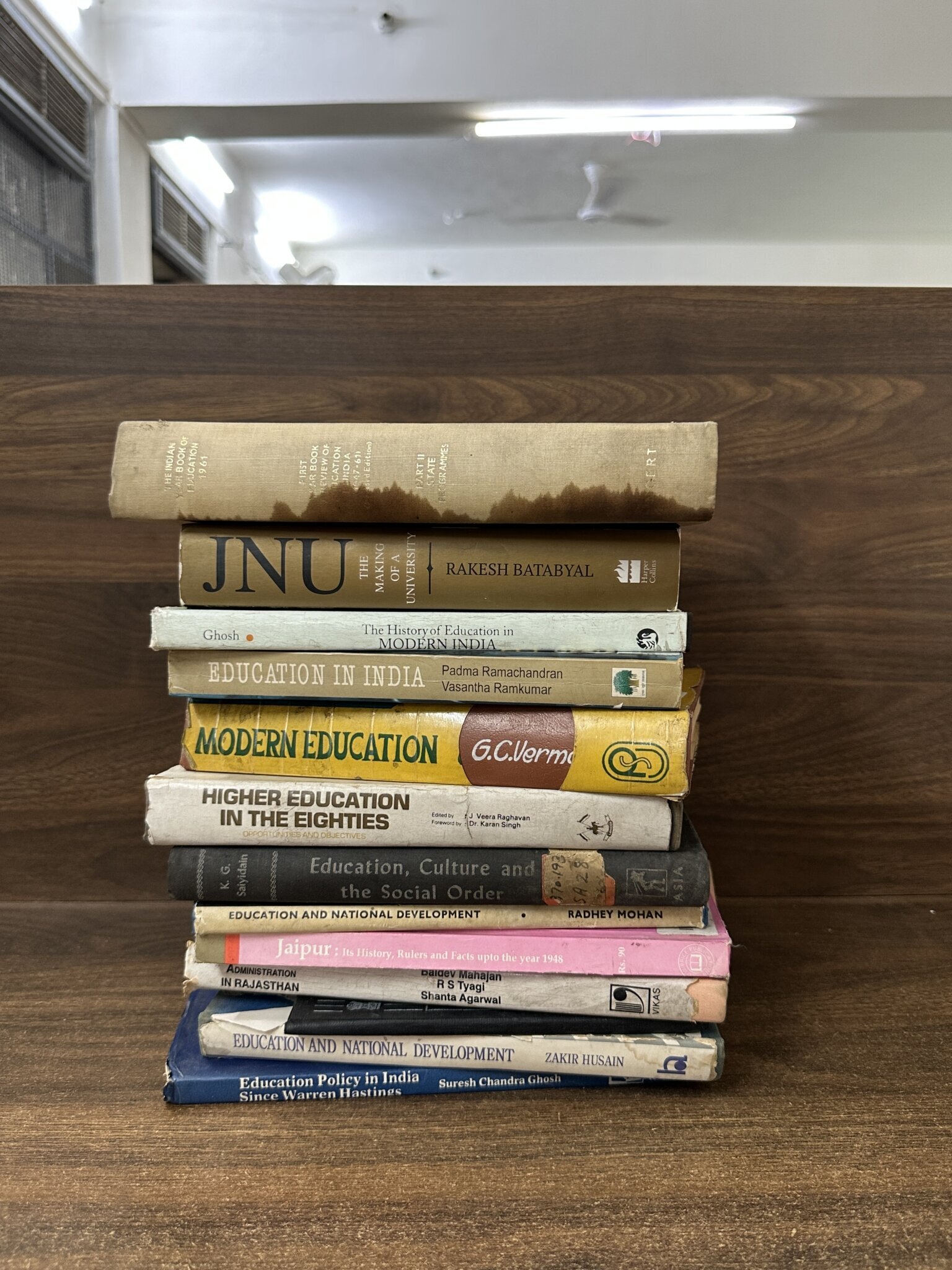
Information collection through various local libraries in Jaipur
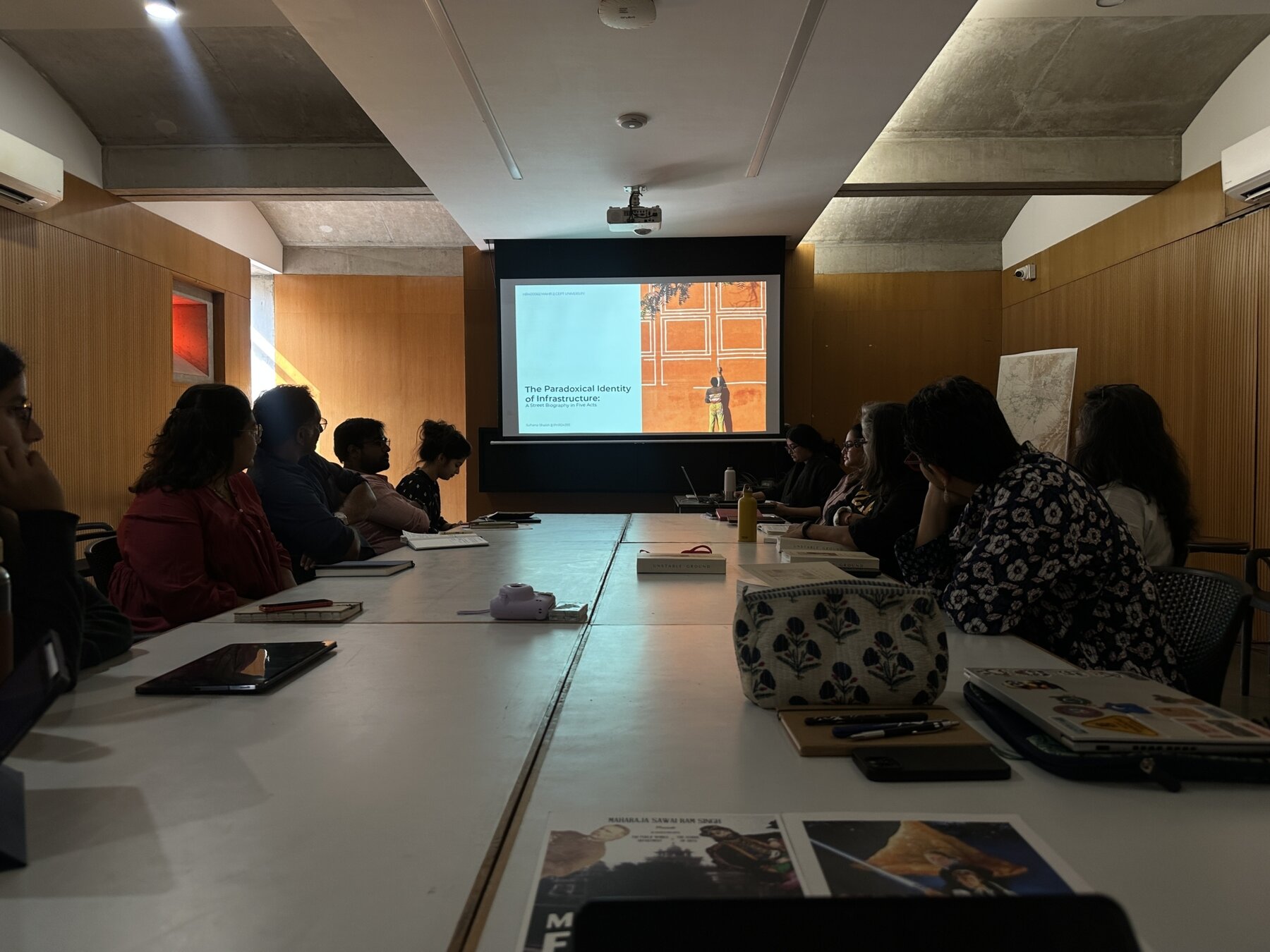
Student Presentations
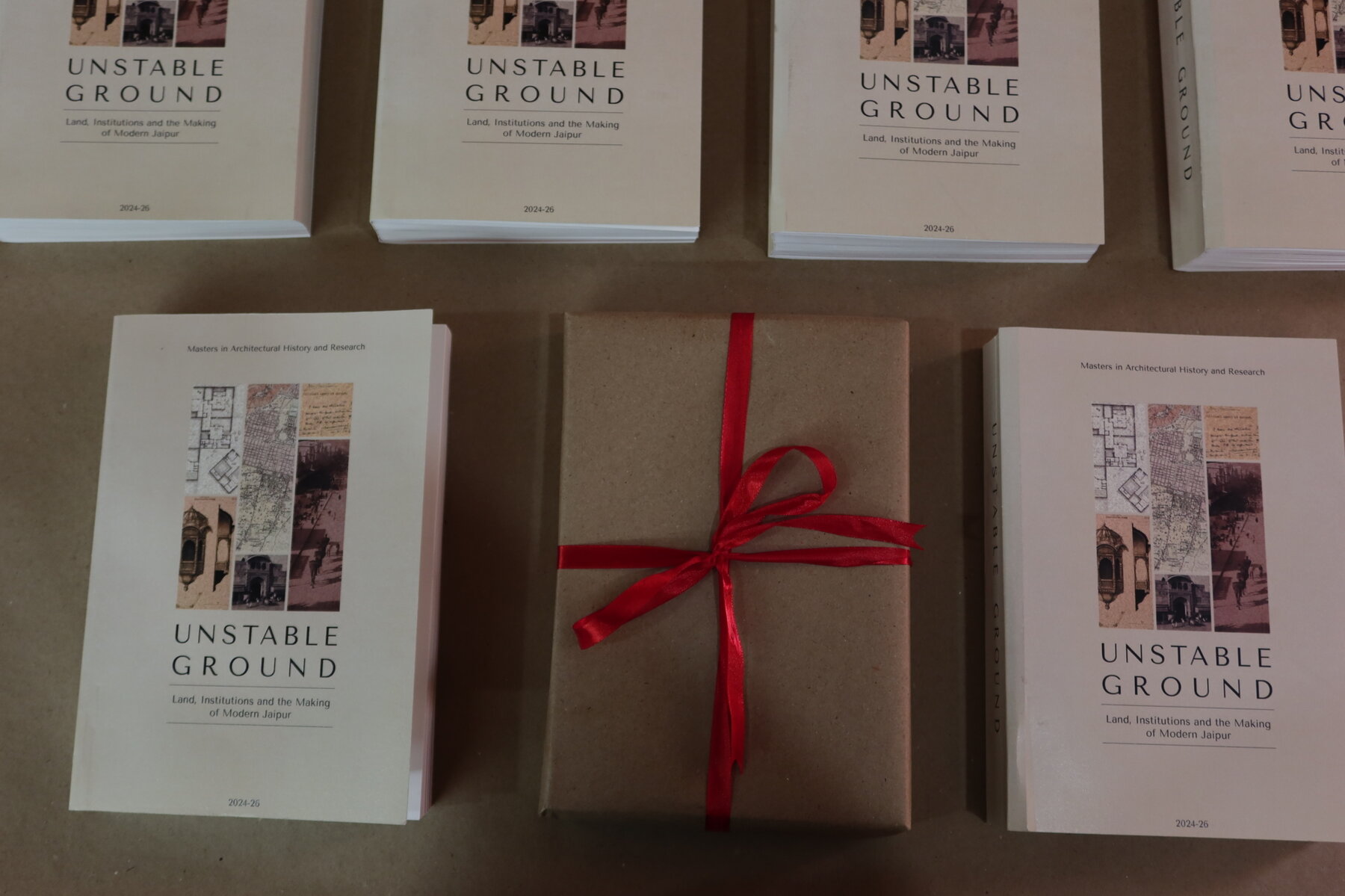
Student work culminated into a book
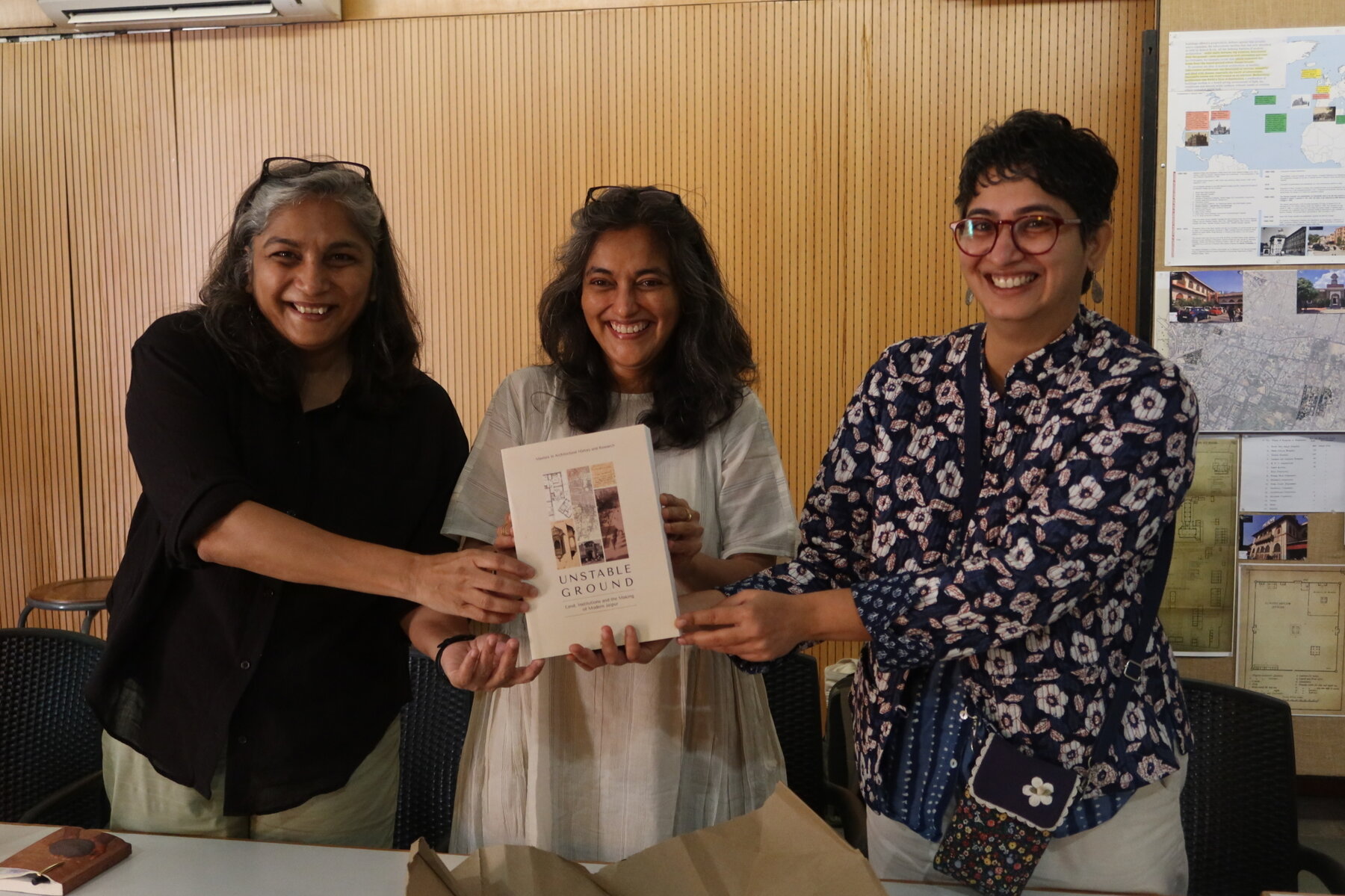
Unveiling of the book by the jurors
- rashmi varma
Gallery