Komorebi : Beyond Gated Living

- manali p
- mokshit kakrecha
- samyak maloo
The Hunnigere Housing Project imagines a community that grows with time, rooted in today’s realities yet open to the futures of an urbanising Nelamangala. Its foundation is everyday residents - families, young professionals, elders & children whose lives form the intimate rhythms of domesticity. Around them, the settlement opens to neighbours & passersby: villagers, farmers & truck drivers whose exchanges santhe, night shelters & open spaces . Housing here is envisioned as an ecosystem of care, transcending divisions of class or category & embracing diverse users within a framework of equality. Care guides every layer: safety & security in walkable streets, belonging in shared commons, resilience in adaptive spaces, joy in playful public edges & solitude in calm retreats. A closed-loop neighbourhood conserving water, minimising energy & living lightly anchors the vision. By maximising the caring capacity of water, it balances density with openness, weaving homes, commons and livelihoods into a caring, sustainable settlement. Like Komorebi sunlight filtering through leaves, finding beauty in imperfection, the project celebrates balance between light & shadow, openness & refuge, permanence & change.
Komorebi is a Japanese word describing sunlight filtering through the leaves of trees. It forms the philosophical foundation of the project, suggesting an architecture that mediates between nature, people, and the built environment by filtering light, density, and social interaction rather than rigidly separating them.
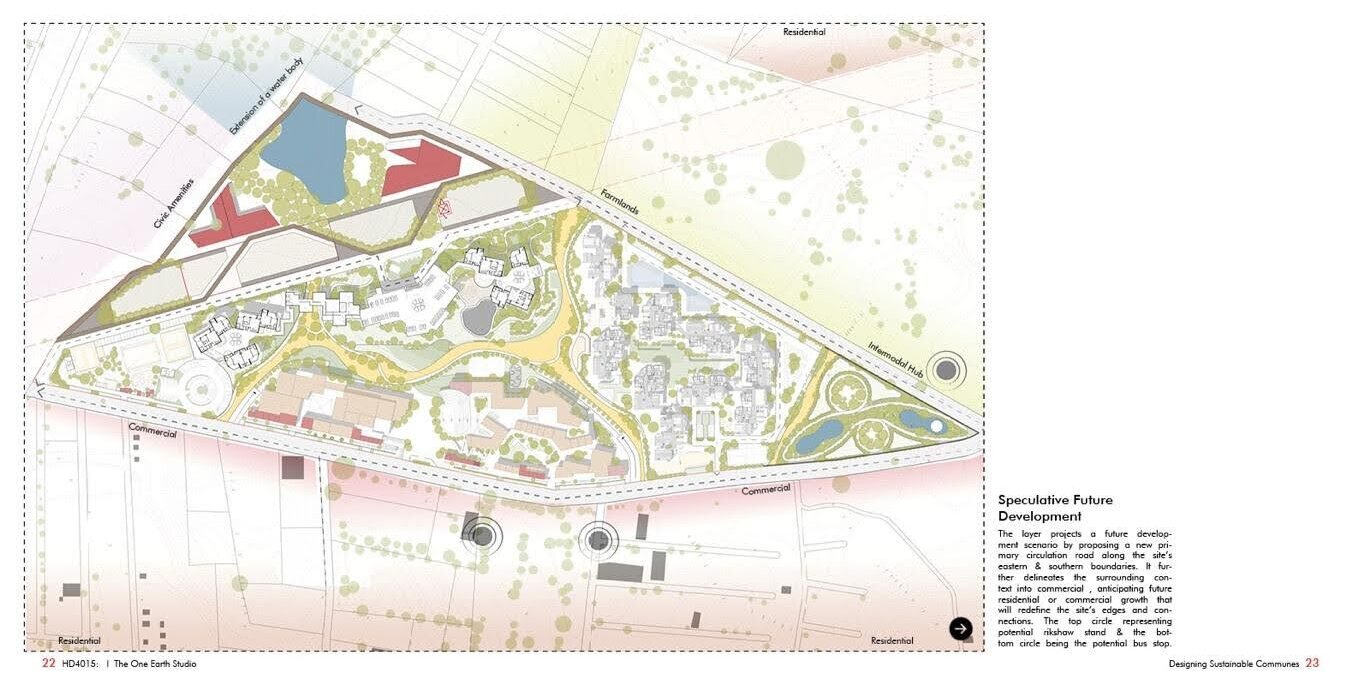
Drawing from the principles of the Bangalore Development Authority (BDA), the project envisions an integrated neighbourhood that resists income-based segregation and supports inclusive urban living. The proposal imagines a neighbourhood that grows incrementally over time, shaped by everyday life and grounded in its surrounding adjacencies, including streets, farmlands, water bodies, and future urban expansion.
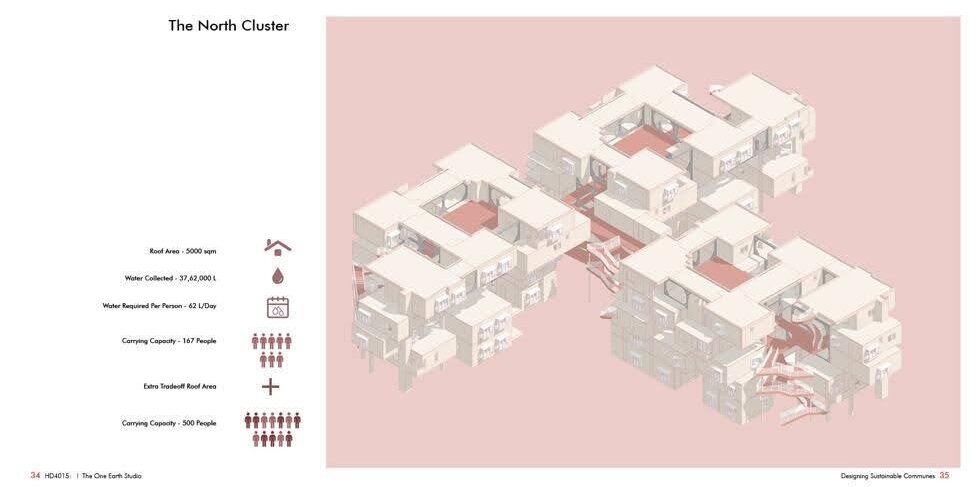
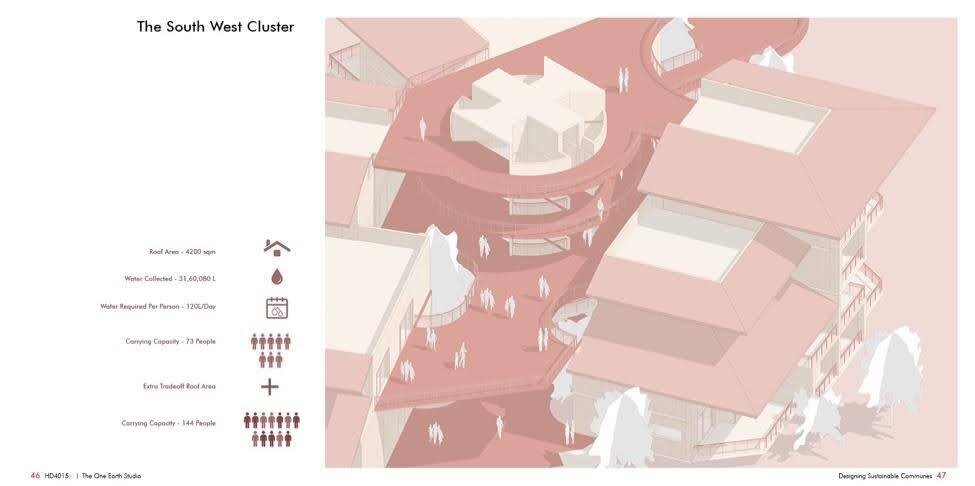
Challenging conventional FSI-based regulations, the project replaces abstract density controls with the carrying capacity of the land, using water as the primary determinant of growth. The neighbourhood is conceived as a closed-loop system that conserves, recharges, and reuses resources, aligning built form and density with ecological limits. Through this approach, Project proposes a resilient, inclusive, and ecologically responsive model for sustainable urban growth.
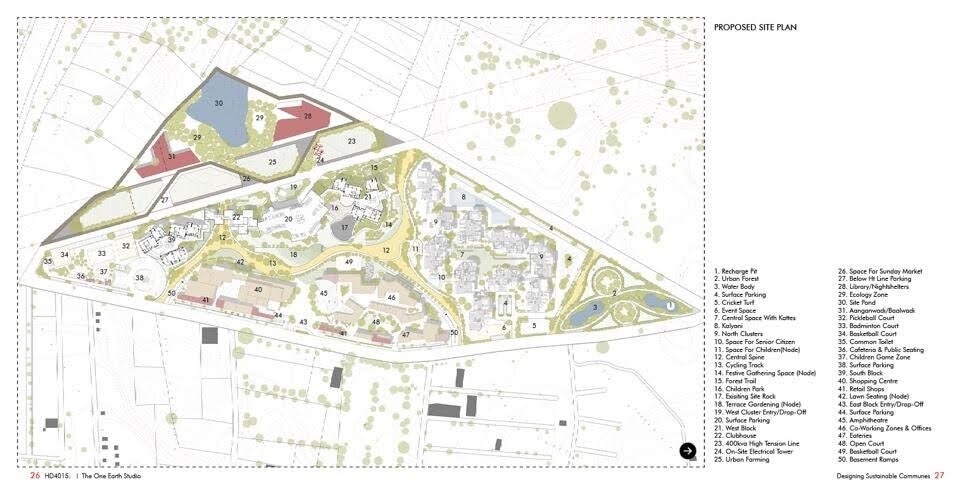
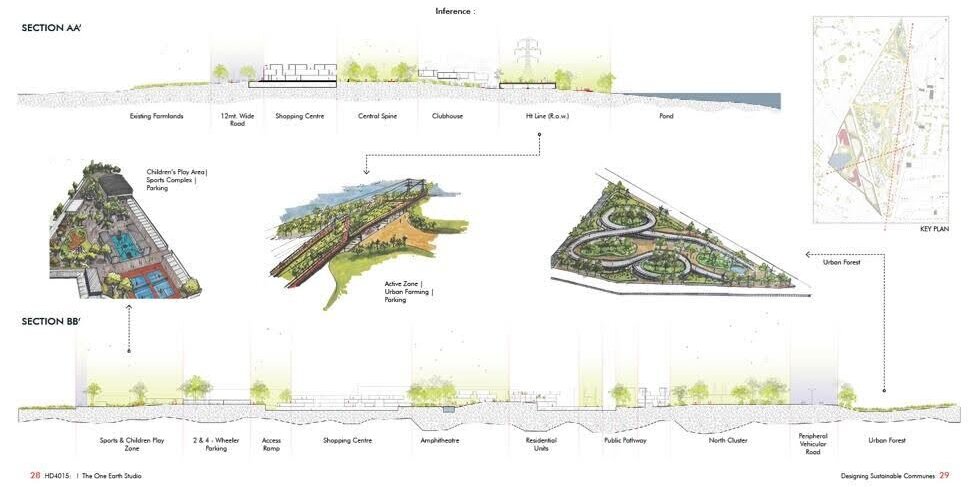
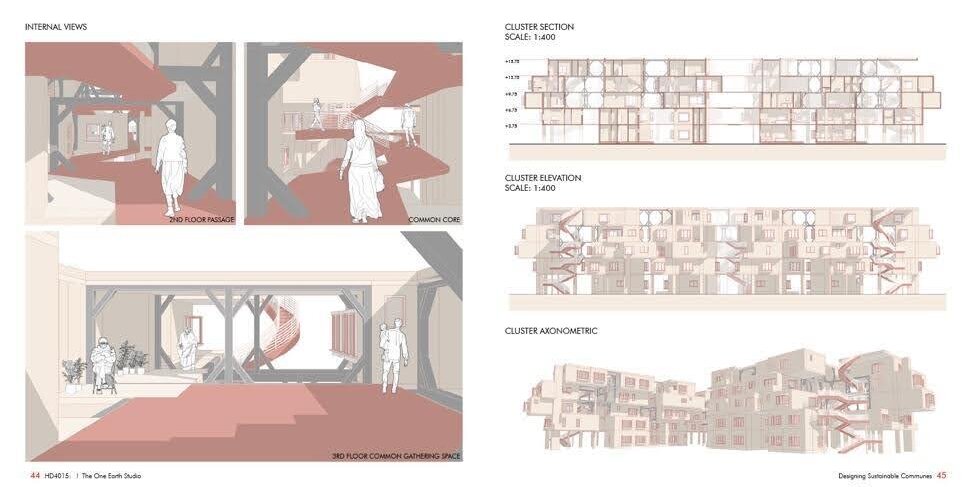
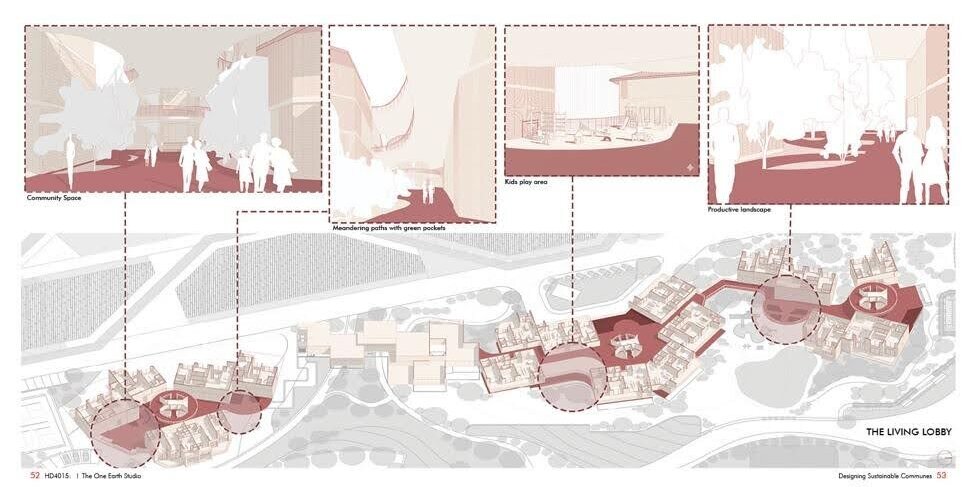
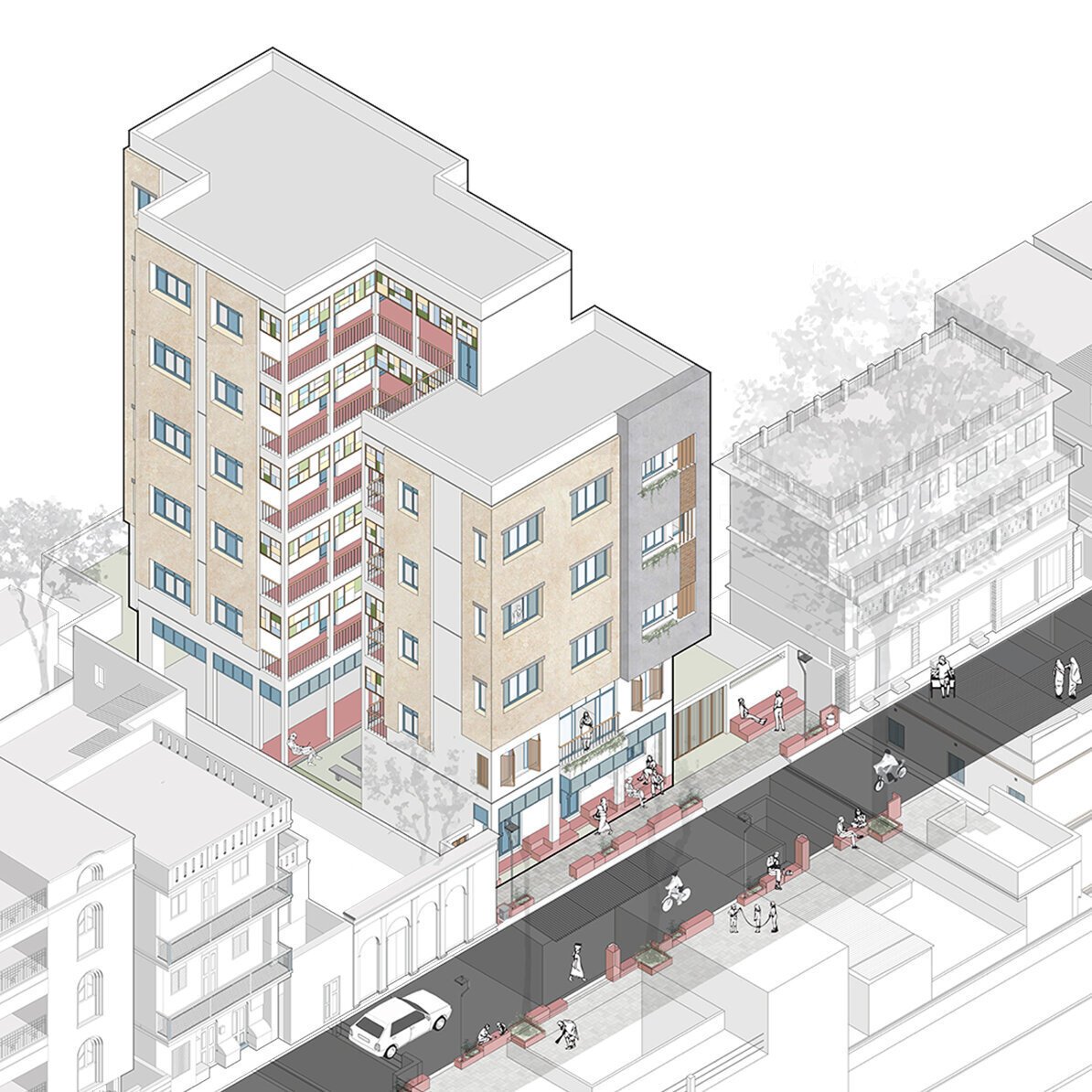
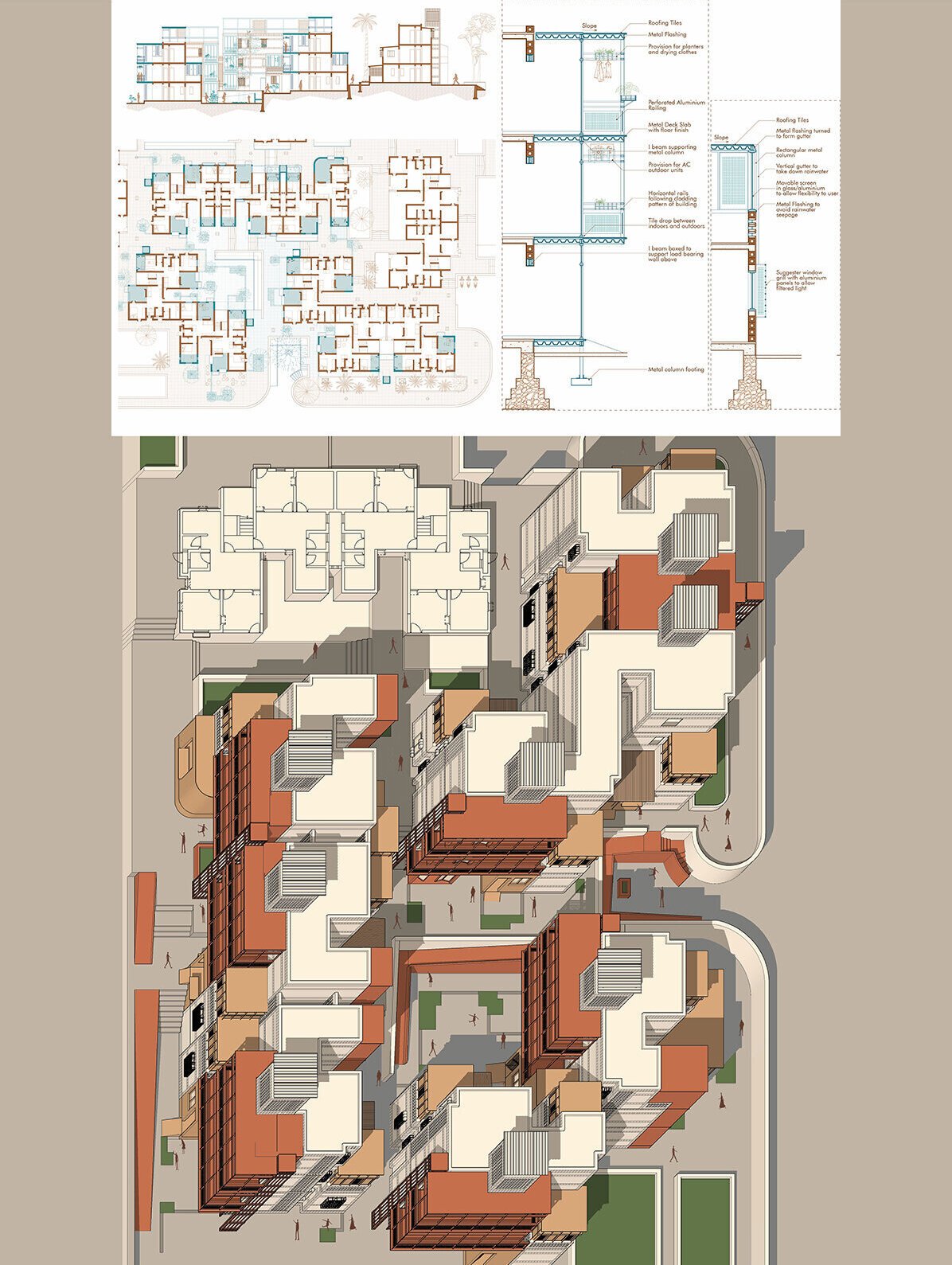
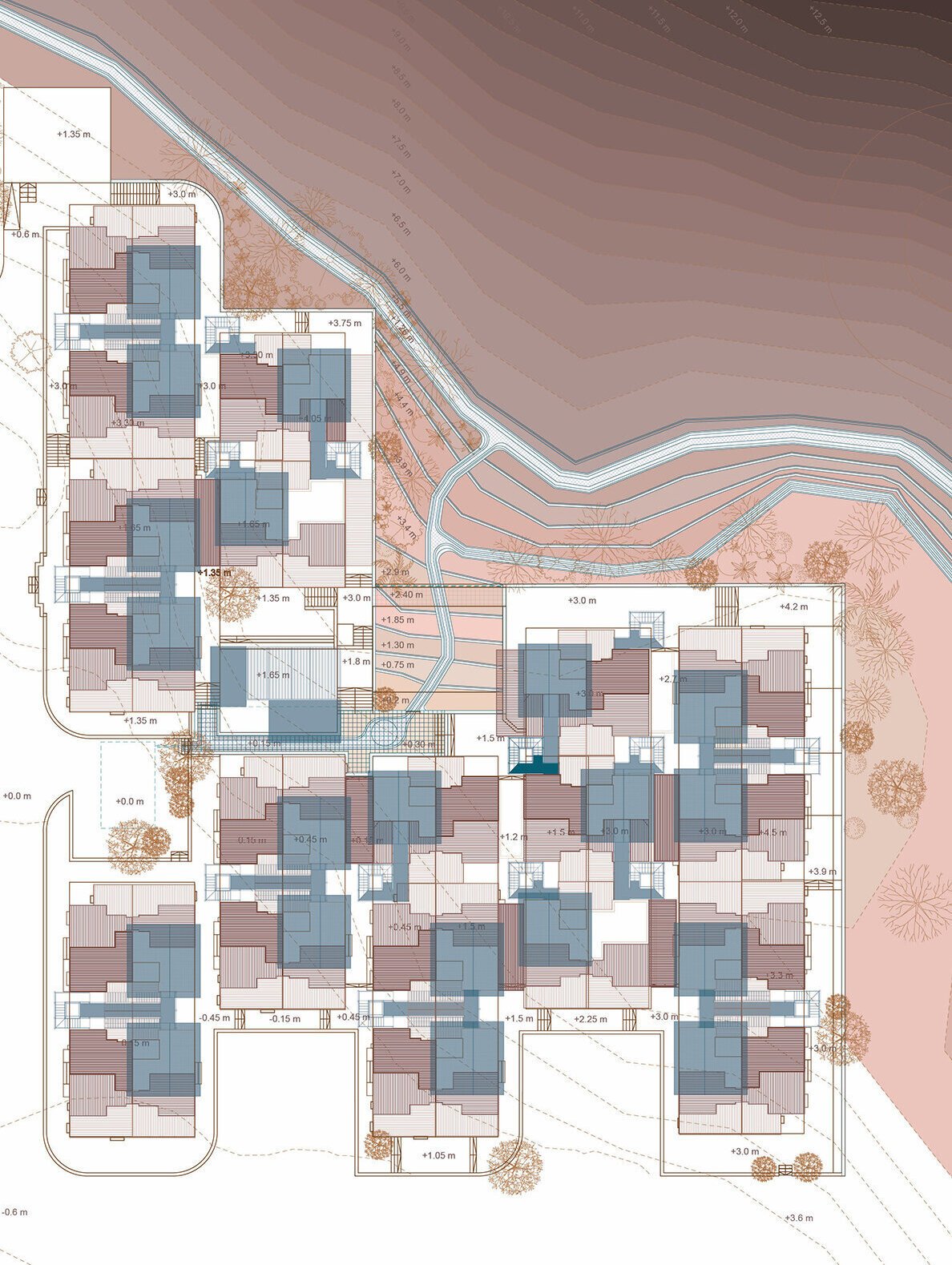
The Housing Project produces a detailed urban and architectural proposal for a mixed-income neighbourhood in Hunigere. The output includes a site-responsive masterplan structured by water networks, topography, and existing adjacencies, replacing conventional FSI-led density controls with land-based carrying capacity. A set of adaptable housing typologies demonstrates incremental growth, unit flexibility, and integration of diverse income groups within shared infrastructure. The project delivers zoning frameworks for mixed-use edges, community facilities, and mobility spines that support walkable daily life. Closed-loop water strategies are articulated through system diagrams, showing rainwater harvesting, groundwater recharge, wastewater reuse, and landscape integration. Architectural drawings, sections, and phasing strategies illustrate how built form evolves over time in response to ecological limits. Together, these outputs present a replicable model for sustainable neighbourhood development at Bangalore’s peri-urban edge.
- manali p
- mokshit kakrecha
- samyak maloo
Gallery