About the project
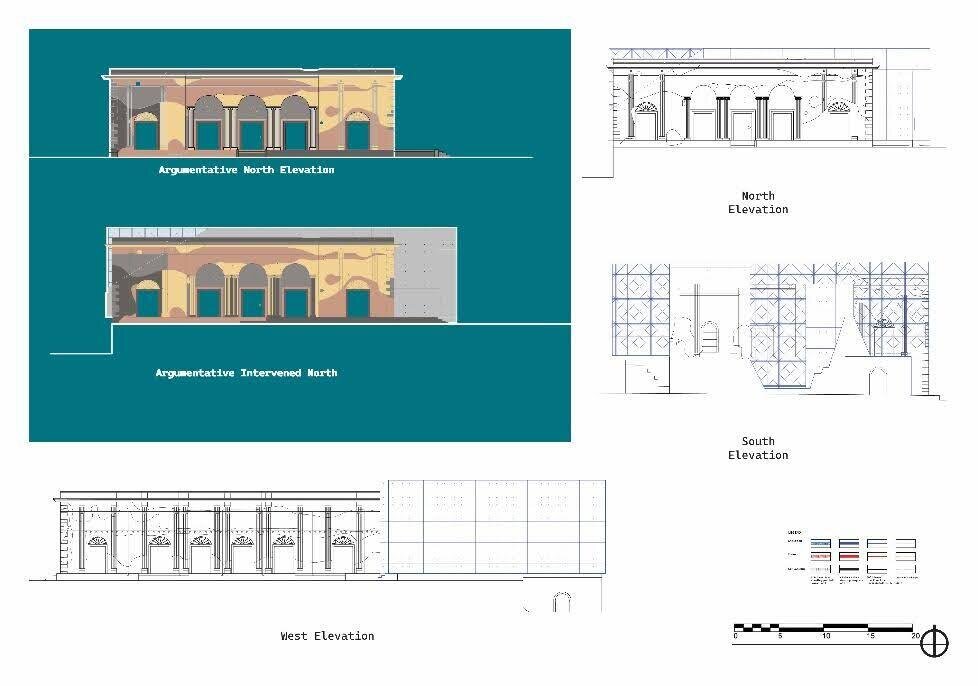
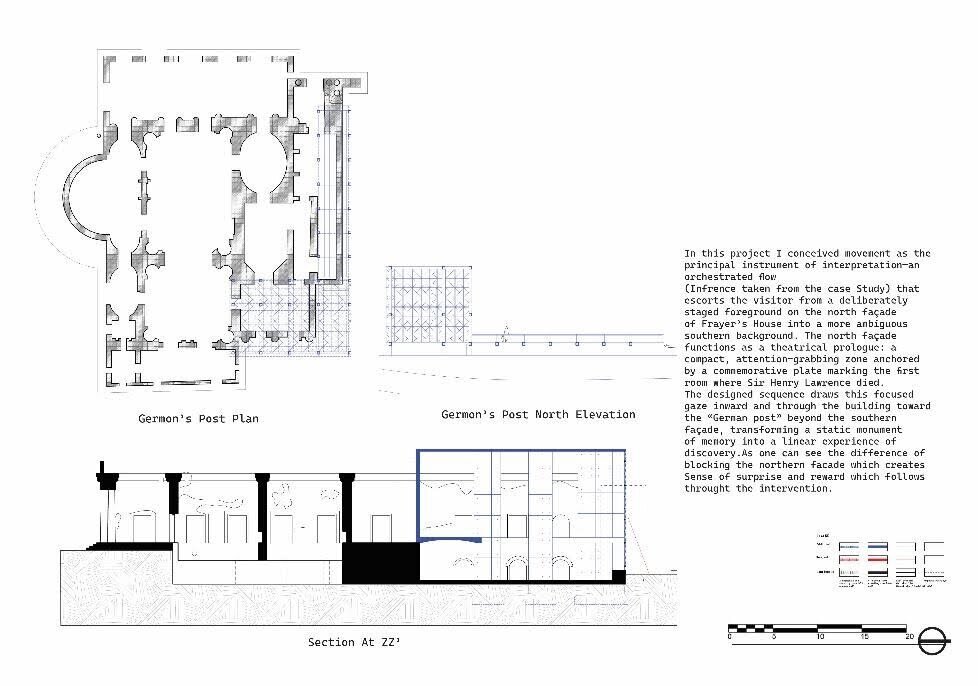
The conservation design approach for The Lucknow Residency seeks to reposition the overlooked background within the experiential foreground, allowing both conditions to operate as shared spatial commons and encouraging visitors to engage with the ruins free of hierarchical bias. Movement functions as the primary interpretive apparatus, guiding users from an intentionally framed point of entry toward historically marginalized zones, thereby softening distinctions between dominant and neglected narratives. This spatial choreography deliberately destabilizes singular, authoritative readings and establishes a neutral interpretive field in which epistemic agency is transferred to the visitor, fostering a critical and reflective encounter with the site’s layered histories.
Approach
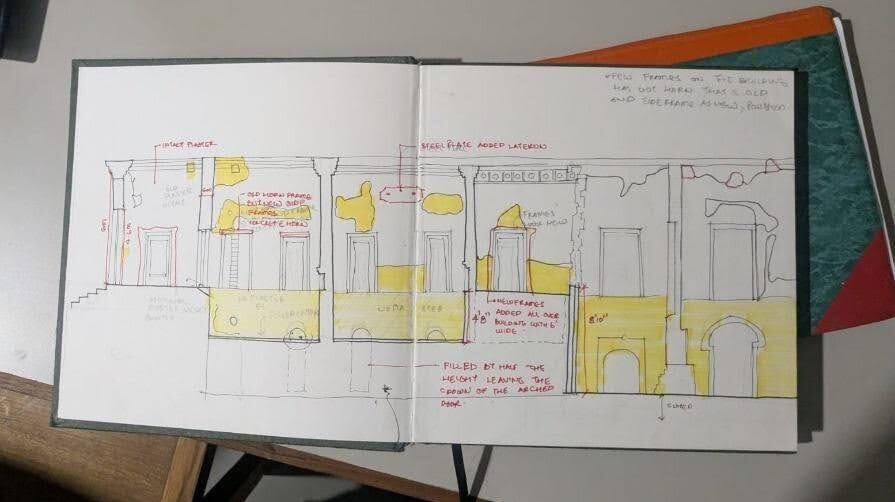
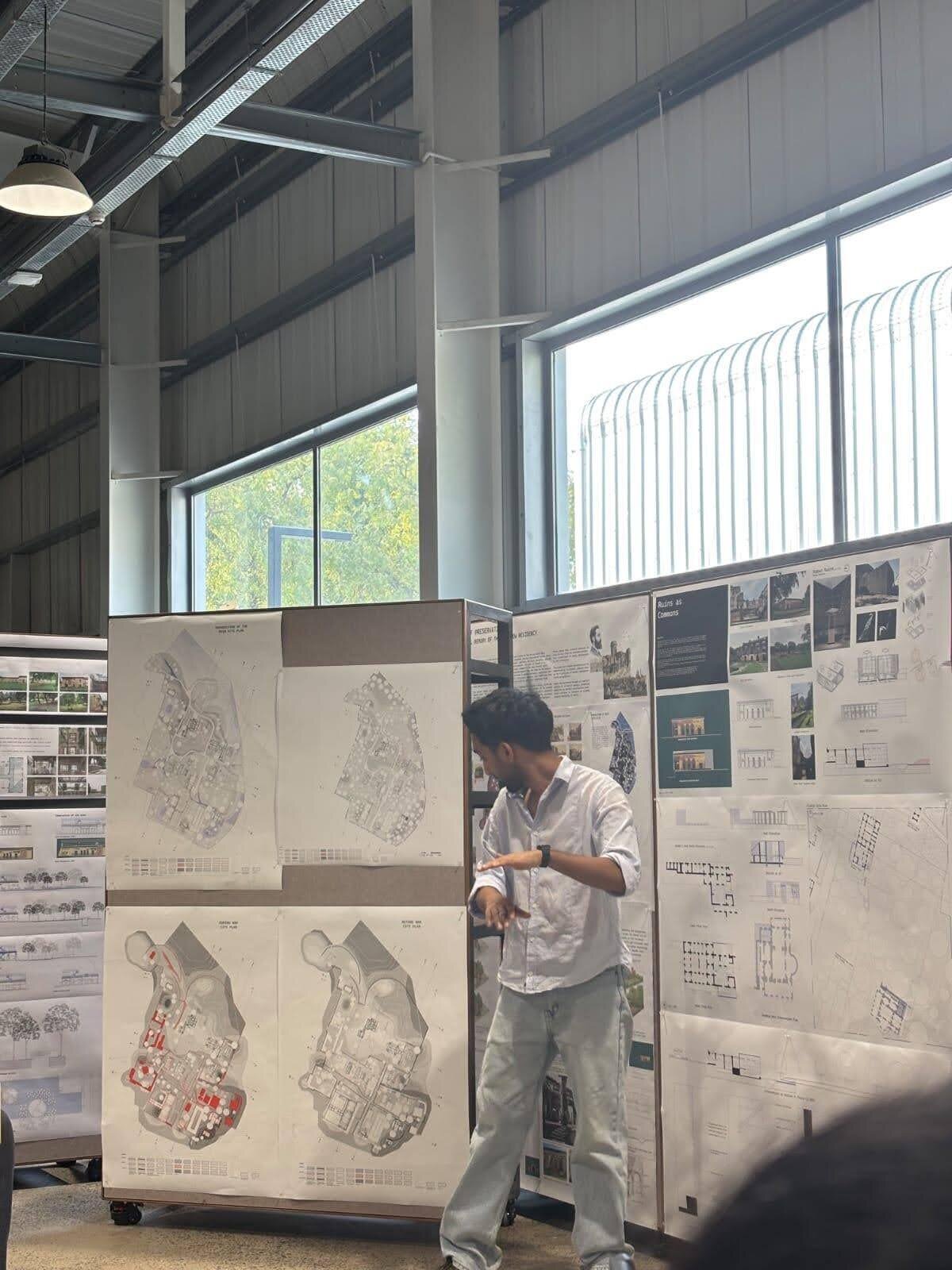
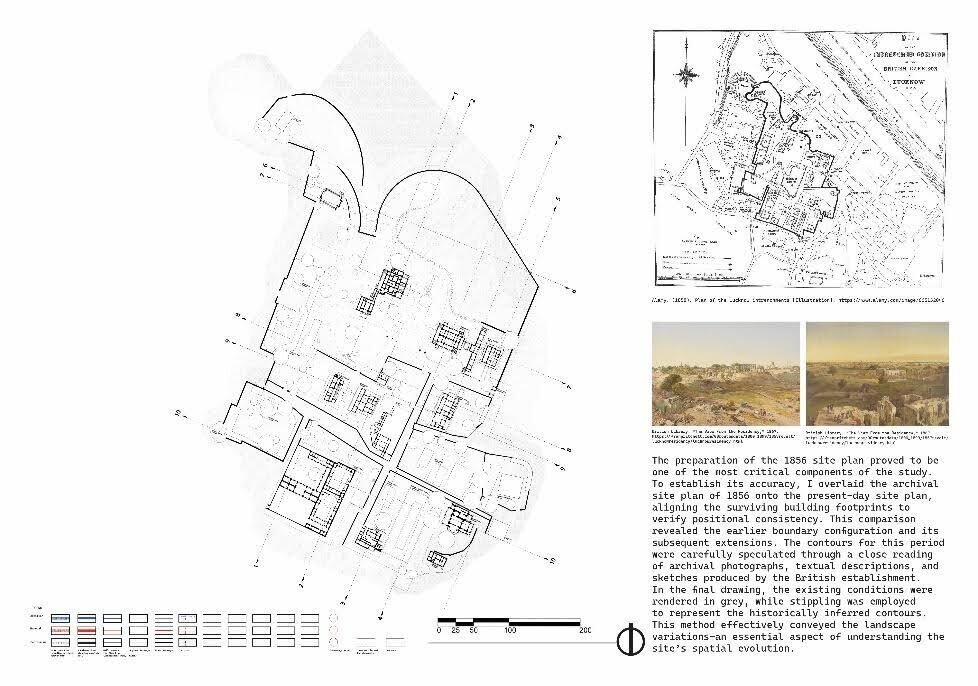
The project evolved from the initial theoretical grounding established through studio readings such as Preservation Is Overtaking Us and Spatial Recall, which critically examine the politics of preservation and the role of memory in spatial practice. These readings informed an analytical understanding of their implications for the ATIRA Housing complex, prompting a deeper engagement with questions of conservation, memory, and lived experience. This inquiry led to an extensive archival study and the reconstruction of four major phases of the Residency, Lucknow, enabling a layered understanding of its historical transformations. Based on this analysis, a conscious conservation approach was formulated. Rather than pursuing restoration or reconstruction, the site of conflict was envisioned as an experiential ruin—one that preserves material authenticity while allowing visitors to engage perceptually and emotionally with the layered histories of the site. This approach positions the ruins as a shared common, fostering individual interpretation and collective memory.
Output
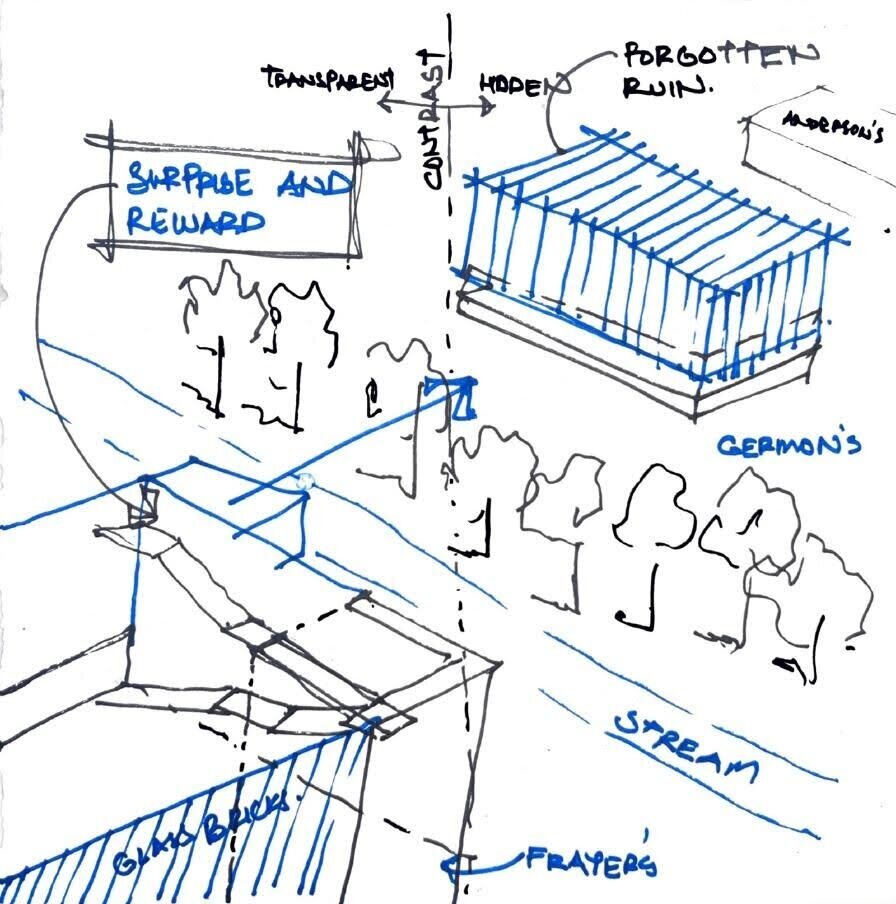
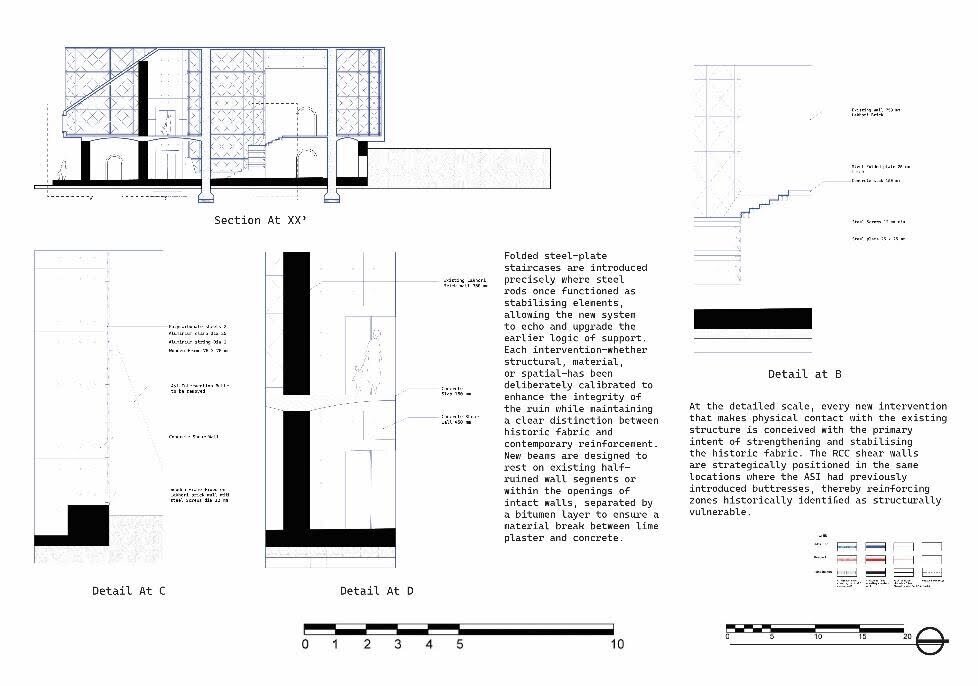
The project articulates a deliberate contrast between past and present, the visible and the hidden, using spatial sequencing to evoke moments of surprise and reward. Movement is treated as a critical design instrument, guiding users through a layered experience of history rather than presenting a singular, didactic narrative. By choreographing circulation through varying degrees of openness, opacity, and transparency, the project enables encounters with the site’s material and intangible histories to unfold gradually. This experiential approach encourages visitors to perceive the ruins through an unbiased lens—one that is not mediated or masked by political propaganda or prescriptive architectural interventions. Built elements are introduced selectively and with restraint, remaining transparent where interpretation is necessary and opaque where absence, silence, or memory must be preserved. In doing so, the project resists monumentalization and instead fosters critical engagement, allowing users to navigate, interpret, and internalize the site’s historical layers through personal observation and movement-driven exploration.
- tarun thakur
Gallery