SAYA: In stillness we see ourselves

- judith david
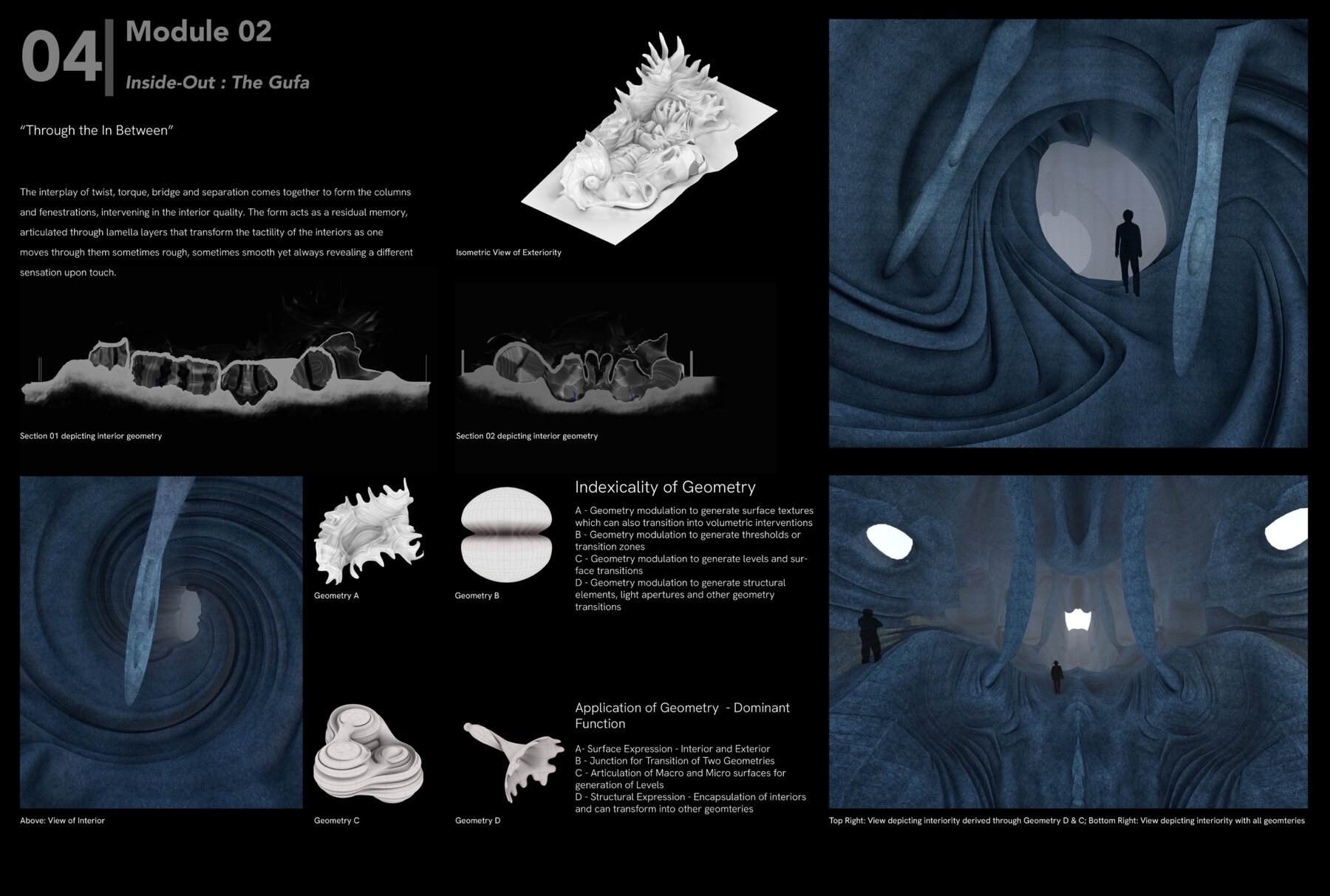
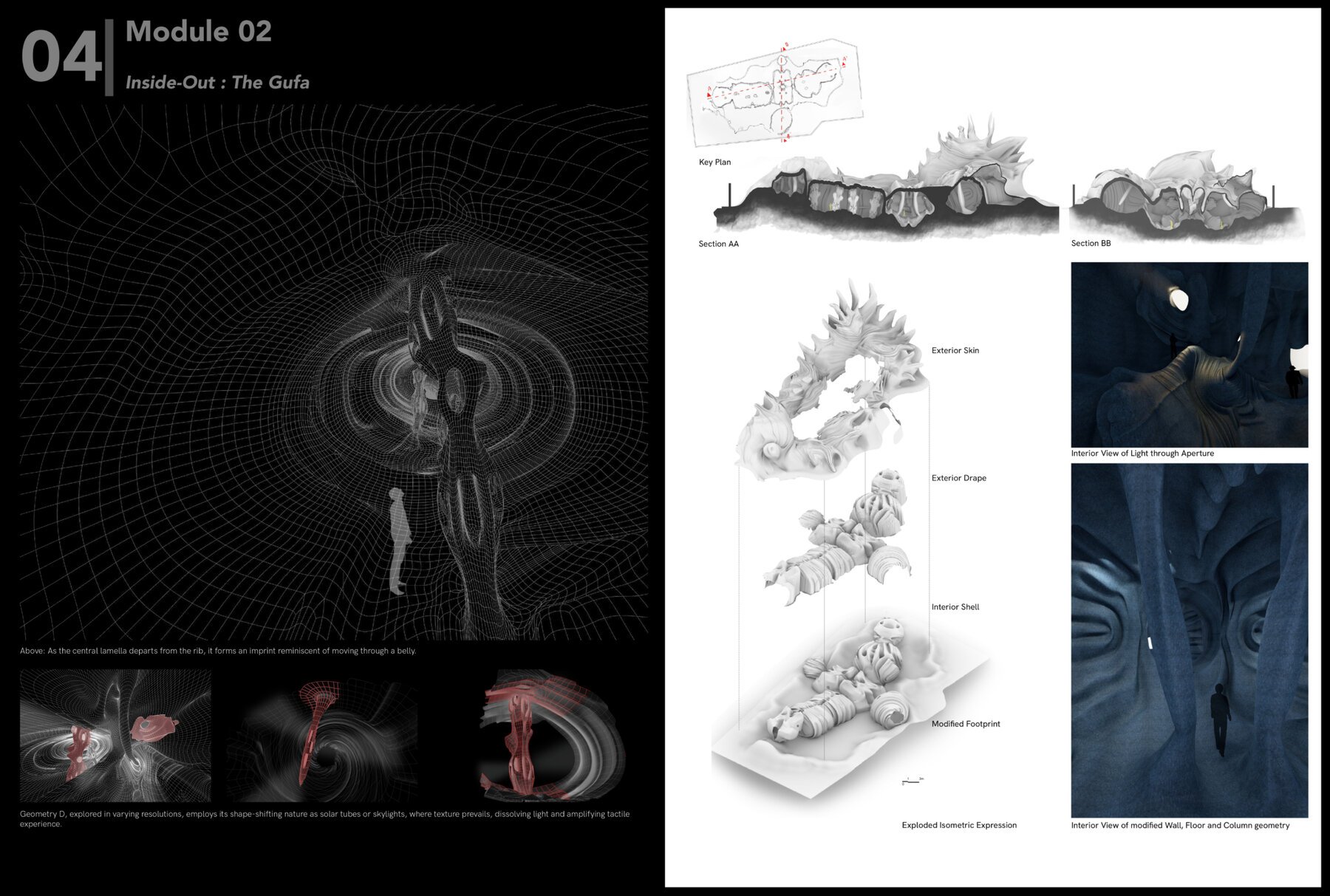
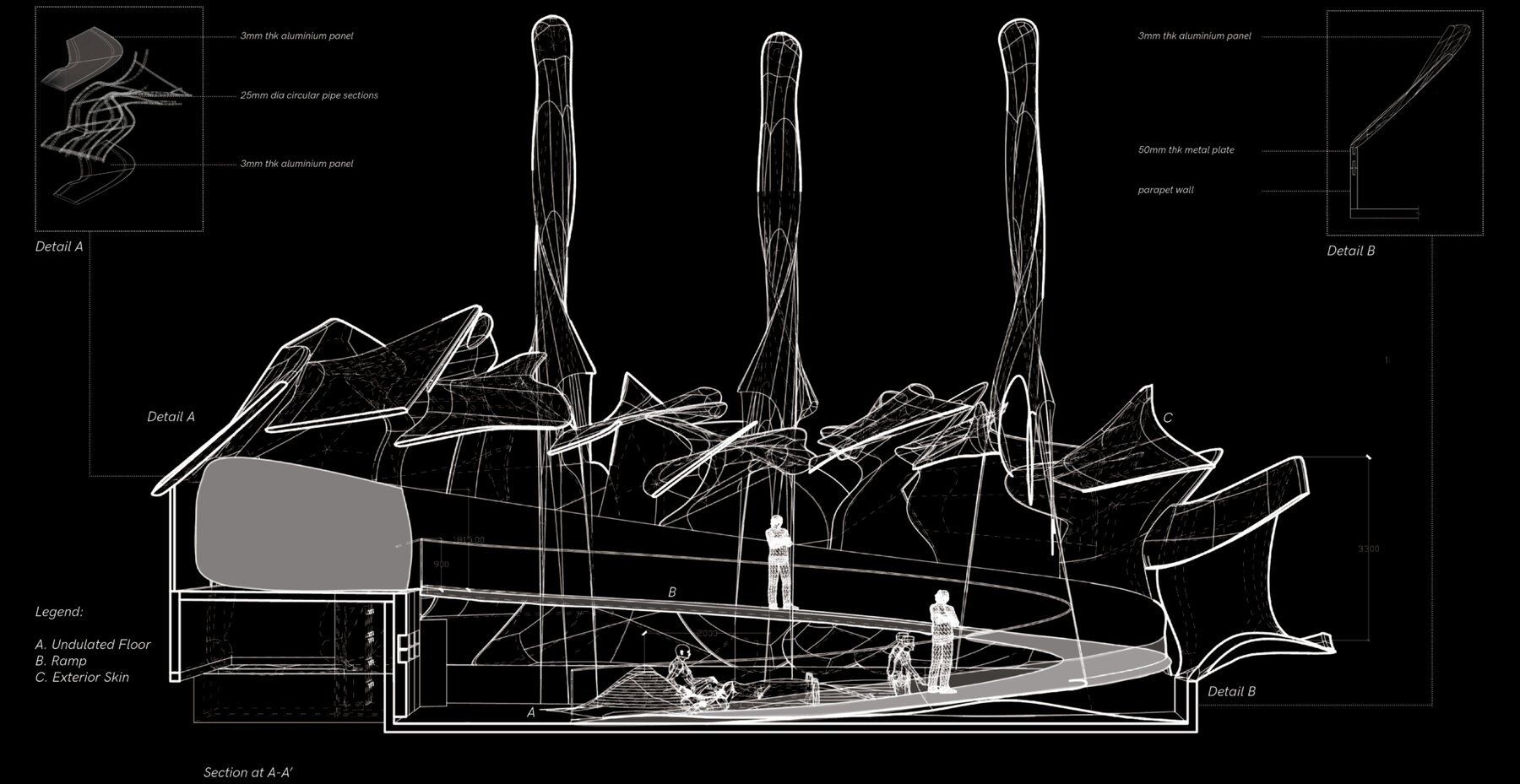
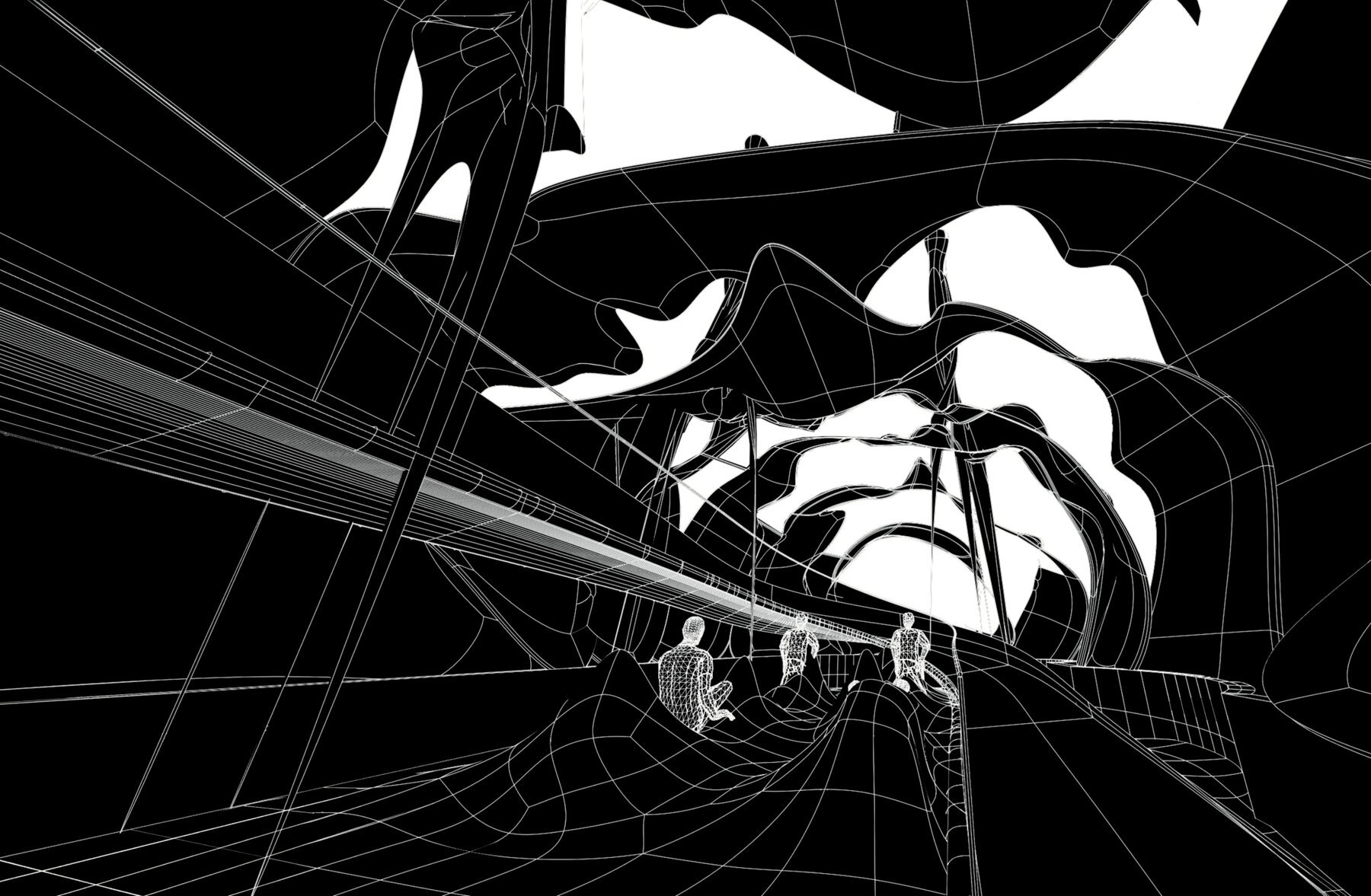
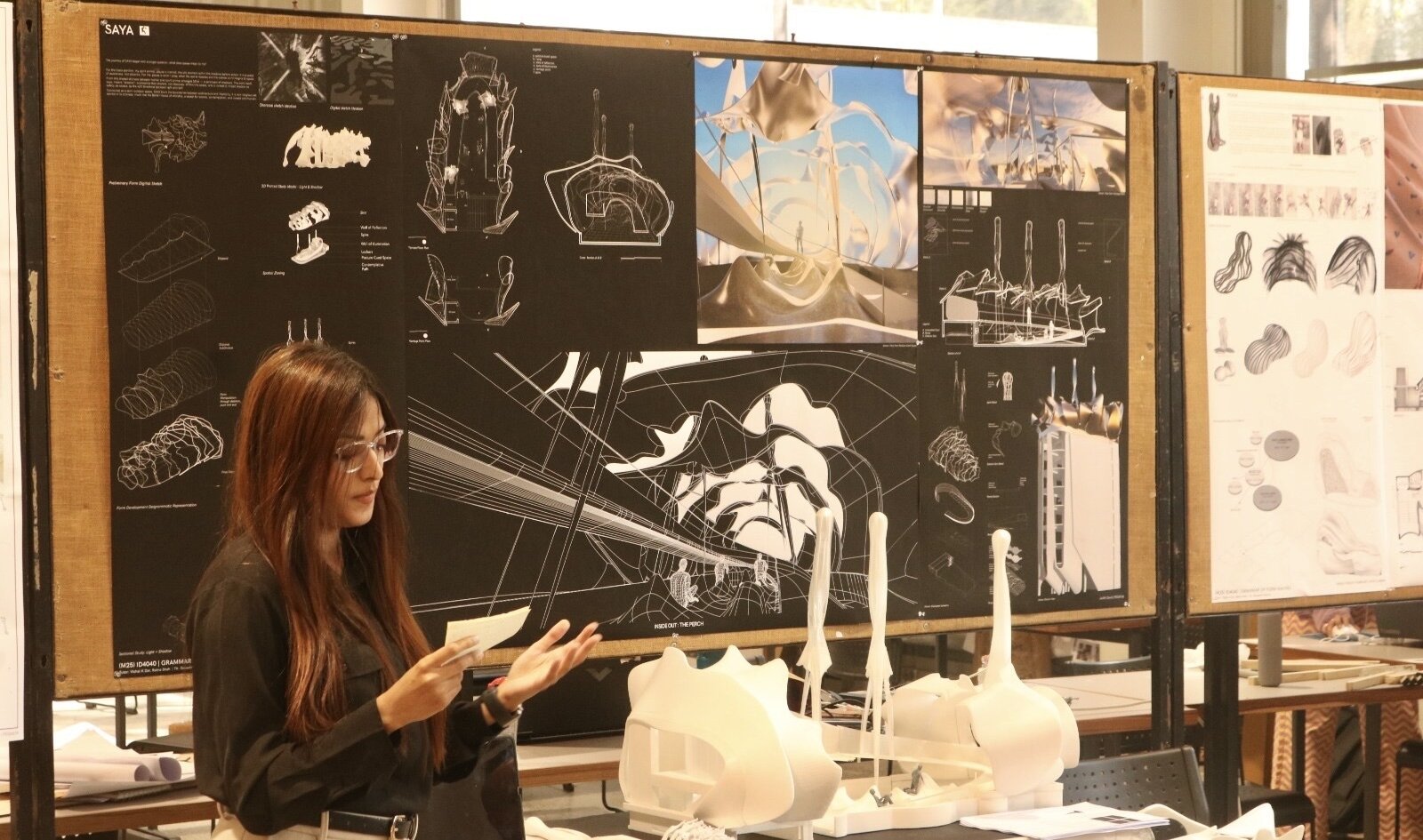
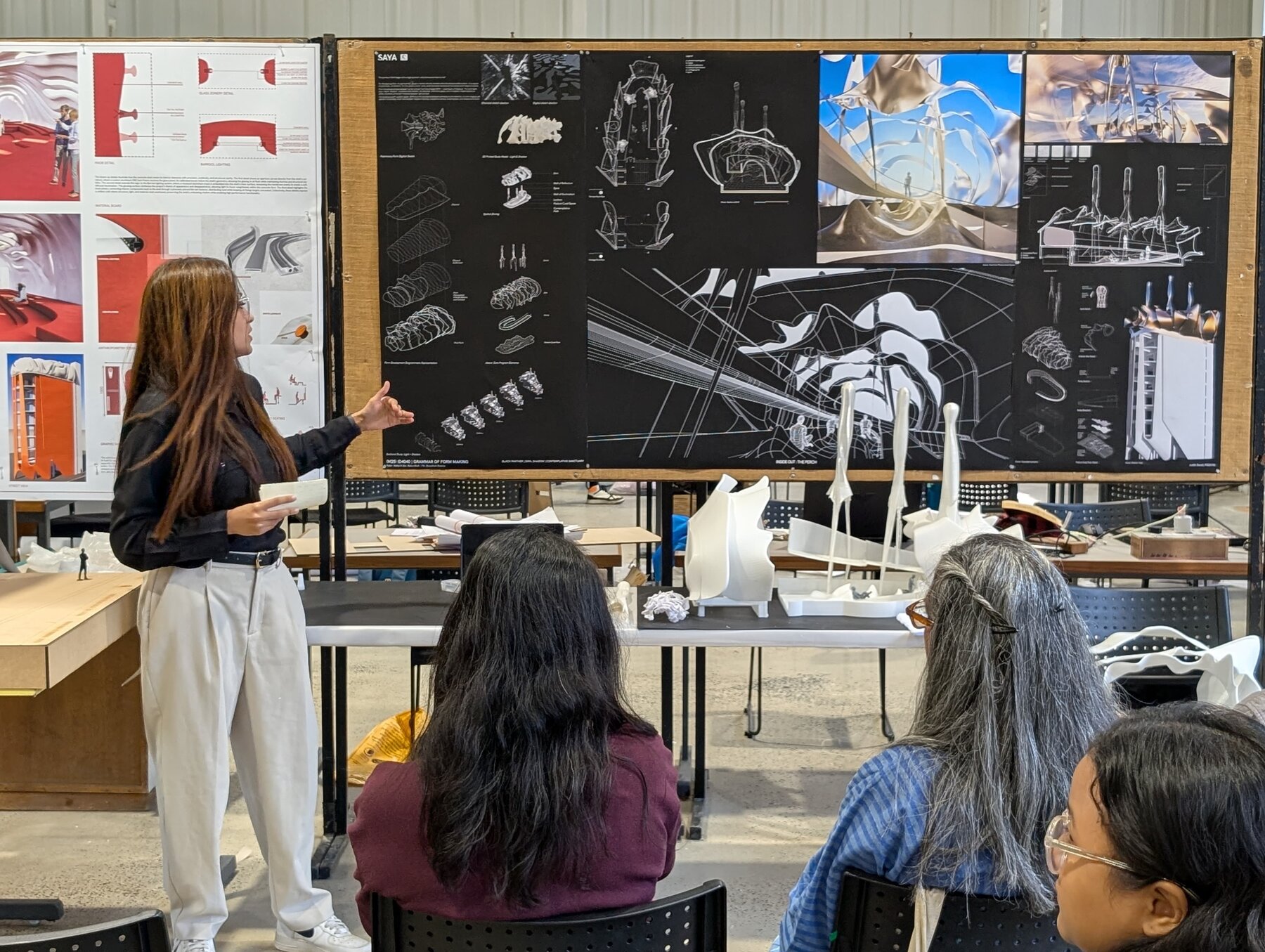
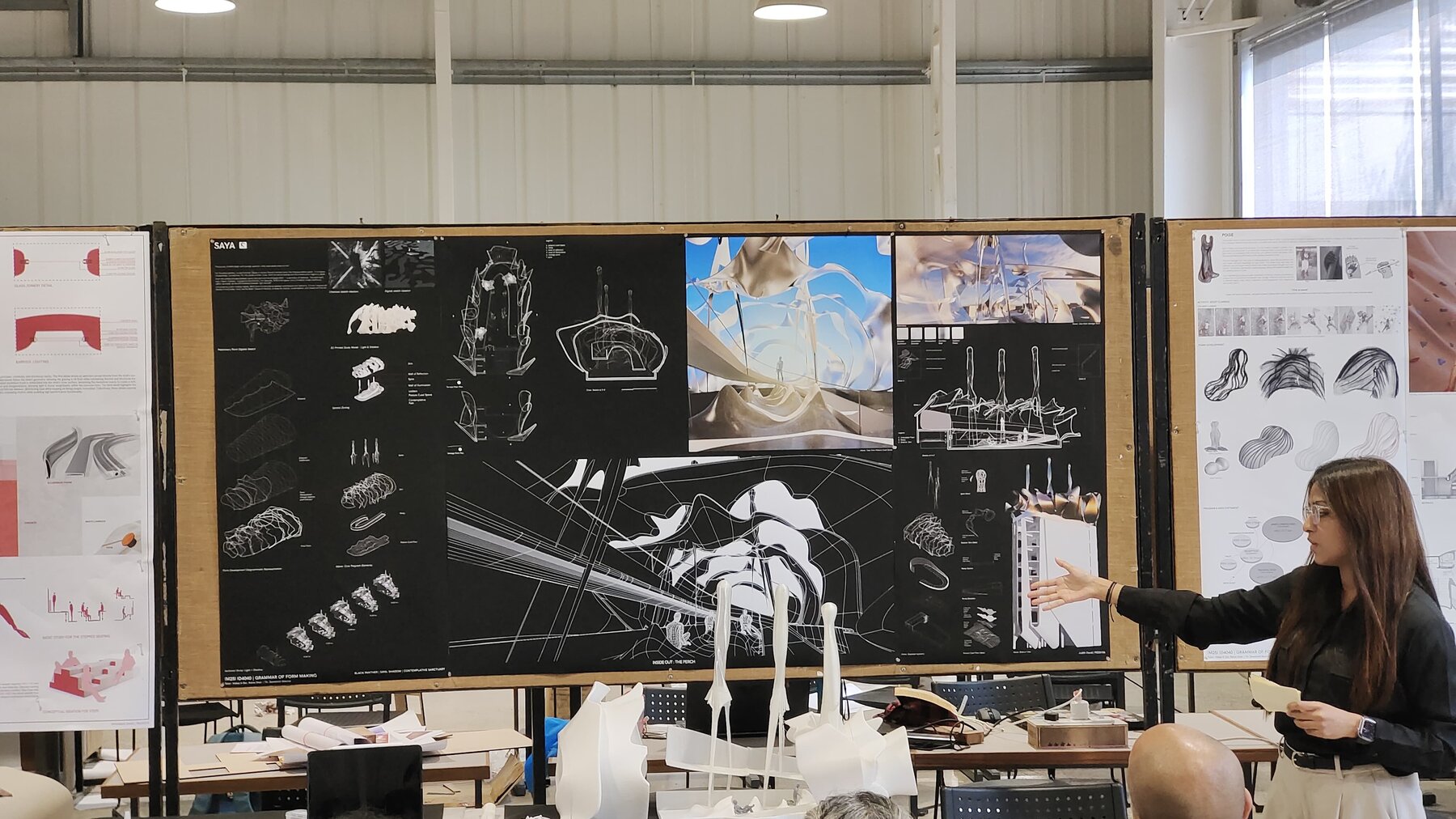
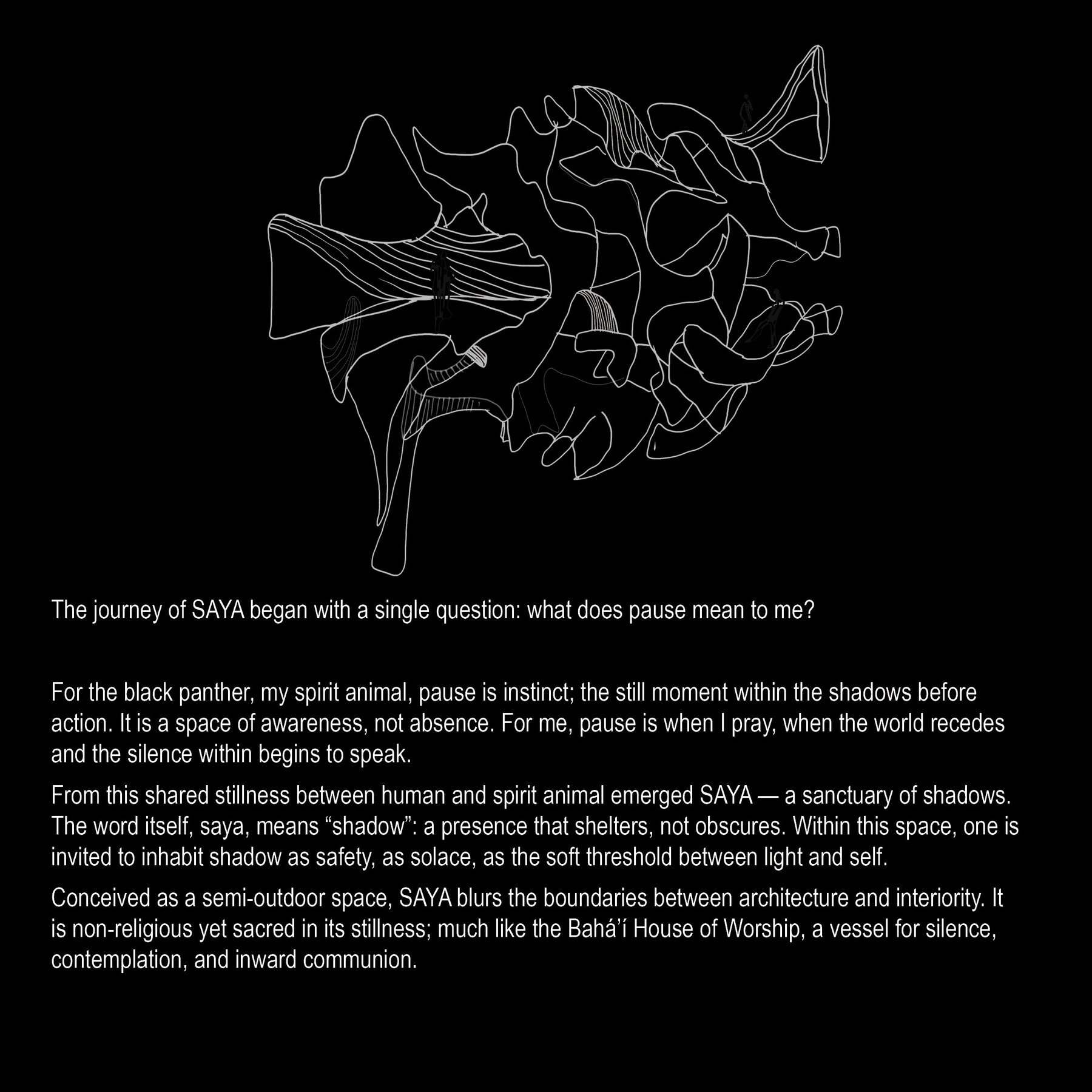
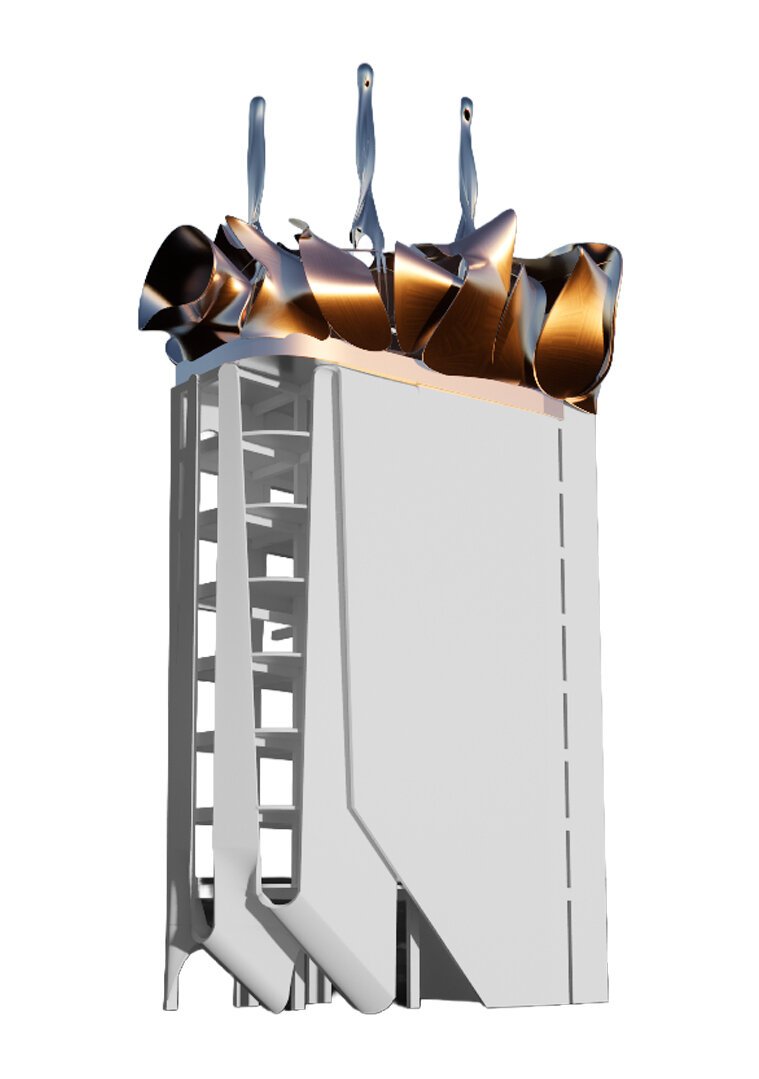
SAYA emerges from an inquiry into pause; a stillness found in prayer and in the black panther’s patient poise within the shadows. The project inhabits this shared quietude, shaping a spatial experience where shadow becomes refuge, rhythm, and revelation. Posture-cued floor depressions invite grounded ways of sitting; postures of humility not imposed by ritual but gently invited by form. Central structural spires anchors the architecture, while an ascending promenade guides visitors through shifting registers of light and darkness, choreographing a slow, deliberate and contemplative journey towards a vantage point. Like the secular quietude of the Lotus Temple, SAYA offers a sanctuary free from doctrine, a place for contemplation, presence, and internal alignment. Here, pause becomes architecture: a softened threshold where one meets oneself, held gently within shadow and light. In the end, SAYA does not ask one to believe in anything; it simply asks one to be still.
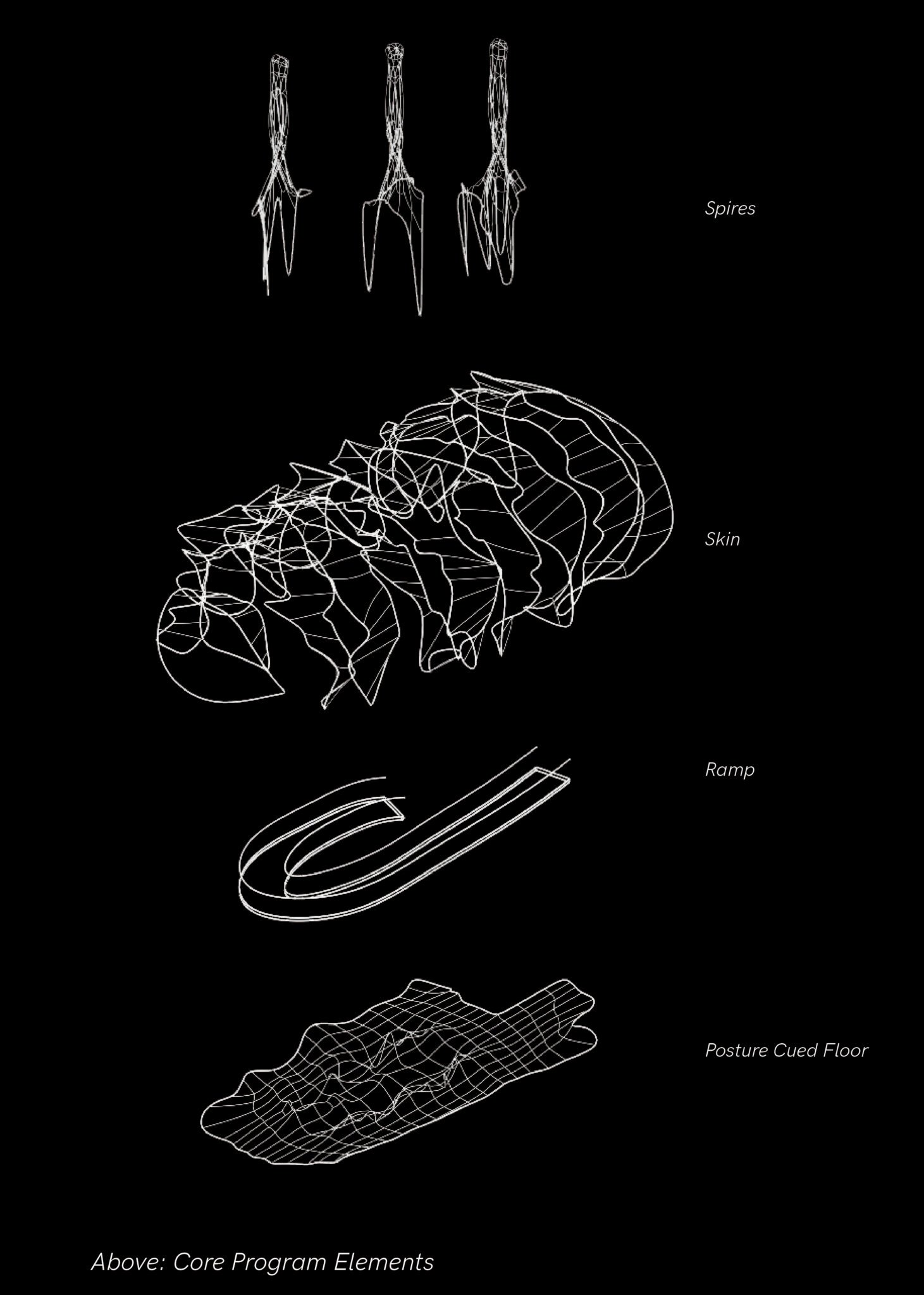
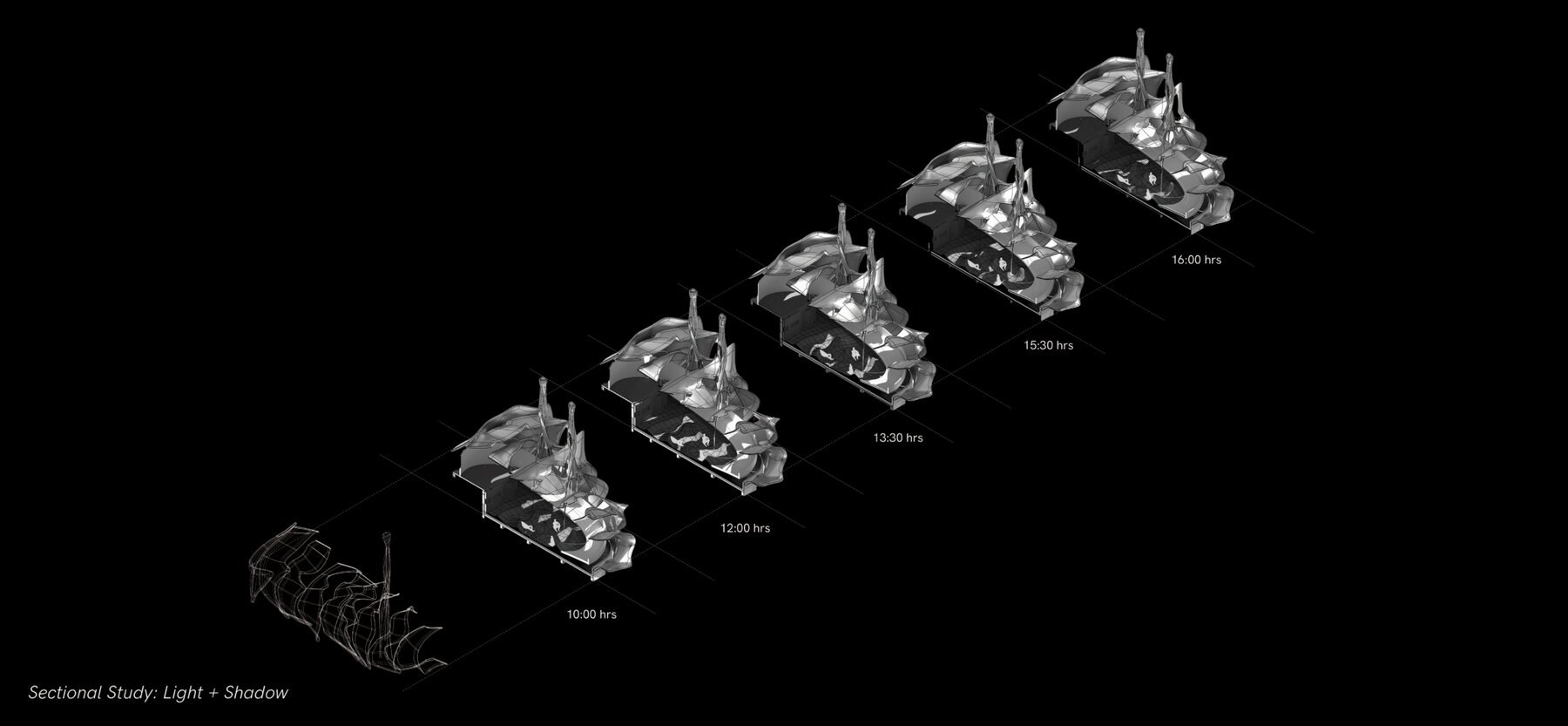
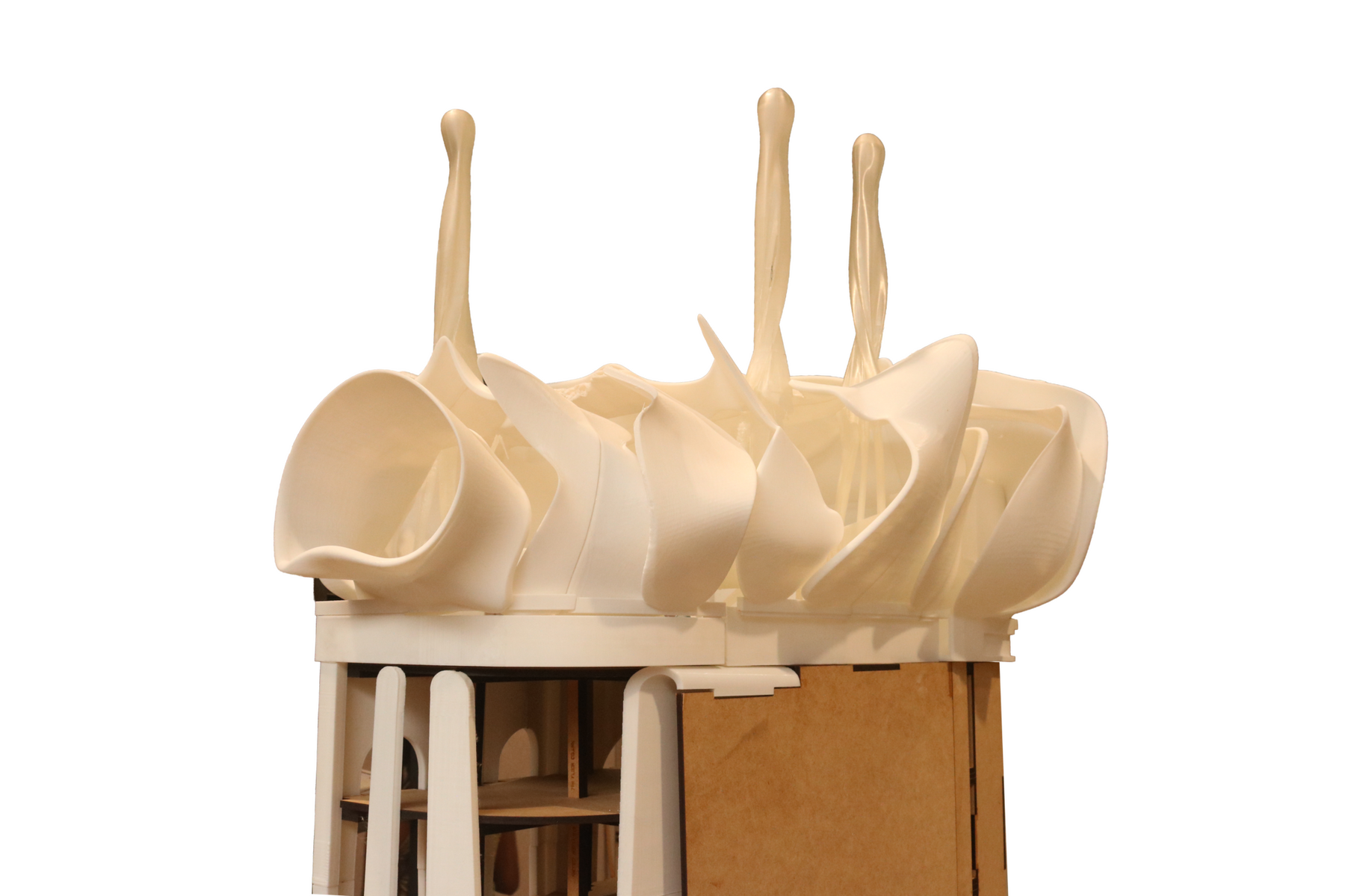
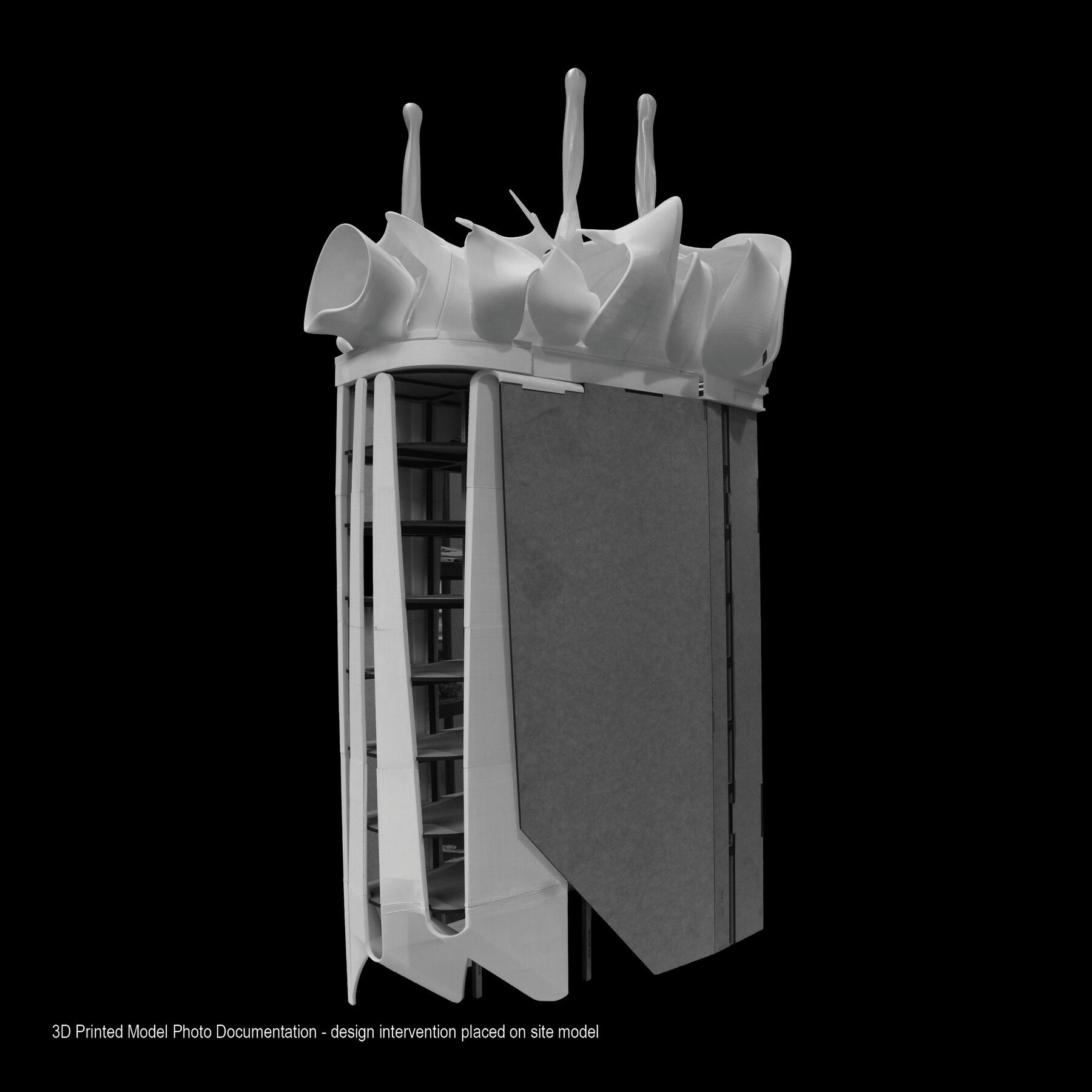
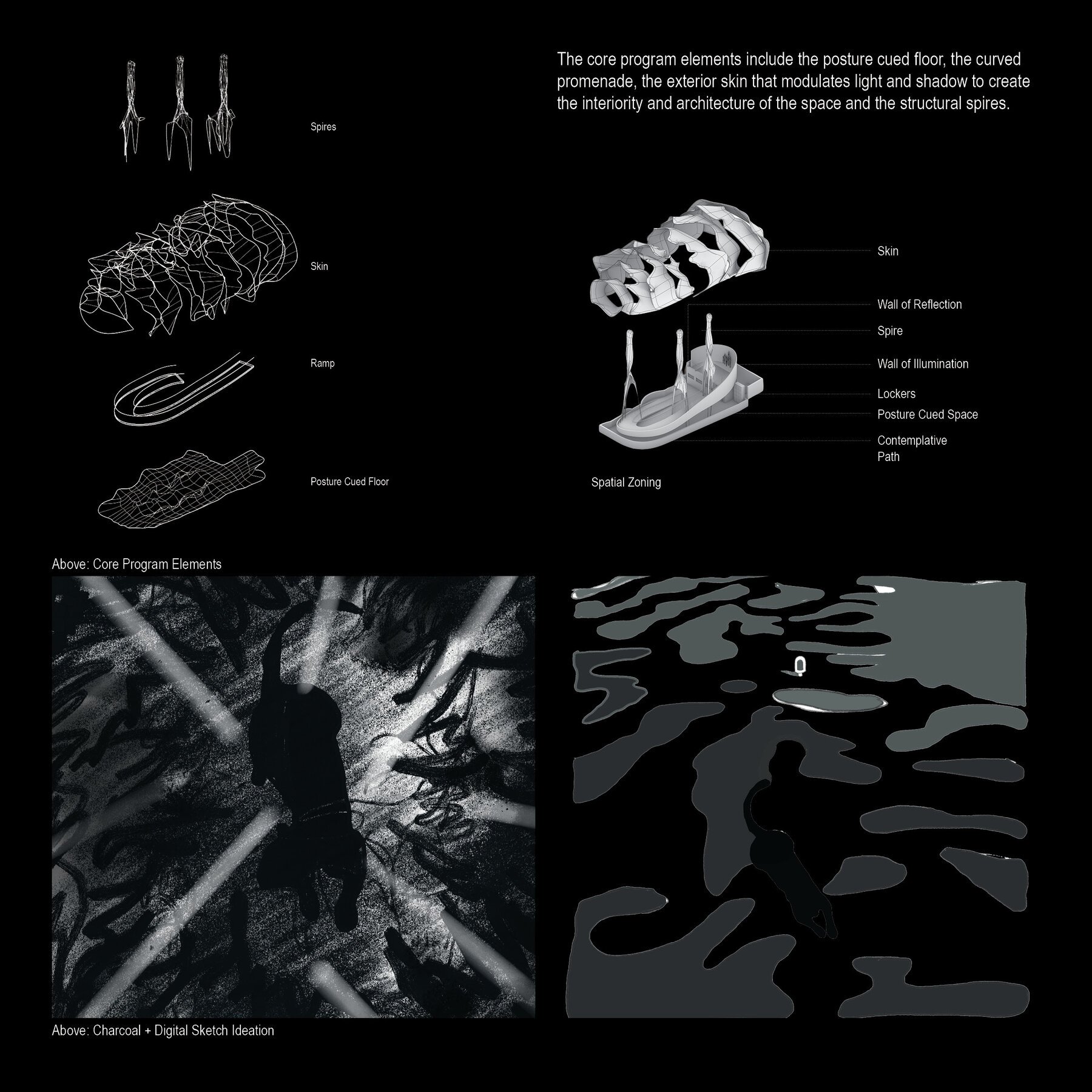
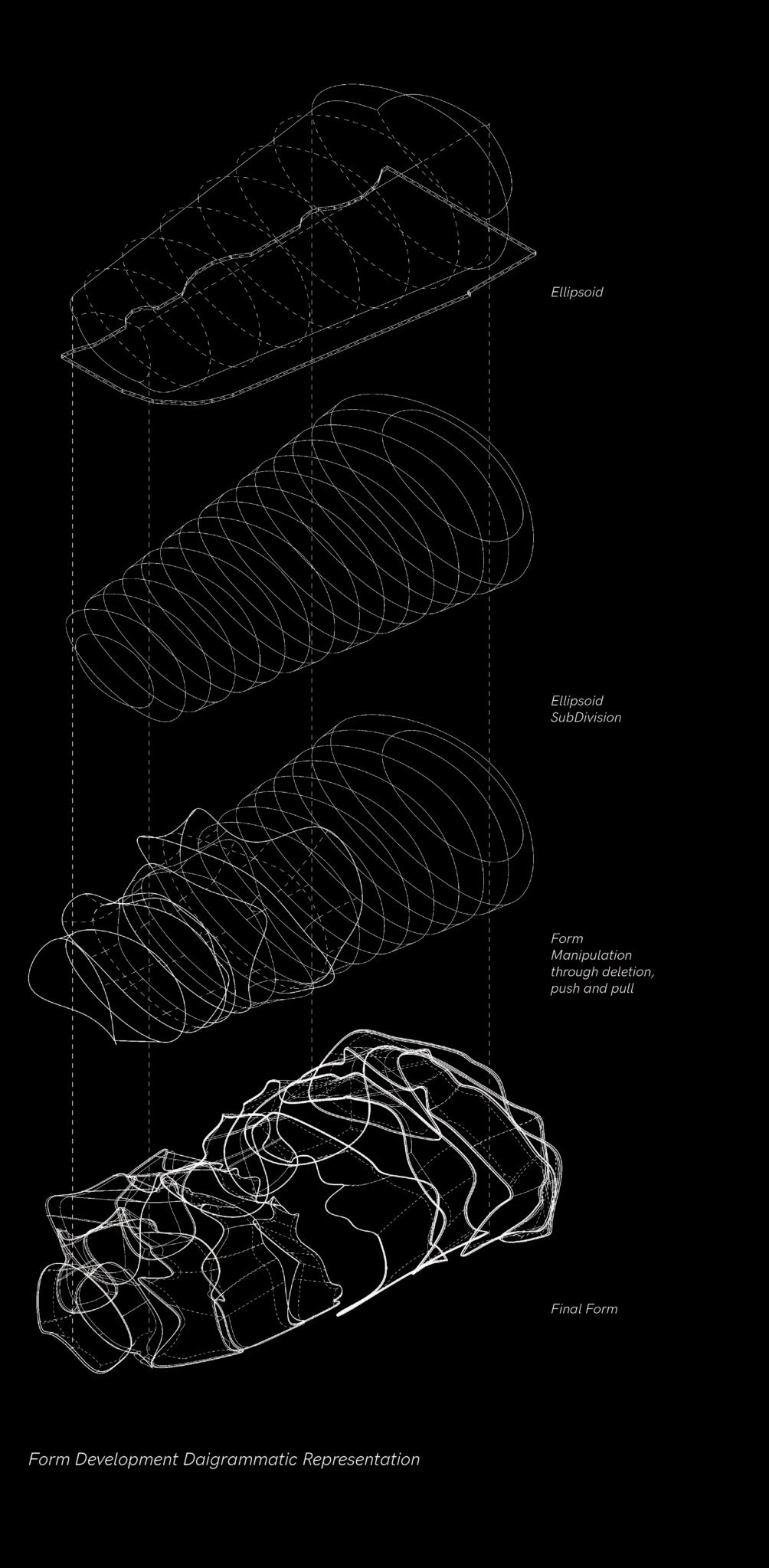
The design approach of SAYA is rooted in phenomenological architecture, where space is shaped to heighten awareness of the body, time, and self. The project begins with pause as an embodied condition, translated into fixed posture-cued floor undulations that invite kneeling, sitting, and reclining. These postures remain constant while light and shadow shift throughout the day, allowing time to be experienced spatially rather than measured. An ascending promenade choreographs movement as a slow, deliberate journey through the space. Three spires structurally hold and anchor this promenade, establishing moments of vertical orientation within a predominantly horizontal field of stillness. The exterior skin is undulated in response to light, generating a landscape of shadows that transform continuously through the day. Drawing from non-denominational contemplative spaces such as the Lotus Temple, SAYA offers an open framework for reflection, where introspection is invited through form, light, and stillness.
SAYA culminates as a semi-outdoor contemplative space that balances enclosure and openness, allowing stillness to be experienced through atmosphere rather than instruction. The interior unfolds as a quiet terrain of shadow and light, where fixed posture-cued floor undulations invite kneeling, reclining, and seated rest; postures of humility not imposed by ritual, but gently invited by form.
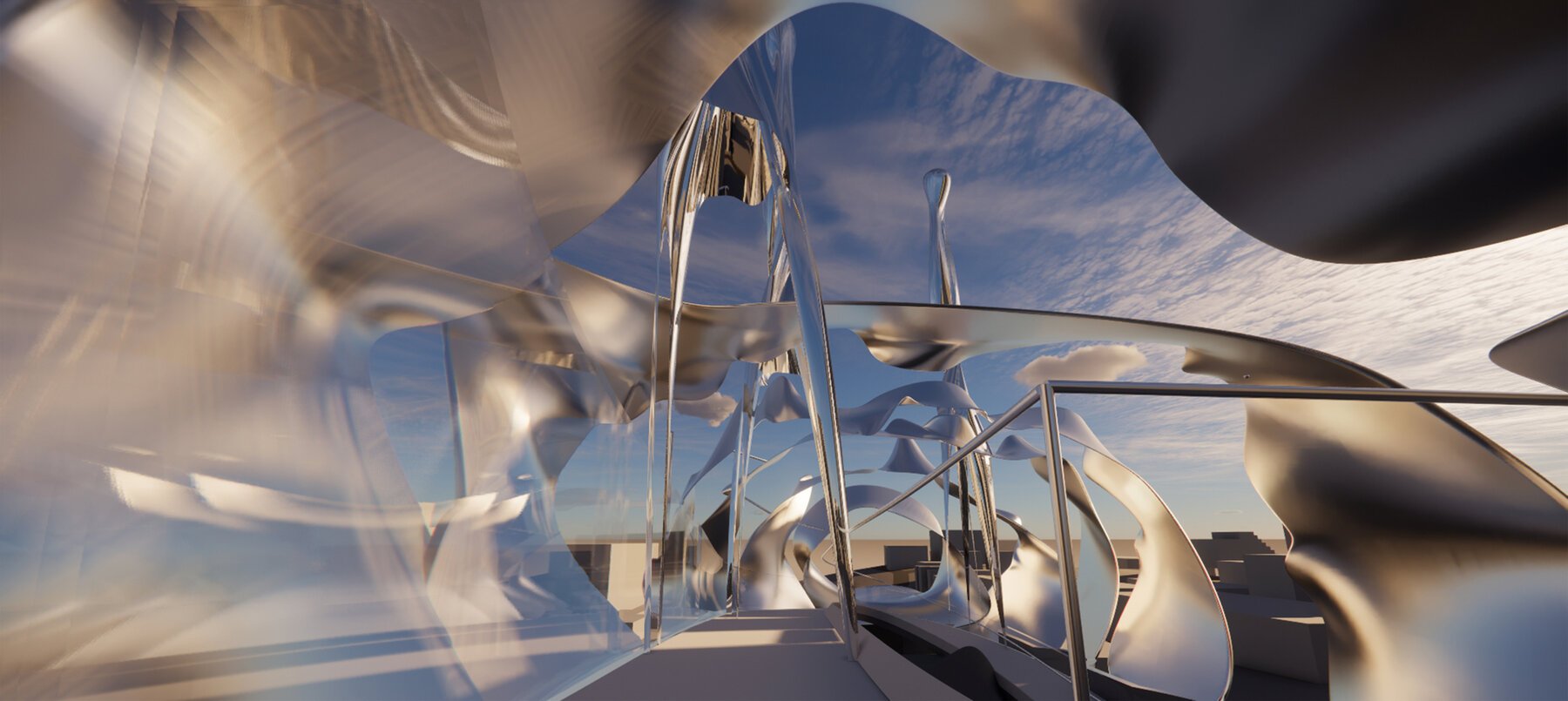
An ascending promenade guides the body through this landscape, enabling a gradual and reflective engagement with the space. Three spires structurally support this promenade, establishing vertical anchors within the otherwise grounded composition creating a curved ramp. At its summit, a vantage point showcases the terrain of shadows below that are sculpted by the exterior skin. At the top, "Wall of Illumination” invites visitors to light a candle or lamp as a universal gesture of pause and presence. Before exiting the space, a “Wall of Reflection” offers a moment to leave behind written intentions or silent prayers.
Externally, the space is wrapped in brushed aluminium panels whose surface subtly shifts with sunlight across the day, creating a dynamic play of the sunlight and sky on the exterior. This changing exterior reinforces the project’s dual presence: outwardly responsive and inwardly still, positioning SAYA as an architecture of pause, contemplation, and quiet presence.
- judith david