The Politics of Imperialism: Architectural and Archival Fabrications at the Lucknow Residency

About the project
Built form materializes the intentions, hierarchies, and mechanisms of control exercised by colonial power. Colonialism functioned not only as political occupation but as a systematic practice of domination and epistemic reconstruction, through which space, identity, and history were reorganised and legitimized. Architecture became a primary instrument of this process.
Within this framework, the Lucknow Residency emerges as a critical site of colonial encounter. Marked by the events of 1857, the complex once served as the administrative and residential seat of British authority in Lucknow. Its location within Qaiser Bagh, its elevated terrain, east-facing orientation, and proximity to the Gomti River were deliberate spatial decisions that asserted surveillance, comfort, and control. Each axis, elevation, and material choice projected British ideals of order onto a contested landscape shaped by layered political and cultural claims.
Guided by the studio theme Cronocaos and Care, this project reads the Residency as a layered record. By placing archival representations alongside material remains, it challenges imperial narratives of order and exposes architecture as an apparatus of colonial ideology, while acknowledging the role of later conservation practices in shaping the ruin’s present condition.
Approach
This research interrogates the colonial investment in architectural order at the Lucknow Residency as a deliberate political and aesthetic strategy. It examines how architecture and the archival record were fabricated to sustain an illusion of imperial civility. The image of the Residency was strategically constructed through material manipulation and idealized representation; archival sketches thus became not records but an orchestrated fiction of power.
Methodologically, the research adopts a comparative and critical approach, closely reading archival visual records alongside on-site material documentation. By aligning drawn representations with the physical remains, the study challenges the authenticity of colonial narratives and exposes how deliberate misrepresentation has produced a disjunction between archival depiction and material reality. This counter-narrative approach demonstrates how the archive and the ruin together reveal the mechanisms through which colonial authority fabricated its image of control.
Framed within a decolonial lens, this research resists the aestheticized narratives of colonial historiography and treats irregularity, fracture and incompletion as authentic traces of history. This approach repositions the Residency as an artifact of imperial propaganda rather than a monument of architectural achievement. Material evidence reveals how colonial power engineered its myth of discipline and civility through selective erasure, foregrounding the curatorial bias and representational politics embedded within the architectural archive.
Output
The paper argues that imperial power at the Lucknow Residency operated through two intertwined systems: material control enacted through architecture and epistemic control enforced through the archive. Together, the building and its representations functioned as coordinated instruments of domination that shaped how power was organized, displayed, and remembered.
The analysis of the Residency’s architectural language and the gaps between its planned and material conditions shows how the building embodied political intent, revealing how form, space, and representation worked collectively to enforce hierarchy. A decolonial reading allows these structures to speak in new ways. It exposes distortion, omission, and strategic authorship within the archival record, showing how each image and drawing constructed a controlled version of the site.
By comparing archives with physical evidence, the research uncovers the veneer that sustained imperial authority. This process guides a shift in method. It replaces the colonial mode of reading with one that questions viewpoint, authorship, and access. It treats silence and inconsistency as evidence, using these tensions to challenge the authority of the archive
- bhavya jain
Gallery
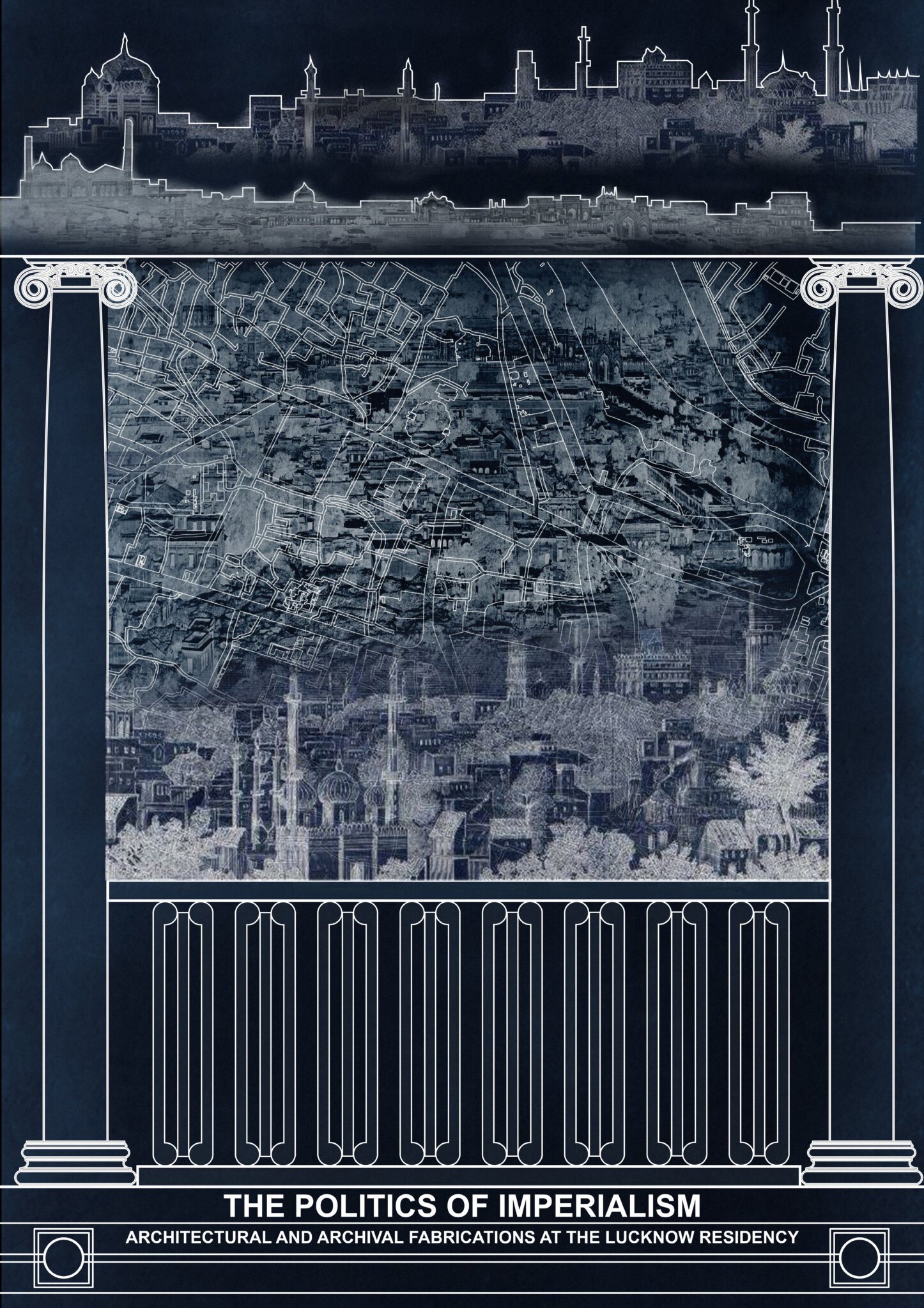
The Politics of Imperialism
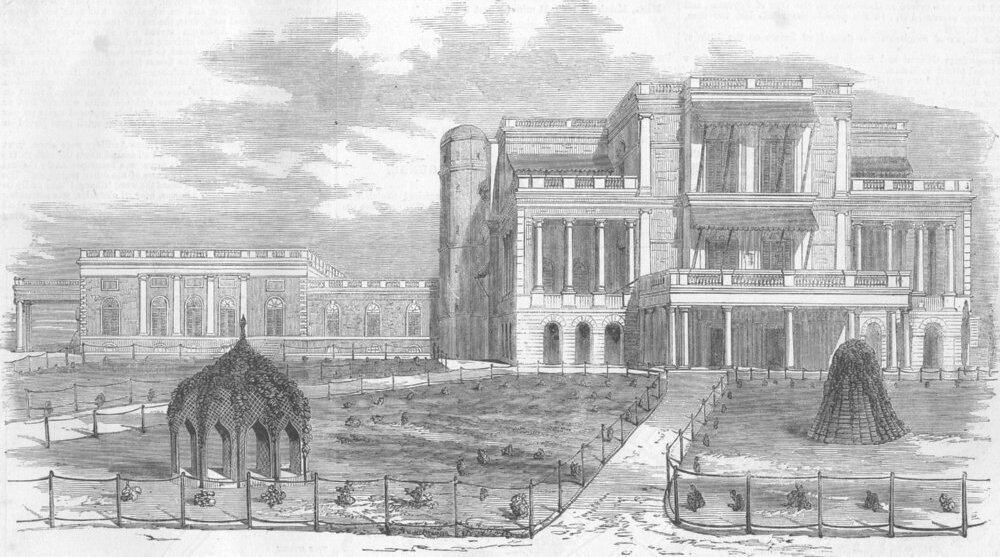
Visual archive of the east- facing façade of the main residency building before the first War of Independence (1857−1858)
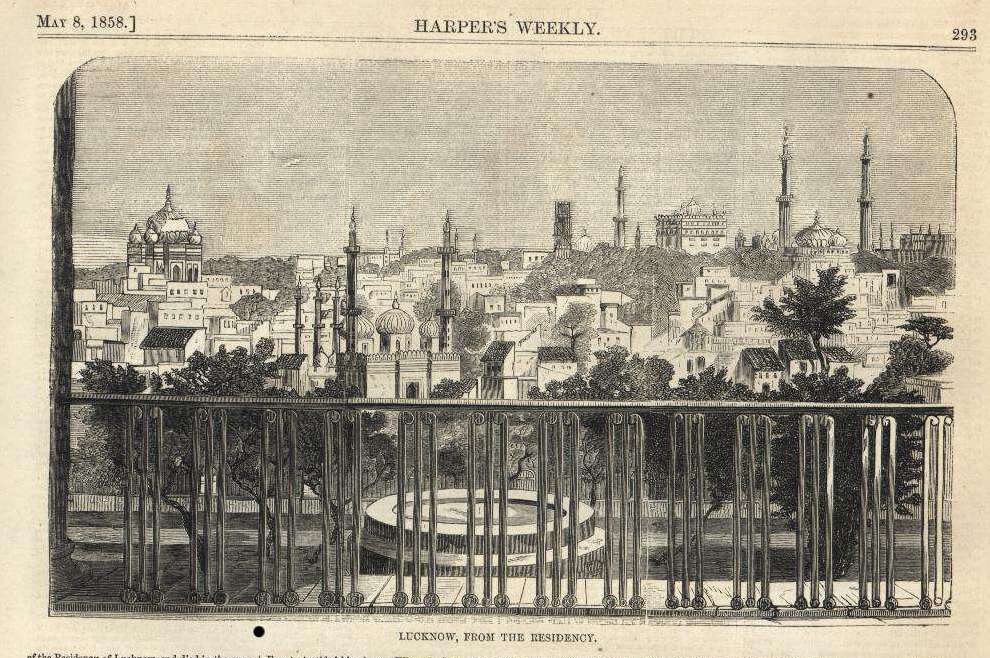
Visual archival representation of the Lucknow city from the main Residency building before the first War of Independence (1857- 1858) (Lucknow, from the front window of the Resident’s house, 1858)
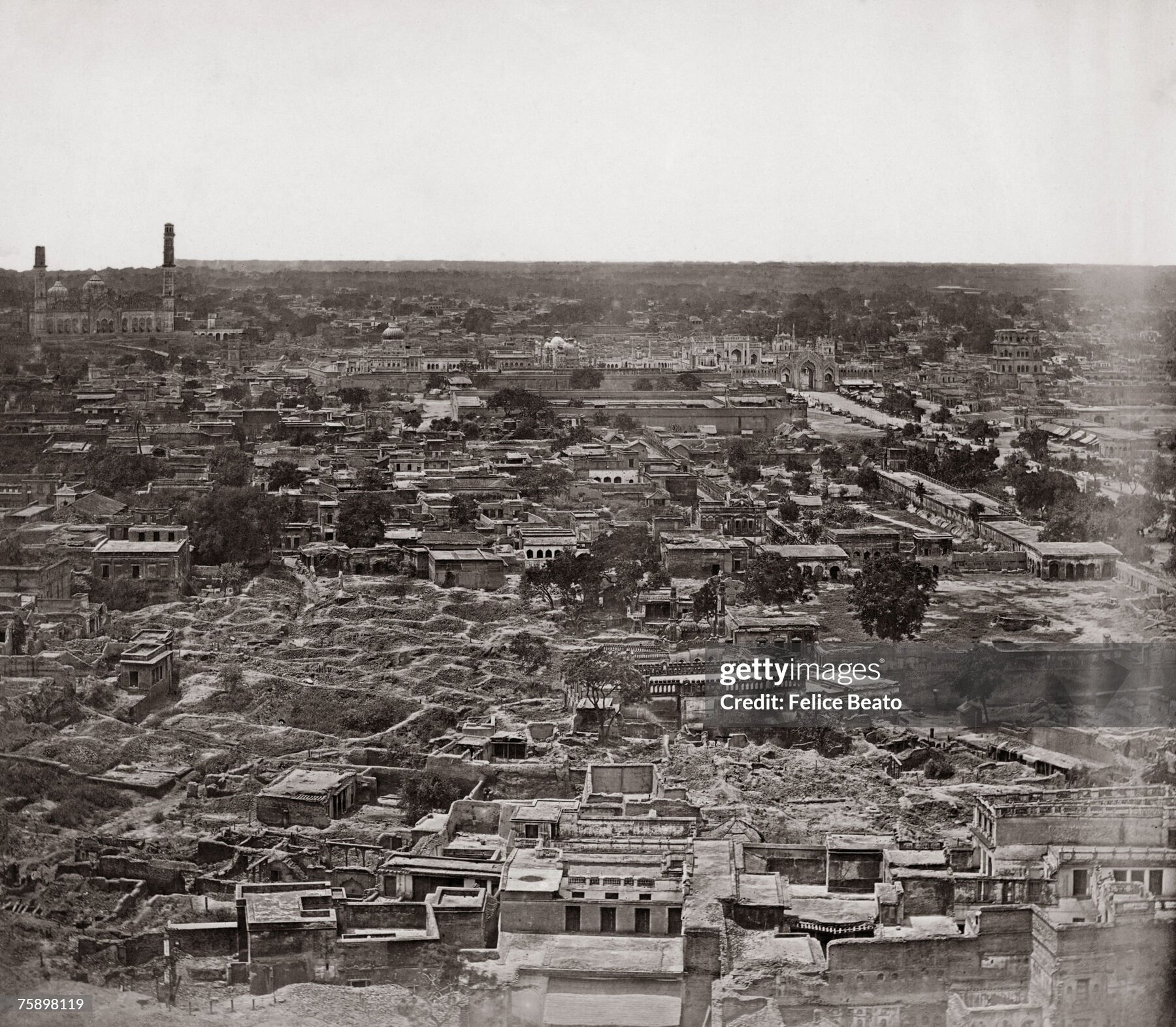
View of the Lucknow city from Bara Imambara before the first War of Independence (1857−1858) (Beato, 2007)

Visual archival representation of the west- facing façade of the main Residency building before the first War of Independence. (Bonner, 1857, p. 292)

East façade of the main Residency building