MCEM: Master’s in Construction Engineering & Management

- More information
Program brief
Who is it for?
This program is designed for engineers and architects seeking advanced competencies in planning, contracts, cost management, safety, quality, equipment, supply chains, digitization, and lean construction.
How we teach
The program follows a studio-centric pedagogy that simulates real-life construction projects across the entire lifecycle, from project formulation to execution, monitoring, control, and integrated delivery enabling students to engage with complex, multidisciplinary challenges. It has a strong industry connection through ensures that students are industry-ready into a meaningful career opportunity.
This approach is supported by mandatory core courses, including Computer Applications in Construction, Construction Economics and Finance, Construction Contracts, Construction Cost Management, Modern Methods of Construction, Sustainable Construction, Strategic Management, and Data Analytics for Construction. Together, these courses create a multidisciplinary learning ecosystem integrating theory, technology, and practice.
The program develops technical expertise, managerial competence, research-based innovation, and leadership capabilities essential for today’s construction industry.
- More information
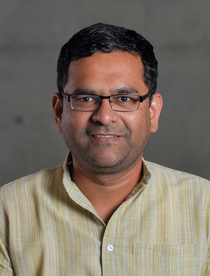
Message from Program Chair
Faculty of Technology
Program Structure
- Degree Title
- Master of Technology (M.Tech) in Construction Engineering & Management
- Duration
- 2 years (4 semesters)
- Total Credits
- 80
- Semester 01
Level 01 — Construction Project Formulation and Appraisal (20 credits)
Studios
Scope:
- Project Identification (pipeline/concept)
- Stakeholder Mapping & Risk Management
- Bid / Procurement Strategy
- Locational Analysis
- Technical Analysis
- Environmental Impact Assessment
- Financial Analysis & Cost – Benefit
- Project Scheduling (WBS, milestones)
- Project Controls
- Viability Appraisal (Go/No-Go)
Theory
- Computer Applications in Construction
- Construction Contracts
- Construction Economics & Finance
Key Learning Outcomes:
- End-to-end understanding of the conceptualization & development phases
- Apply appraisal tools on a selected project
- Prepare a feasibility dossier plus implementation roadmap integrating risk, stakeholders, bid, finance, schedule, EIA, and technical findings.
- Semester 02
Level 02: Construction Execution, Monitoring and Control (20 credits)
Studios
Scope:
- Execution-phase focus
- Time – Cost – Quality – Safety constraints
- Resource planning, allocation & control (men – materials – machines – money – methods)
- Construction planning & control (baseline, look-ahead, variance)
- Cost management (BOQ, rate analysis)
- Quality management (QA/QC plan, checklists, formats)
- Safety management (safety plan, permits, briefings)
- MIS & reporting (site observations, photographs, videos, dashboards)
- Lean construction (waste mapping, 5S, Last Planner concepts)
- Contract documents & compliance
- Progress measurement and control
Courses
- Modern Methods of Construction
- Construction Cost Management
- Sustainable Construction
Key Learning Outcomes:
- Investigate & analyse execution processes
- Understand pre-construction readiness, safety, quality, resources & productivity planning
- Monitor and control time & cost with field data and variance analysis
- Use MIS, checklists and lean tools to drive corrective actions
- Become change agents for best practices at construction sites.
- Semester 03
Level 03 : Integrated Construction Practices (20 Credits)
Scope:
- Lean foundations
- Integrated Project Delivery (IPD) mindset
- BIM-enabled collaboration across
Architecture – Structure – MEPF
- Model coordination & clash resolution
- 4D/5D (schedule & cost integration)
- Look-ahead planning & Last Planner concepts
- A3 problem-solving & value stream mapping
- CDE workflows (models/drawings/RFIs/submittals)
- Model-based quantities & take-off checks
- Digital QA/QC & safety observations
- Change management & version control
- Stakeholder roles, handoffs, and risk – reward alignment
Key Learning Outcomes:
- Apply a collaborative, model-centric workflow to plan and deliver packages across A‑S-MEPF.
- Diagnose pitfalls of traditional delivery and redesign processes using Lean/IPD principles.
- Coordinate federated models, run clash detection, and drive constructible resolutions.
- Link models to time & cost (4D/5D) to test scenarios, resources, and sequence alternatives.
- Set up a CDE with clear approvals, RFI/submittal cycles, and traceable decisions.
- Use field and model data to build dashboards, trigger corrective actions, and standardize best practices.
- Semester 04
Level 04 : Directed Research Project (DRP) (14 Credits)
An in-depth, faculty-guided inquiry undertaken in Semester 4, often aligned with industry-based research themes. Students from the program engage in impactful Directed Research Projects (DRP) that address real-world industry challenges and emerging trends in the built environment.
Following are the key theme areas of DRP-based research.
Lean Construction & Productivity Improvement
Students work on applying lean principles to real project scenarios, developing methods to minimize waste, improve on-site efficiency, and streamline construction processes reflected by multiple thesis selections in Lean Construction across recent years.
Building Information Modeling (BIM) & Digital Construction
One of the most active research domains, BIM-focused DRPs emphasize digital workflows, model-based coordination, and openBIM adoption. Students develop solutions that enhance project accuracy, collaboration, and data-driven decision-making, as shown by continuous thesis work in BIM and IT in Construction.
Construction Cost Management & Value Engineering
Research in this area focuses on cost planning, project budgeting, and optimization techniques. Students explore value engineering strategies and cost-control frameworks, contributing practical insights for reducing expenditure without compromising quality supported by recurring thesis topics in cost management and value engineering.
Project Scheduling, Procurement & Megaproject Management
Students engage in advanced planning, scheduling analysis, procurement strategies, and challenges related to large-scale infrastructure developments. DRPs in these areas lead to improved project delivery models and scheduling innovations, visible across multiple years of mapping.
Sustainable Construction, Health & Safety, and Waste Management
Research topics include sustainable construction methods, environmental impact reduction, worker safety enhancement, and efficient solid waste management. These projects strengthen students’ ability to integrate sustainability and safety into project design and execution, reflected in multiple thesis areas like sustainable construction, health & safety, and waste management.
*The program structure and courses indicated above are based on previous years’ offerings and are subject to change.
Program Testimonial
Program Ambassadors


Board of Review (BOR) Members

Viplav Shah

Sagar Gandhi