- gajjar miloni
About the project
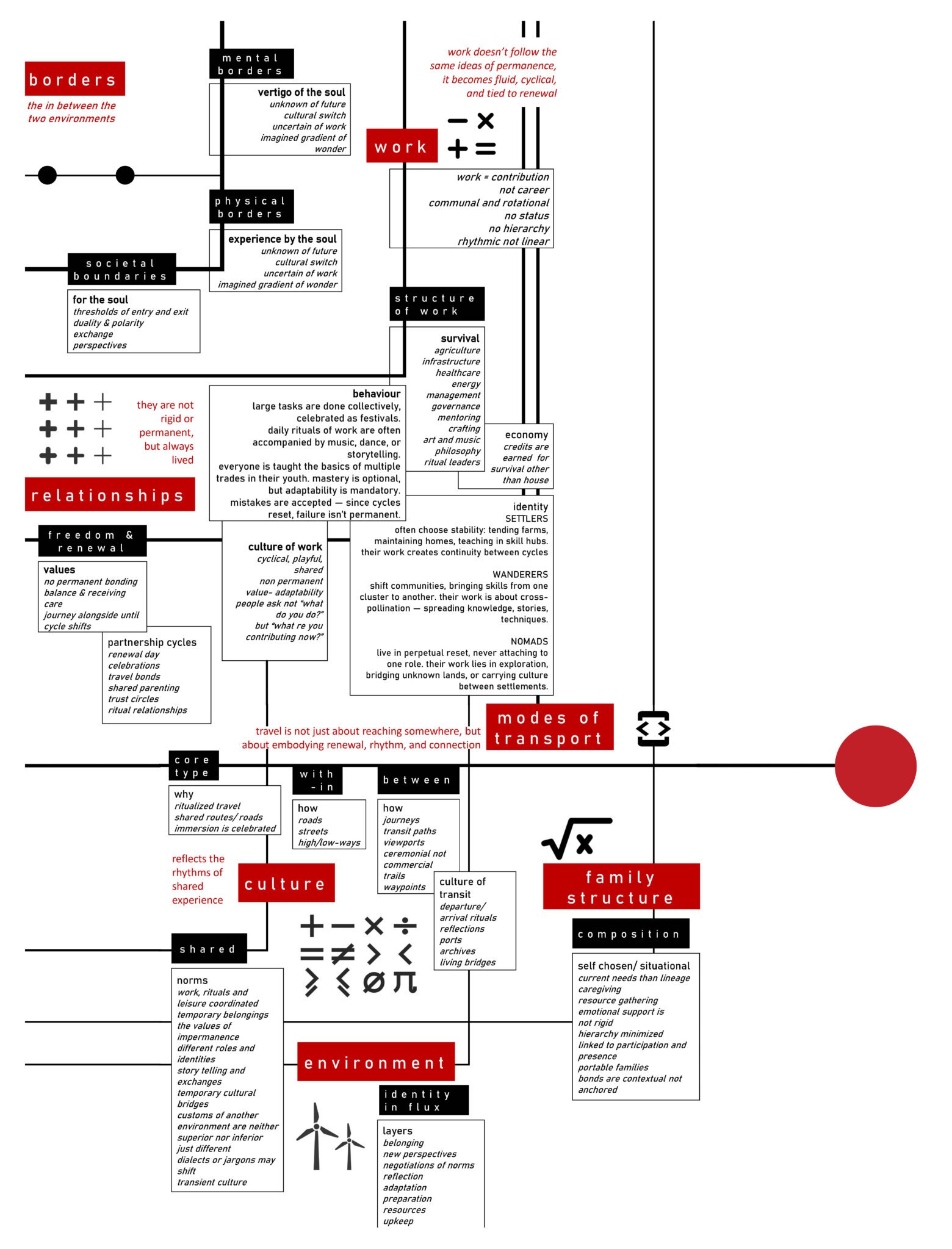
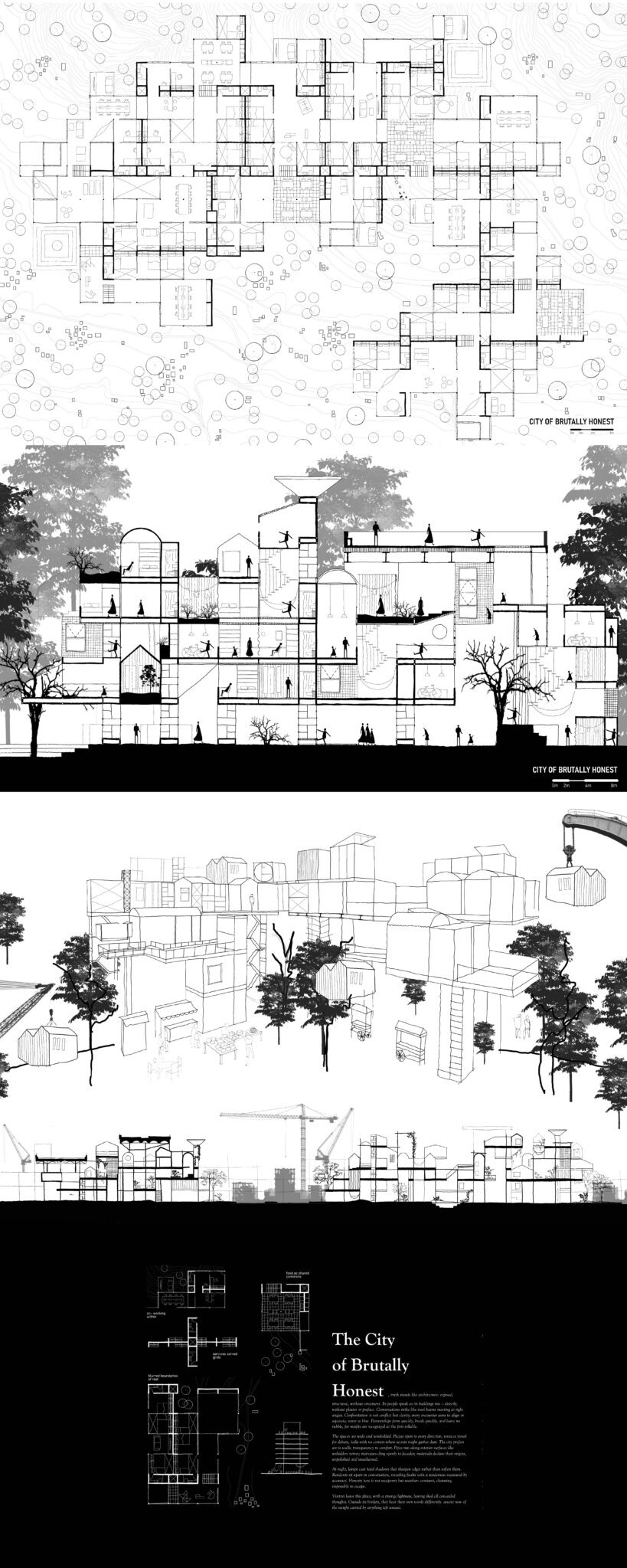
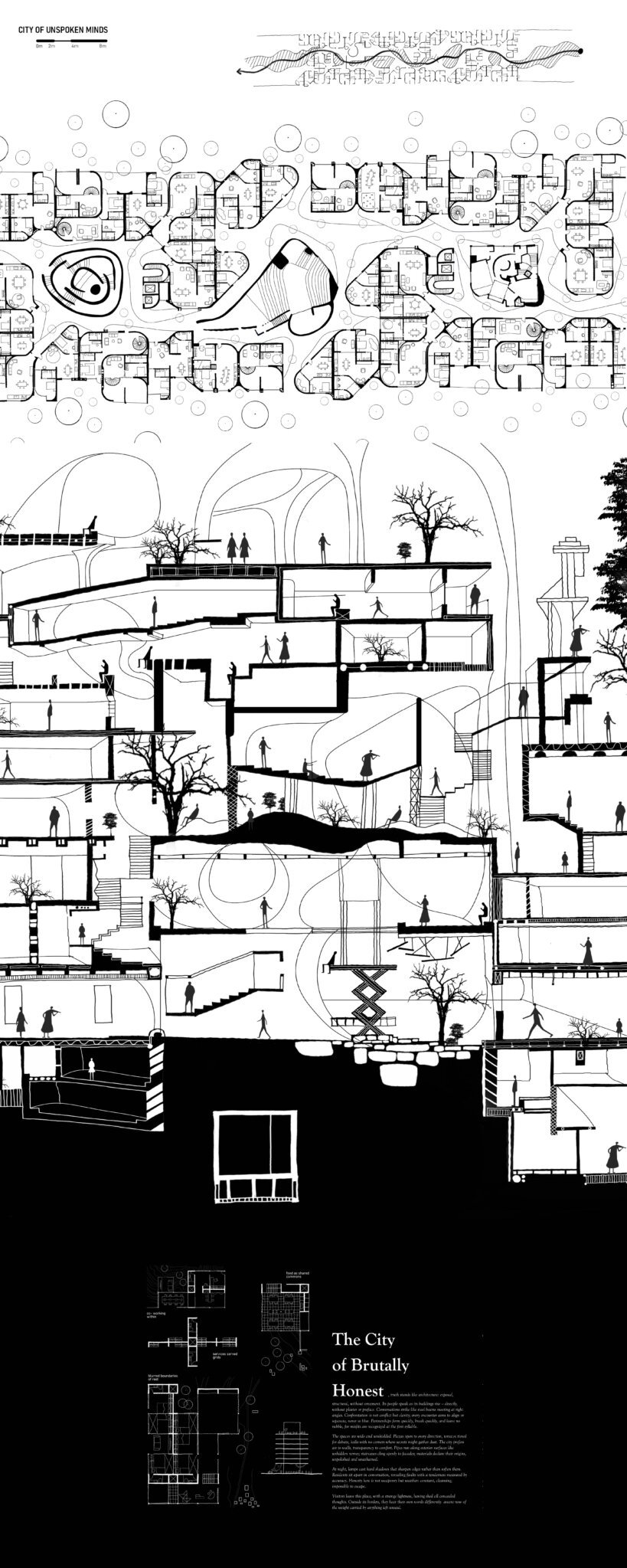
This work stems from a curiosity about how people move through societies, how frustrations and behaviours shape their environments, and how architecture can respond to lives in constant transition. By examining contrasting social conditions—environmental and behavioural—the project develops narrative cities, collages, and spatial diagrams that question what it means to dwell, belong, and reset.
It explores how people speak, retreat, interact, and adapt, and how spatial systems—structures, proximities, thresholds, and circulation—can mirror patterns of honesty, concealment, shared life, and solitude. Ultimately, the work asks how architecture can support movement without dislocation and offer belonging without possession, responding to the shifting rhythms of contemporary life.
Approach
The project investigates how people navigate societies in flux and how their behaviours, frustrations, and adaptations shape the environments they inhabit. By studying contrasting social and environmental conditions, it translates patterns of movement, retreat, interaction, and communication into narrative cities, collages, and spatial diagrams. The work positions architecture as a responsive system—using thresholds, proximities, and circulation to reflect honesty, concealment, solitude, and shared life—proposing spaces that enable continuity, belonging, and adaptability within constantly shifting contemporary lives.
Output
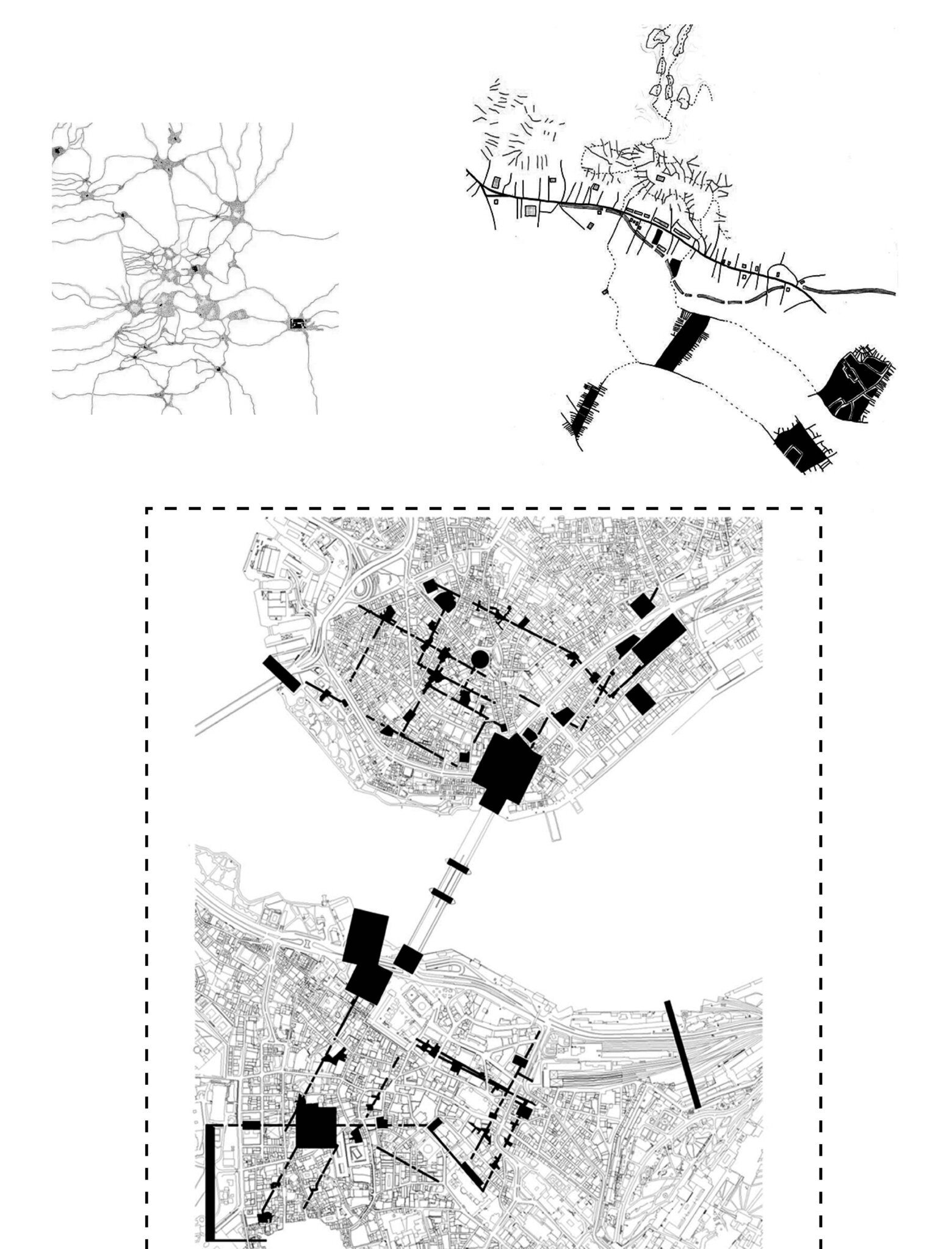
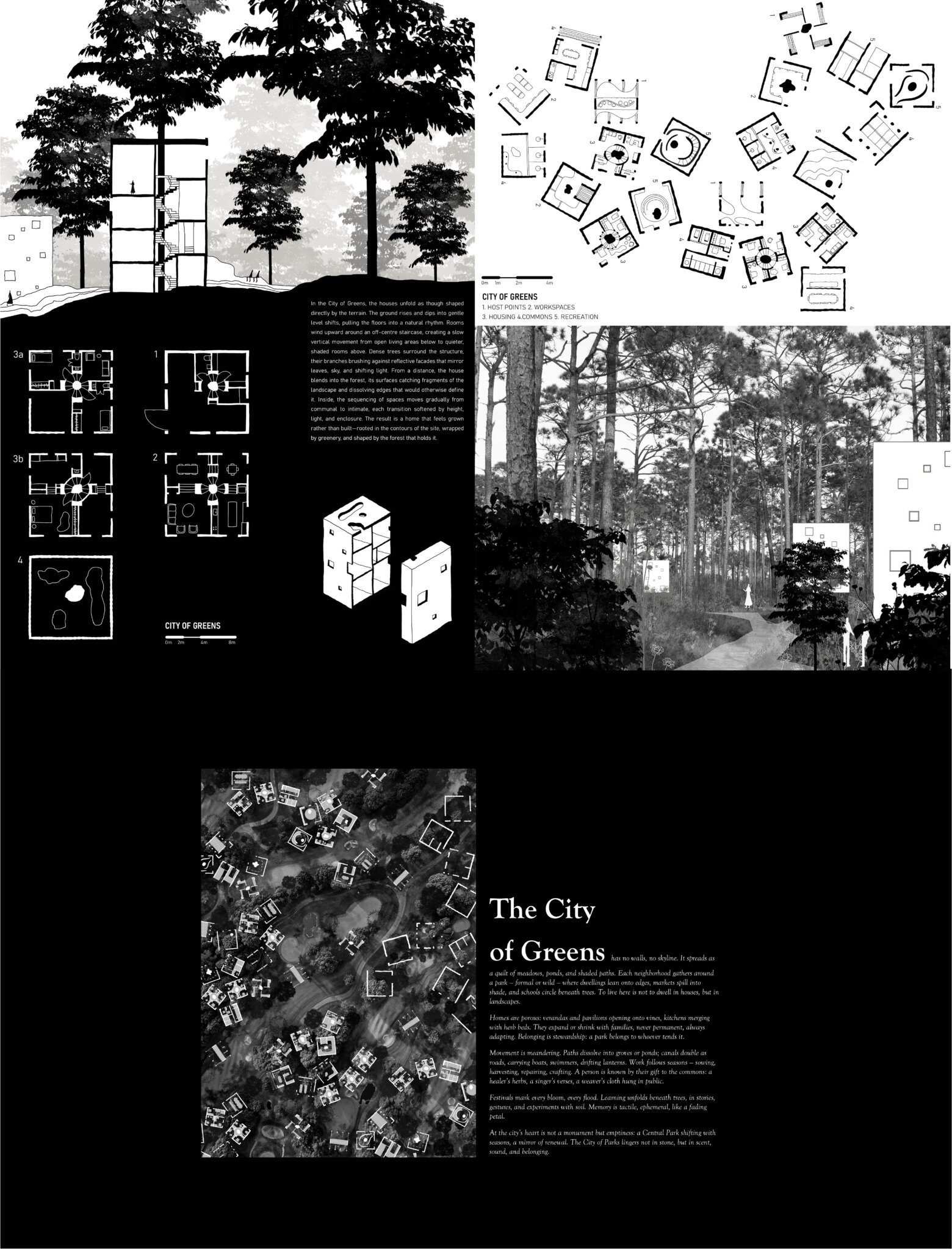
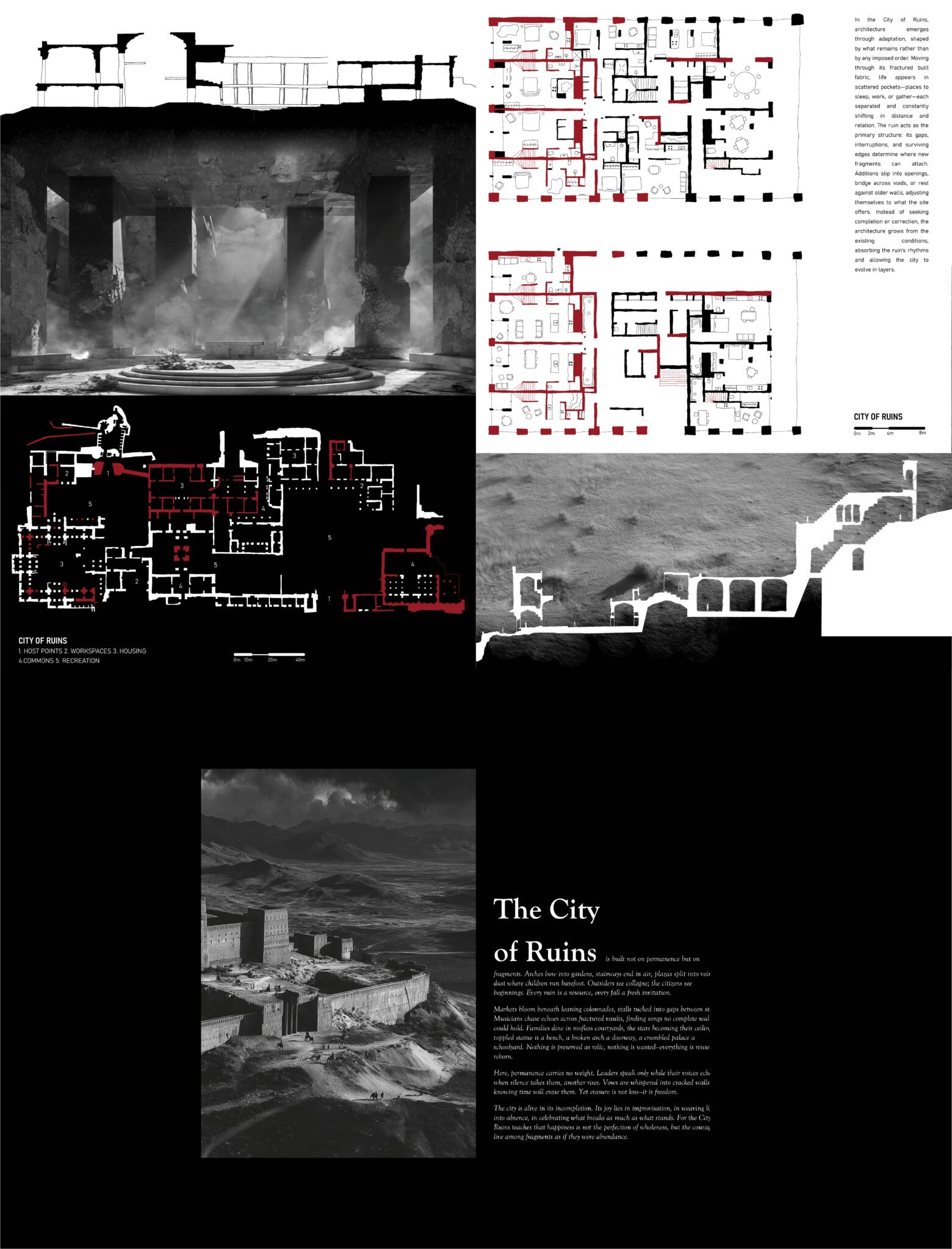
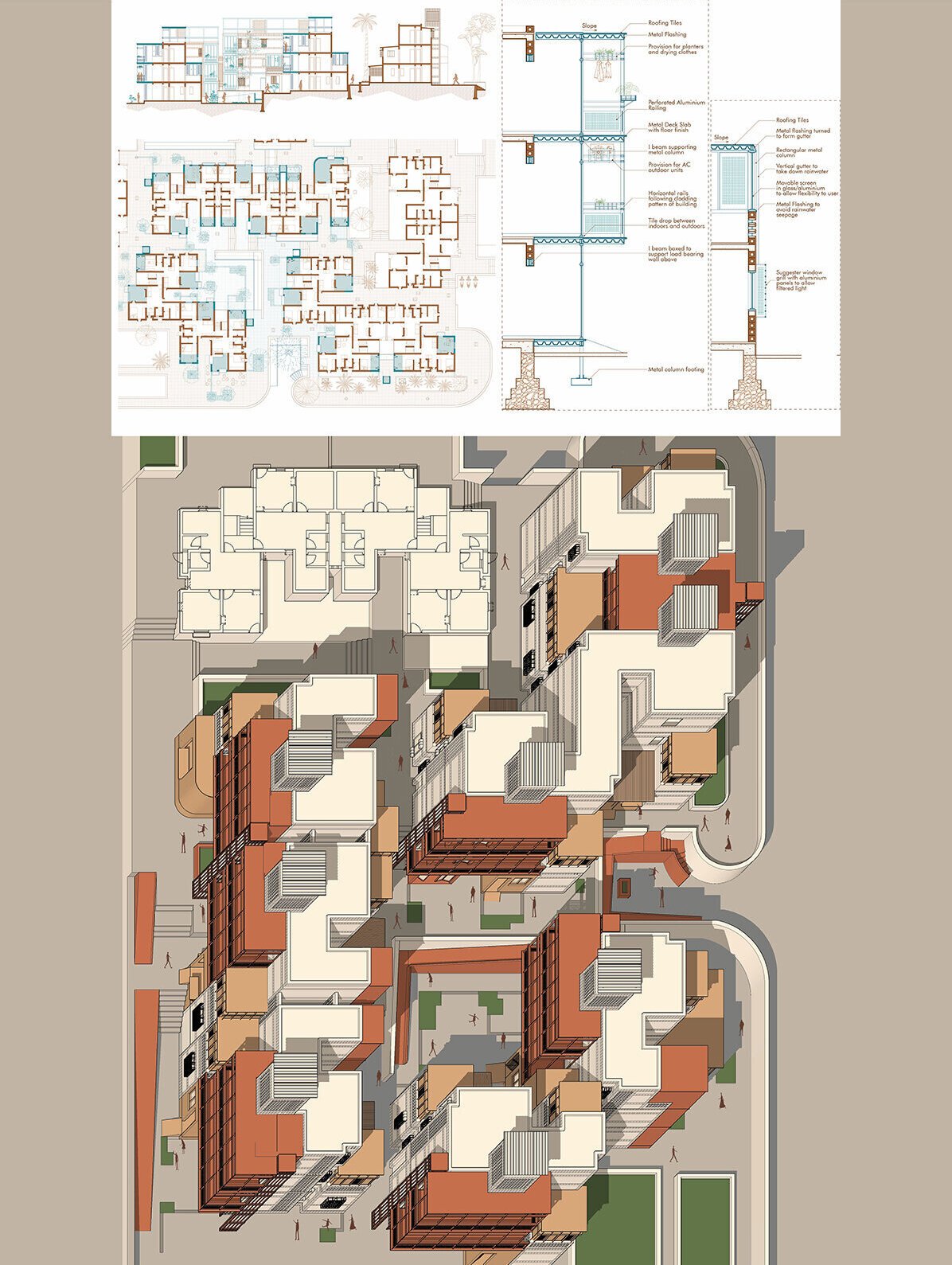
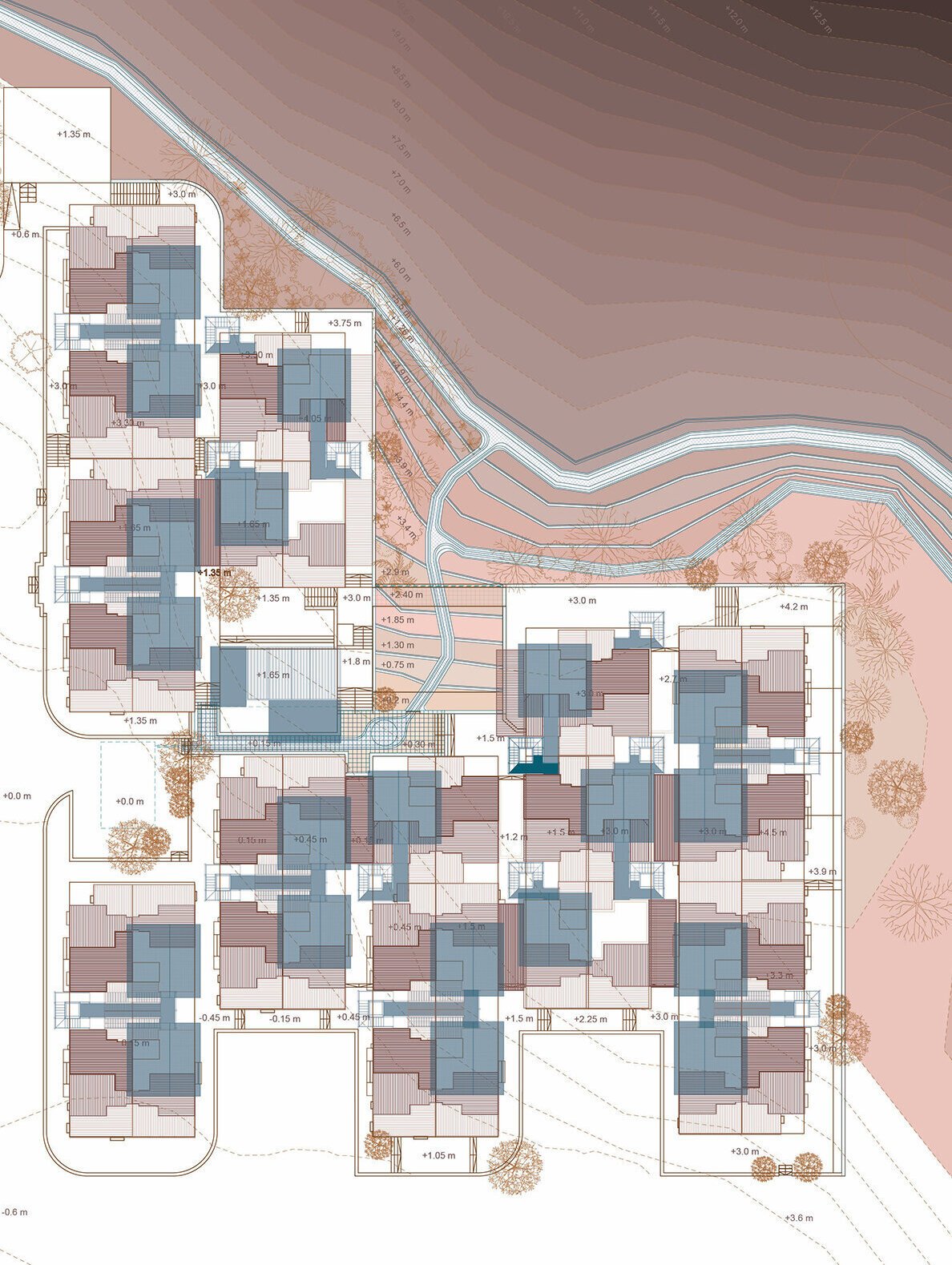
The project output comprises a series of narrative cities developed through collages, spatial diagrams, and analytical mappings. These visual and spatial artifacts translate social behaviours, movement patterns, and environmental contrasts into architectural systems. Together, they articulate speculative frameworks of thresholds, circulation, and proximities that explore alternative ways of dwelling, belonging, and adapting within transient and evolving social conditions.
- gajjar miloni
Gallery