Climate Responsive Design Optimization of an Outpatient Healthcare Facility

- sathyashriya k
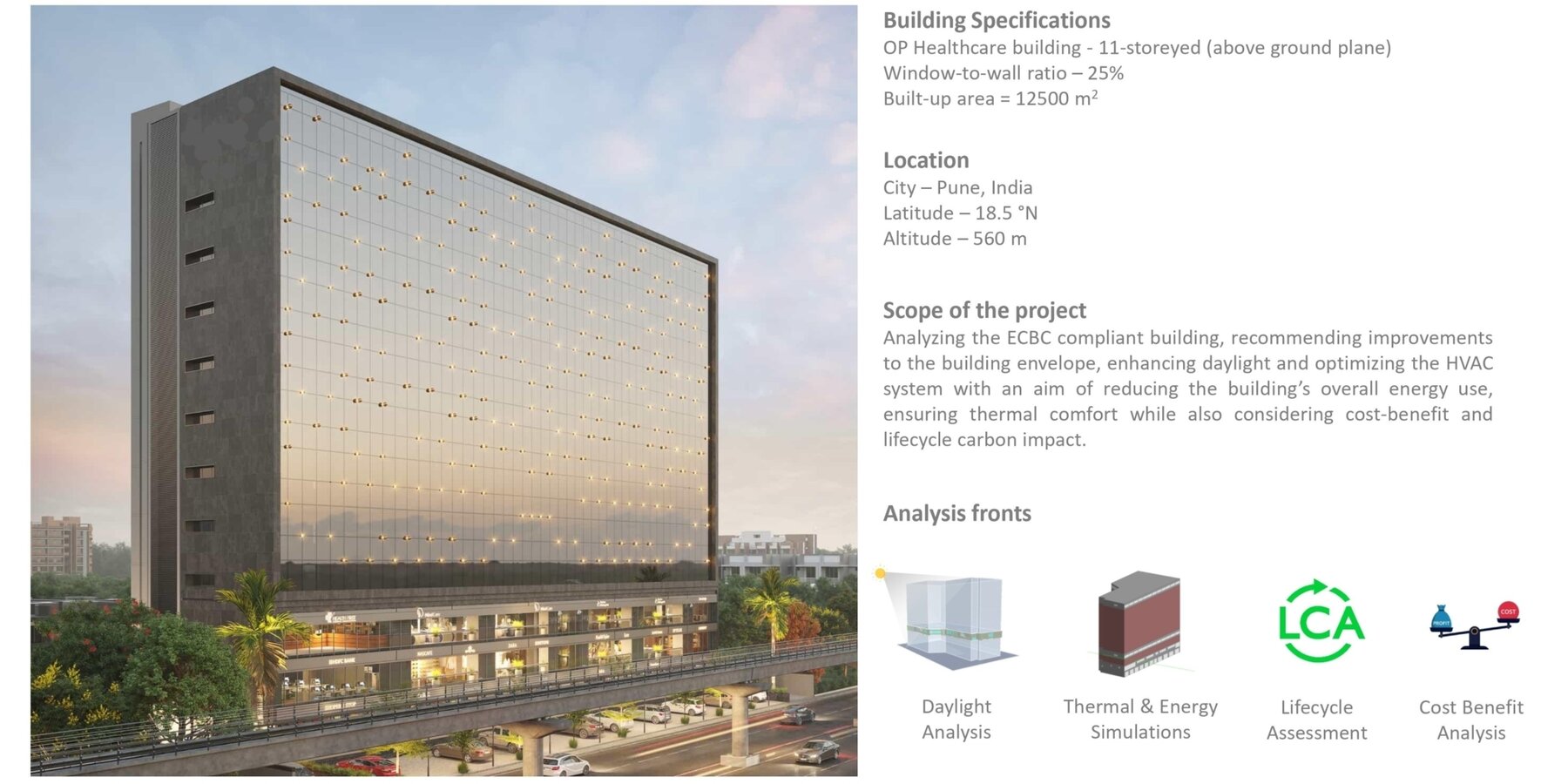
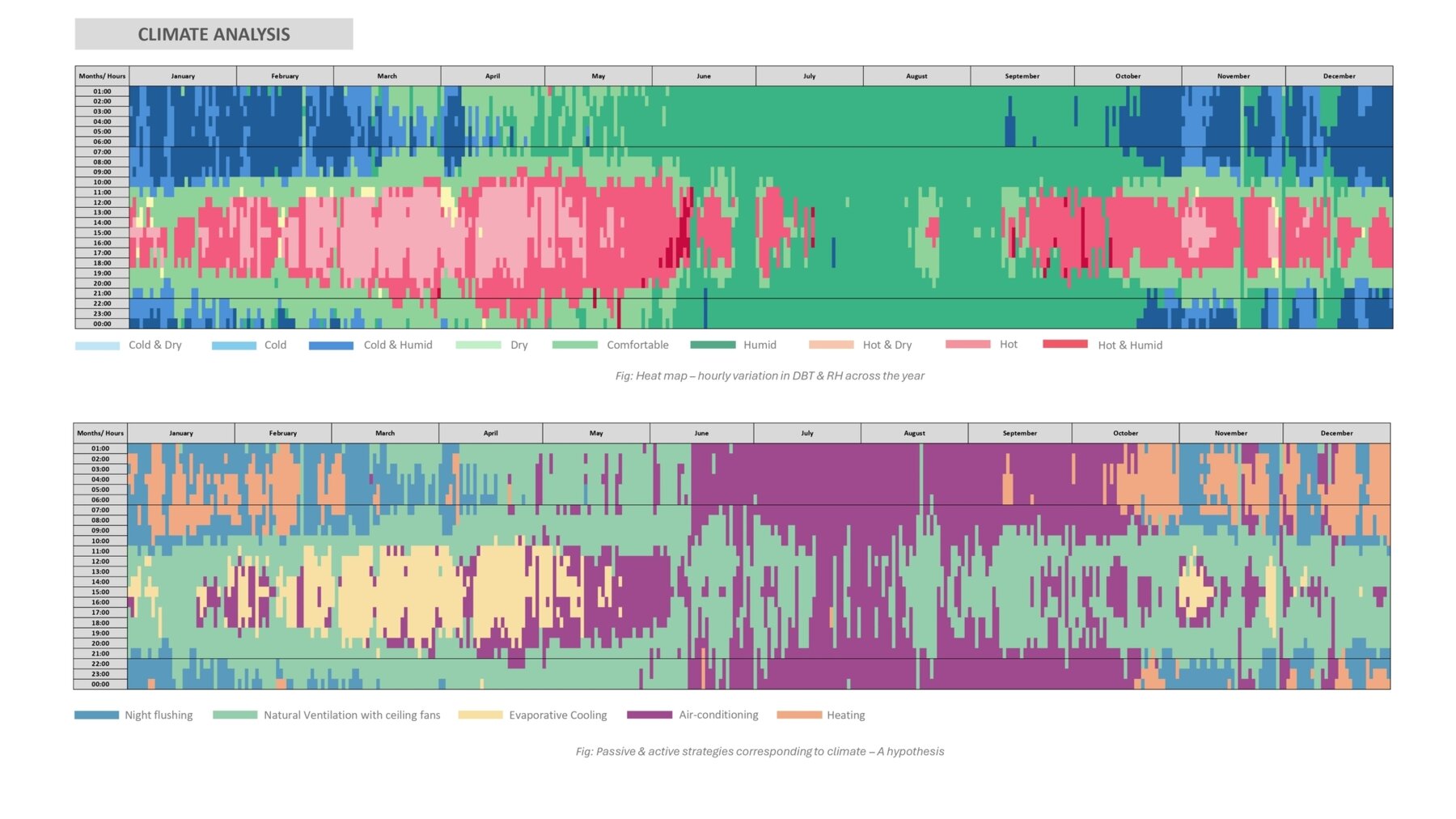
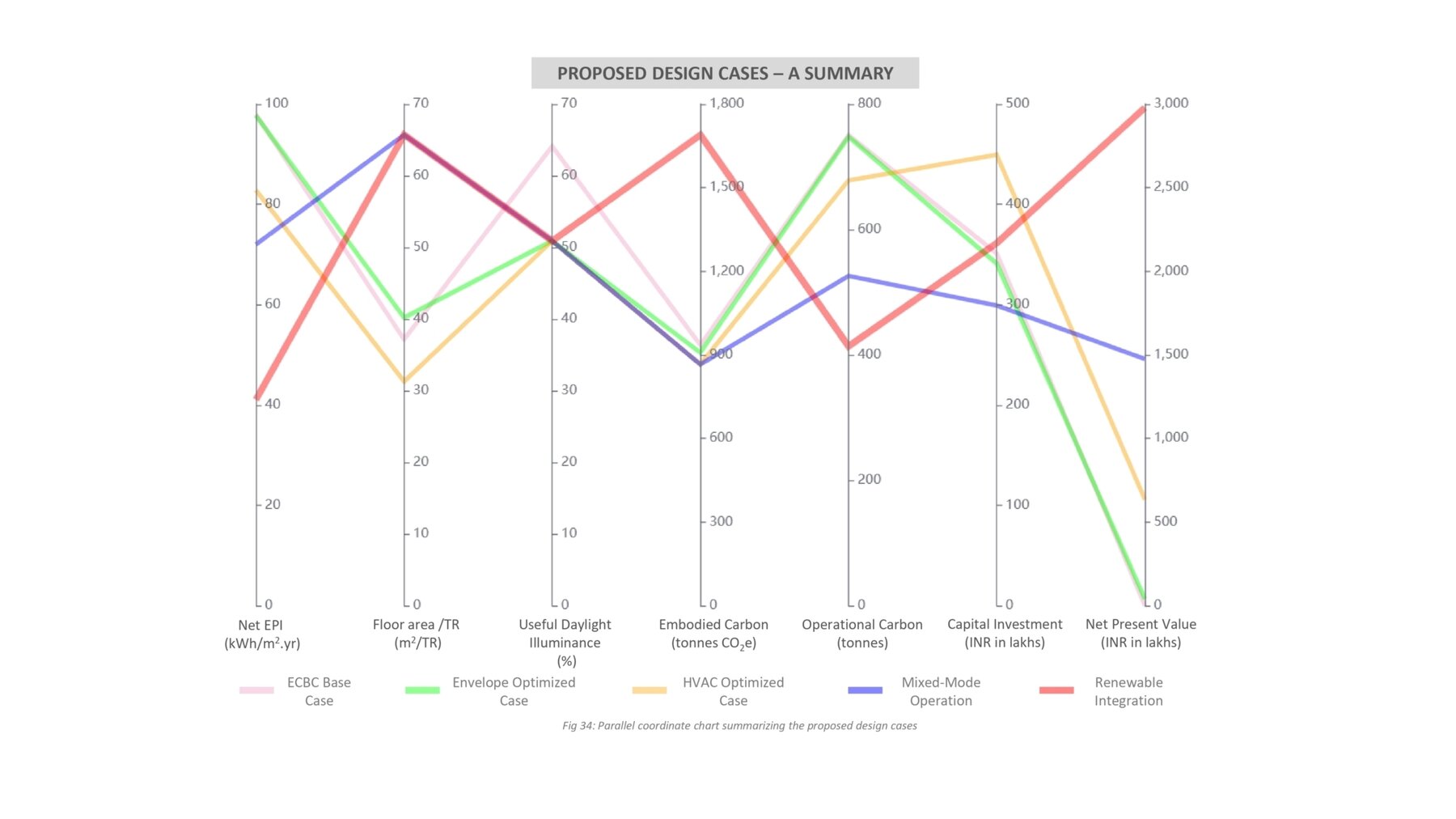
The project, located in Pune’s warm-humid climate, was assessed against the ECBC 2017 recommended Standard Design Case, with a baseline Energy Performance Index (EPI) of 97 kWh/m²·yr and a VRF-based HVAC system (with DOAS) sized at 251 TR. Initial envelope parametric analysis indicated that adopting relatively higher thermal transmittance for walls and roof, combined with a high-SRI roof and improved glazing with lower SHGC, resulted in an 11% reduction in HVAC capacity and a 3% reduction in EPI. Daylighting strategies were implemented to enhance uniformity and reduce excessive perimeter illuminance, with light shelves on south-facing façades and vertical fins on east and west façades.
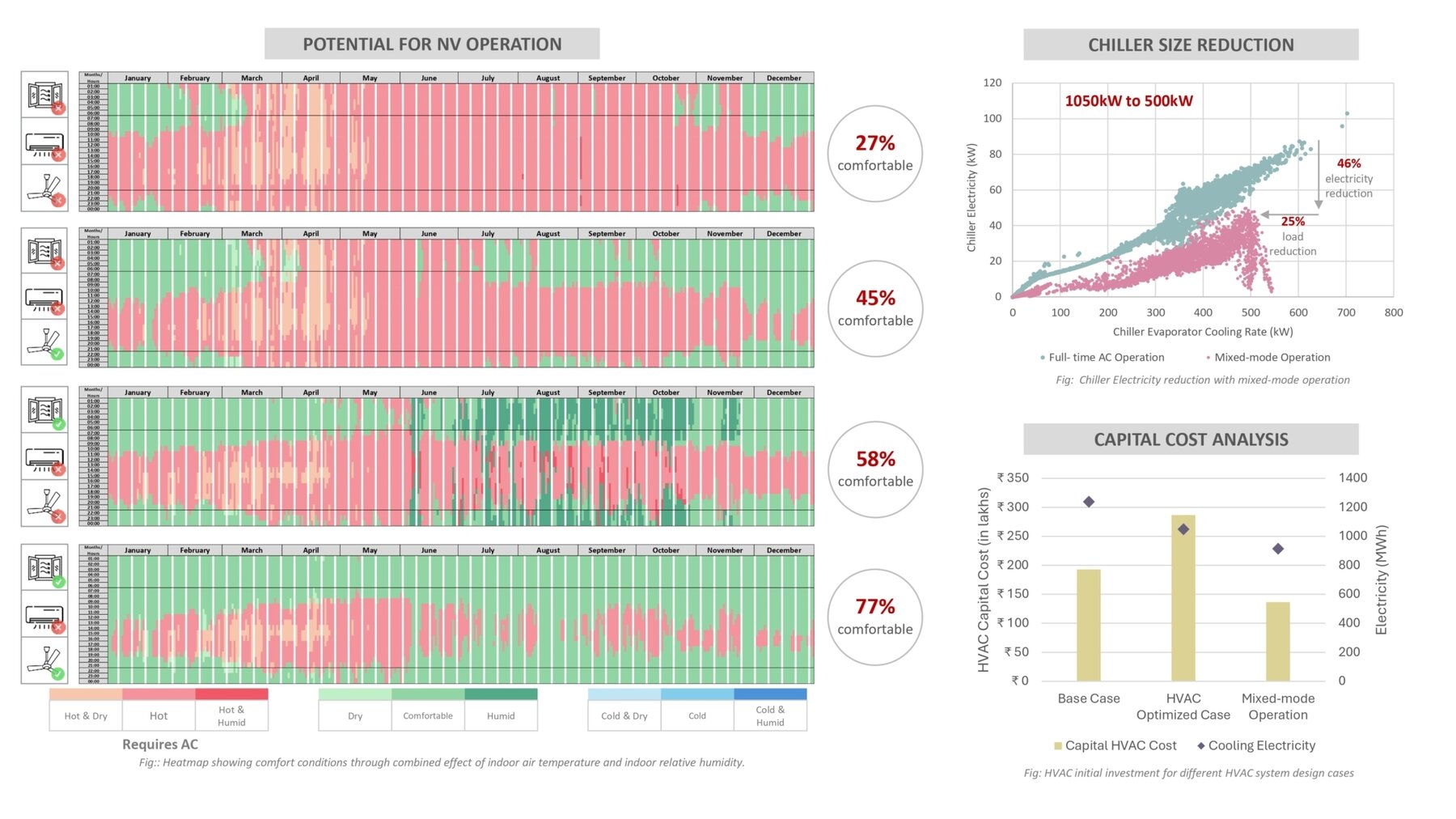
System-level optimization involved transitioning to a water-cooled chiller system with FCUs, supported by equipment sequencing and improved operating parameters. The integration of mixed-mode operation combining natural ventilation with ceiling fan-assisted air movement during favorable periods further reduced peak cooling demand, enabling a reduction in HVAC capacity to 142 TR (43% lower than baseline) and achieving a final EPI of 72 kWh/m²·yr.
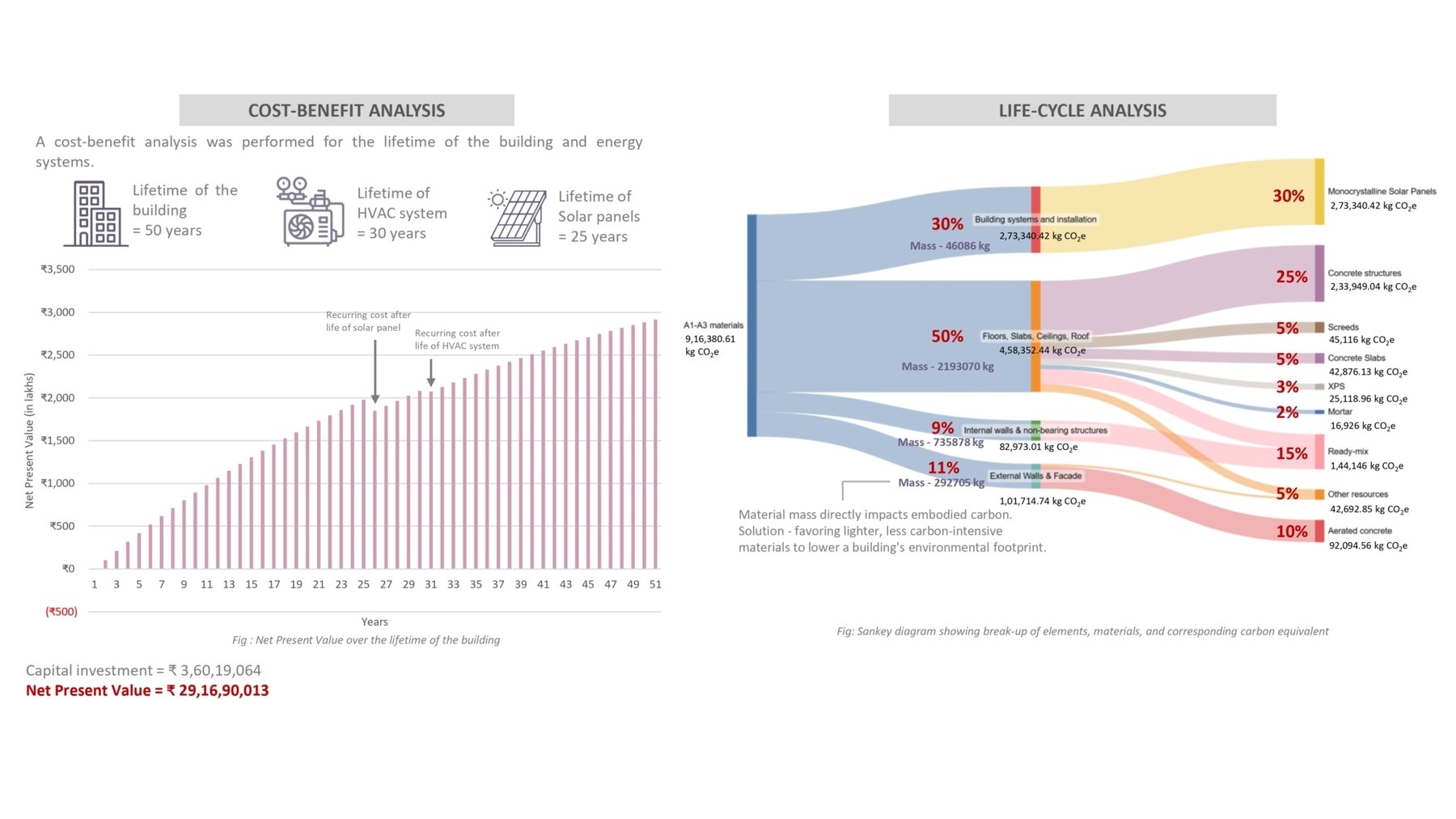
The incorporation of solar PV systems offset 41% of the building’s energy demand, reducing the net EPI to 41 kWh/m²·yr. The optimized design achieved capital cost savings of ₹9.93 lakhs and an NPV benefit of approximately ₹40 lakhs, along with a 7% reduction in embodied carbon.
The project, located in Pune’s warm-humid climate, was assessed against the ECBC 2017 recommended Standard Design Case, with a baseline Energy Performance Index (EPI) of 97 kWh/m²·yr and a VRF-based HVAC system (with DOAS) sized at 251 TR. Initial envelope parametric analysis indicated that adopting relatively higher thermal transmittance for walls and roof, combined with a high-SRI roof and improved glazing with lower SHGC, resulted in an 11% reduction in HVAC capacity and a 3% reduction in EPI. Daylighting strategies were implemented to enhance uniformity and reduce excessive perimeter illuminance, with light shelves on south-facing façades and vertical fins on east and west façades.
System-level optimization involved transitioning to a water-cooled chiller system with FCUs, supported by equipment sequencing and improved operating parameters. The integration of mixed-mode operation combining natural ventilation with ceiling fan-assisted air movement during favorable periods further reduced peak cooling demand, enabling a reduction in HVAC capacity to 142 TR (43% lower than baseline) and achieving a final EPI of 72 kWh/m²·yr. The incorporation of solar PV systems offset 41% of the building’s energy demand, reducing the net EPI to 41 kWh/m²·yr. The optimized design achieved capital cost savings of ₹9.93 lakhs and an NPV benefit of approximately ₹40 lakhs, along with a 7% reduction in embodied carbon.
- sathyashriya k
Gallery