
- arya thakar
About the project
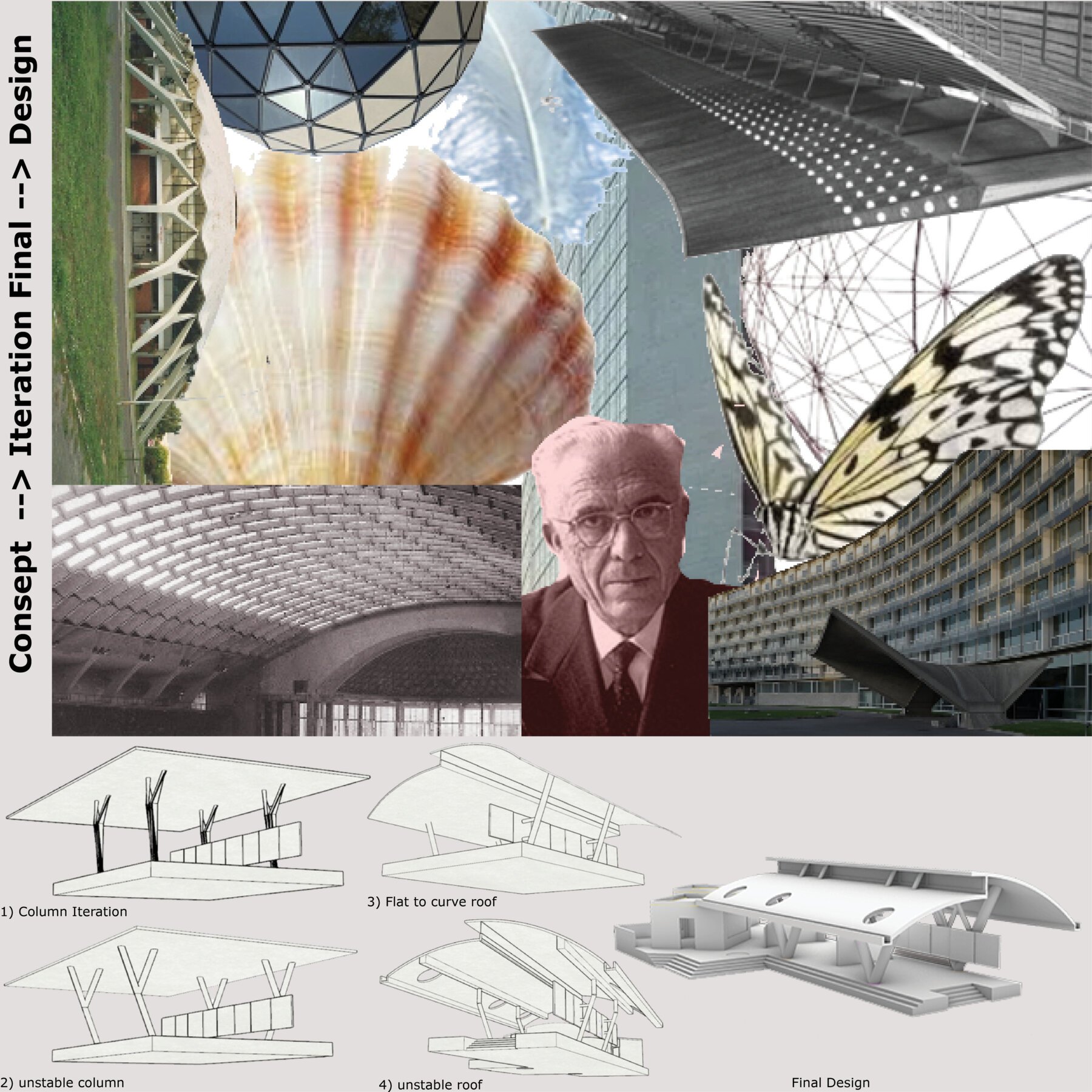
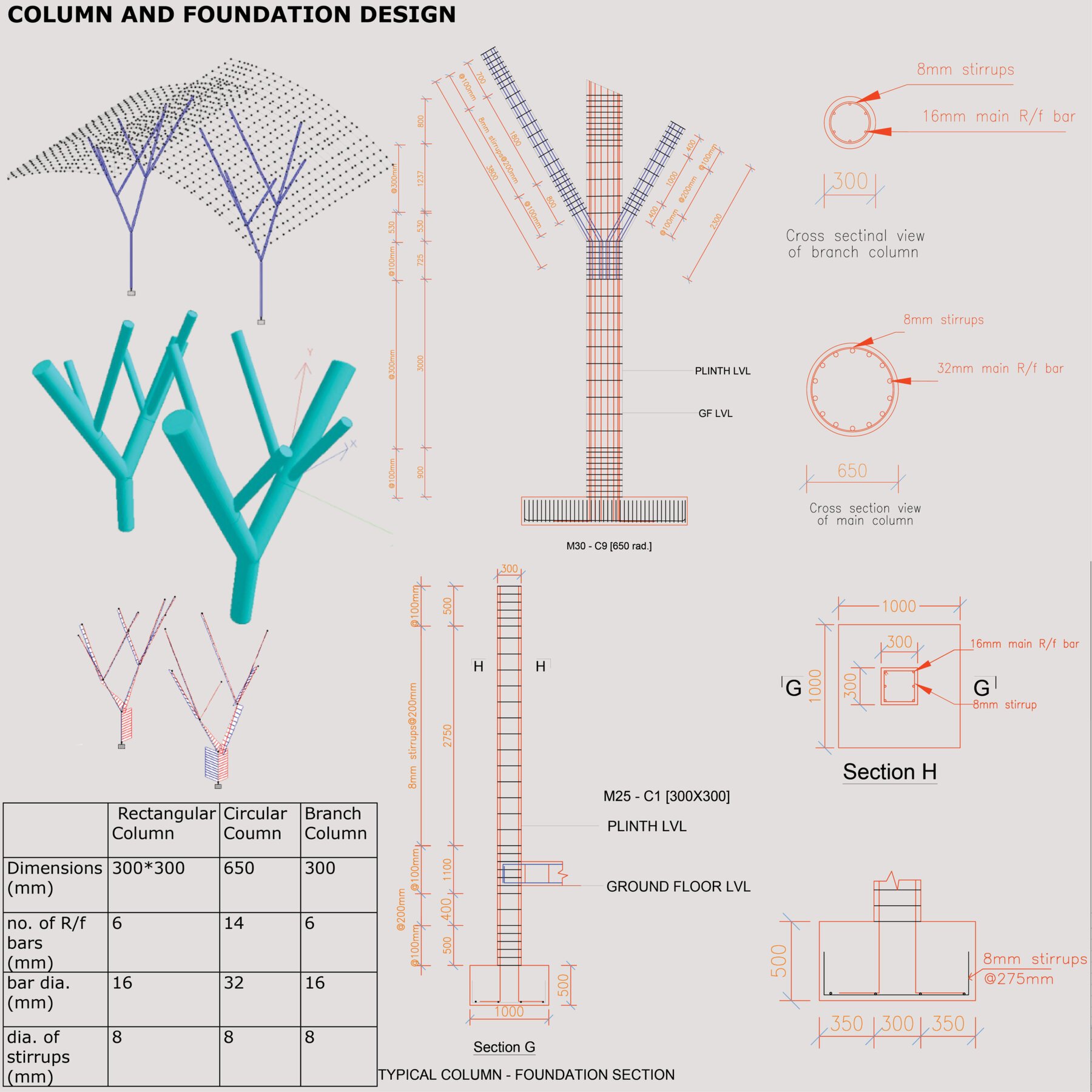
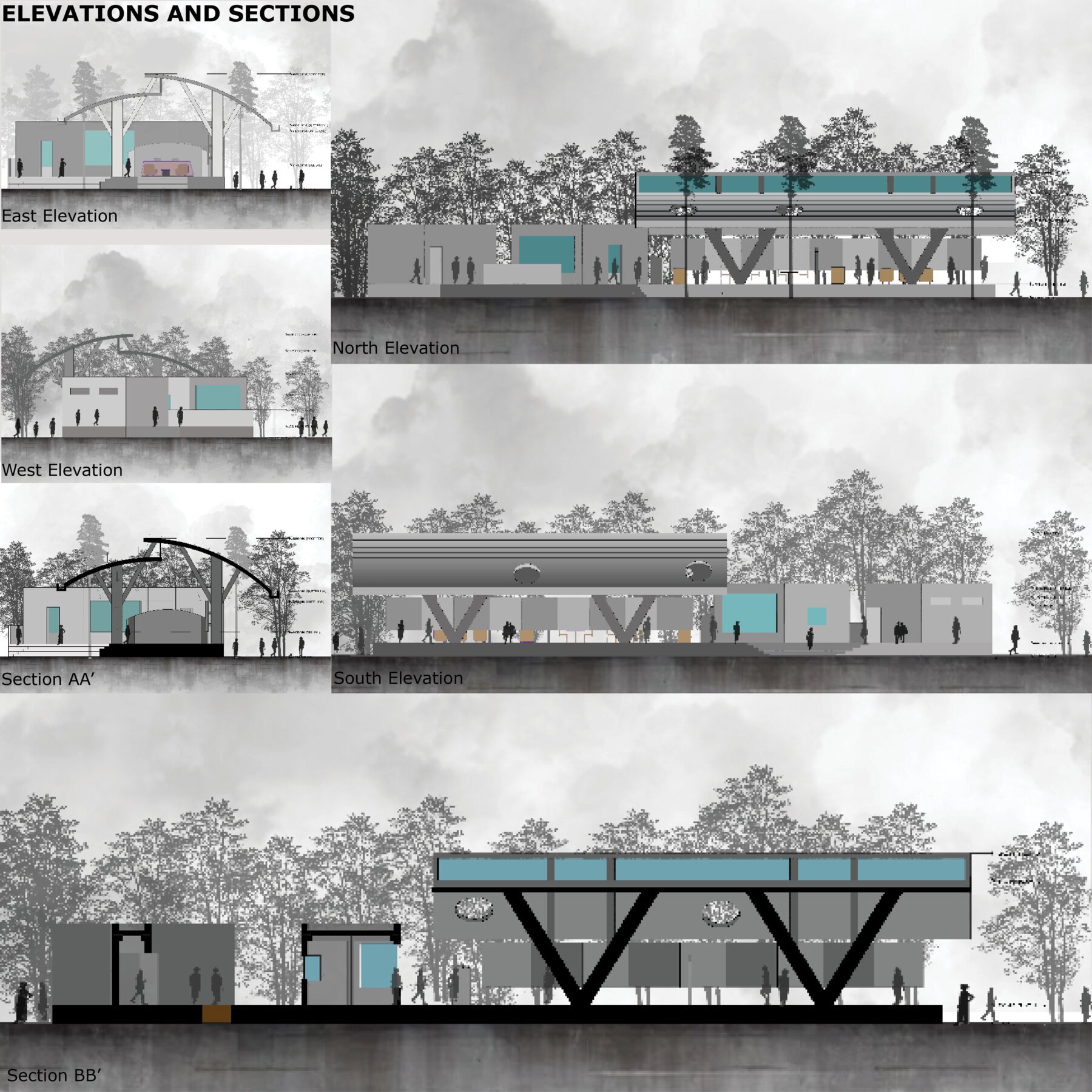
The Concrete Canopy is an RCC structure inspired by Pier Luigi Nervi, defined by two sweeping curved roofs that meet at a central circular column and are supported by four main columns. As the columns rise, they branch into multiple members, creating a tree-like system that enhances both aesthetics and load distribution. The design blends expressive architectural form with structural logic. I completed the full structural design of the slab, beams, columns—including the branching system—and the foundation, ensuring that the architectural vision and structural performance align seamlessly within the overall concept.
Approach
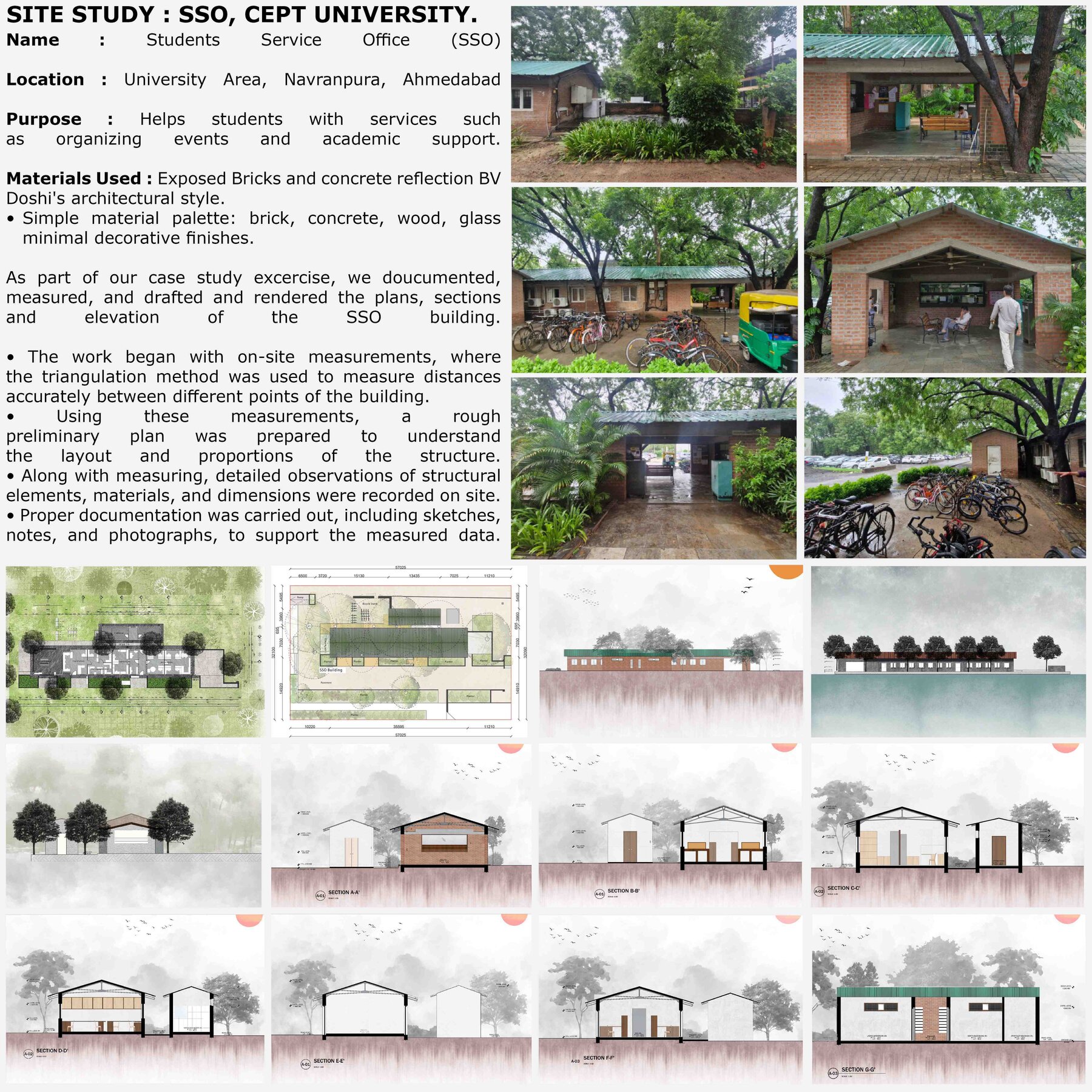
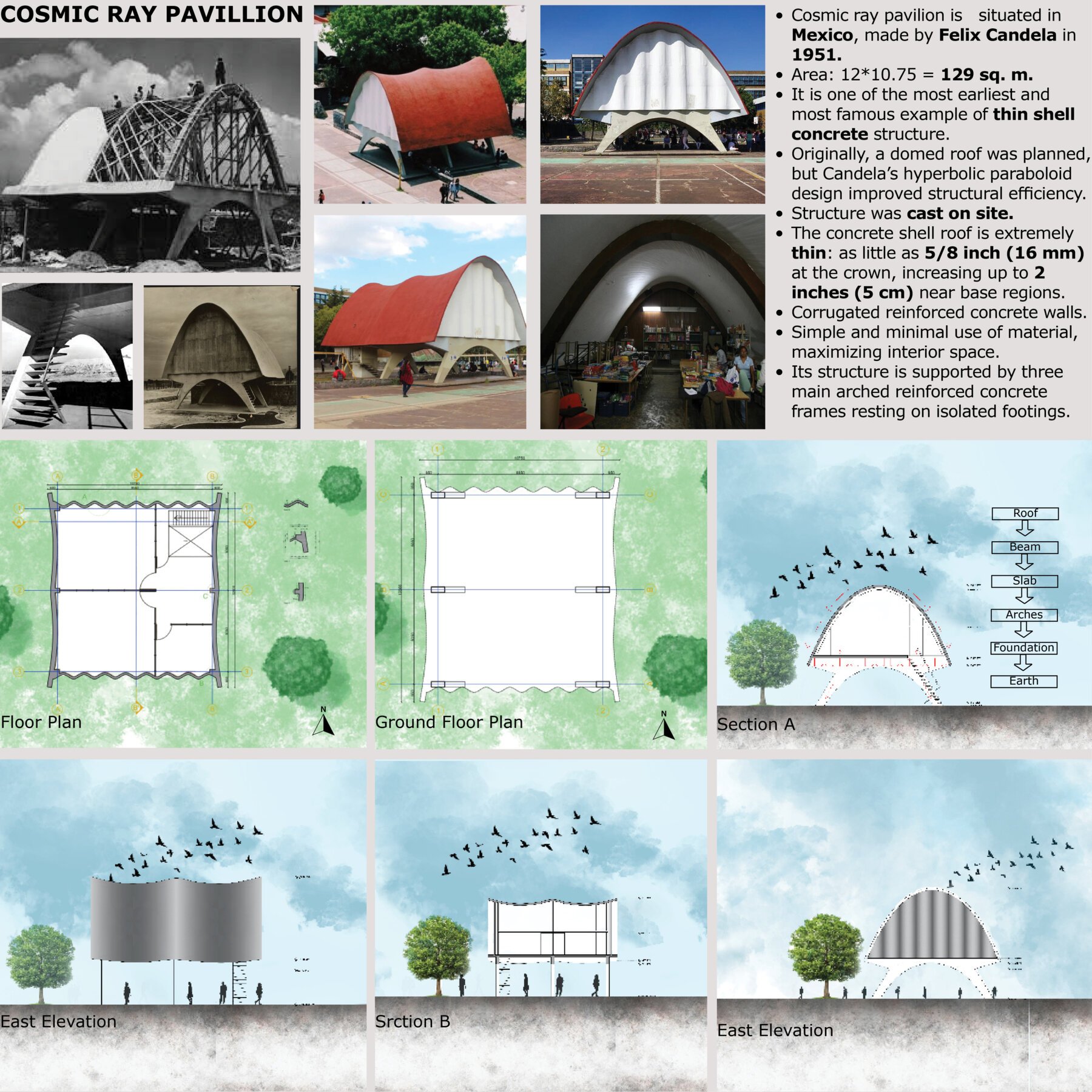
This semester project represents my comprehensive learning journey in RCC design, developed through a clear and methodical approach. I began with detailed case studies of the Student Service Office (SSO) at CEPT University and the Cosmic Ray Pavilion in Mexico to understand real-world application of RCC systems. Parallelly, I studied the engineering works of Pier Luigi Nervi, analysing his structural logic and translating key observations into a conceptual mind map.
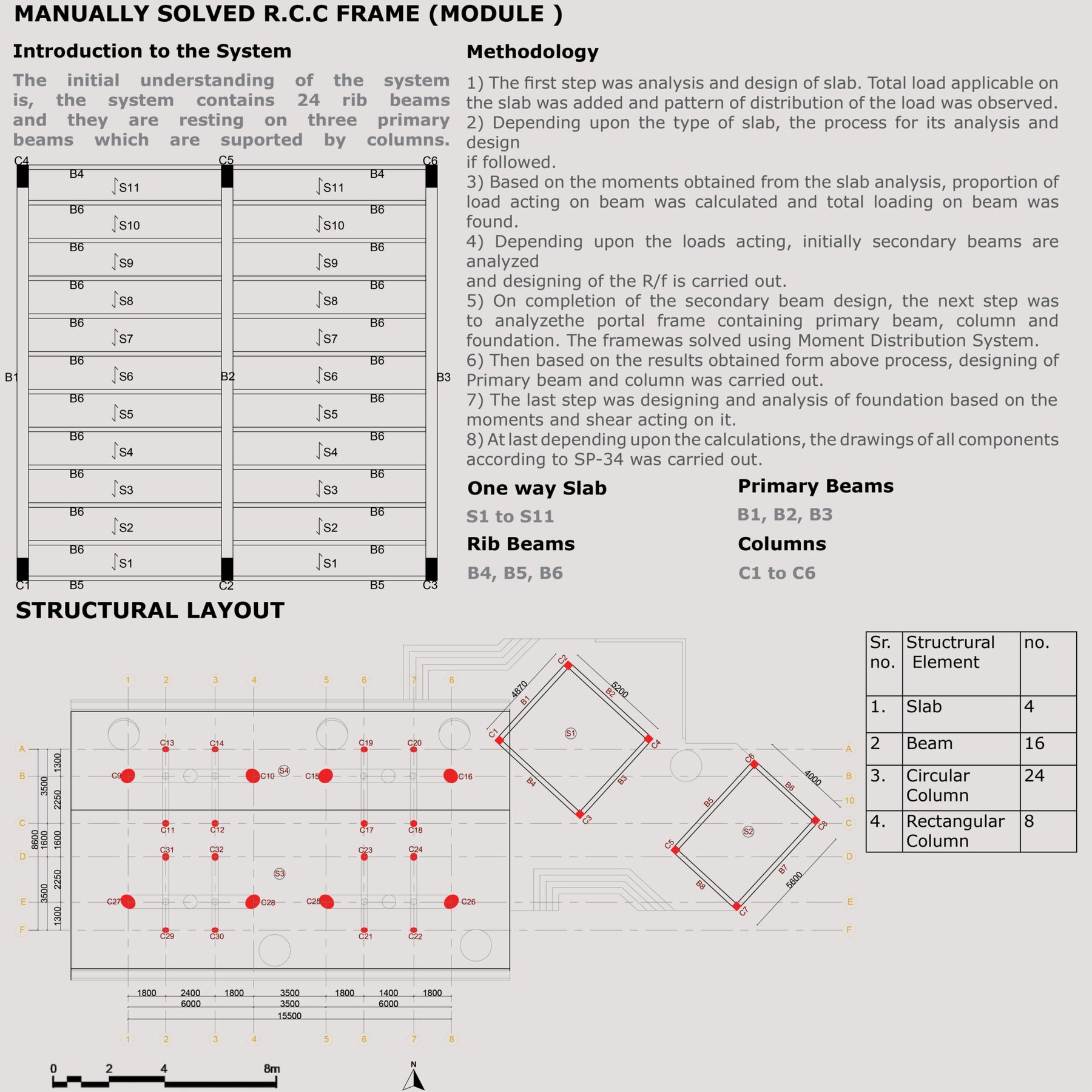
Alongside precedent studies, I built a strong theoretical foundation by learning core RCC concepts such as beam and frame analysis, shear force and bending moment diagrams, and essential design principles. These learnings informed the development of my own architectural–structural design, inspired by Nervi’s work and the case studies. I then integrated appropriate structural elements to ensure stability and load transfer.
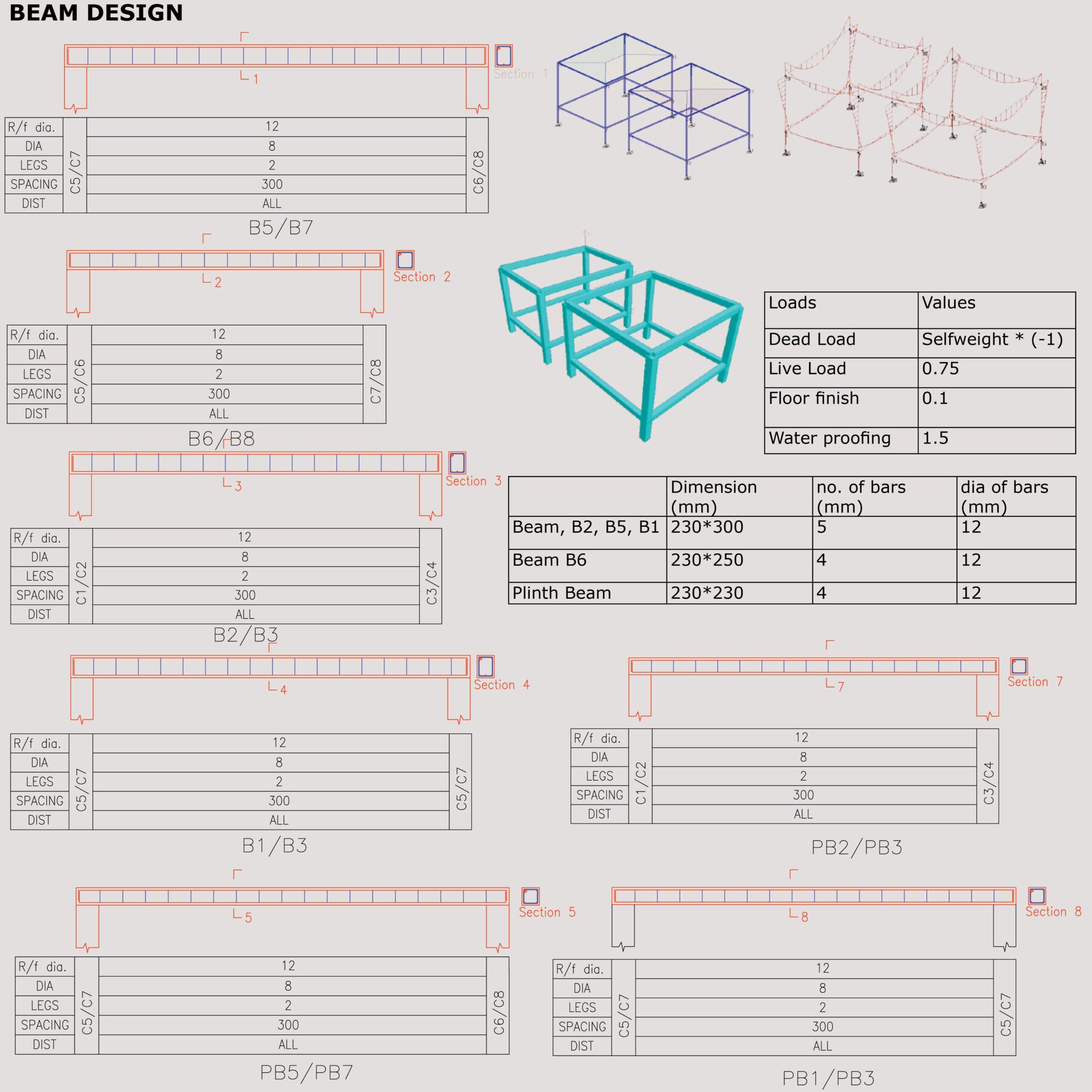
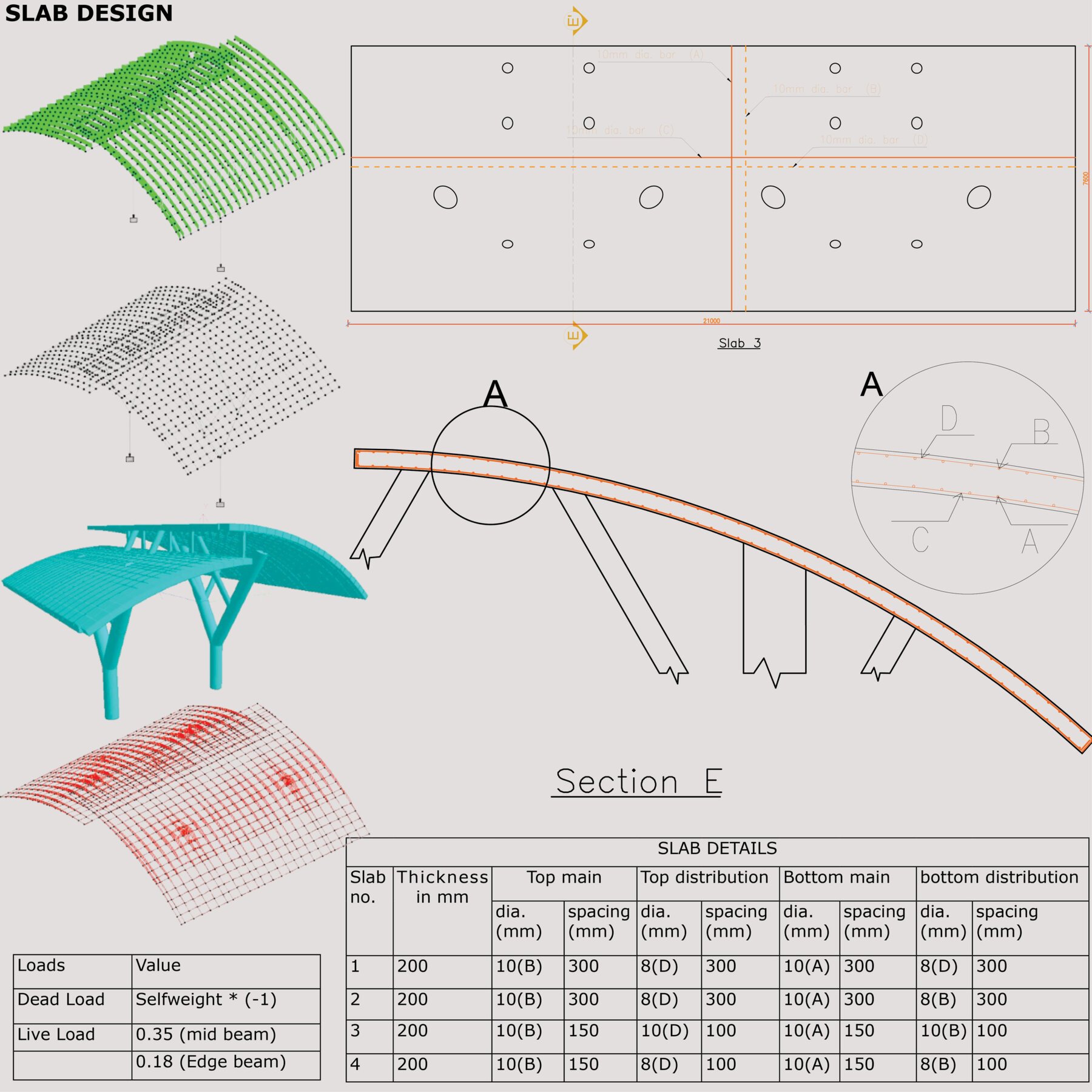
The complete structural system—slabs, beams, columns, and foundation—was analysed using STAAD. Based on the software outputs, I used Excel to calculate reinforcement quantity and bar diameters to safely resist applied loads. To further understand constructability, I fabricated a 1:10 physical model of a portion of the structure and studied the construction sequence, gaining clarity on the RCC process from design to execution.
Output
This project provided a strong and structured understanding of RCC structures by directly linking theoretical knowledge with design application. Through case studies and precedent analysis, I learned how architectural intent is translated into structural systems and how form, span, and geometry influence load behaviour. The project helped me clearly understand load paths, from slabs to beams, columns, and finally to the foundation, strengthening my grasp of safe and logical structural design.
Working on analysis improved my understanding of structural behaviour, including the role of SFD and BMD in decision-making during design. Using STAAD introduced me to professional structural workflows, teaching me how to model structures, apply loads, and interpret outputs critically rather than treating software as a black box. Calculating reinforcement manually using Excel helped bridge the gap between software results and actual material detailing.
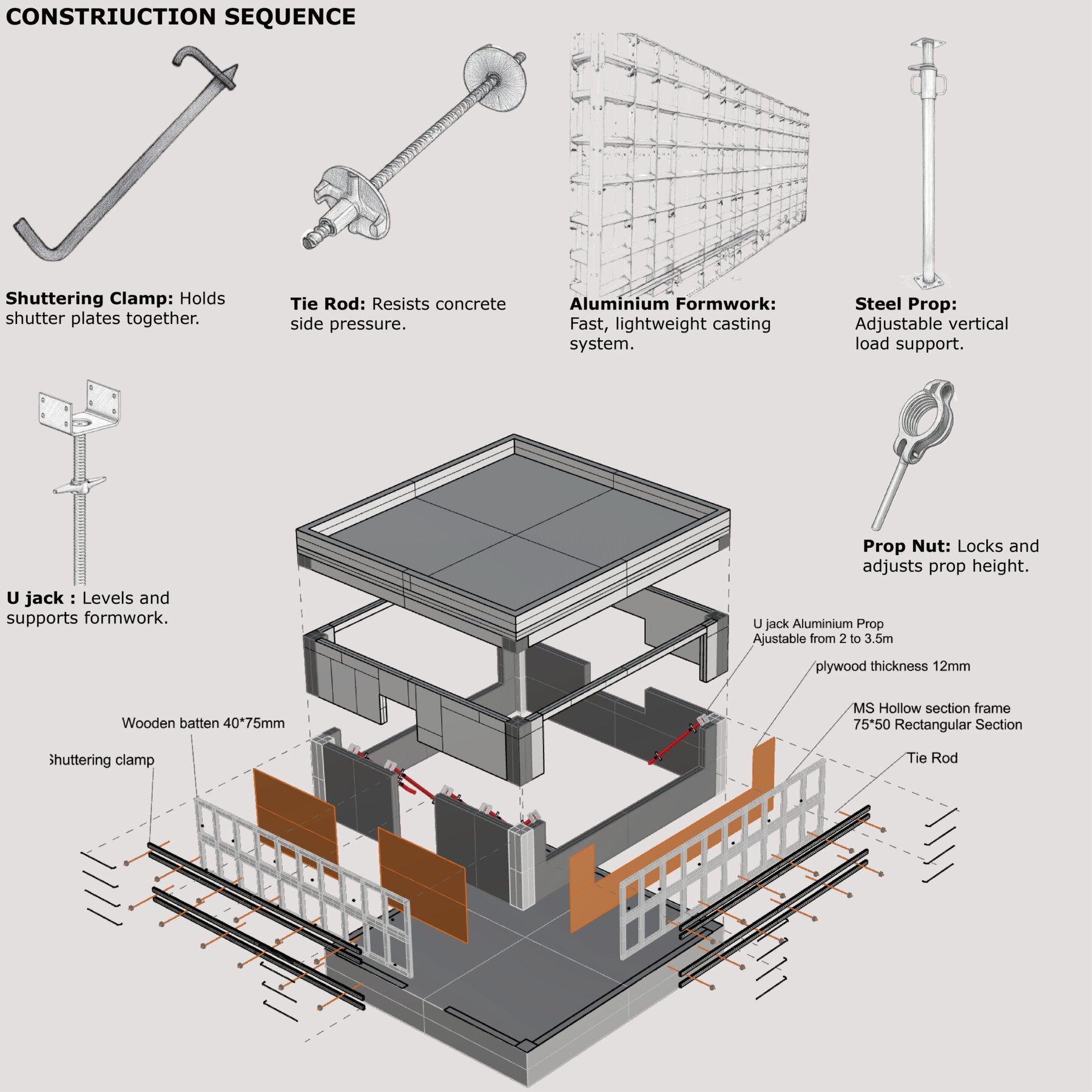
Building a physical model enhanced my understanding of scale, junctions, and constructability, while studying the construction sequence clarified how RCC structures are executed on site, from formwork and reinforcement to concreting. Overall, the project developed my ability to think structurally, coordinate architecture with engineering, and approach RCC design in a systematic and practical manner.
- arya thakar
Gallery
Related projects

Structural Assessment and Strengthening of a Historic Clock Tower
Malav Solanki

Climate Responsive Design Optimization of an Outpatient Healthcare Facility
Sathyashriya K

VRV vs air-cooled VAV - Which HVAC system is better for an Office Building?
Rishiraj Ghosh

The Urban Rise
Yashwani Lad, Sahil Shah & 2 others