VRV vs air-cooled VAV — Which HVAC system is better for an Office Building?

- rishiraj ghosh
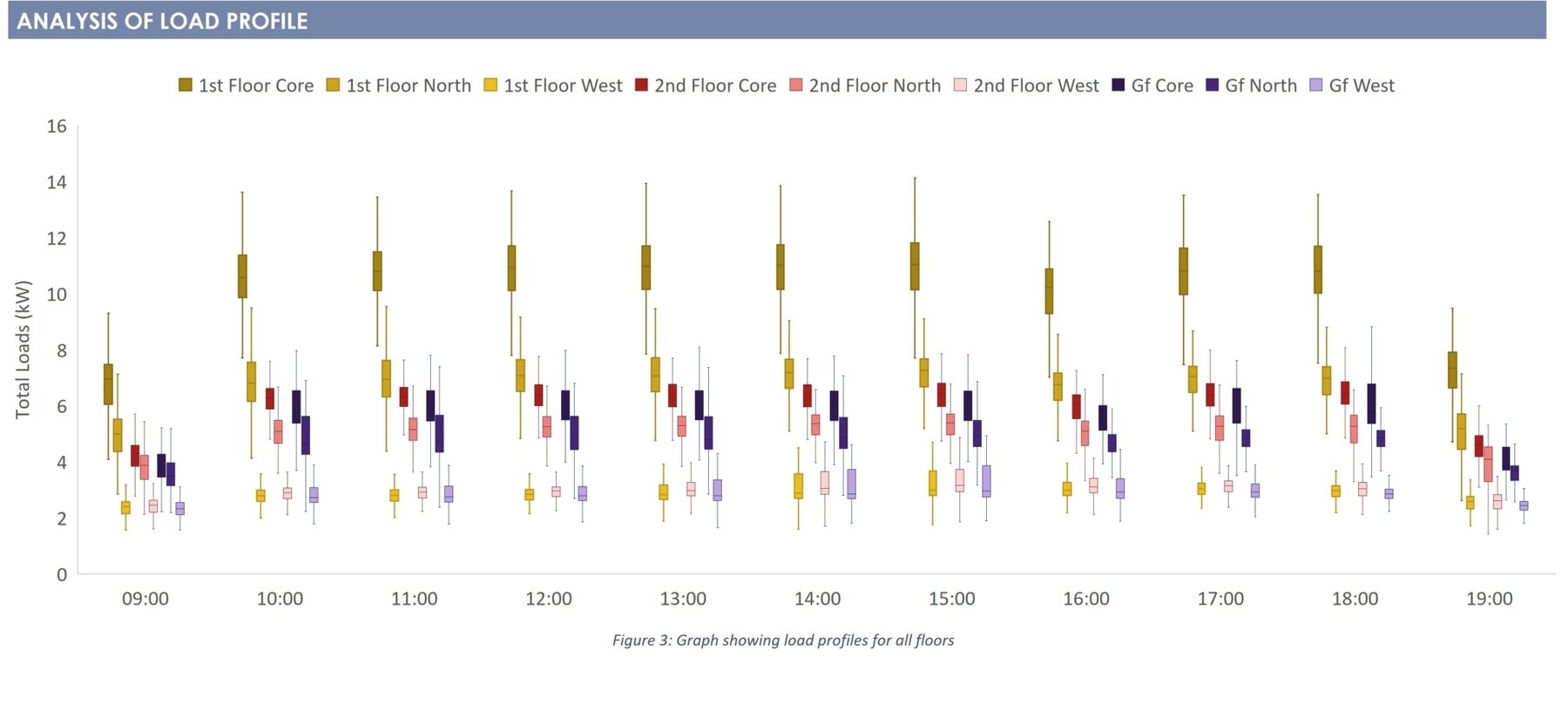
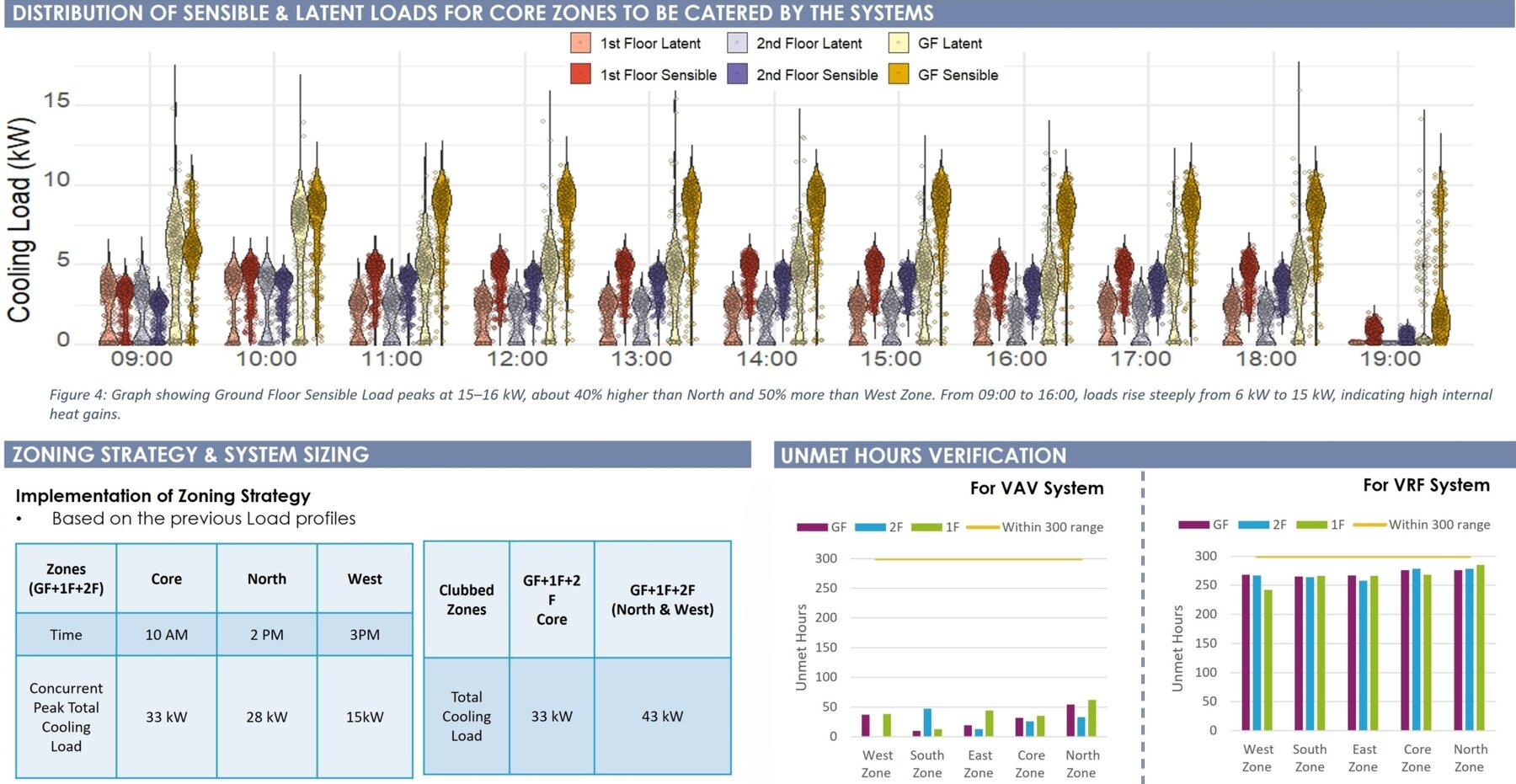
The study evaluates HVAC system performance for a 1000 m² office building in Kolkata, operating from 10:00–18:00 under ECBC 2017 thermal comfort and air quality requirements. A zoning strategy (Core, North, West) was developed from hourly load profiles, with peak cooling loads of 28–33 kW (Core/North) and 15 kW (West), enabling efficient system sizing (Core: 33 kW; Perimeter: 43 kW).
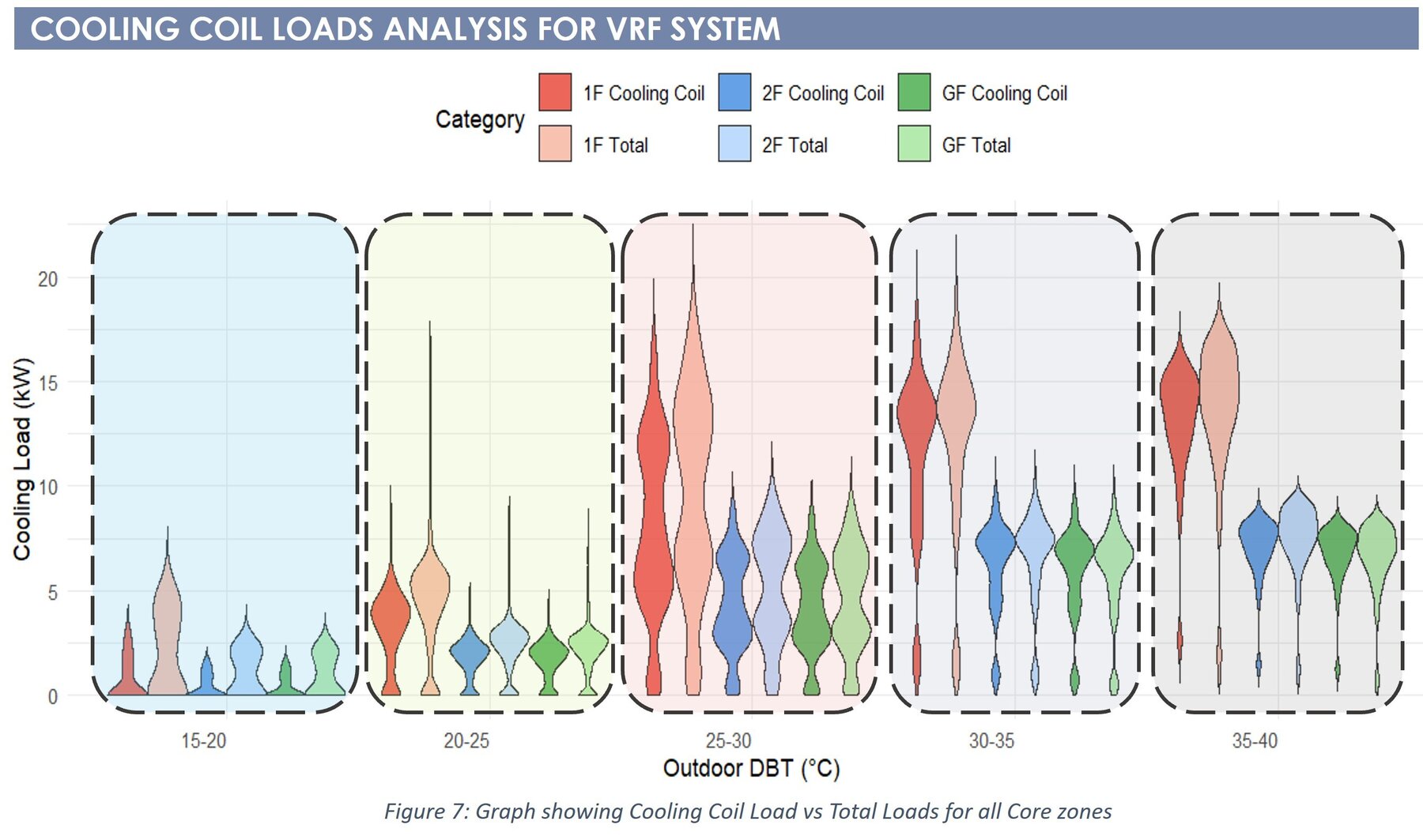
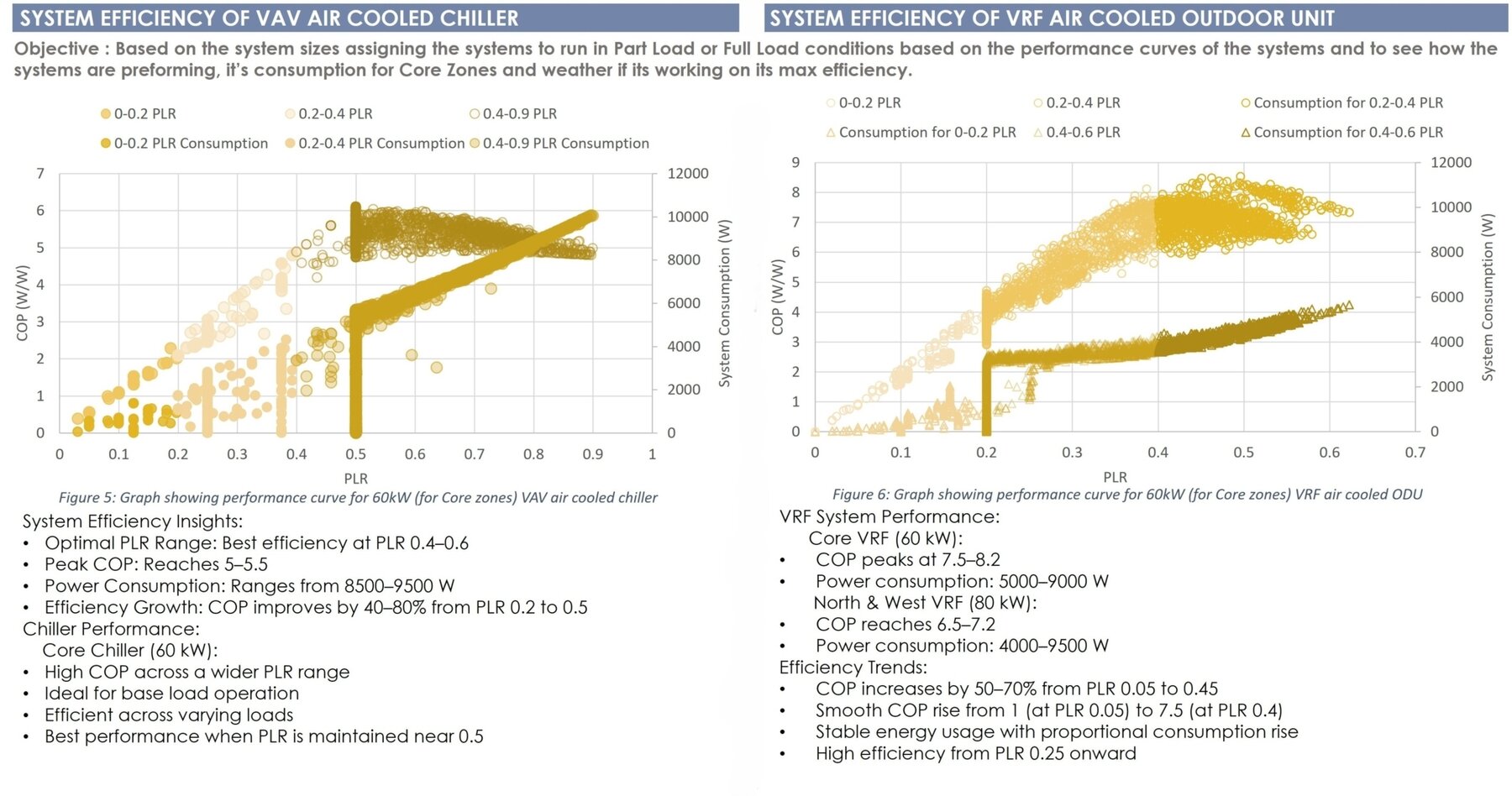
Two systems were compared: VAV with air-cooled chiller and VRF (air-cooled). Results from annual energy simulations, system performance curve analysis, and part-load ratio (PLR) evaluation showed that VAV systems perform optimally at PLR 0.4–0.6, achieving peak COP of (5.5–5.6)W/W, with energy consumption increasing sharply outside this range. In contrast, VRF systems demonstrate higher operational flexibility, with COP peaking at (7.5 – 8.2)W/W and maintaining high efficiency across a wider PLR range (0.25–0.5), making them more suitable for part-load dominated conditions. VRF indoor-unit cooling coil load analysis for the core zones showed that the loads handled by the indoor-unit coils increased from approximately 2–3 kW at 15–20°C outdoor DBT to nearly 22 kW at 35–40°C outdoor DBT. . Annual comparison shows VRF achieving 43% lower EPI (89 kWh/m²·yr) compared to VAV (156 kWh/m²·yr), primarily due to superior part-load efficiency and reduced distribution losses.
Overall, the study demonstrates that VRF systems outperform VAV in hot-humid climates due to better part-load response, zoning adaptability, and lower energy consumption.
The project employed an integrated building performance simulation workflow to investigate the suitability of different HVAC systems for a mid-rise office building in Kolkata’s hot-humid climate. A detailed ECBC-compliant digital model was created to study hourly variations in cooling demand, internal heat gains, and operational schedules across multiple thermal zones. Zone-wise load assessments were used to develop an optimized zoning strategy by grouping spaces with similar load characteristics and peak timings. Two HVAC configurations—VAV with air-cooled chiller and VRF with air-cooled outdoor units—were then evaluated through annual simulations. The analysis focused on system response under varying outdoor temperatures and part-load conditions, examining COP trends, electricity consumption, cooling coil loads, and unmet hours. The workflow combined load analysis, zoning optimization, and operational performance evaluation to identify the most energy-efficient and adaptable cooling strategy for the building.
The analysis revealed that HVAC performance in the hot-humid climate of Kolkata is highly dependent on zoning configuration and part-load operation. Annual simulation results showed that the VRF system outperformed the VAV air-cooled chiller system, reducing the building EPI from 156 kWh/m²·yr to 89 kWh/m²·yr, resulting in approximately 43% lower energy consumption. Cooling load assessment indicated that the core zones consistently recorded the highest loads due to internal heat gains, with peak cooling demands of nearly 33 kW, while the north and west perimeter zones reached around 28–33 kW and 15 kW respectively. The VAV system achieved its best operational efficiency within a PLR range of 0.4–0.6, where COP values reached approximately 5.5–5.6. In comparison, the VRF system maintained superior part-load efficiency, achieving COP values between 7.5 and 8.2 across a wider operating range. The optimized zoning strategy also helped reduce unmet hours and improved overall operational flexibility and thermal performance.
- rishiraj ghosh
Gallery