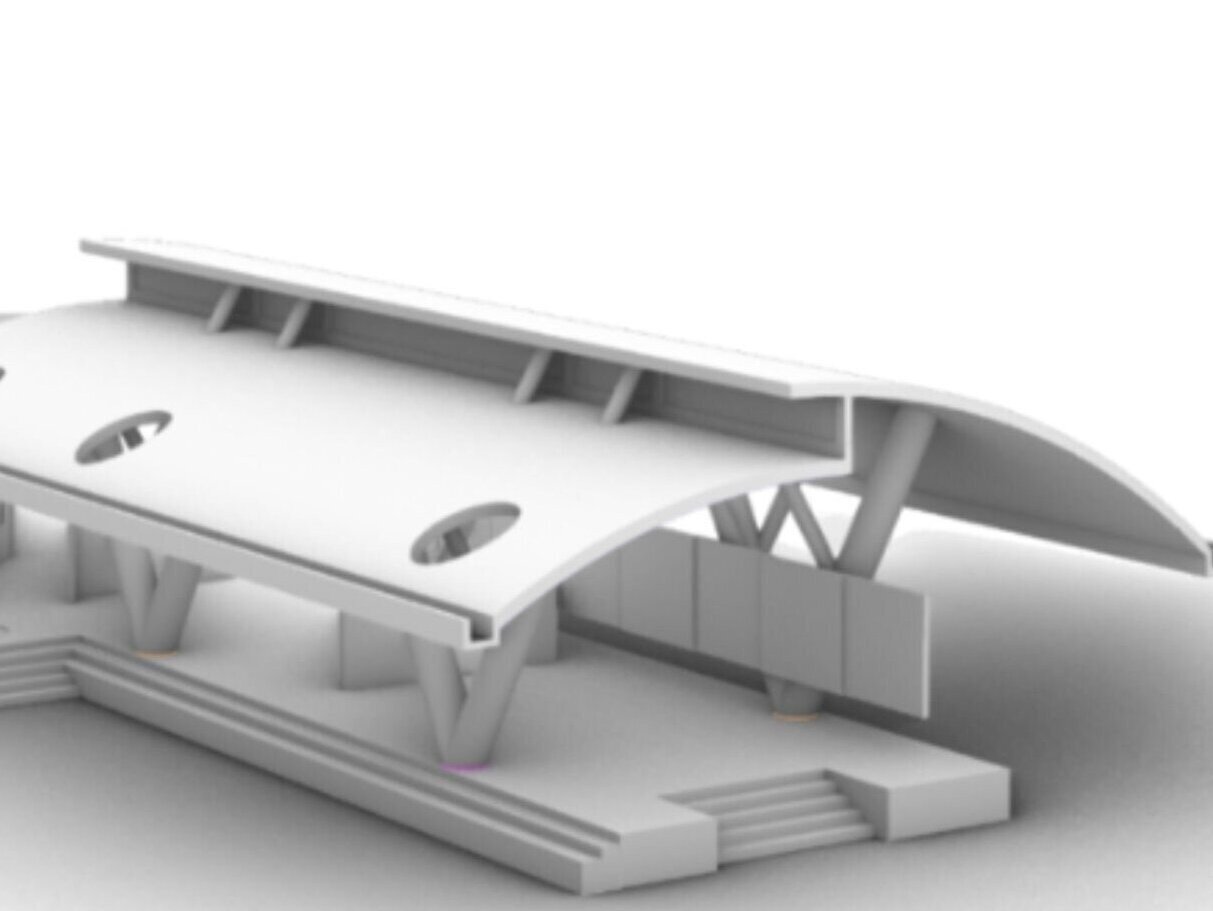
Cost optimal design proposals for energy code compliant hotel building

About the project
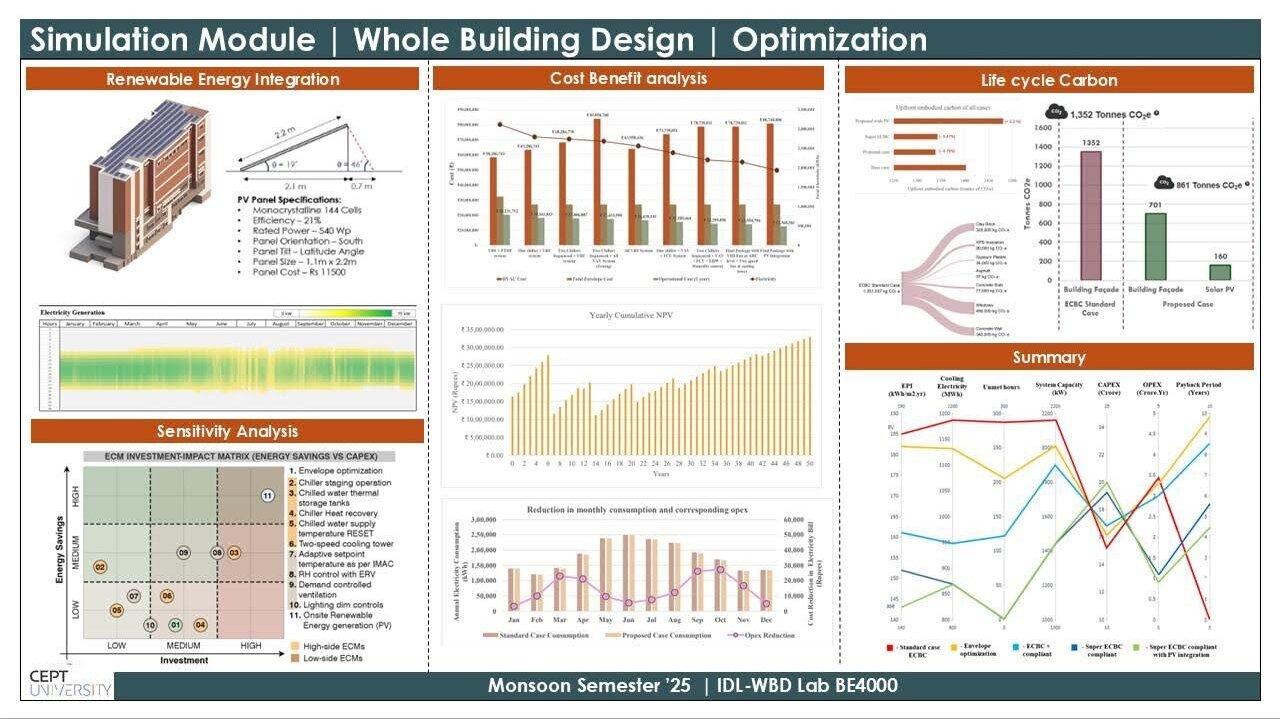
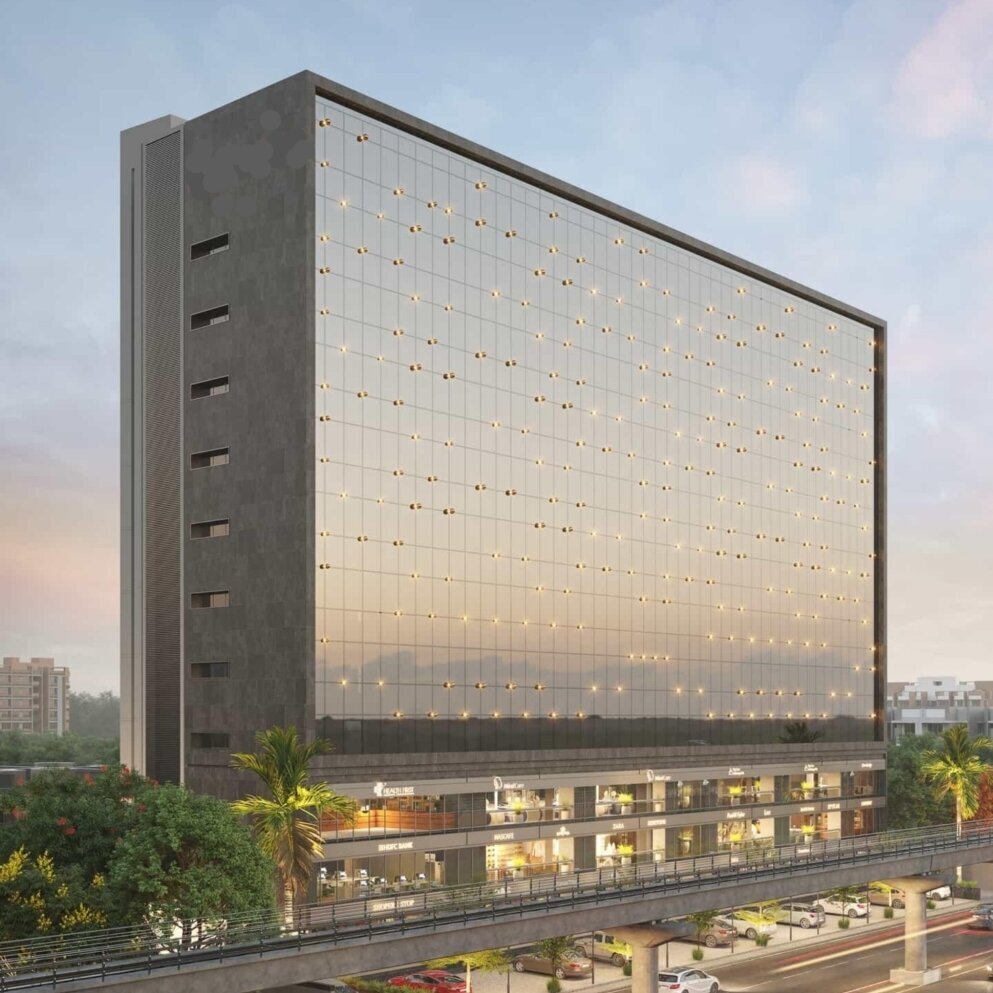
This project identified the Energy Conservation Measures (ECMs) to enhance the energy efficiency of the 11-storey hotel building in Mysore, Karnataka. A top-down approach was followed, addressing opportunities on both the waterside and air-side systems. The uniqueness of the proposal lies in the integration of advanced computational methods, including multi-objective optimization for envelope design and dynamic supervisory HVAC control through the EnergyPlus Management System (EMS). Collectively, these measures achieved a 34% reduction in Energy Performance Index (EPI) — from 164 to 117 kWh/m2·year — and further to 107 kWh/m2·year with renewable energy (RE) integration.
Output
The proposed envelope design delivers ₹4.5 lakh in capital cost savings and reduces the cooling load by 1% (from 575 TR to 572 TR). This reduction in cooling load was achieved while reducing the envelope cost by 26% and a 68% reduction in embodied carbon in the building envelope. These improvements were achieved by optimizing the roof insulation thickness and selecting a higher-SHGC glazing, made feasible due to effective external shading that significantly reduces radiative heat gains. For enhancing daylight access in the hotel rooms, a 0.6 m chamfered overhang shading design was introduced, effectively mitigating solar heat gain while maintaining 65% visible light transmittance (VLT). Daylight analysis confirmed 73% Useful Daylight Illuminance (UDI) compliance as per ECBC 2017, ensuring visually comfortable interiors for the guests.
The existing VRF with DOAS system was found to operate inefficiently at part load and unable to maintain humidity within the comfort range. The first HVAC proposal involved rezoning with diversity and decoupling latent load through a dedicated DX-coil AHU, enabling the VRF to handle only sensible loads. This reduced the EPI from 163 to 134 kWh/m2·year. The second proposal incorporated a water-cooled chiller system with chilled water storage, leveraging Time-of-Use tariff benefits to reduce peak-hour energy costs. Supplementary ECMs such as energy recovery wheels (ERVs), demand-controlled ventilation (DCV), and mixed-mode HVAC operation further optimized system efficiency, collectively reducing the EPI to 117 kWh/m2·year.
- vishal yadav
Gallery
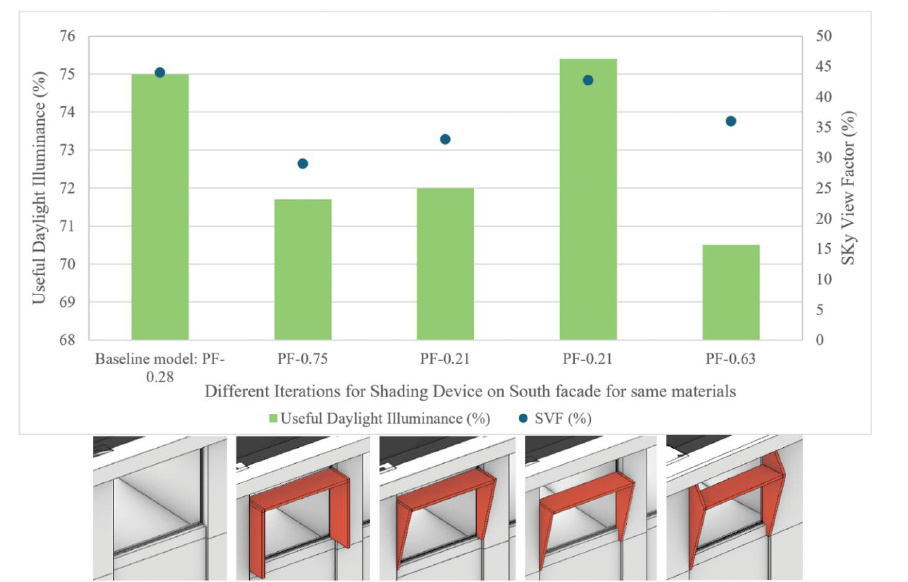
Iterations for shading device design
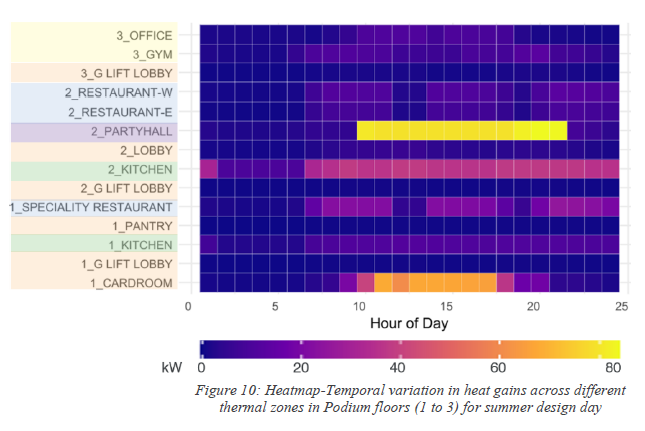
Temporal heat gains in various thermal zones in the building for avoiding grouping zones with concurrent peaks
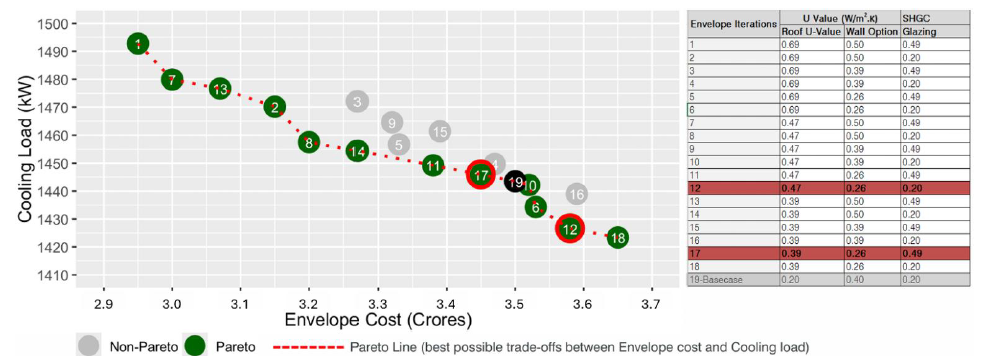
Envelope CAPEX and thermal performance trade-off through Pareto analysis