Leonardo’s Vision: A Journey through Distorted Realms

- anushka kulkarni
About the project
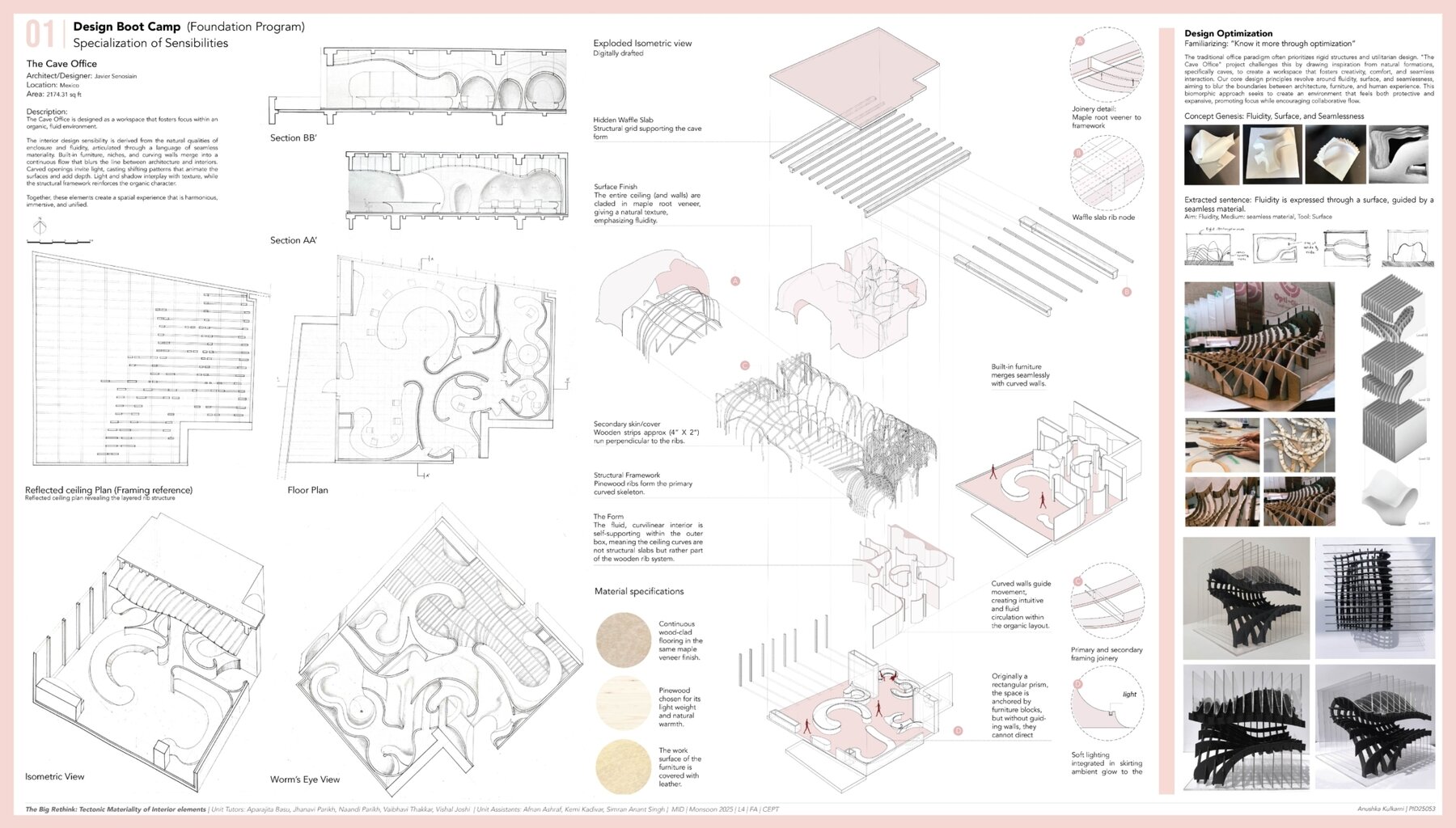
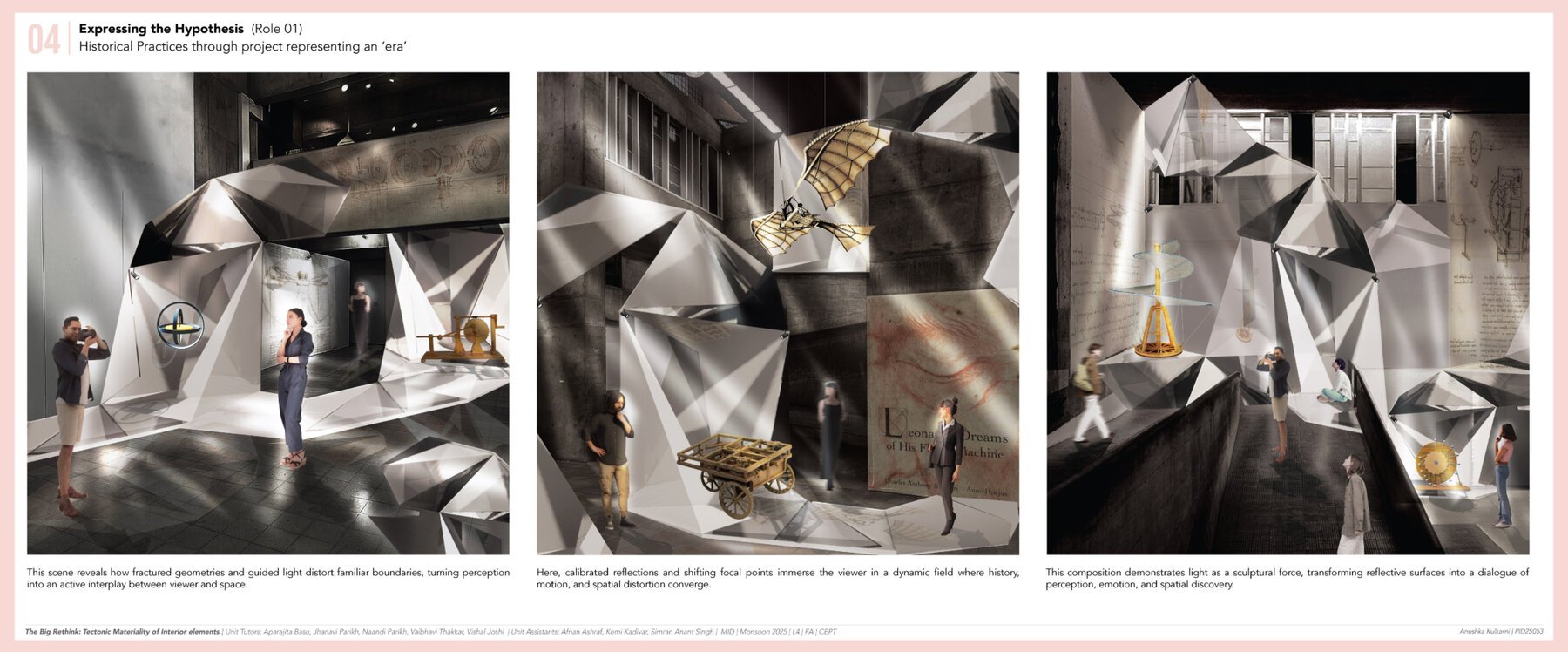
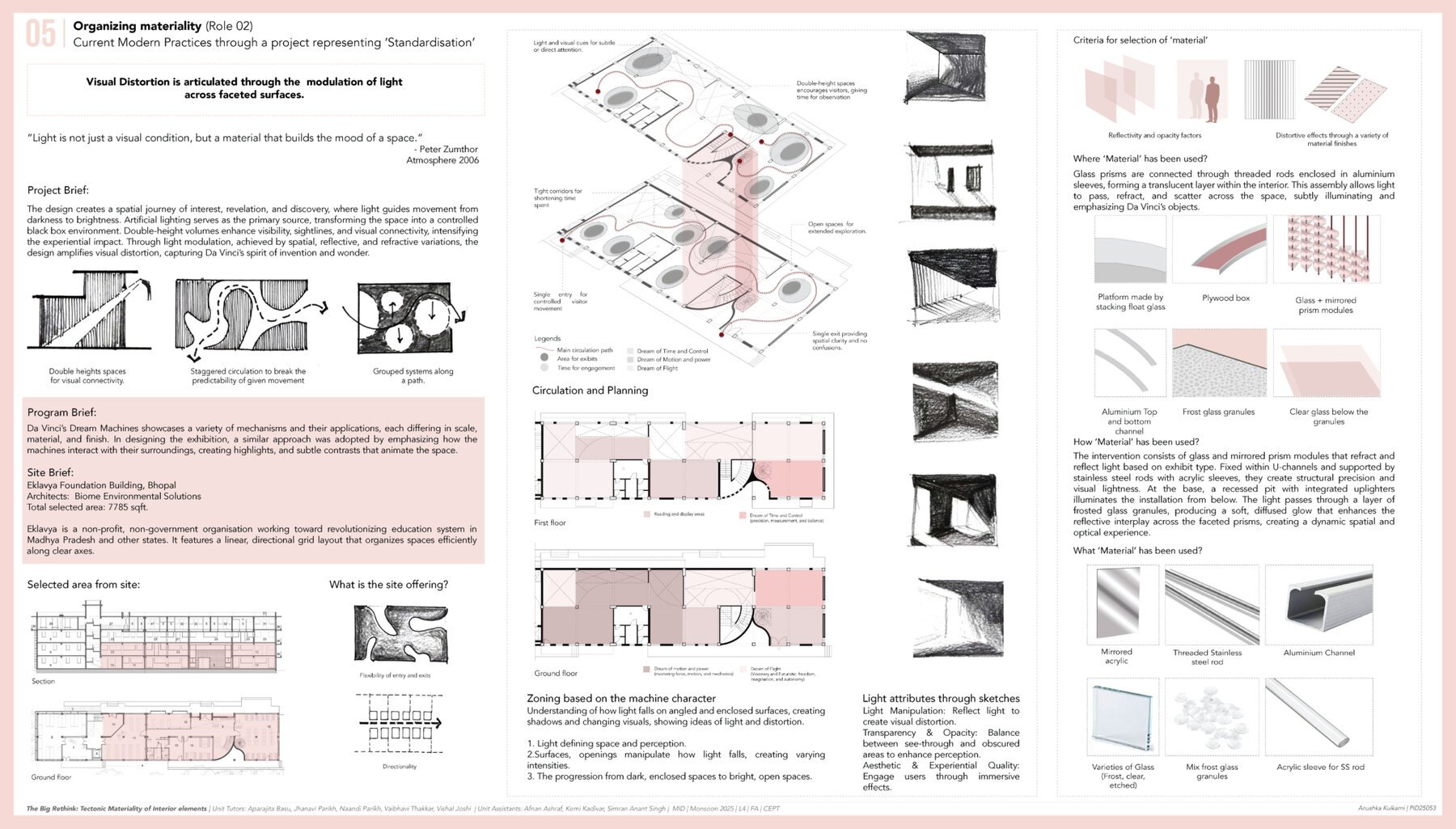
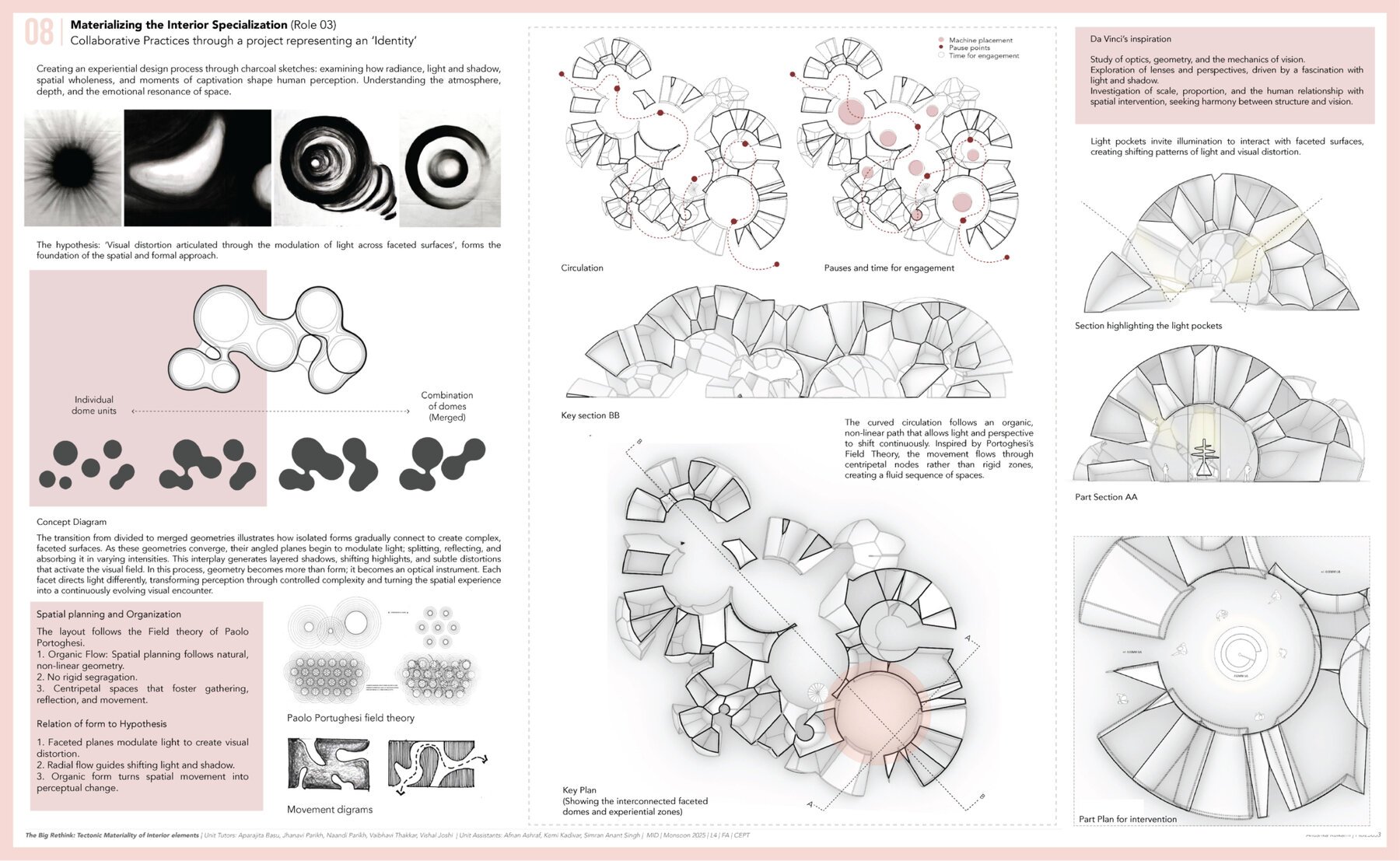
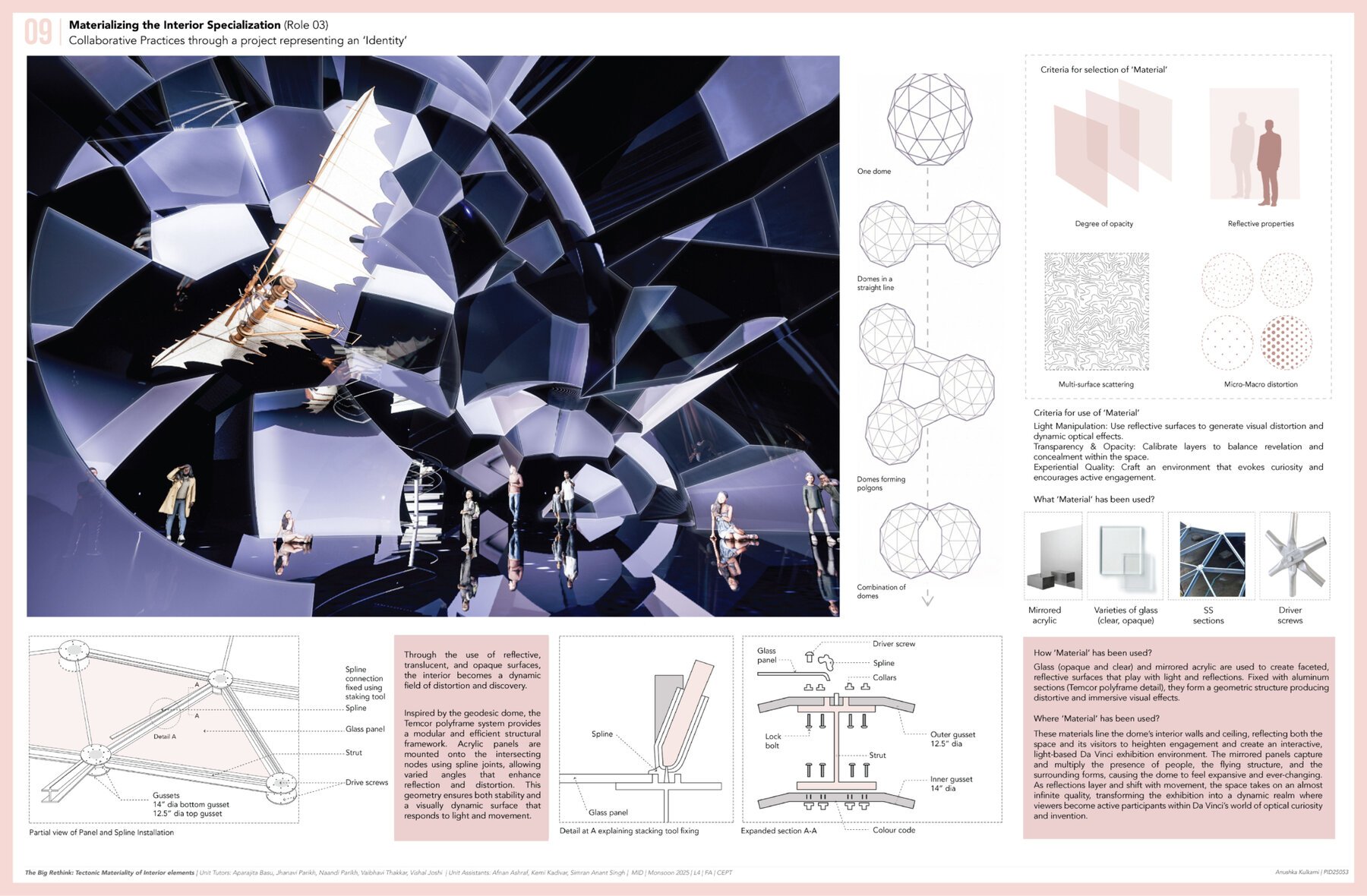
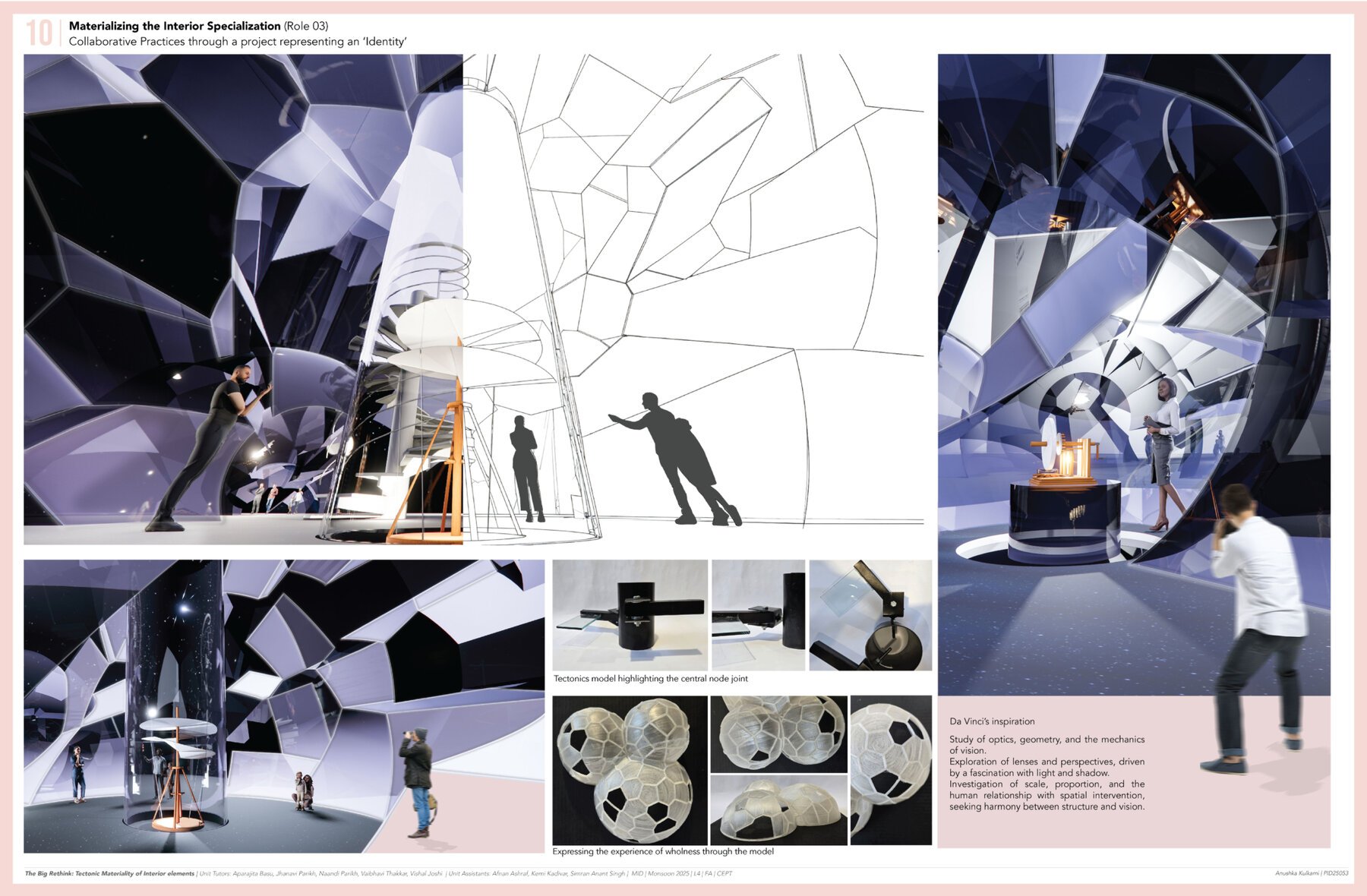
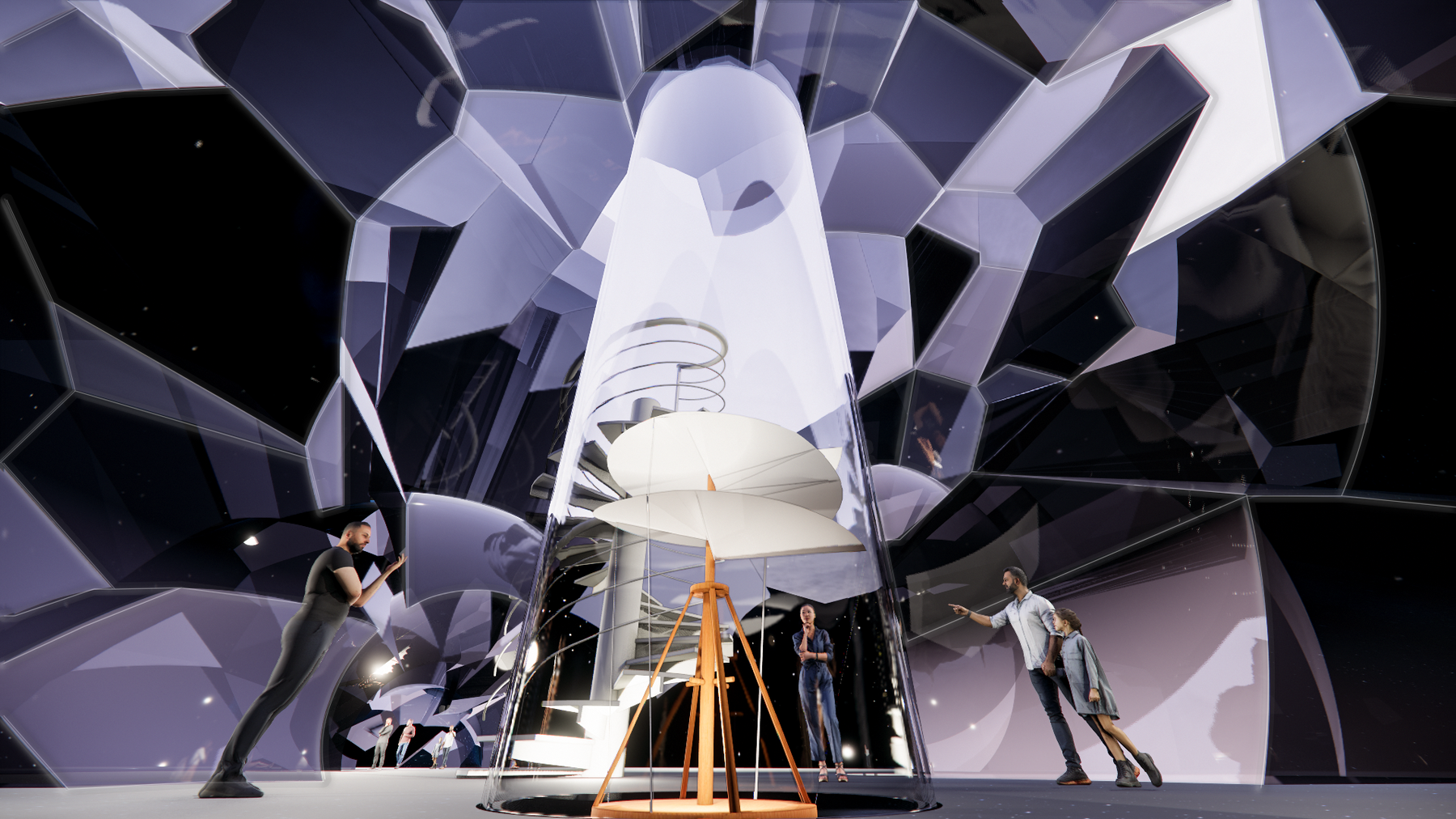
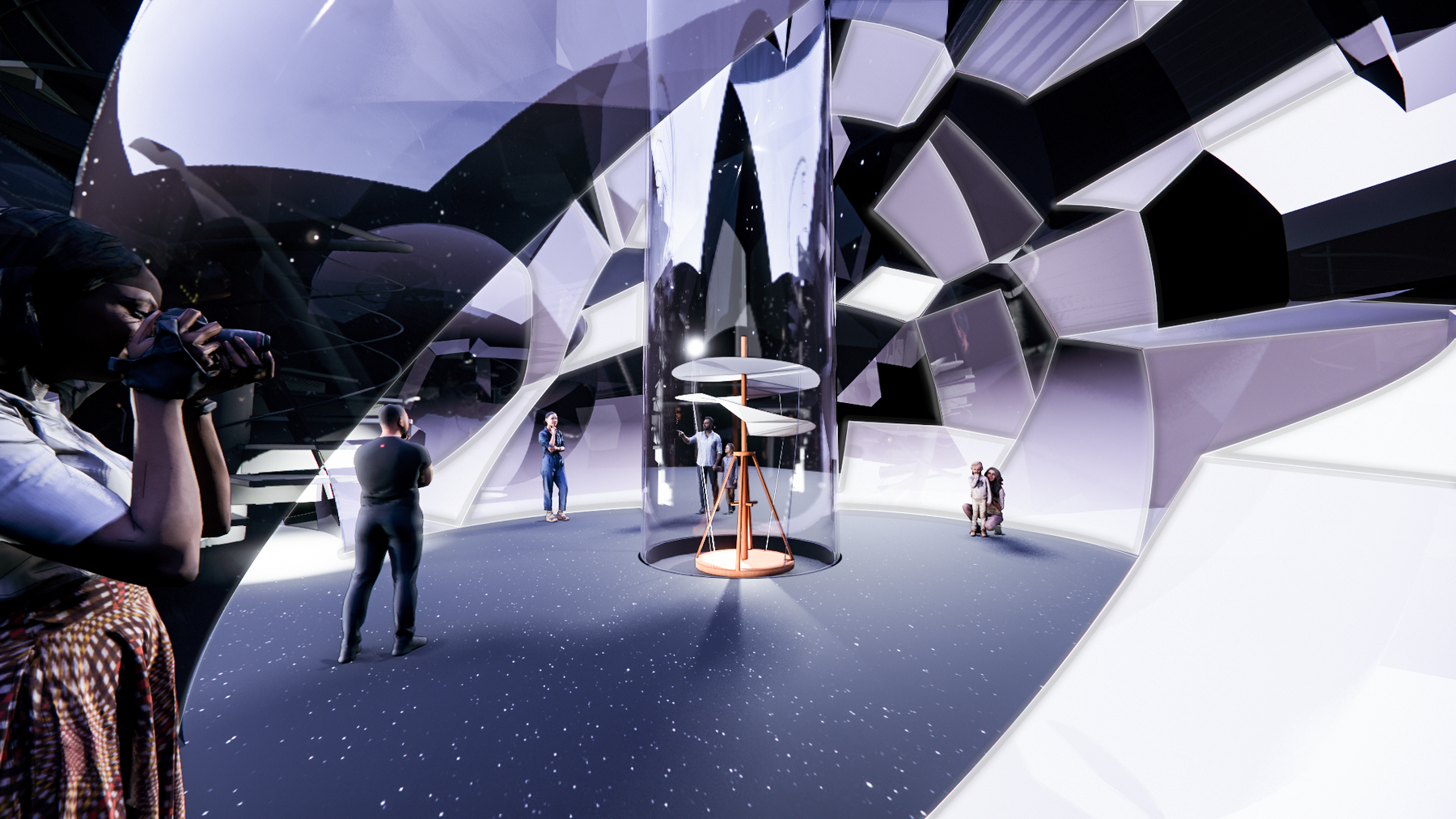
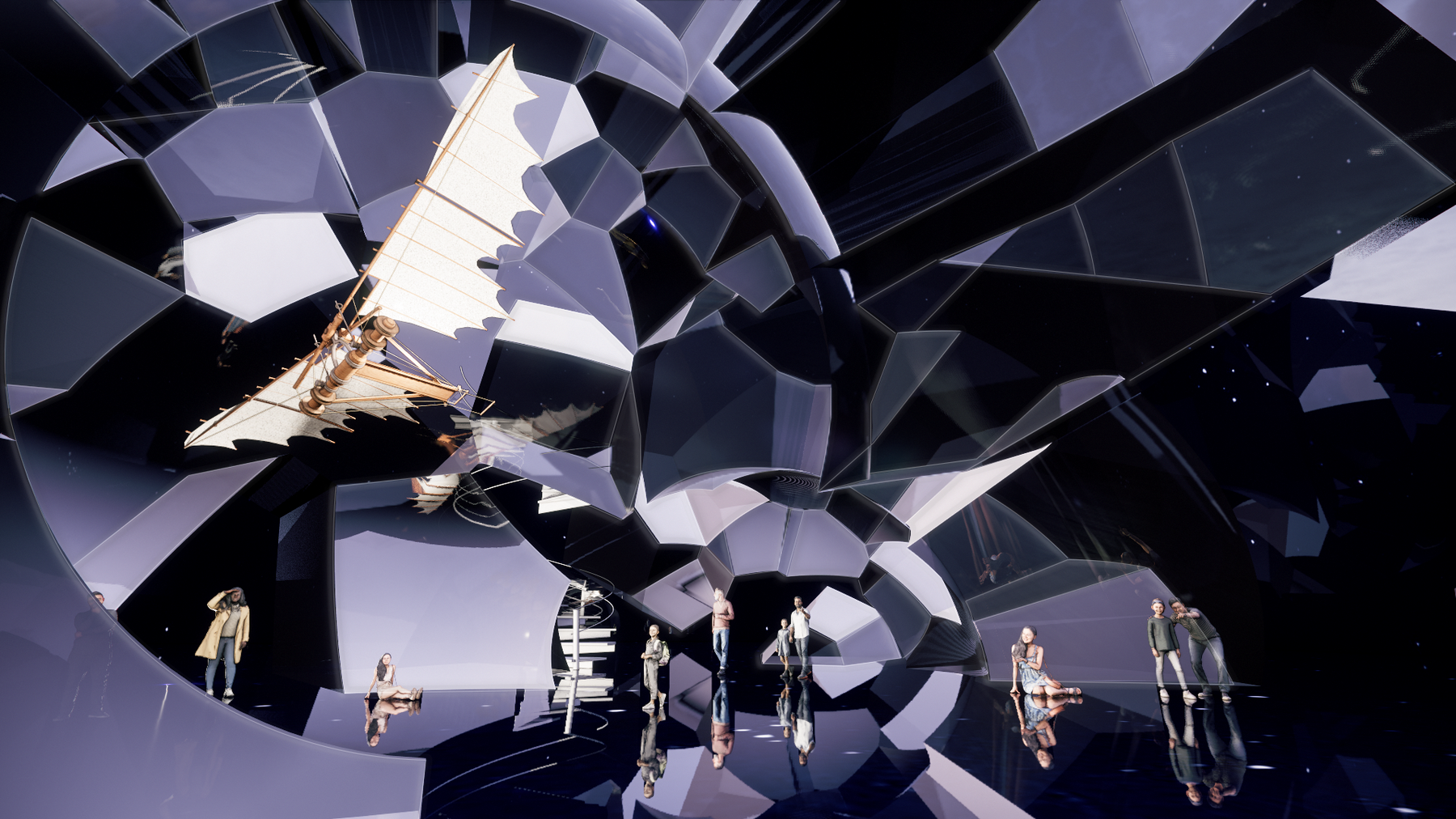
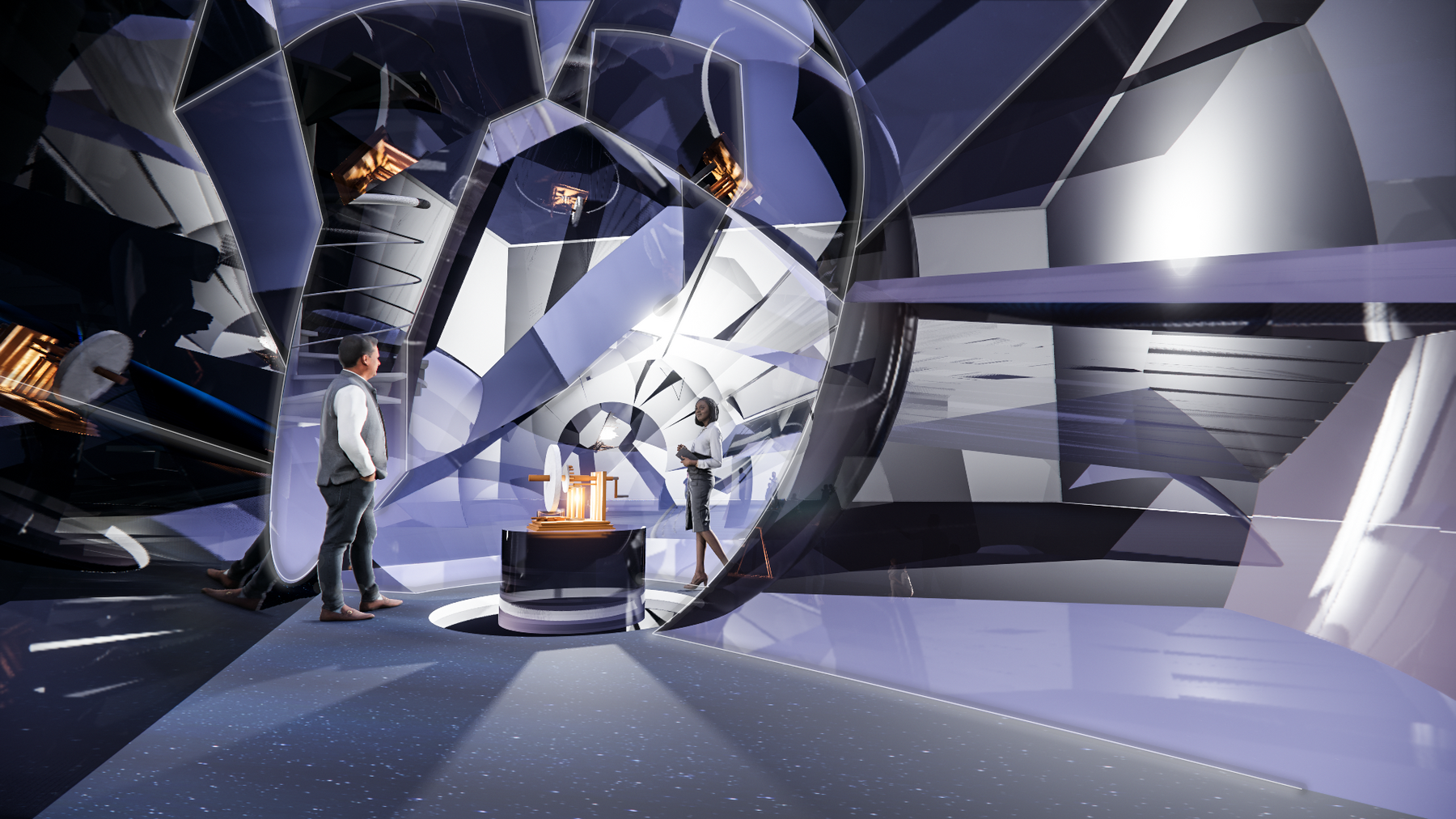
Perception is treated as a mutable condition, shaped through the careful orchestration of light, surface geometry, and material assemblies. Set within an exhibition framework inspired by Leonardo da Vinci’s experimental machines, the project constructs a sequence of interior moments where vision becomes unstable and continuously negotiated. Angular planes, layered transparencies, and calibrated lighting conditions generate shifting readings of scale, orientation, and depth. Rather than relying on applied effects, the spatial distortions emerge from the tectonic logic of the interior itself, embedding experiential intent within the construction system. The work advances a position that interior design can operate as an instrument of sensory re-calibration, where structure and atmosphere are inseparable. By foregrounding how fabrication strategies influence perception, the project reframes the role of the designer from form-giver to curator of experience, capable of crafting environments that provoke curiosity and invite visitors to reconsider how interiors are seen, navigated, and understood.
Approach
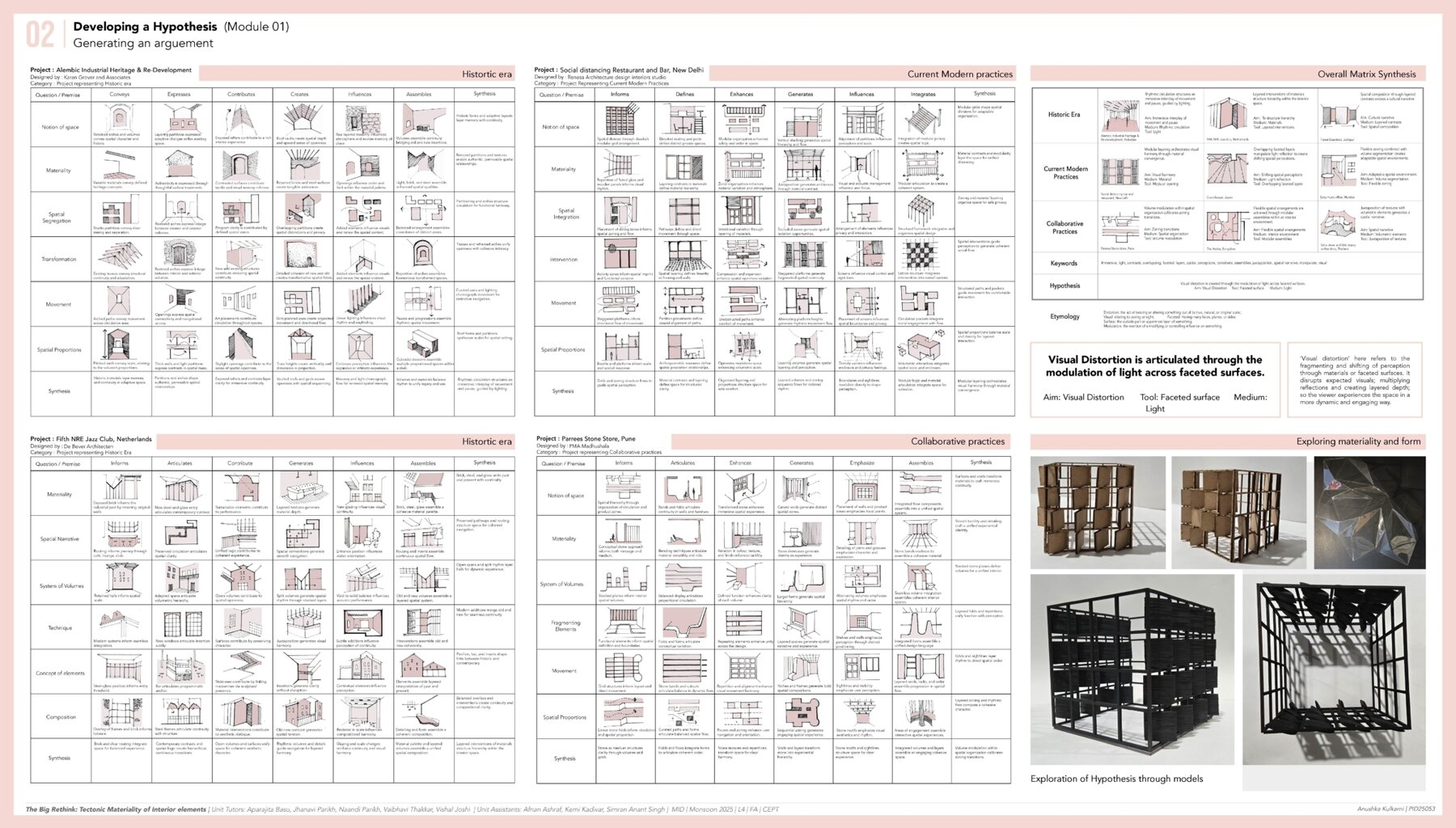
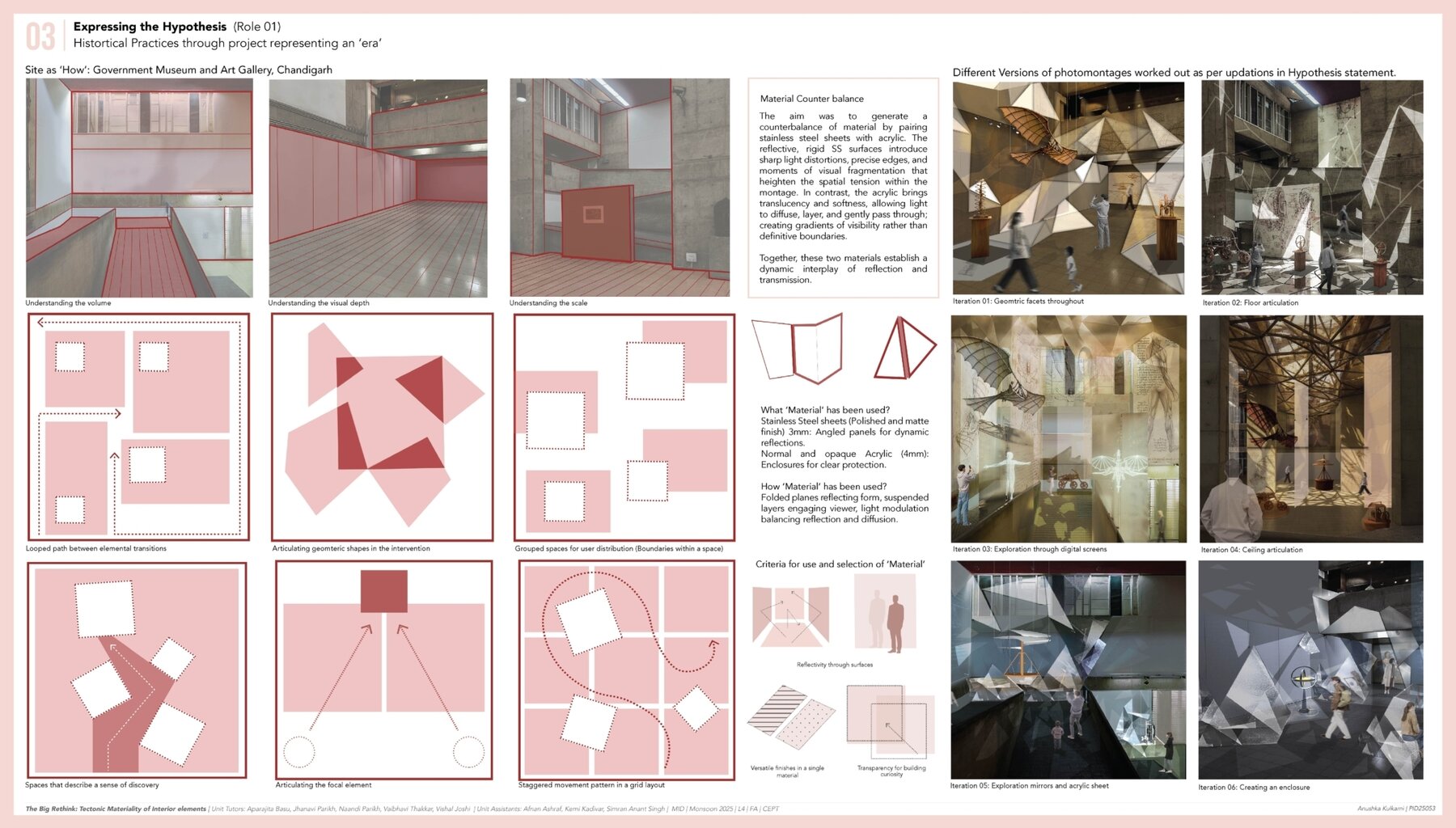
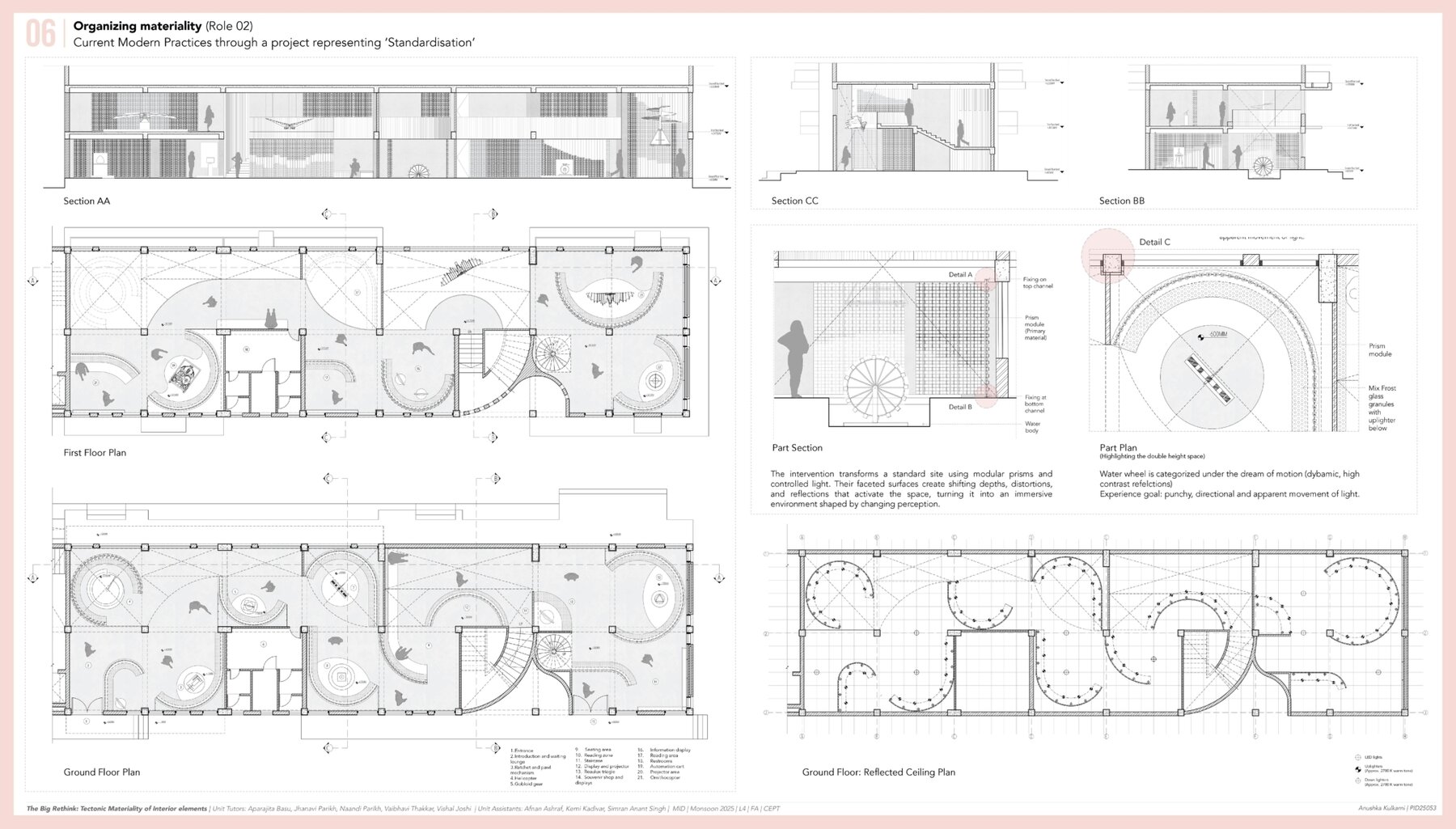
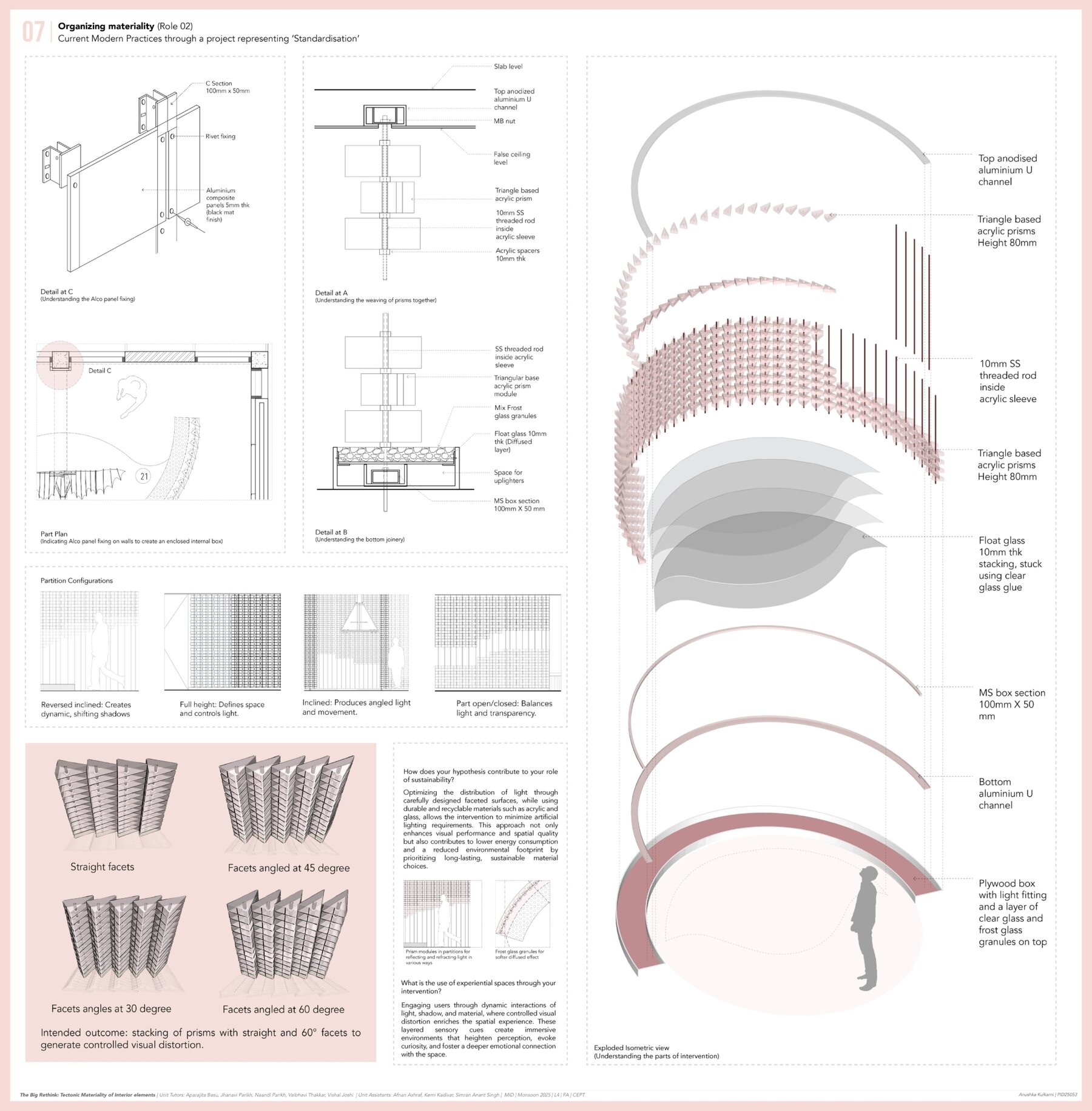
The project adopts an exploratory, hypothesis-driven approach rooted in tectonic materiality and optical behavior. Initial investigations focused on understanding how light reacts to faceted geometries through physical models, drawings, and light experiments. These studies informed the development of prism-like interior elements capable of distorting visual perception. The design process unfolded in two phases: first, establishing an argument around tectonic materiality by examining material systems, joints, and construction logic; and second, translating these findings into three focused spatial interventions within an exhibition context. Iterative prototyping allowed testing of how modulation of surface angles, transparency, and material thickness influenced reflection, depth, and distortion. This approach enabled the project to bridge conceptual intent with buildable tectonic systems.
Output
The final outcome is a speculative exhibition environment structured around Leonardo da Vinci’s visionary machines, where visitors encounter a sequence of visually distorted spatial moments. Faceted interior elements operate as both structural and experiential devices, filtering and refracting light to create shifting perceptions of depth and scale. The output includes detailed drawings, physical prototypes, light studies, and a fully developed spatial narrative illustrating the interior designer’s role in crafting perceptual atmospheres. The project demonstrates how controlled illumination, when embedded within tectonic systems, can transcend decorative application to become a core spatial driver. Through its material strategies and optical effects, the work offers a new perspective on how interiors can challenge sensory expectations and generate immersive experiential realms.
- anushka kulkarni
Gallery