- shashwati chowdhury
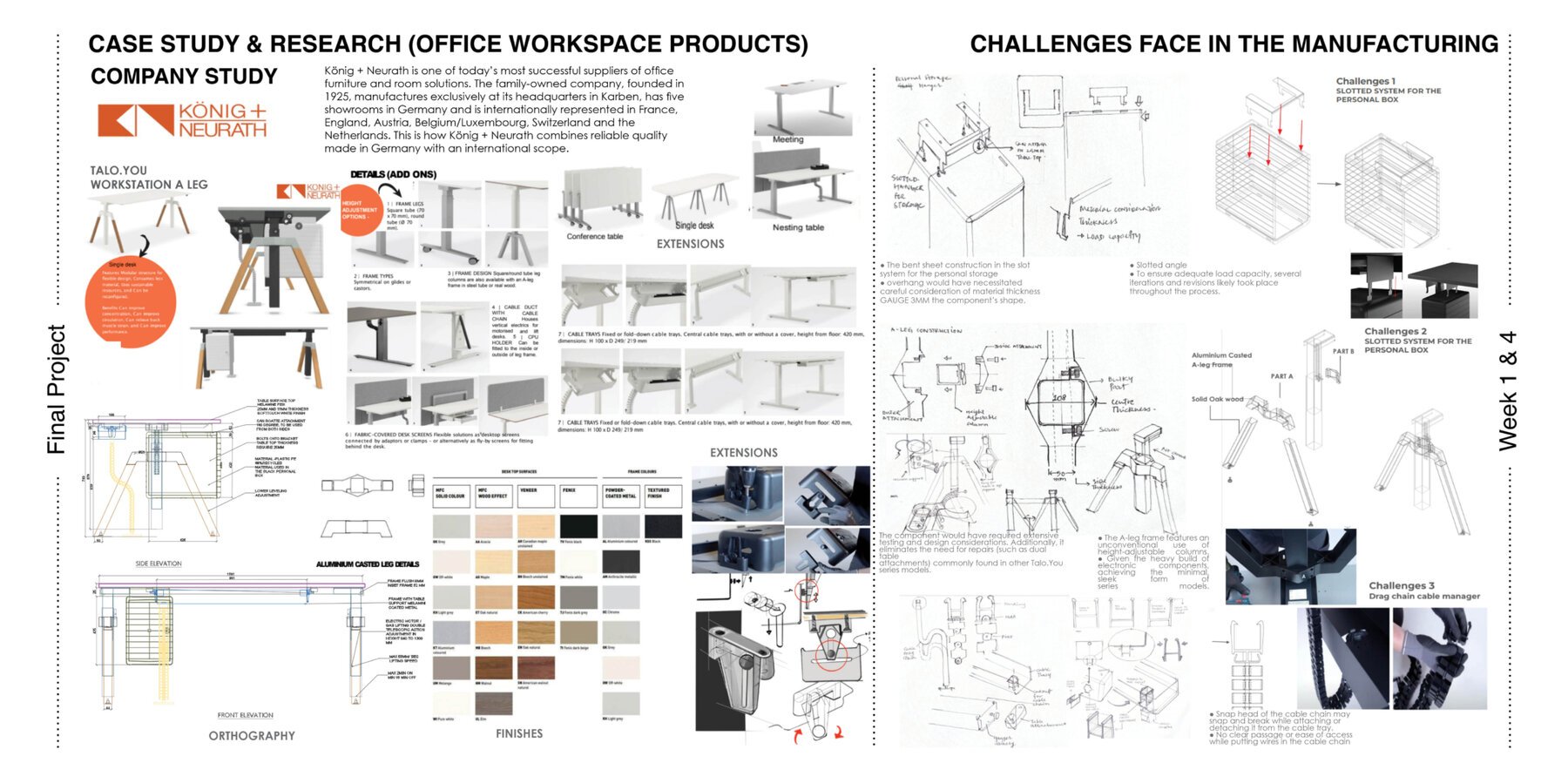
Case Study and Research
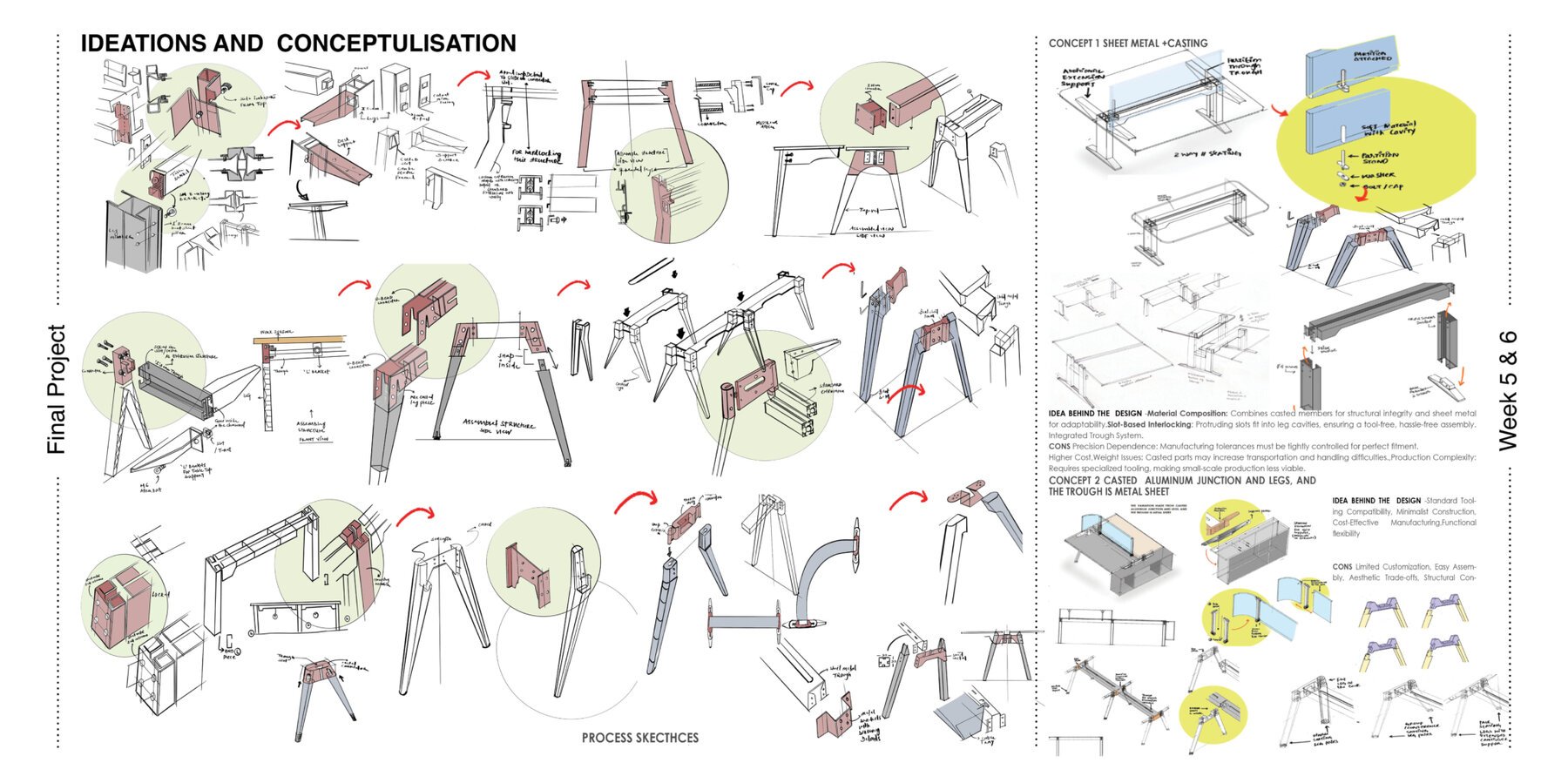
Ideation and Conceptualisation Configurations
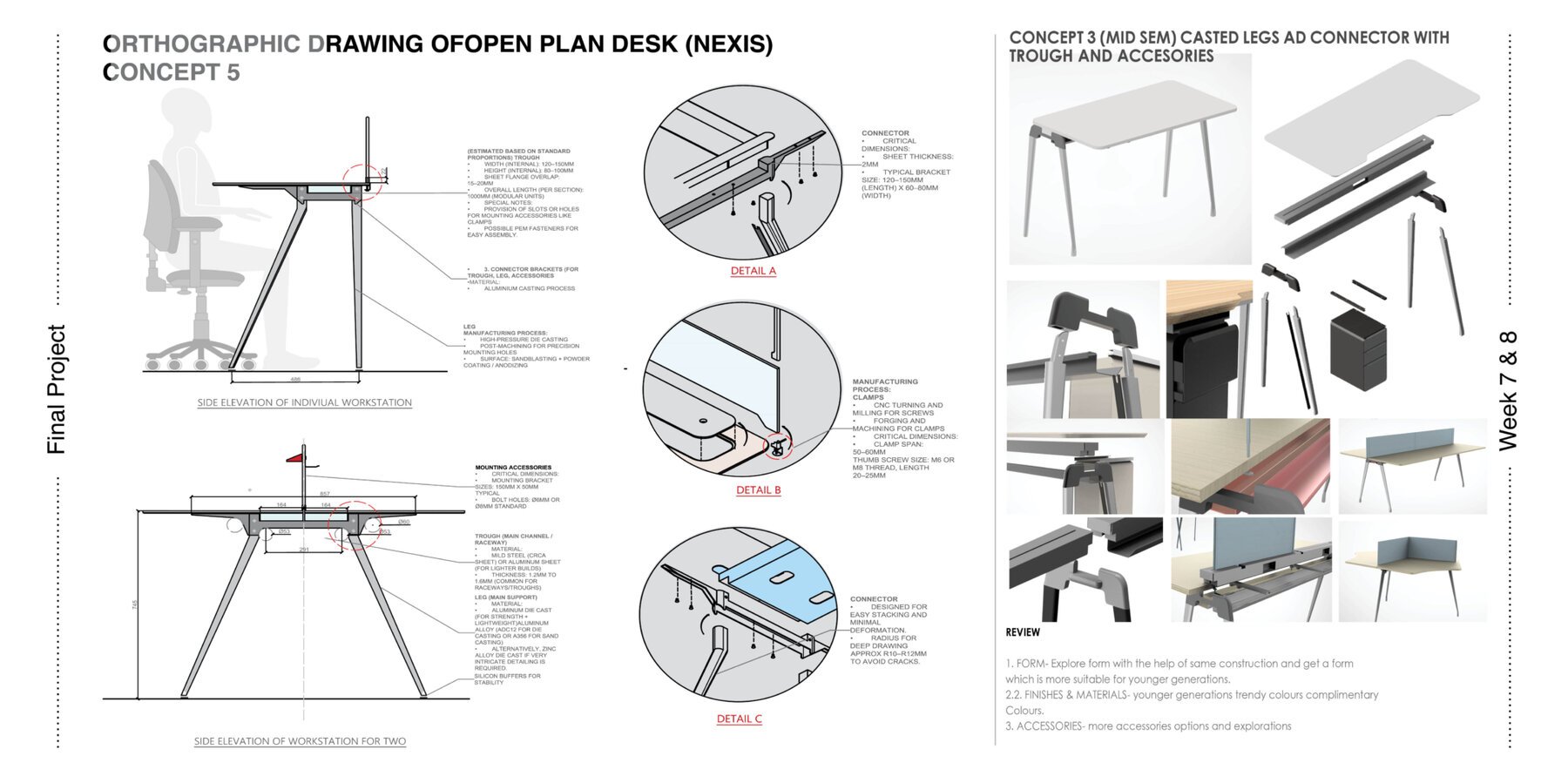
Configurations and Systems
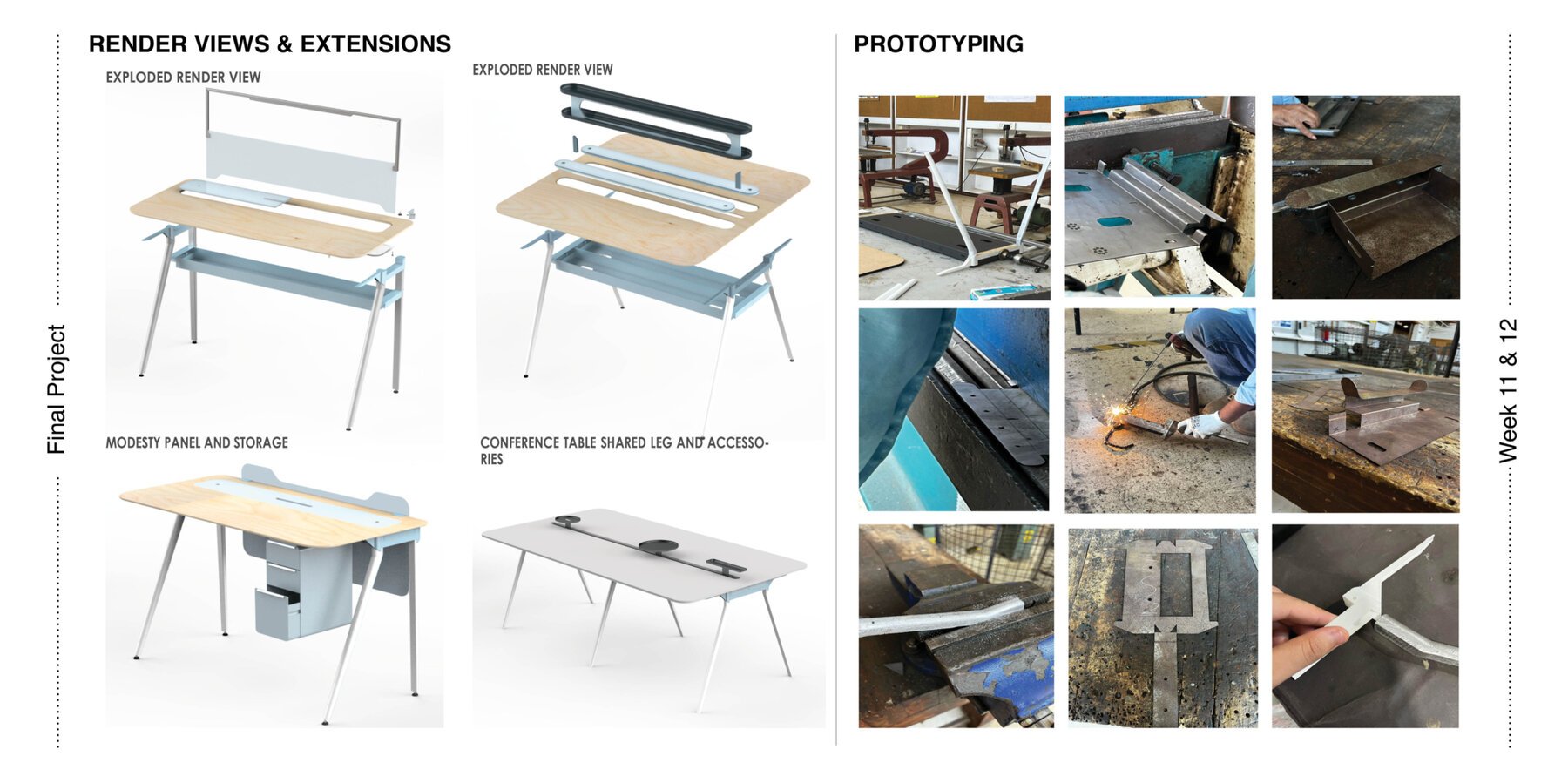
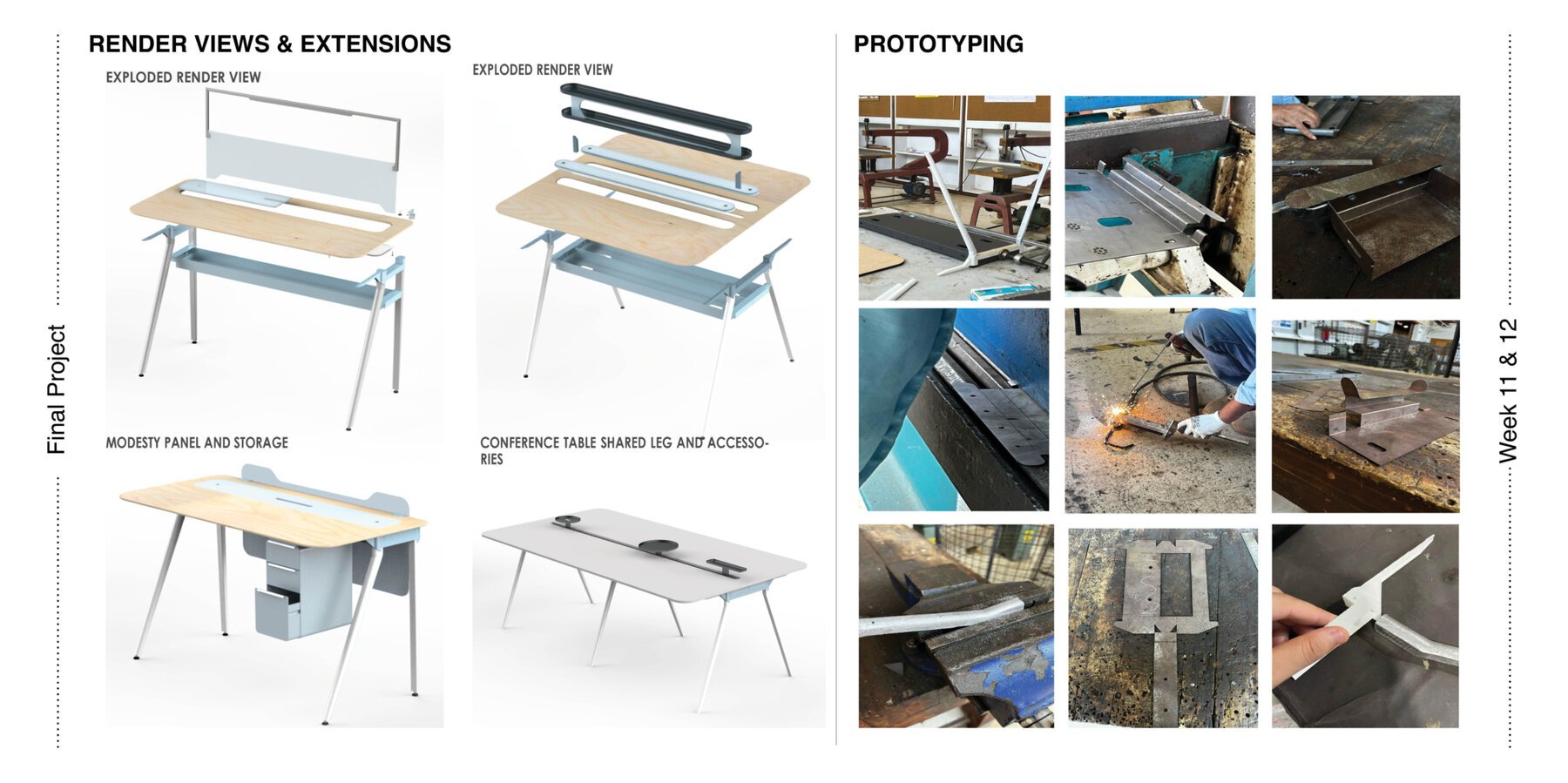
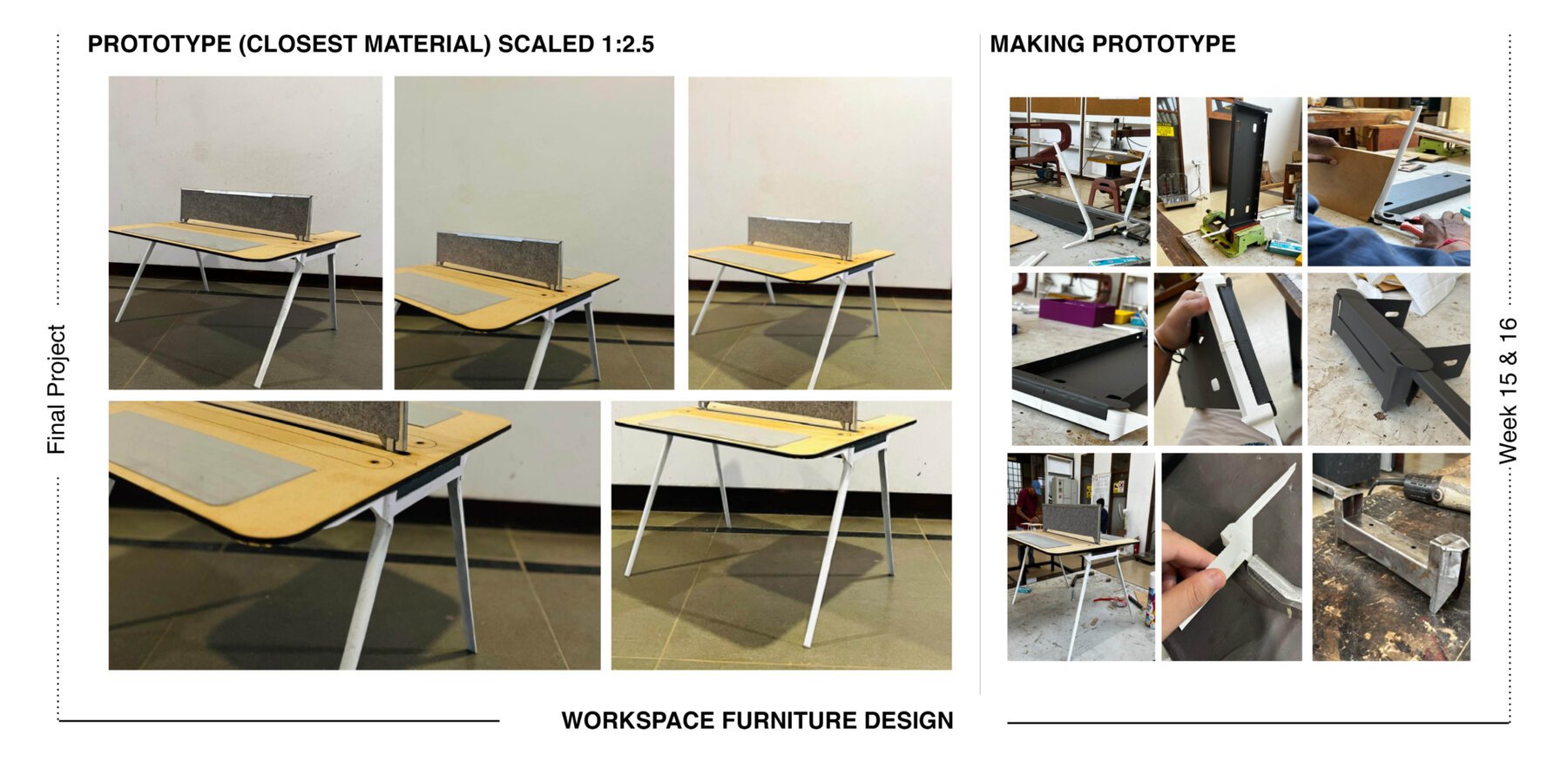
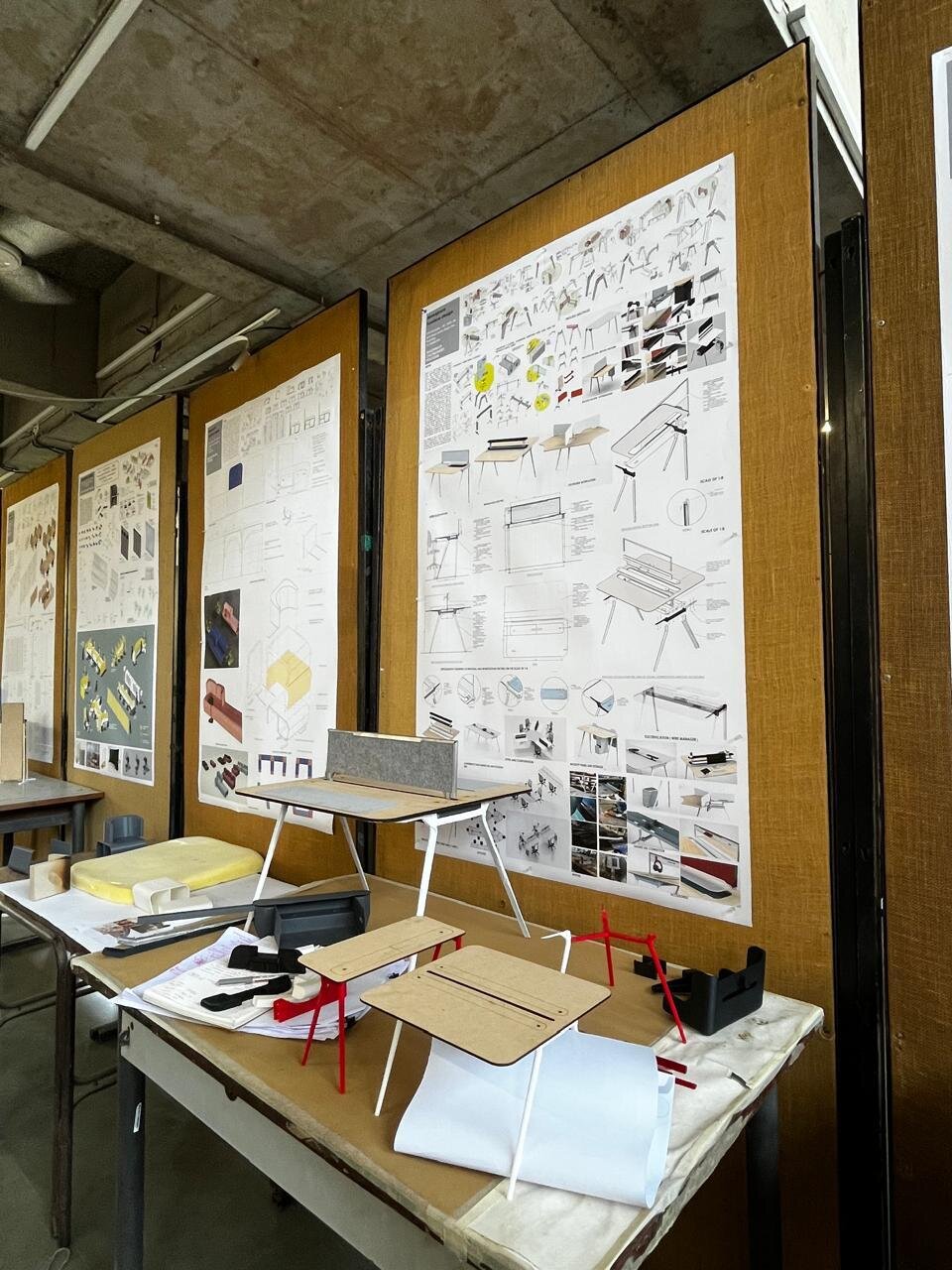
Prototype in 1:2.5 scale with closest material and making
About the project
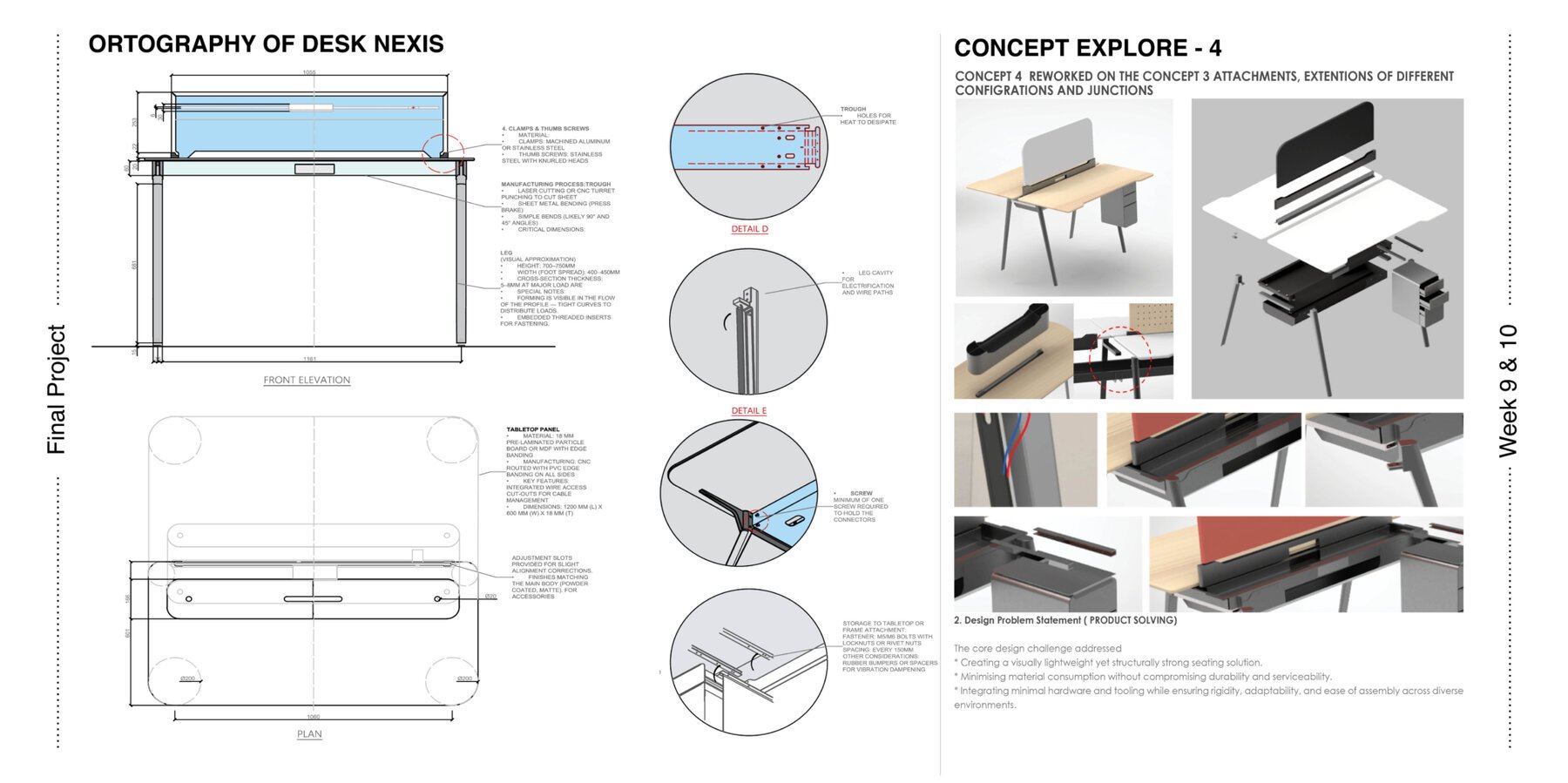
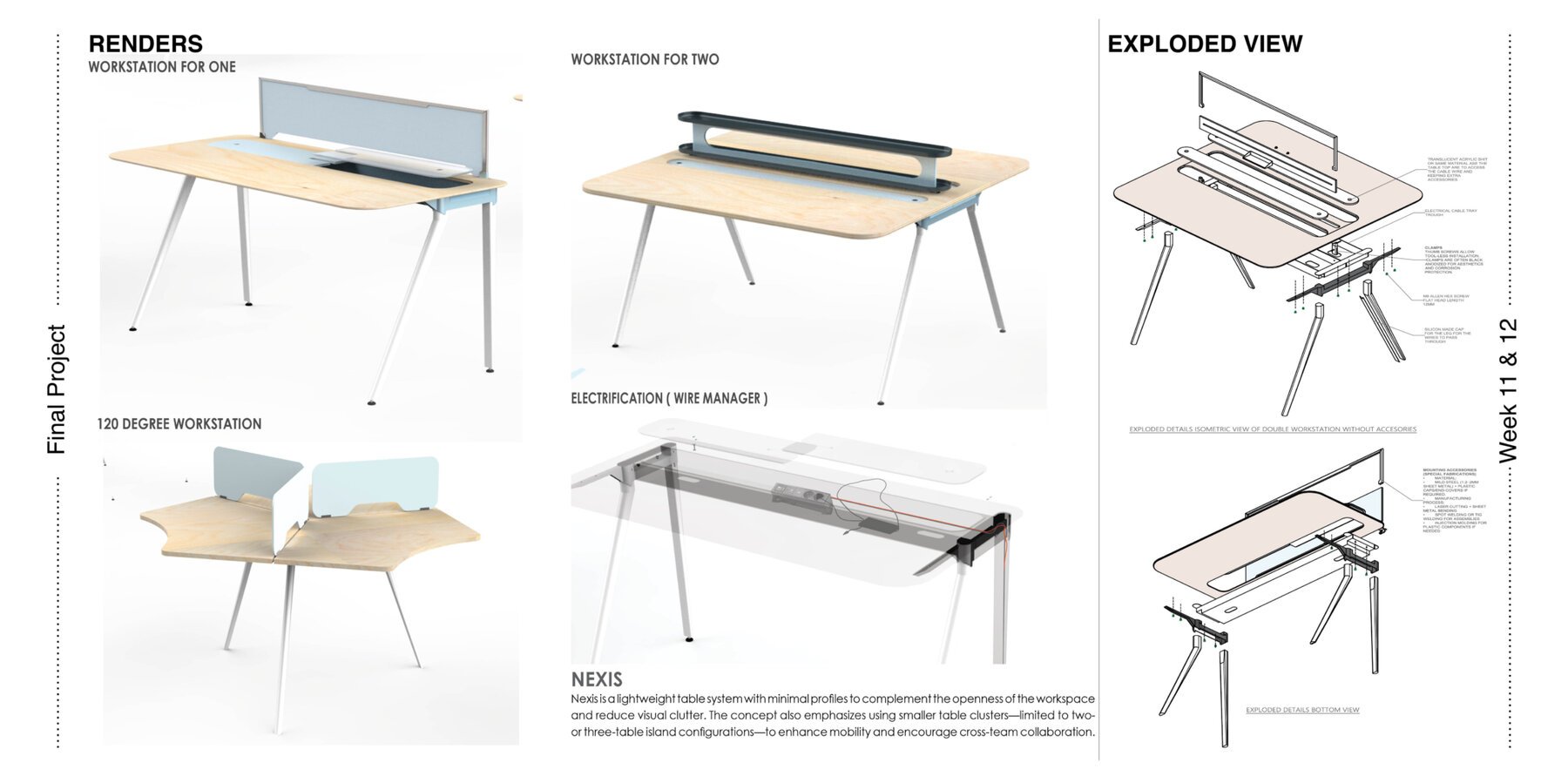
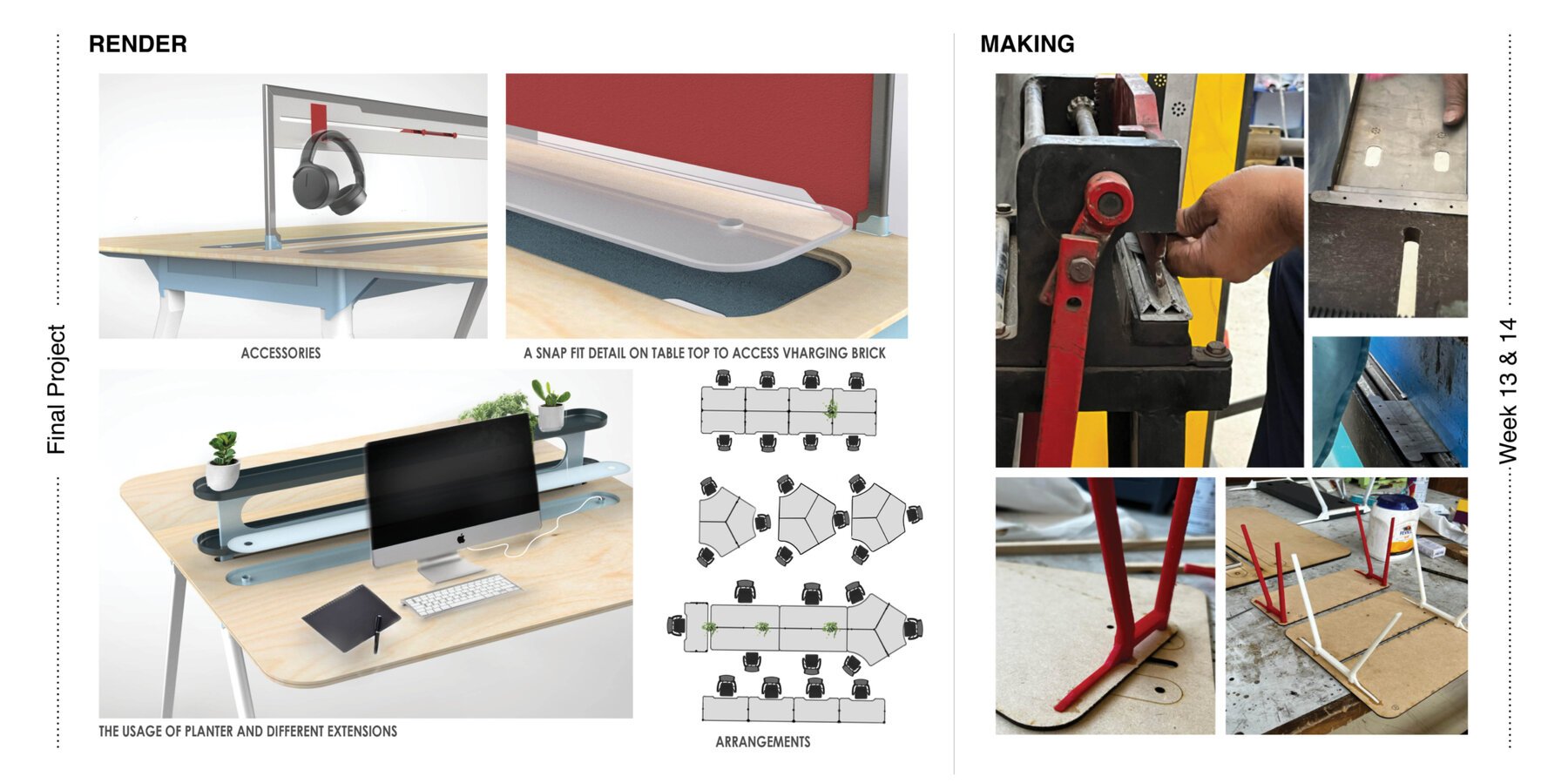
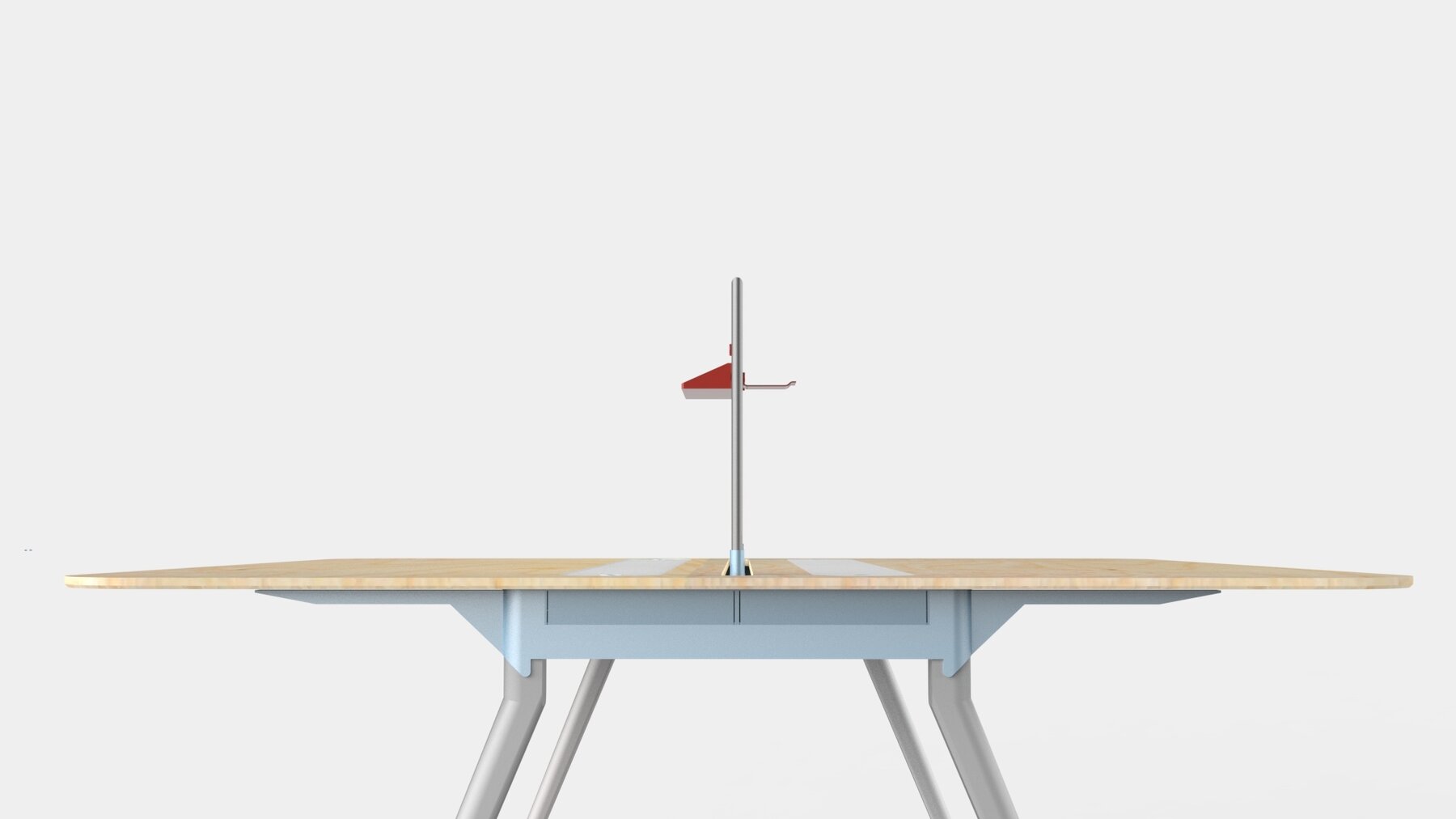
Nexis is a lightweight table system with minimal profiles to complement the openness of the workspace and reduce visual clutter. The concept also emphasizes using smaller table clusters limited to two- or three-table island configurations to enhance mobility and encourage cross-team collaboration. The design focuses on reducing the clutter typically caused by essential equipment and peripherals. Useful objects and essentials are organized with minimal, well-designed accessories and extensions to the table. Integrated wire management ensures easy access and an intuitive, distraction-free workflow, with minimal visible wiring. Charging bricks for laptops and monitor adapters are housed within a cable trough. A lift-up cap on the tabletop allows users to arrange their cables inside; once closed, only the required wires pass through a neat cutout, leaving the tabletop clear for work without unnecessary equipment. Additionally, stationery and tools are arranged across various sophisticated platforms and attachment options built into the design. The design is also intuitive in that it doesn’t promote a heavy workload office environment. The objective is to keep the freshness and openness in the space and the workflow both.
Approach
The project approach focused on identifying a single core element the table as the foundation of the entire system. Instead of designing multiple isolated components, the process emphasized building a cohesive system around this central element. Different aspects of design, including structure, ergonomics, material efficiency, mobility, and spatial flexibility, were explored in parallel.
The studio-led collaboration with Godrej Design India involved extensive back-and-forth iterations, testing proportions, profiles, and configurations. By refining one element repeatedly and expanding its possibilities, the design evolved into a lightweight, modular table system that supports openness, reduces visual clutter, and enables adaptable two- and three-table collaborative clusters.
Output
The outcome of the project is Nexis, a lightweight, modular table system developed by focusing on a single core element and expanding it into a flexible, scalable system. The design enables multiple configurations, particularly two- and three-table island clusters that support both focused individual work and informal collaboration. Minimal structural profiles and carefully refined proportions help reduce visual clutter while maintaining strength and stability.
Designed through a studio-led collaboration with Godrej Design India, the system evolved through multiple rounds of iteration, testing aspects such as ergonomics, mobility, material efficiency, and spatial adaptability. Nexis responds to the dynamic needs of contemporary workspaces by allowing easy reconfiguration and movement. The final system integrates clarity, functionality, and adaptability, offering a versatile solution that encourages openness, improves spatial efficiency, and enhances cross-team interaction while maintaining a strong and cohesive design identity.
- shashwati chowdhury
Gallery