- srishti bisht
About the project
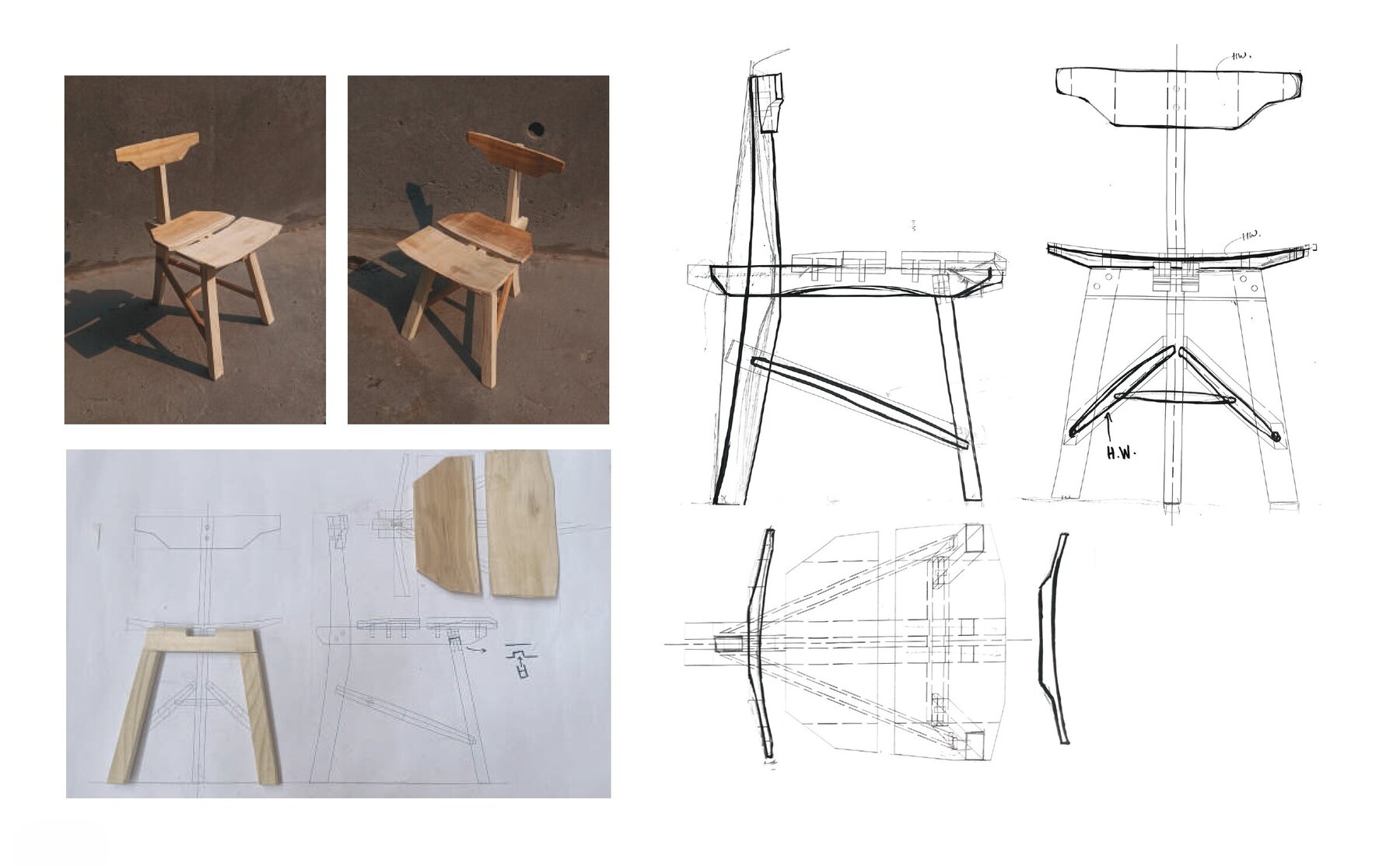
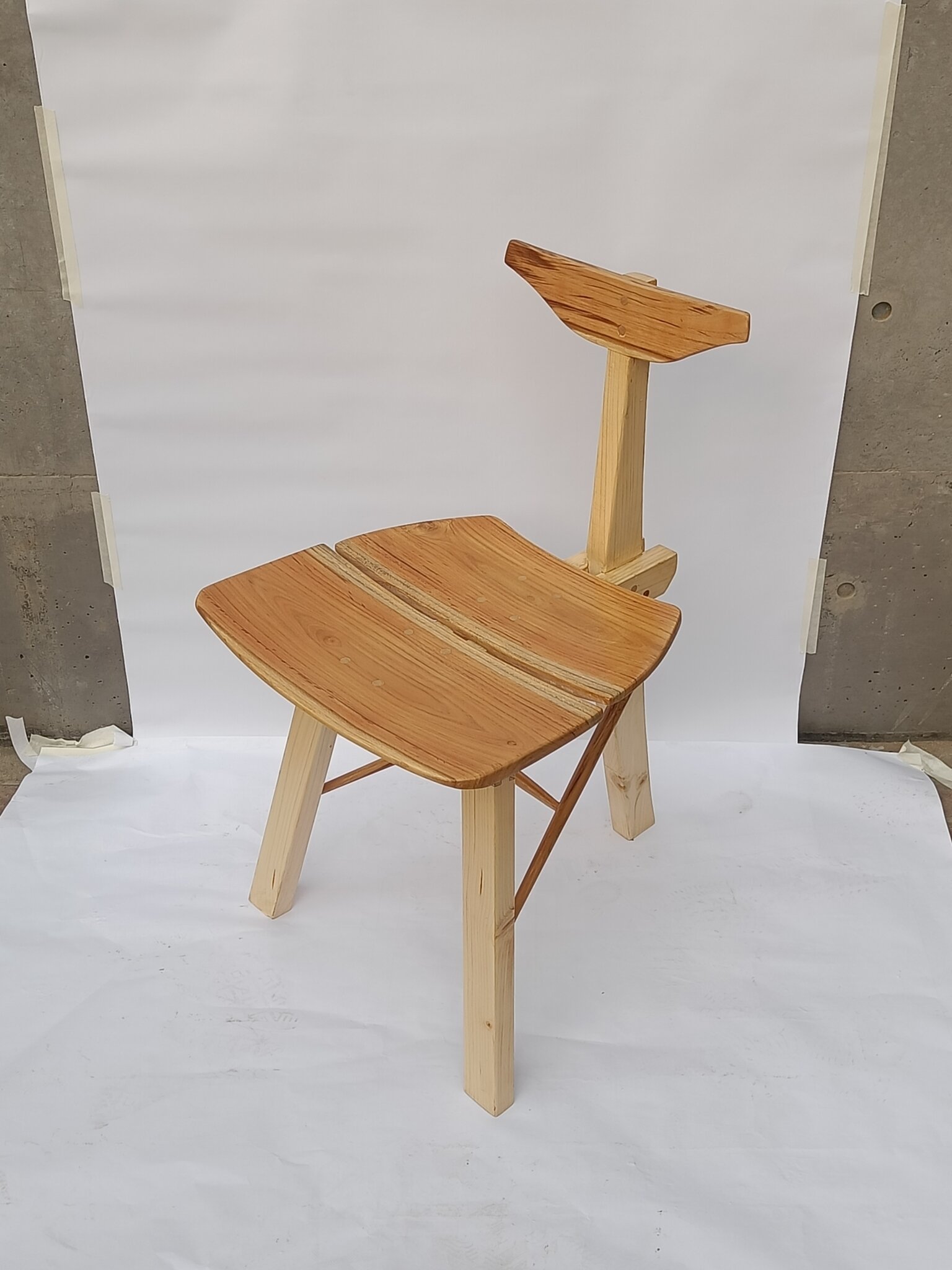
This project looks at how softwood and hardwood can be combined within a single seating element, using Pine and Teak. It is informed by a detailed study of George Nakashima’s Conoid Chair, focusing on its geometry, material use, and joinery rather than its exact appearance.
Instead of replicating the two-legged structure of the Conoid Chair, the project uses its underlying principles as a reference. By questioning conventional material placement and chair construction, the design developed into a three-legged dining chair that explores balance, structure, and material hierarchy.
Approach
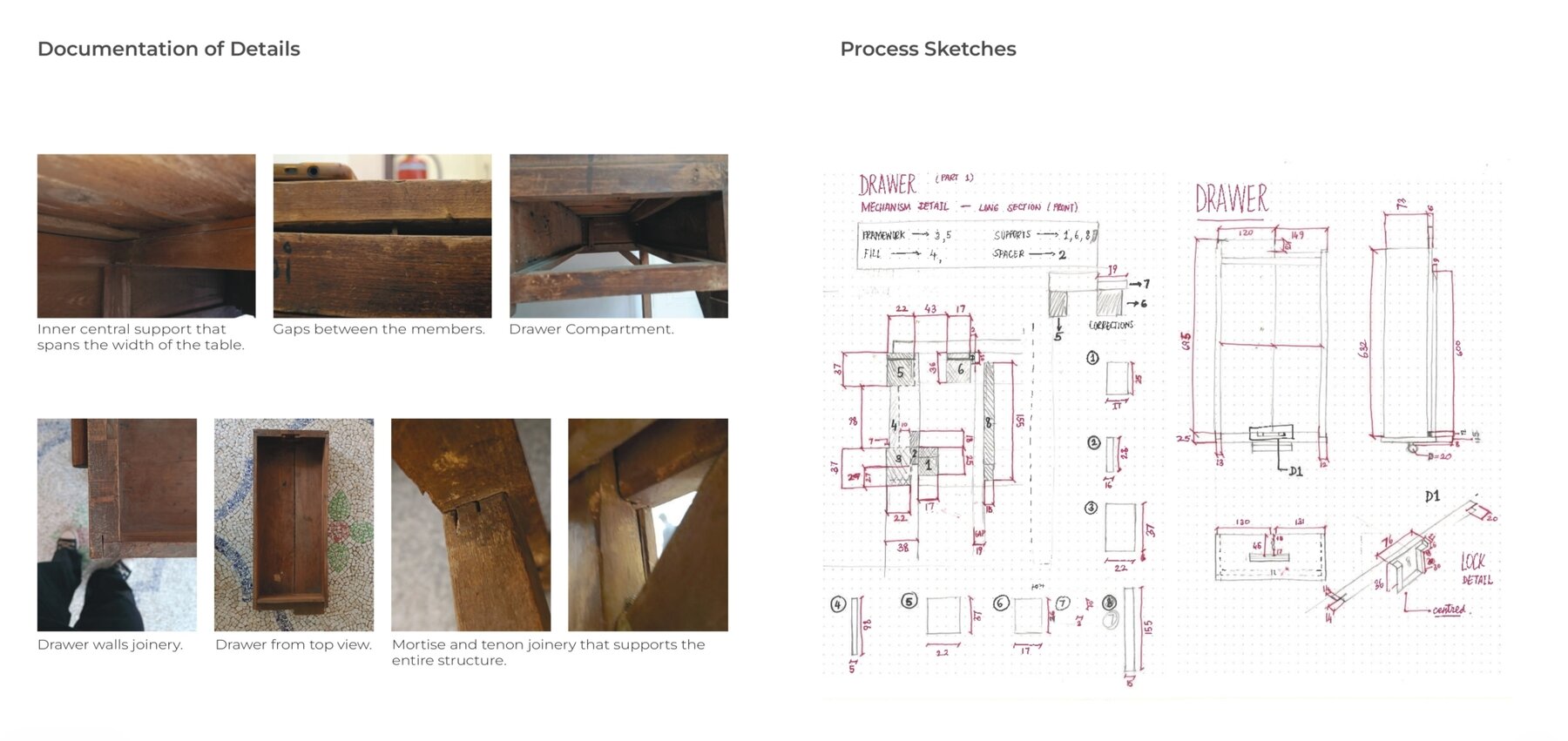
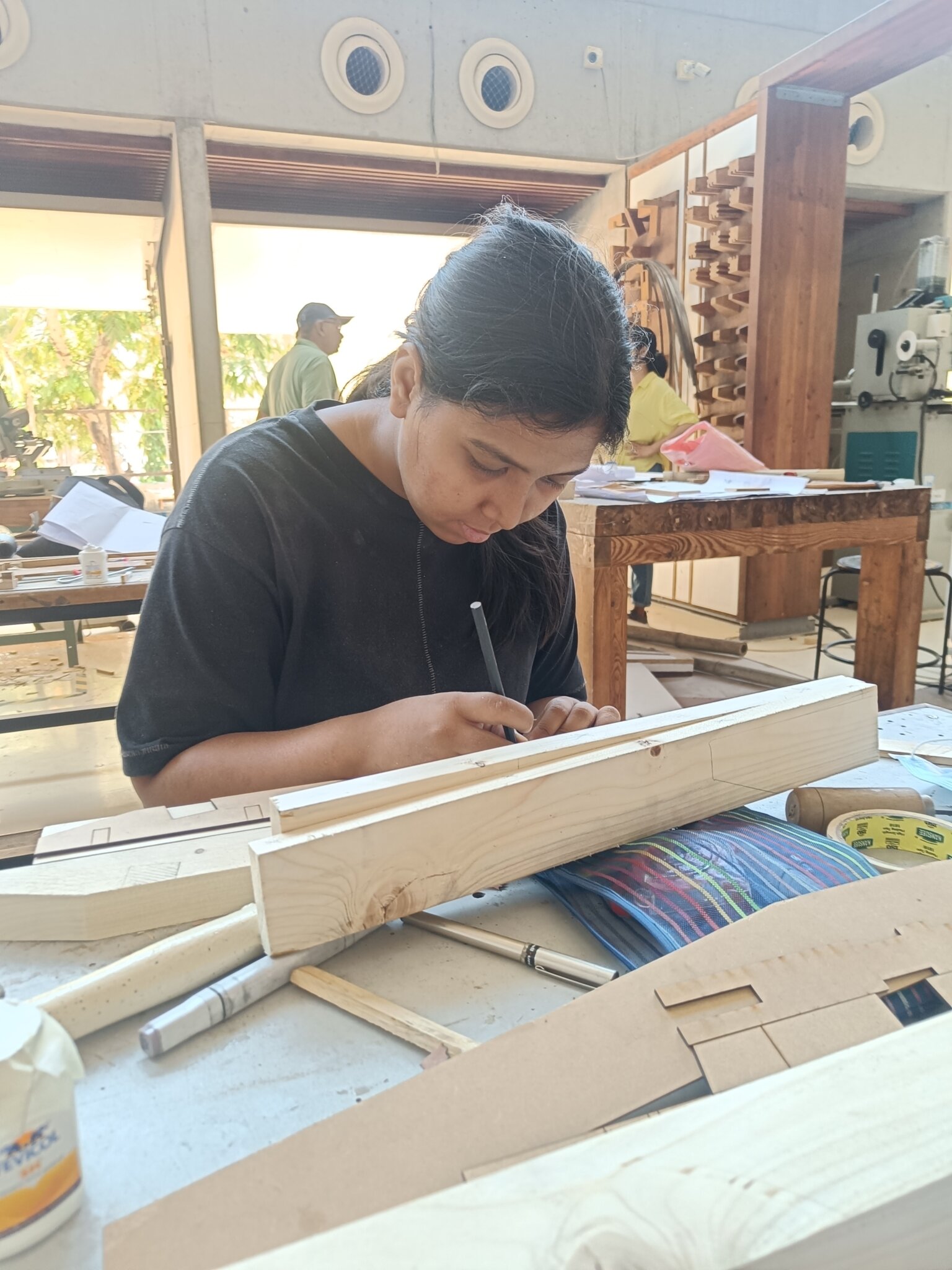
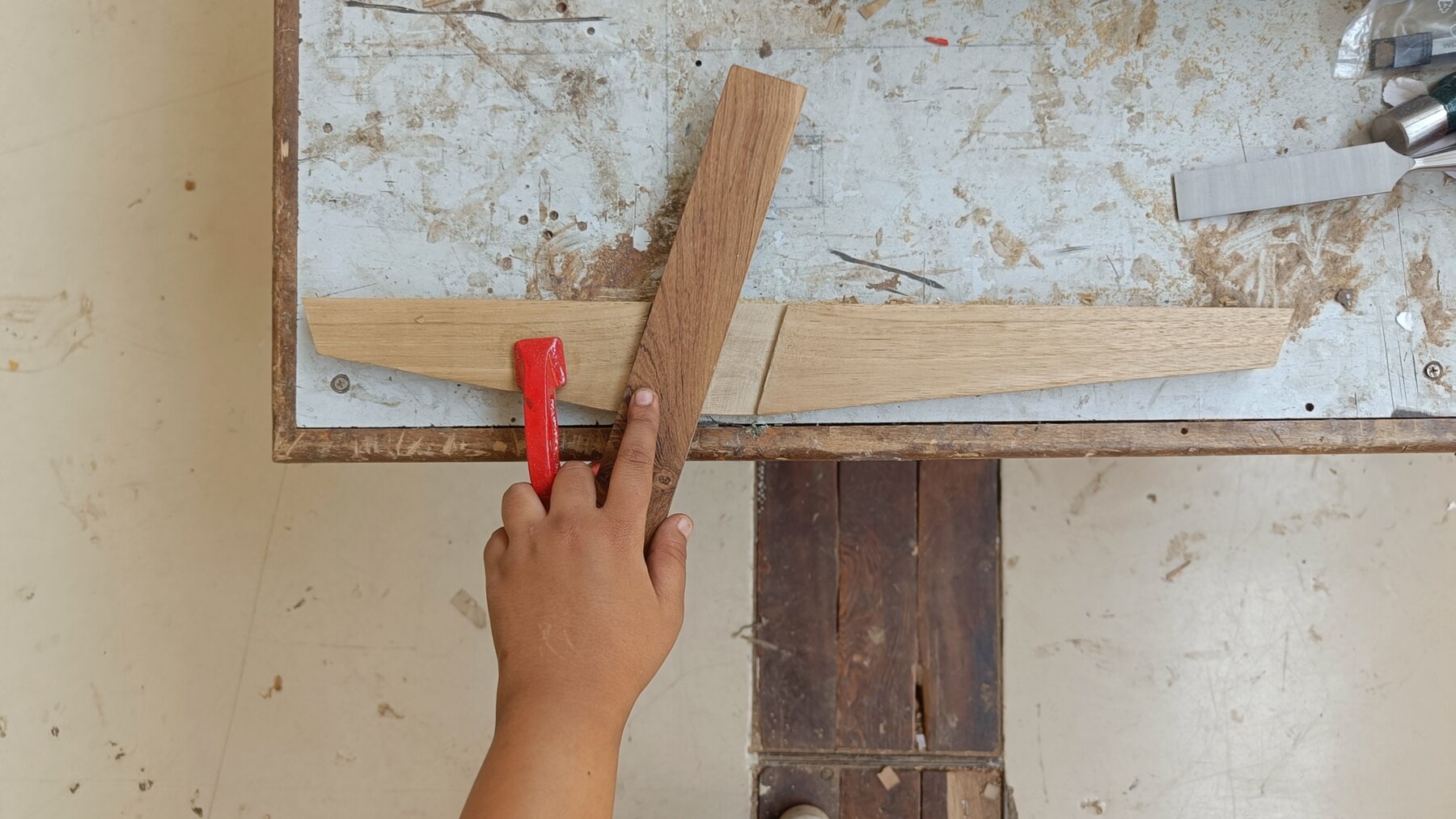
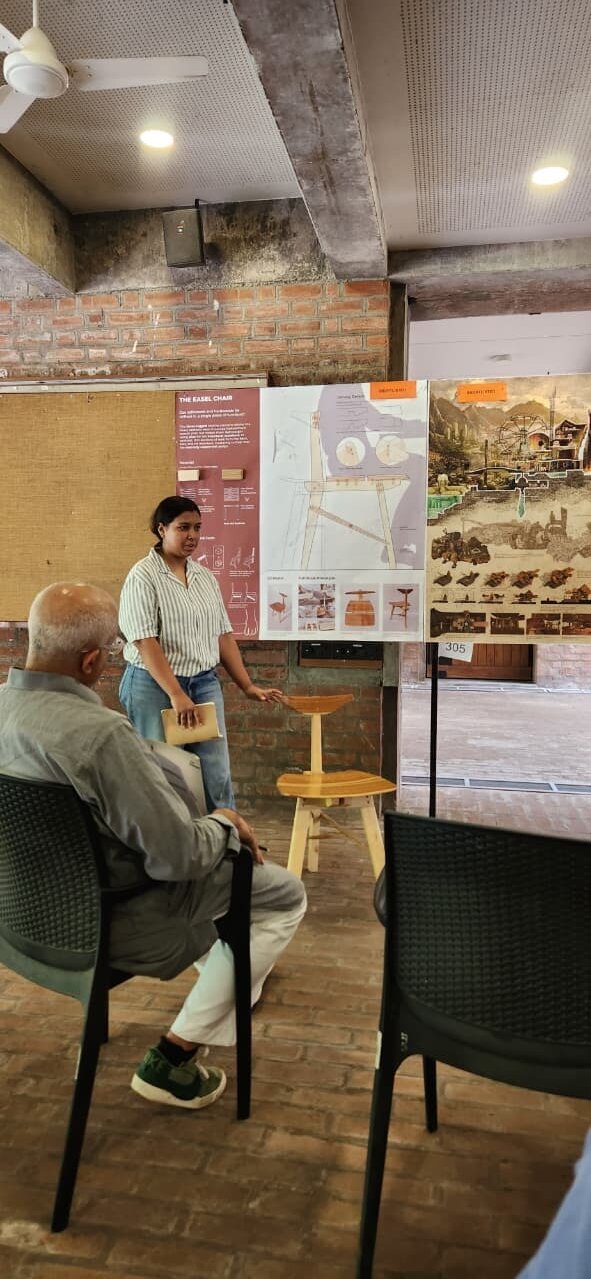
The project was preceded by three exercises that built a foundation for the outcome. These included measuring existing furniture and producing a full-scale 1:1 drawing to understand construction, studying George Nakashima’s Conoid Chair to analyze its geometry, materiality, joinery, structure, and proportions, and learning through making by fabricating a section of the chair in the workshop.
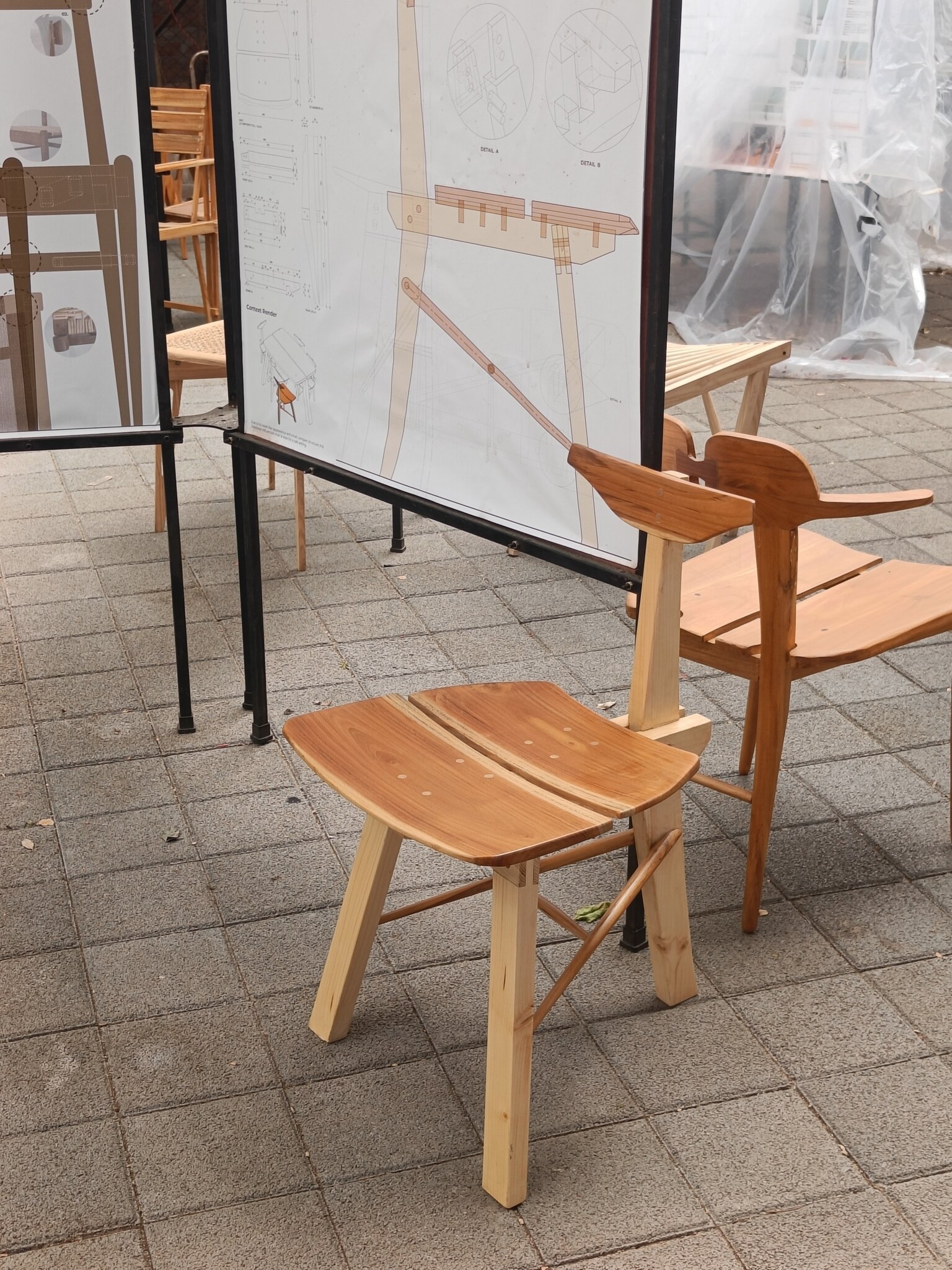
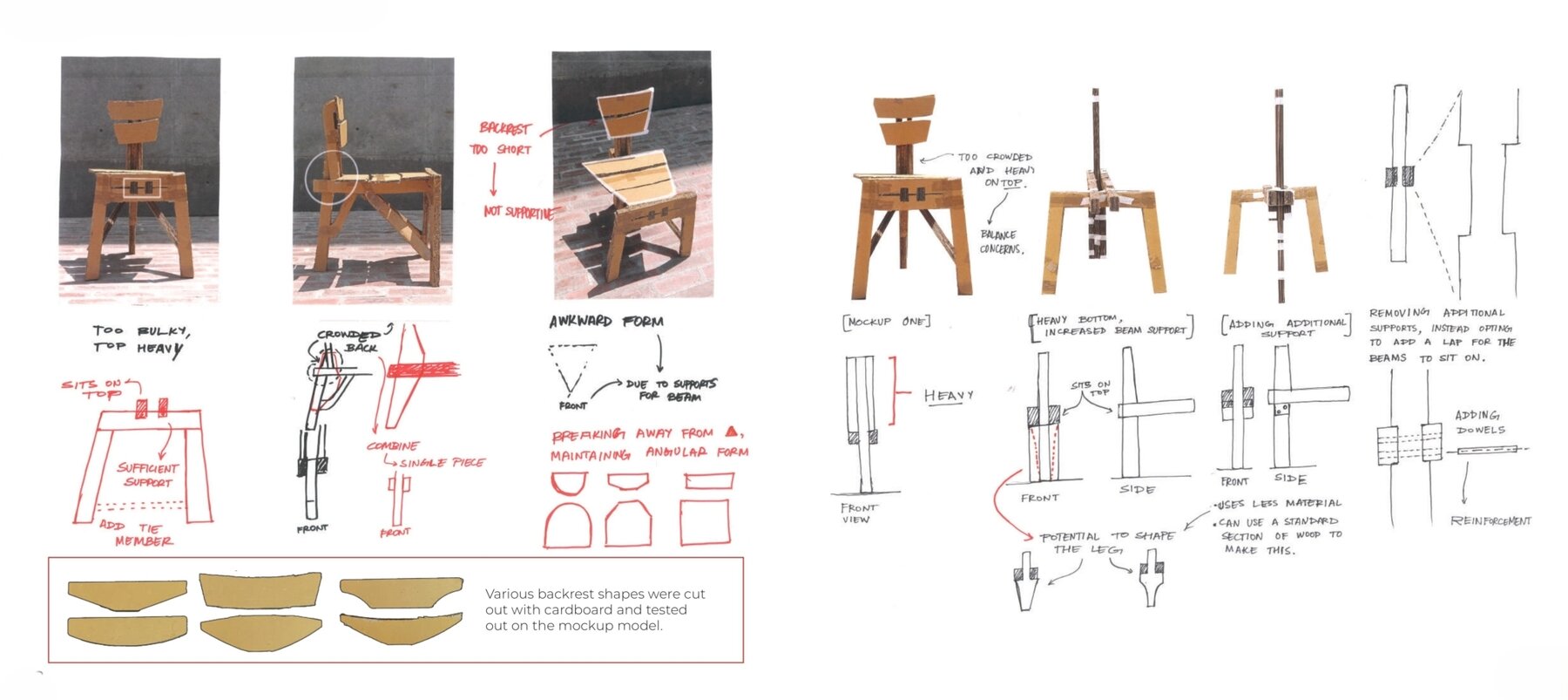
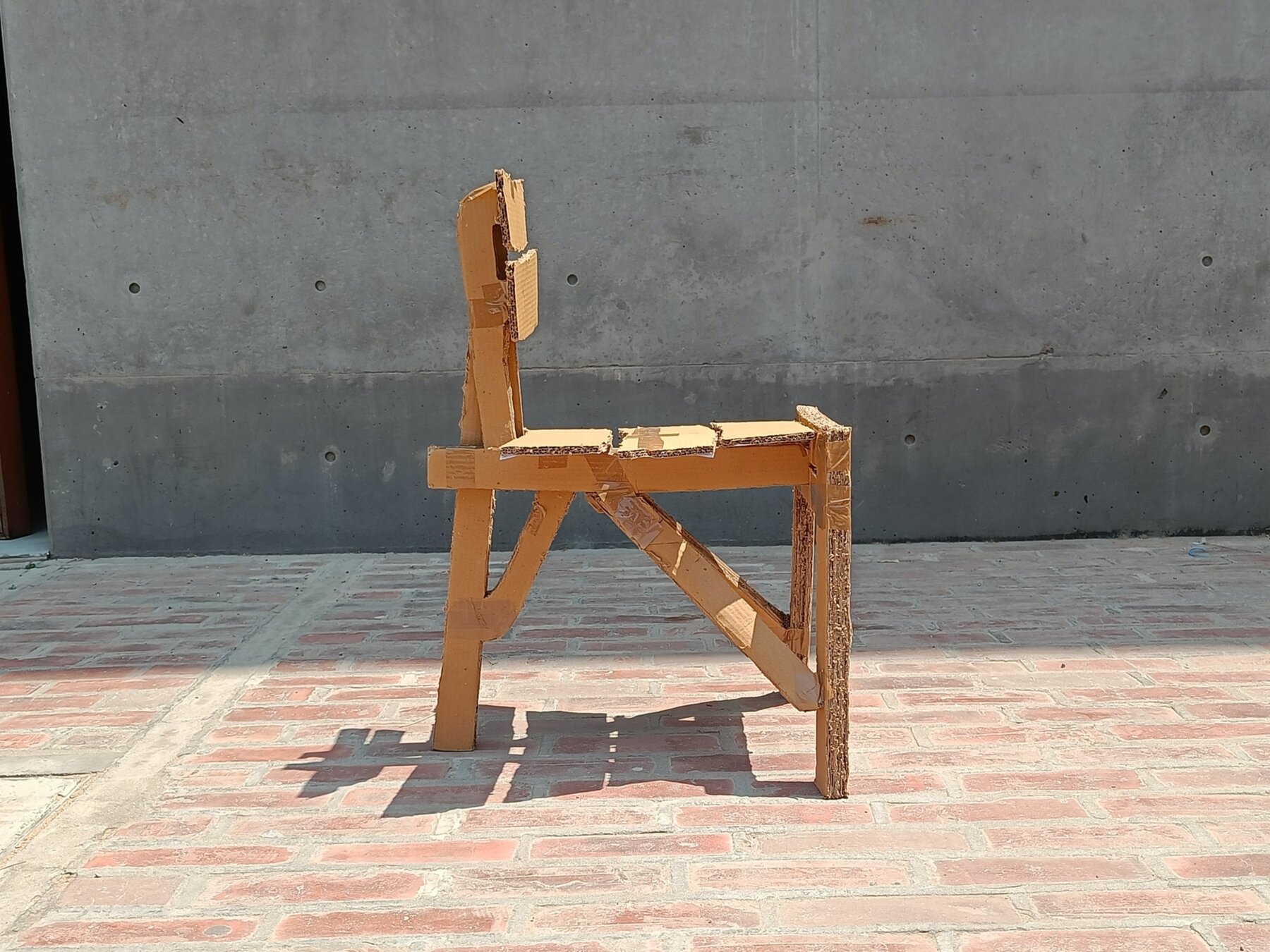
The main studio project began with the question of how softwoods and hardwoods could be combined within a single piece of furniture. Initial design diagrams and scaled drawings explored structural configurations, which evolved into a cross-beam-based system. Parallel workshop studies examined the behavior of Pine and Teak with different joineries, leading to the rejection of mortise-and-tenon joints in favor of lap and reinforced joints. Rule-making exercises and iterative models at 1:5, 1:3, and 1:1 scales informed material placement, proportions, and ultimately the three-legged final chair.
Output
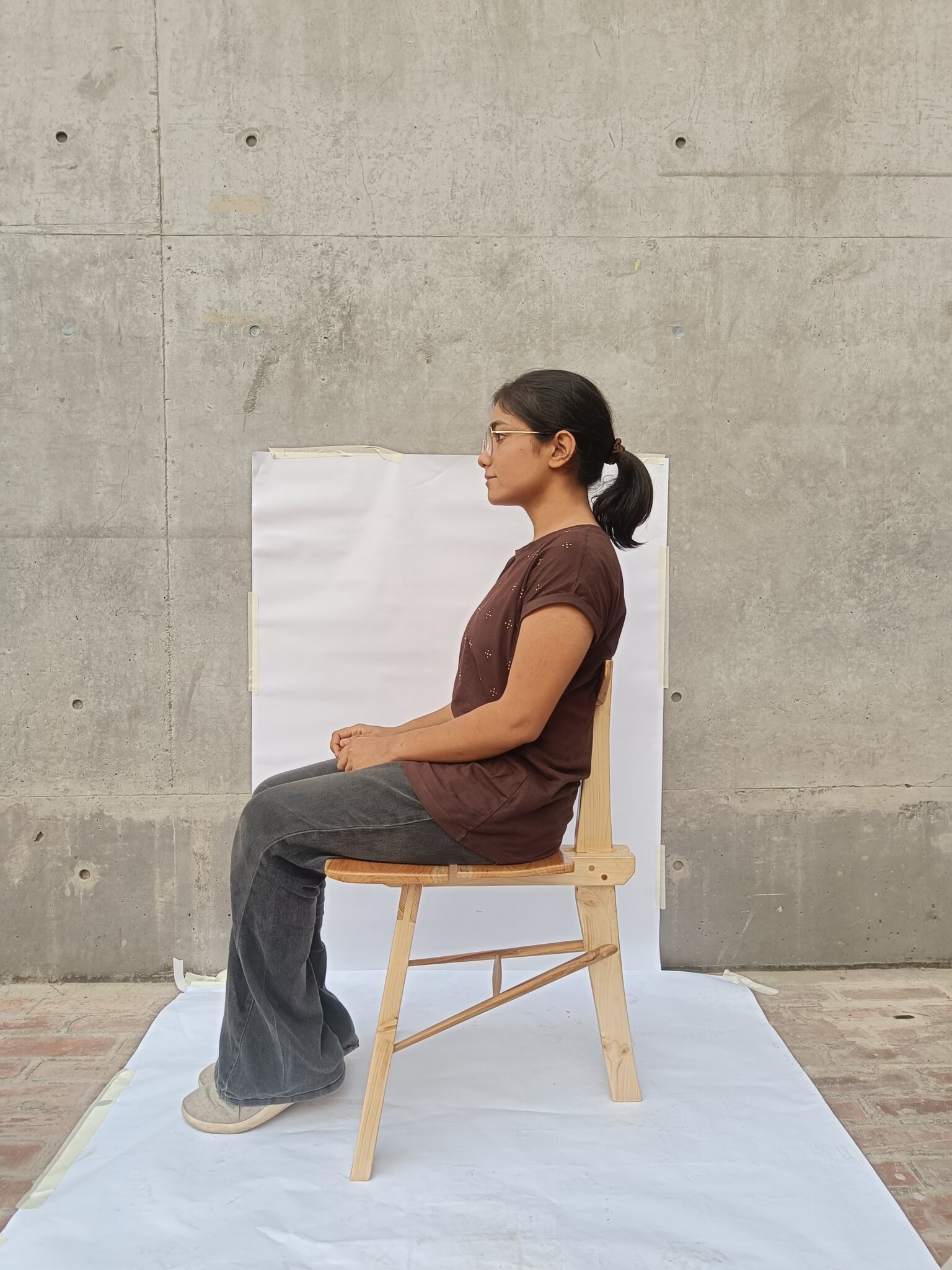
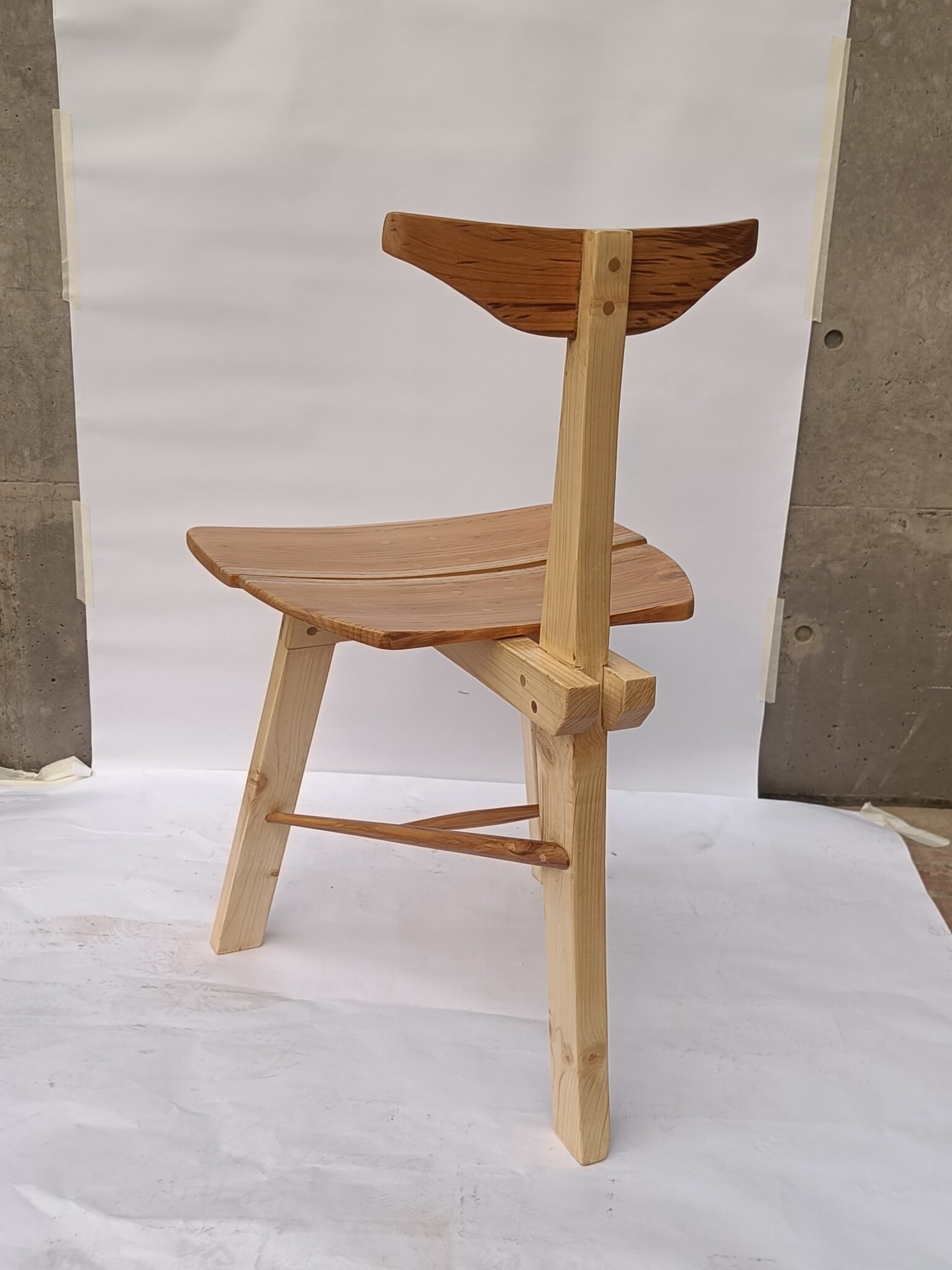
The final outcome is a three-legged dining chair that reinterprets the visual language of George Nakashima’s Conoid Chair through the use of softer, lighter materials. The Pine framework retains the heavy proportions associated with Nakashima’s work while achieving a lighter physical presence due to Pine’s lower density and standardized sections.
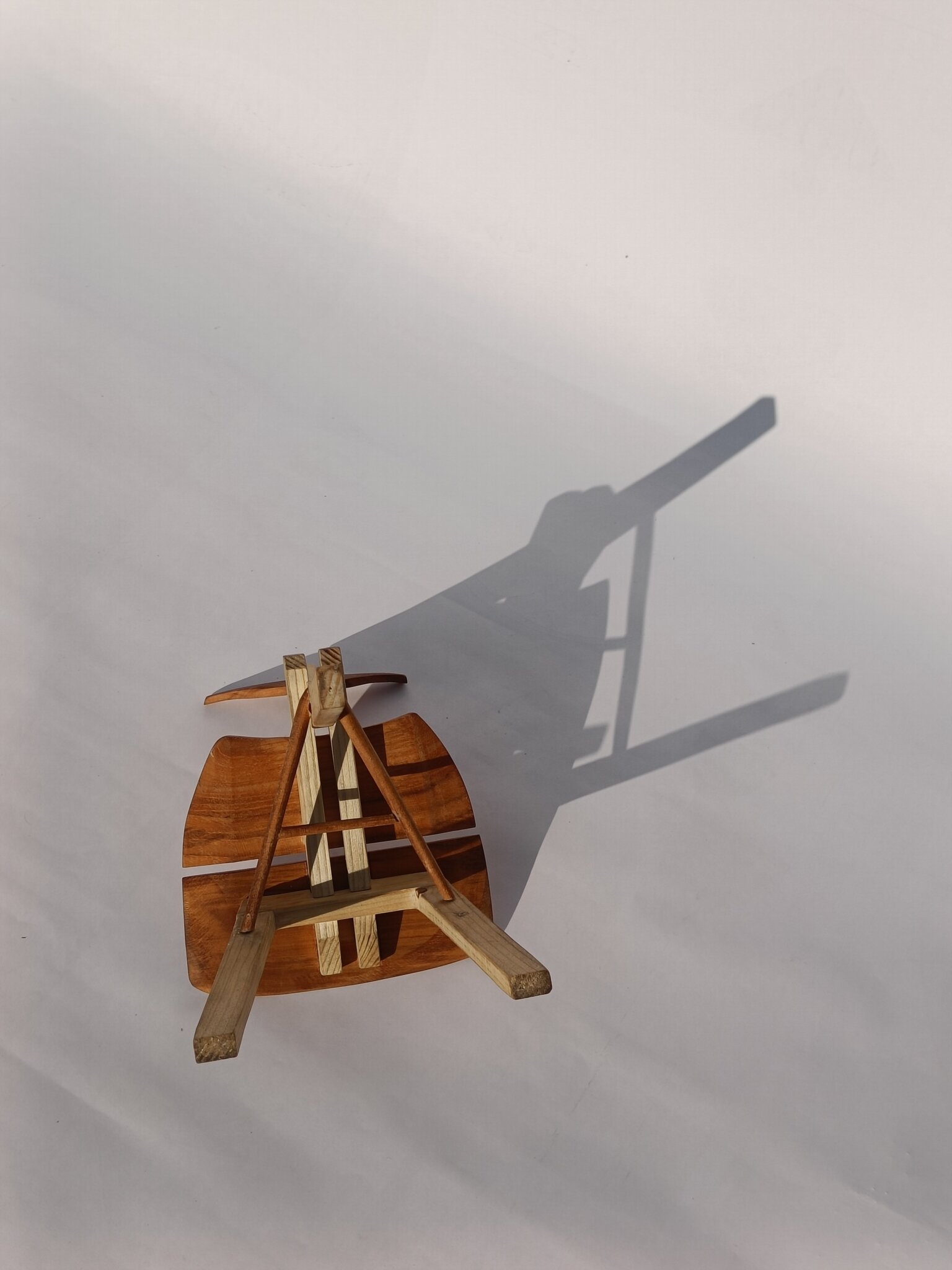
In contrast, the seat, backrest, and tie members are made from thin sections of Teak, creating a visual contrast within the centrally cantilevered structure. The three-legged configuration reduces material usage and explores alternative approaches to balance and load distribution. While functional, stability remains an area for further refinement. Overall, the chair demonstrates material honesty, structural intent, and a clear relationship between form, function, and fabrication.
- srishti bisht
Gallery