- shaurya parekh
About the project
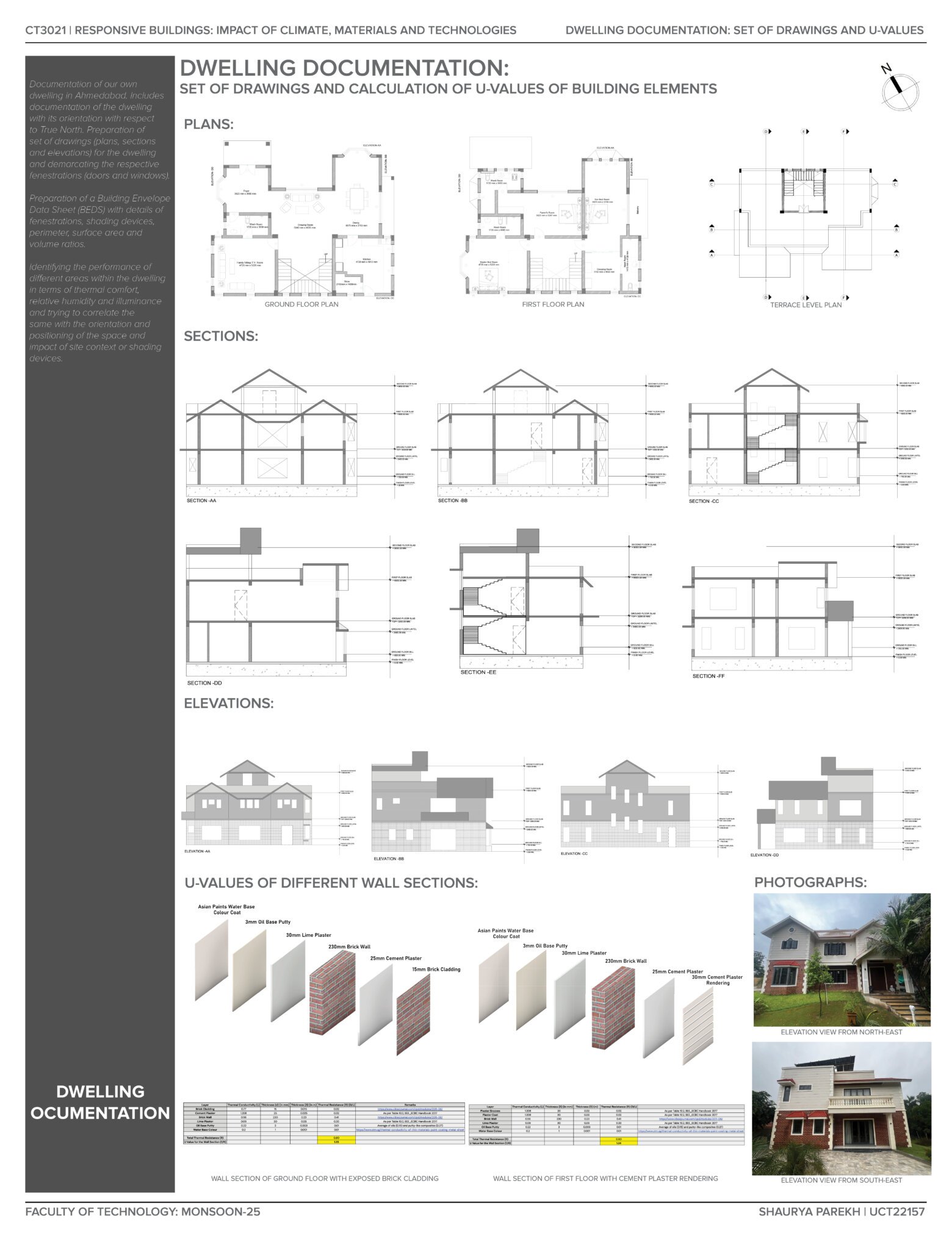
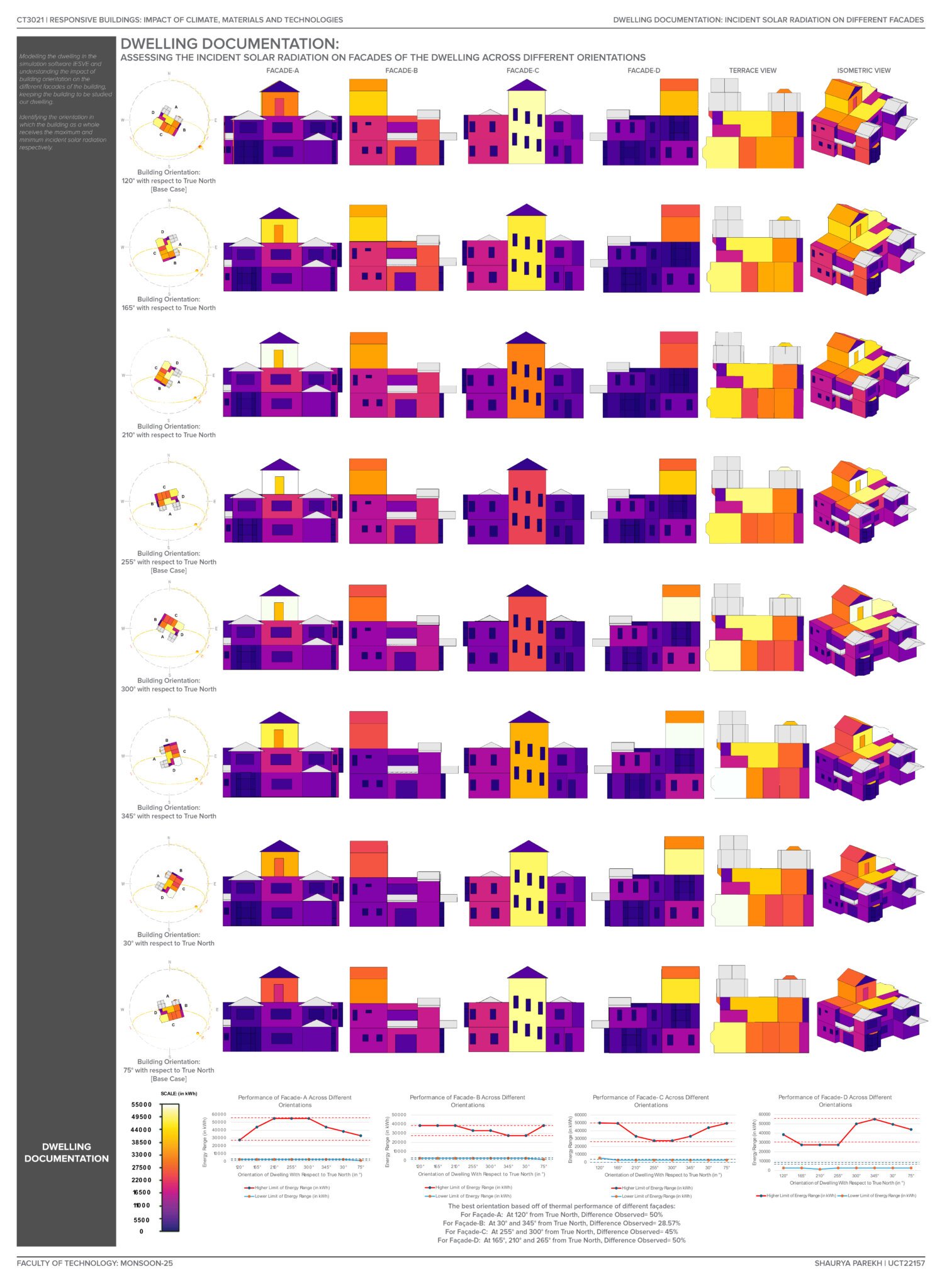
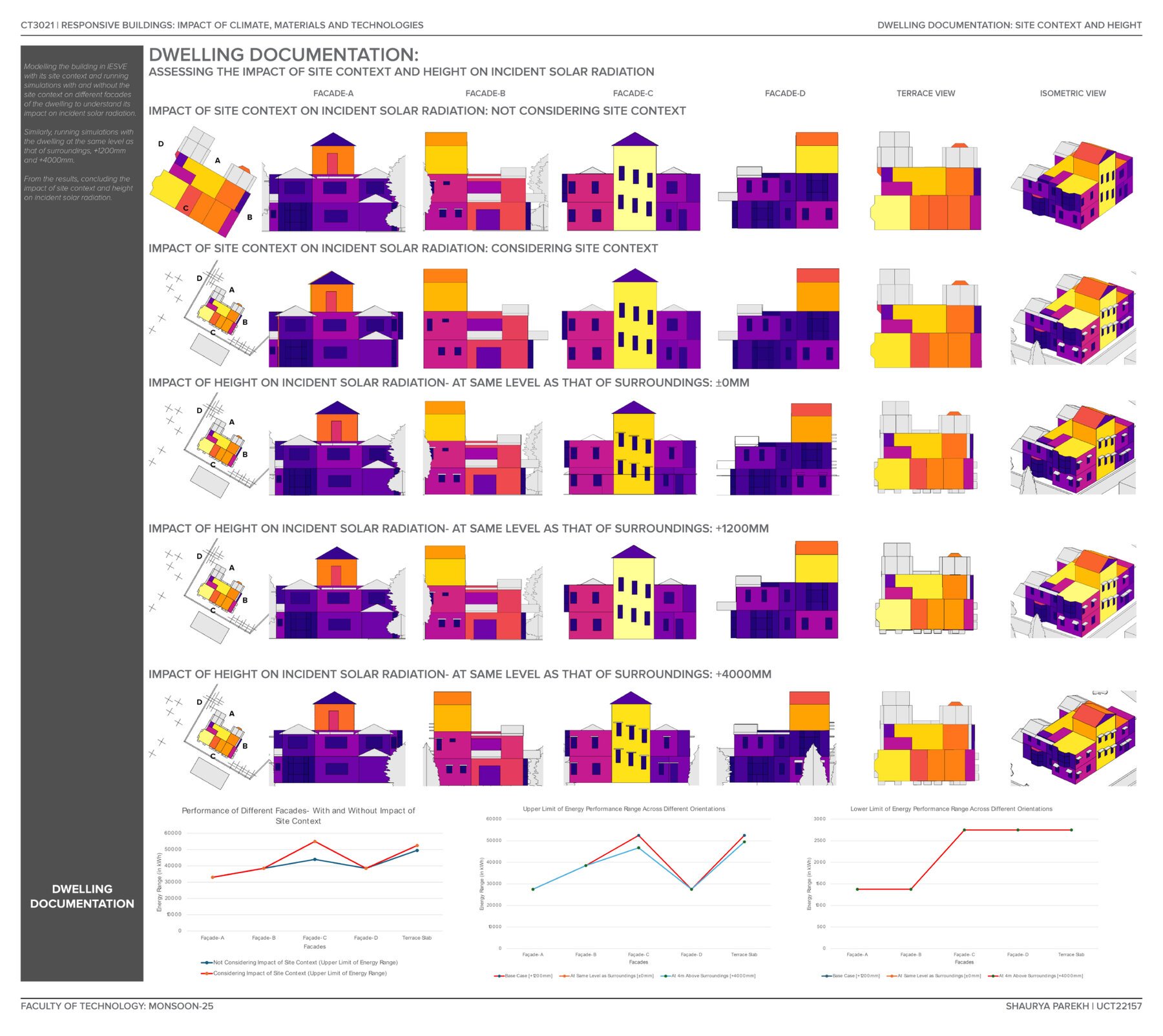
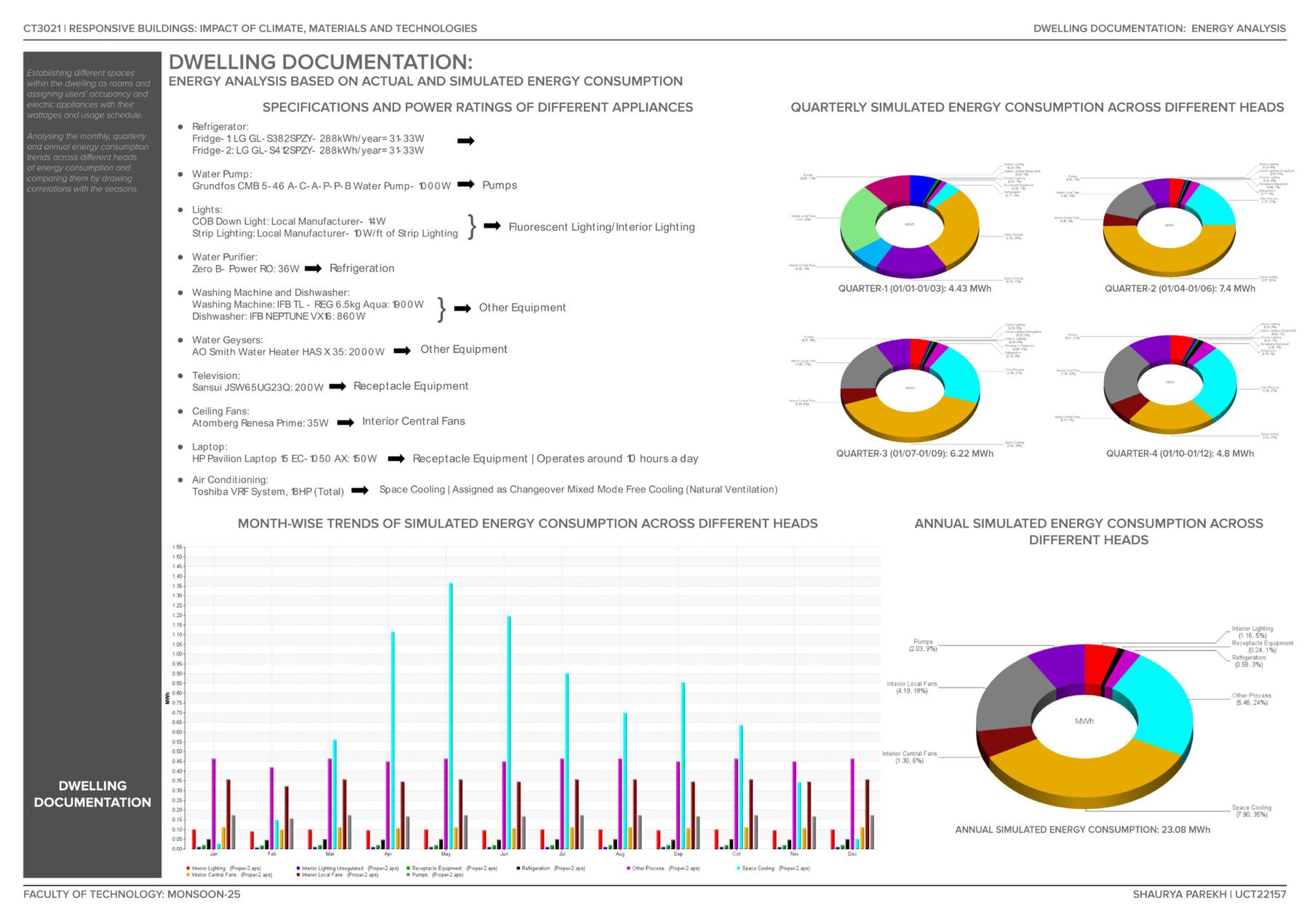
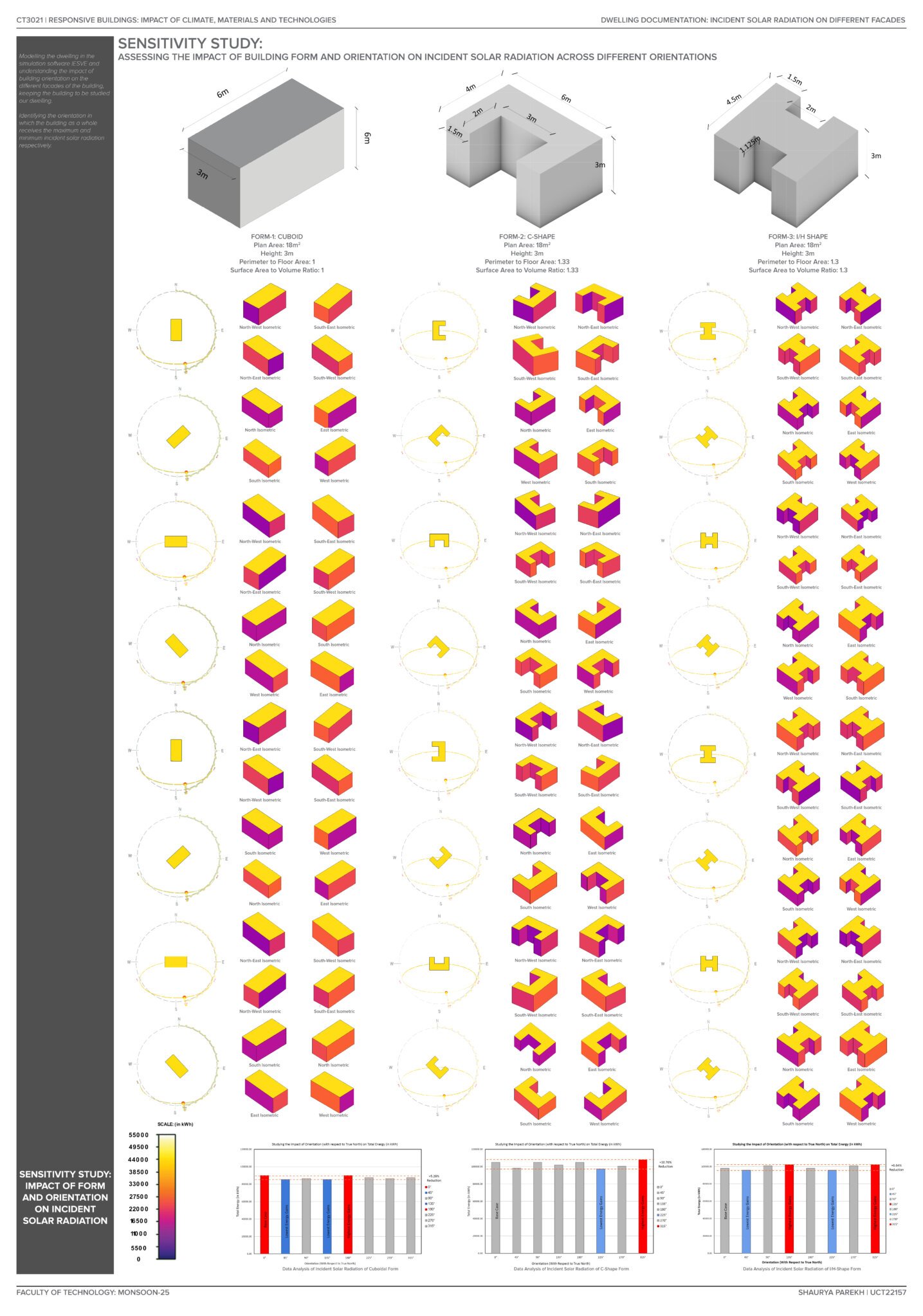
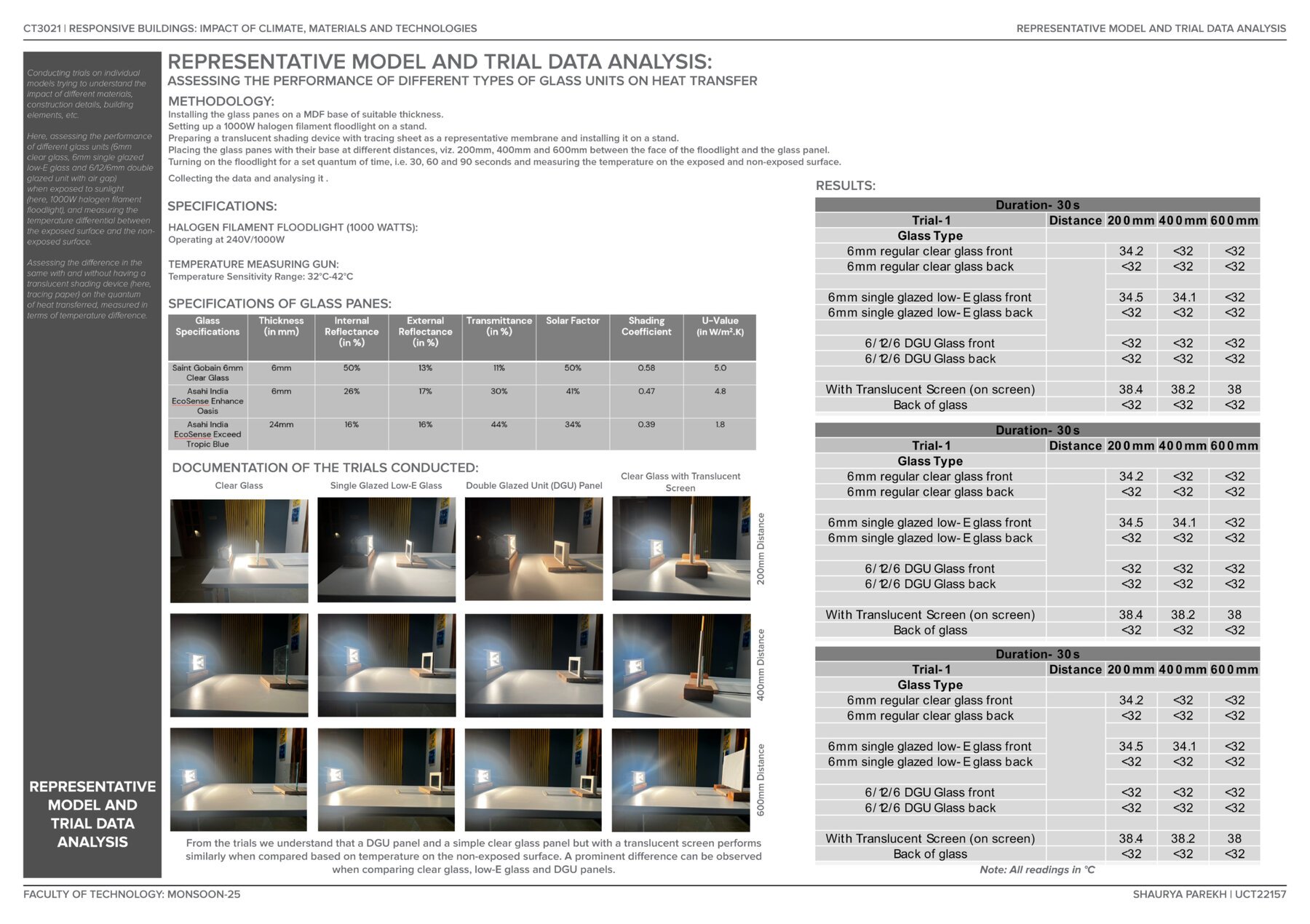
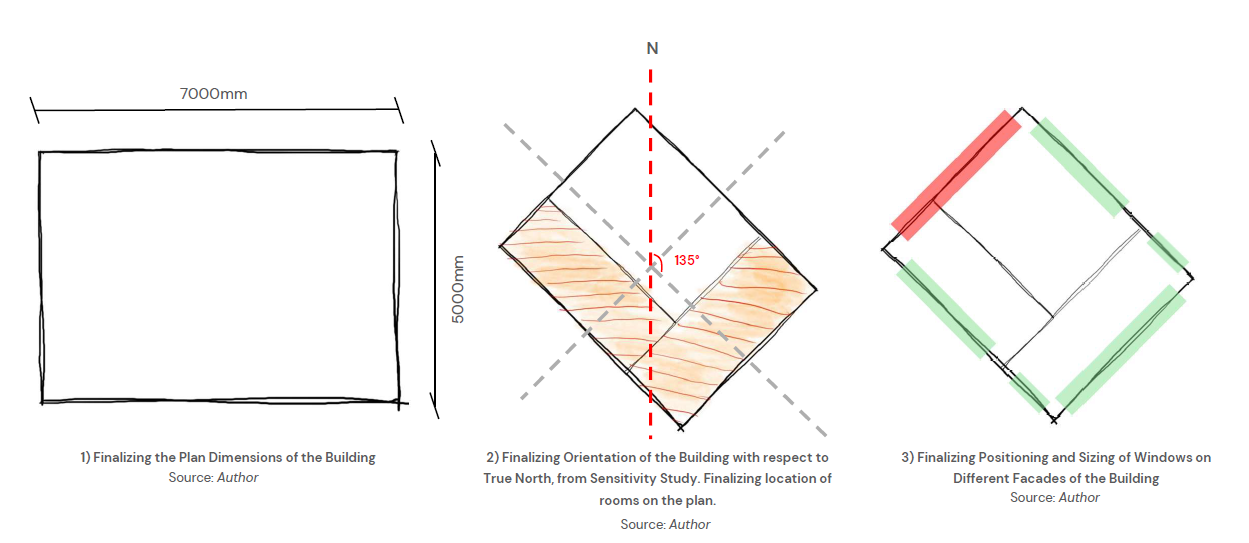
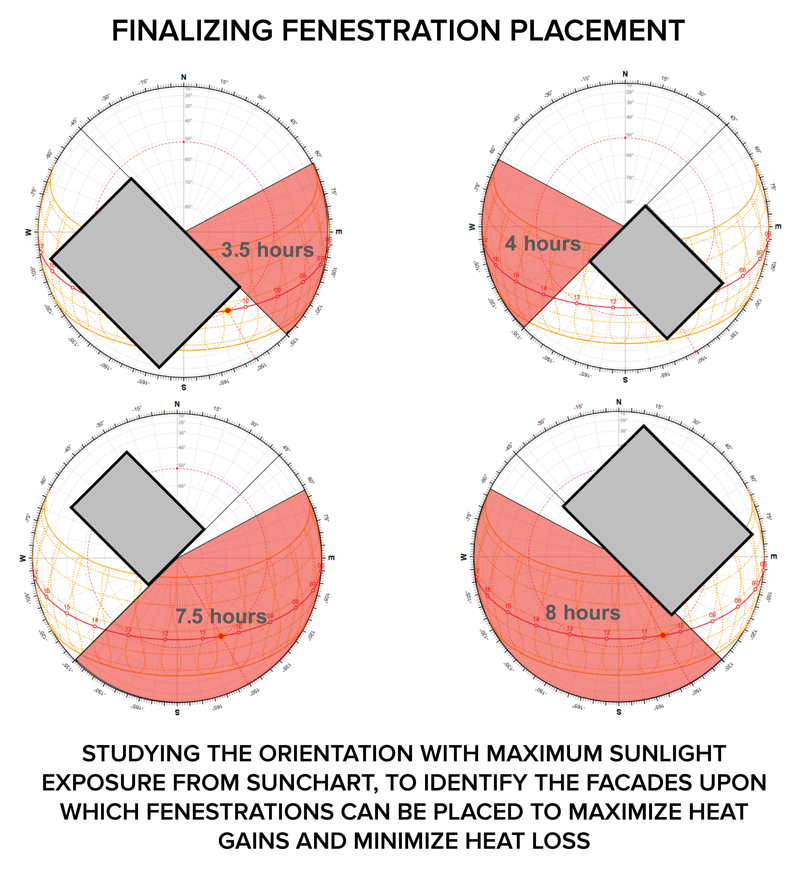
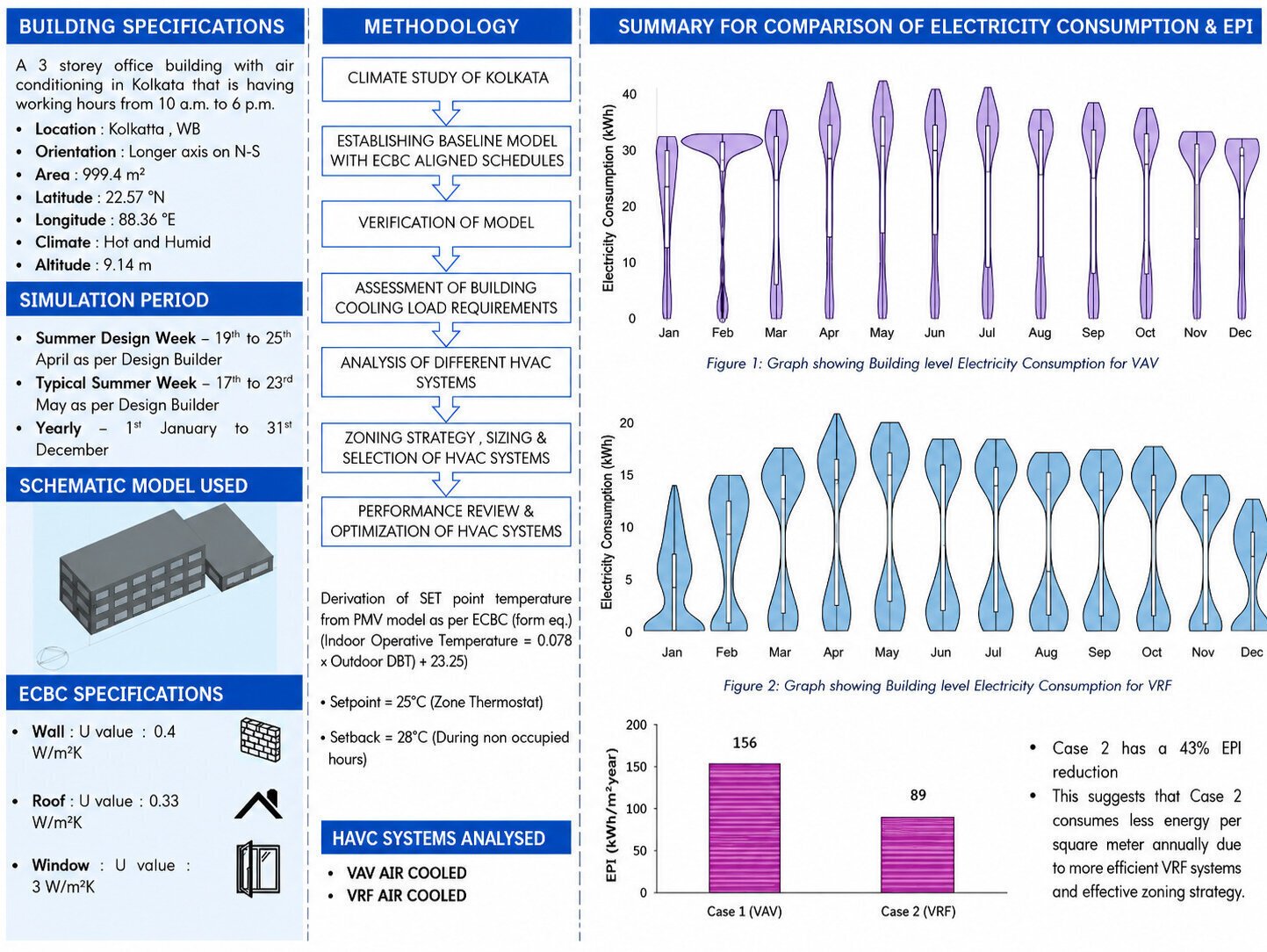
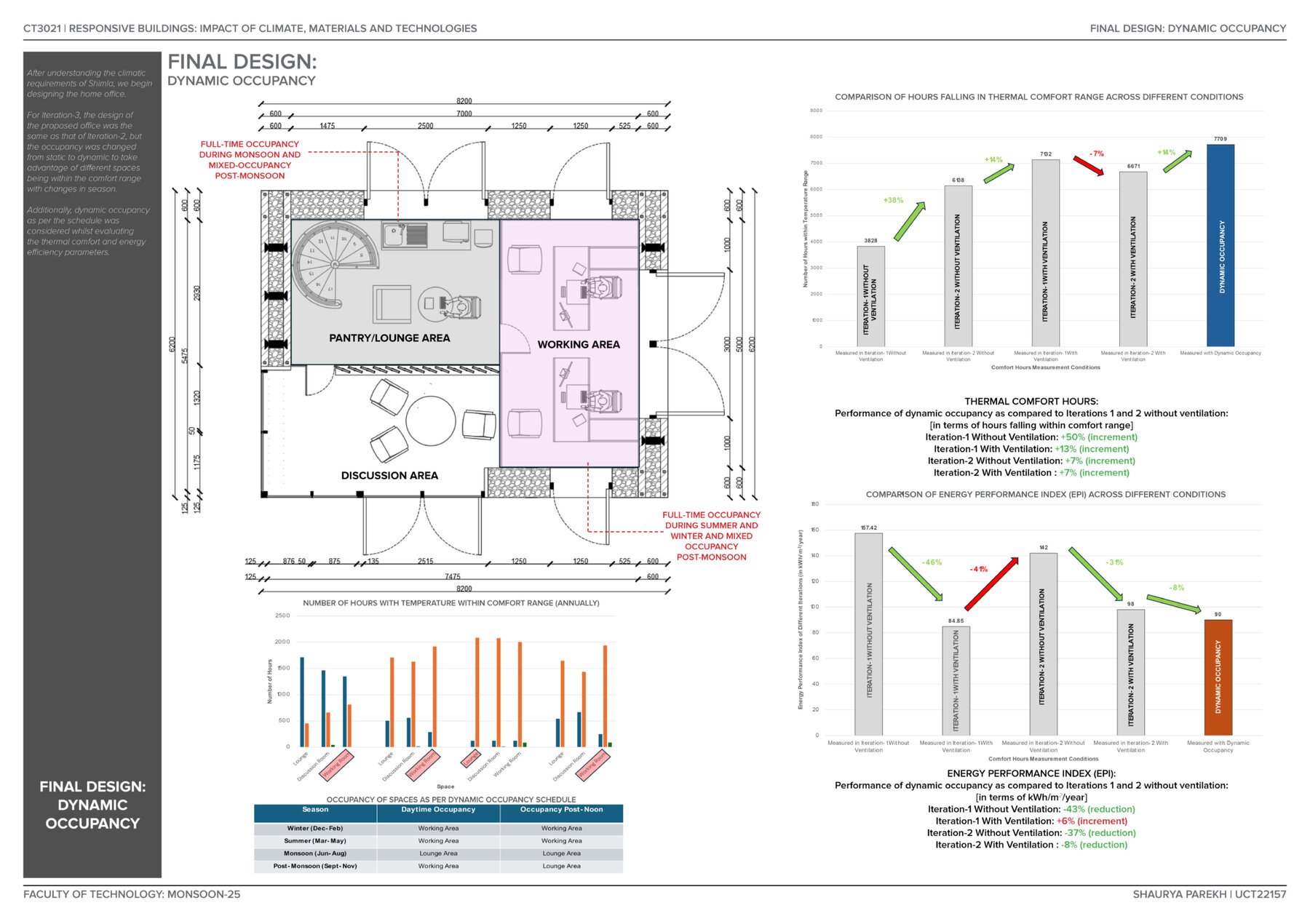
Real estate development is one of India’s most energy and resource-intensive sectors, contributing nearly 40% of carbon emissions. This studio explored passive strategies, design techniques, and materials that reduce reliance on active systems for comfort. The compilation includes exercises such as analysing our dwelling’s luminous and thermal performance, and energy use which helped the students establish the understanding of building dynamics and impact of different components, before working on the final project that included conducting an extensive climate study for a site where we designed a home office for an environmental-consultant couple. Various design and space occupancy iterations were conducted and compared based on the number of hours within the established adaptive thermal-comfort range and Energy Performance Index (EPI) values.
Approach
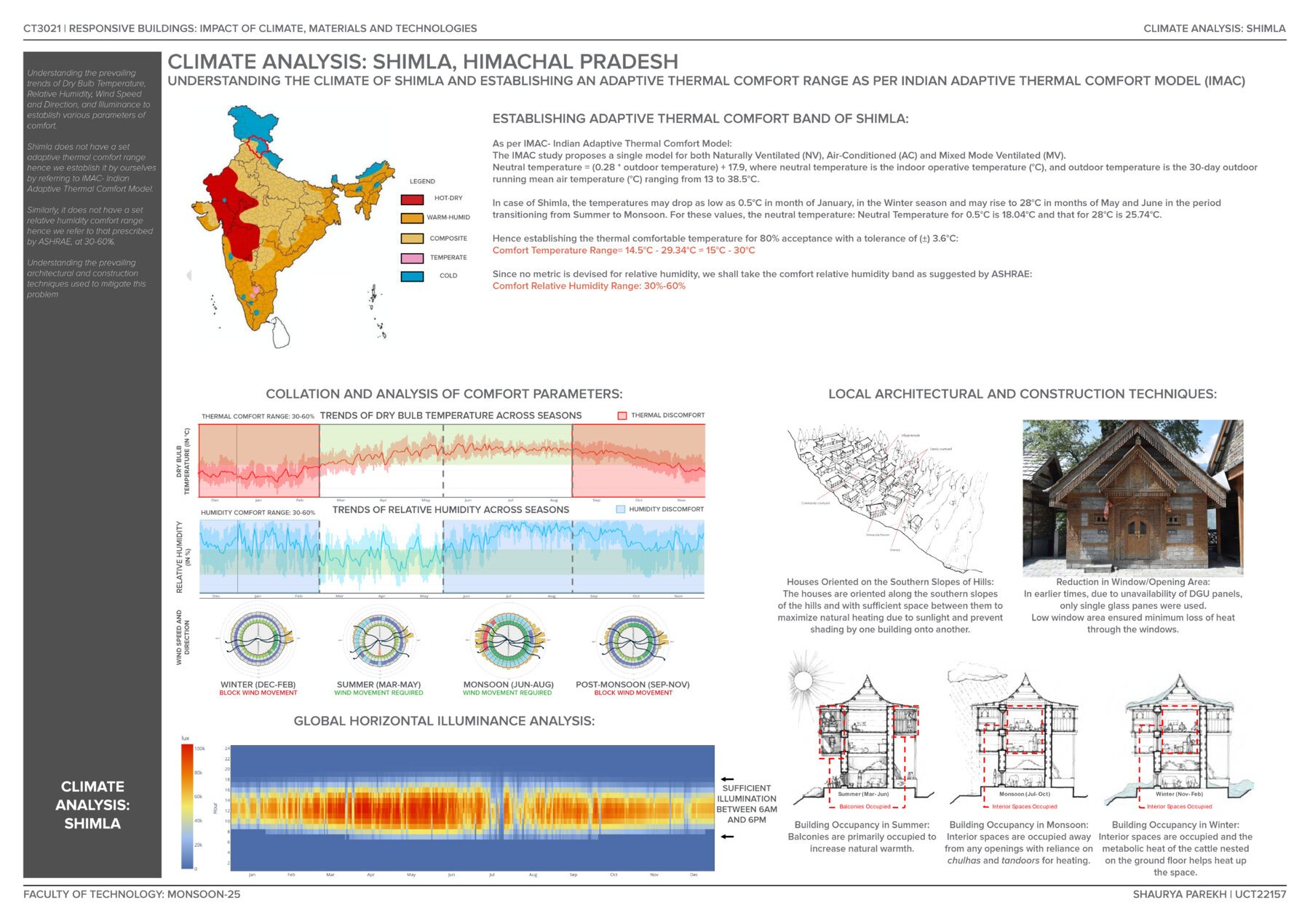
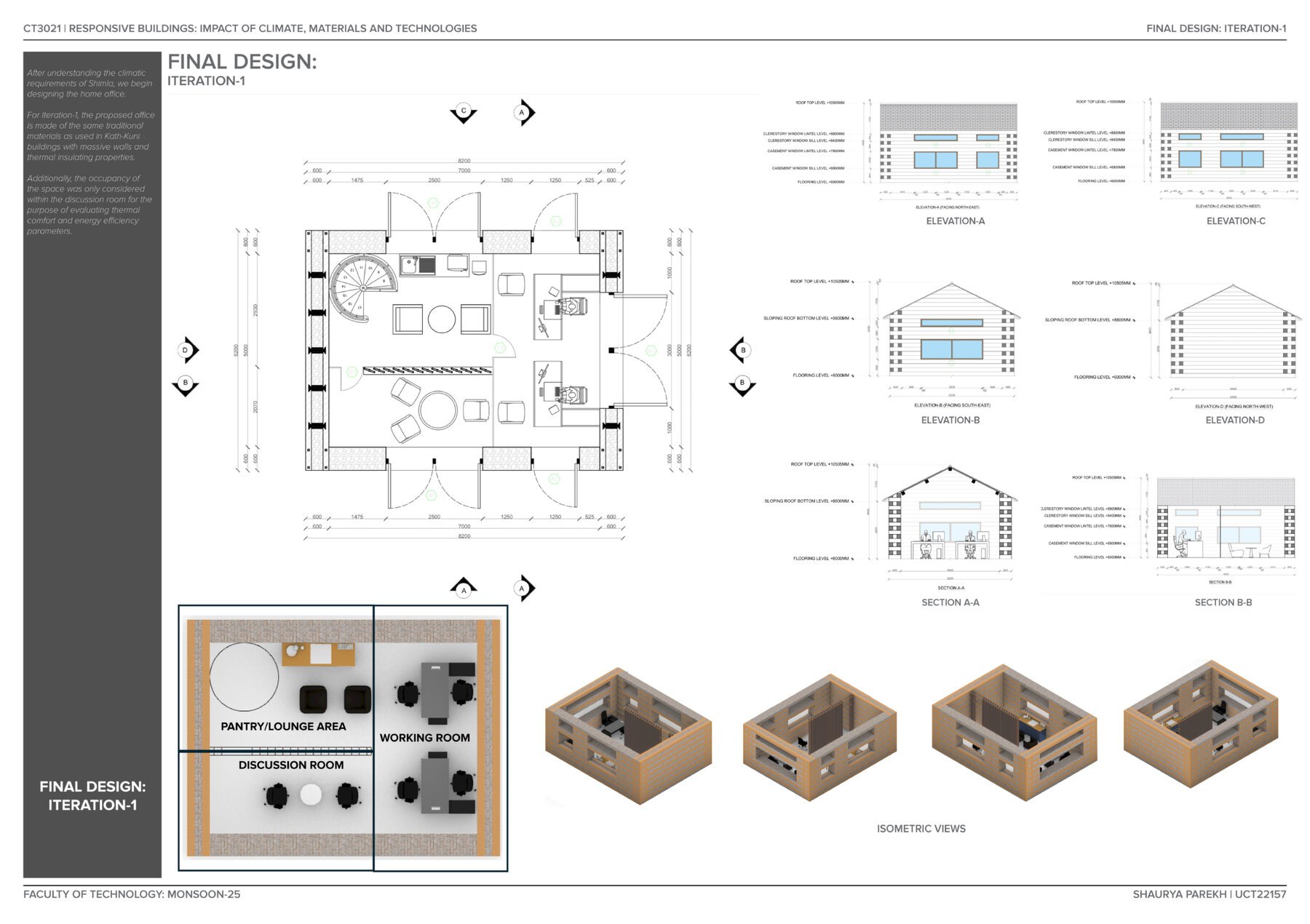
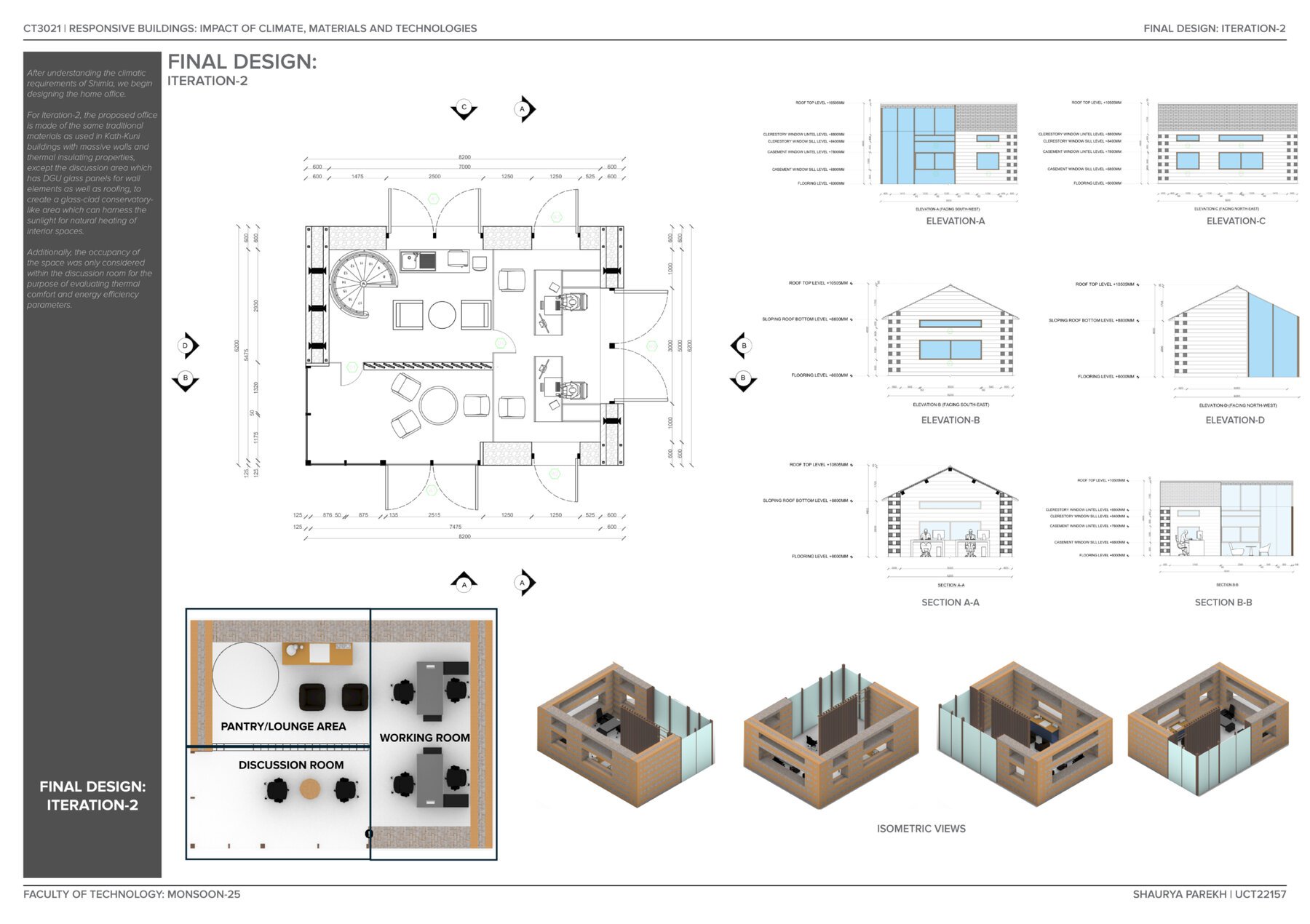
A house-office designed at the G+2 floor in Shimla, Himachal Pradesh, for an environmental consultant couple. The structure is designed keeping in mind the traditionally used materials and construction technique- Kath Kuni. Traditional buildings were studied by conducting secondary research and their building elements as well as material properties (thermal and illuminance) were calculated, which helped understand the requirement of using certain materials and the need for providing certain thicknesses to specific building elements. Over and above making the building look visually appealing, the intent behind conducting the iterations was to achieve a certain level of energy efficiency (measured in terms of Energy Performance Index- EPI, in kWh/m2/year) with an adequate number of hours measured within the comfort thermal range. In addition to this, the space was also designed to be naturally well ventilated and have sufficient ingress of daylight, providing the occupants to be connected to nature.
Output
In the context of modern-day energy efficient buildings, wherein energy efficiency is established by using complex materials with a high embodied energy, or deploying resource-intensive technologies, the study conducted by the means of this project helps us understand how by deploying dynamic occupancy of different zones within a space, helps increase the energy efficiency of the space whilst also maintaining reasonable thermal comfort for the occupants.
The final output culminates the learnings of different design iterations and introduces the concept of dynamic occupancy, which helps increase the thermal comfort hours without making any changes to the built form. Different zones within the space are proposed to be occupied during different seasons to maximise the occupant thermal comfort whilst also minimizing the reliance on active means of establishing it.
- shaurya parekh
Gallery