- jehat g mathai
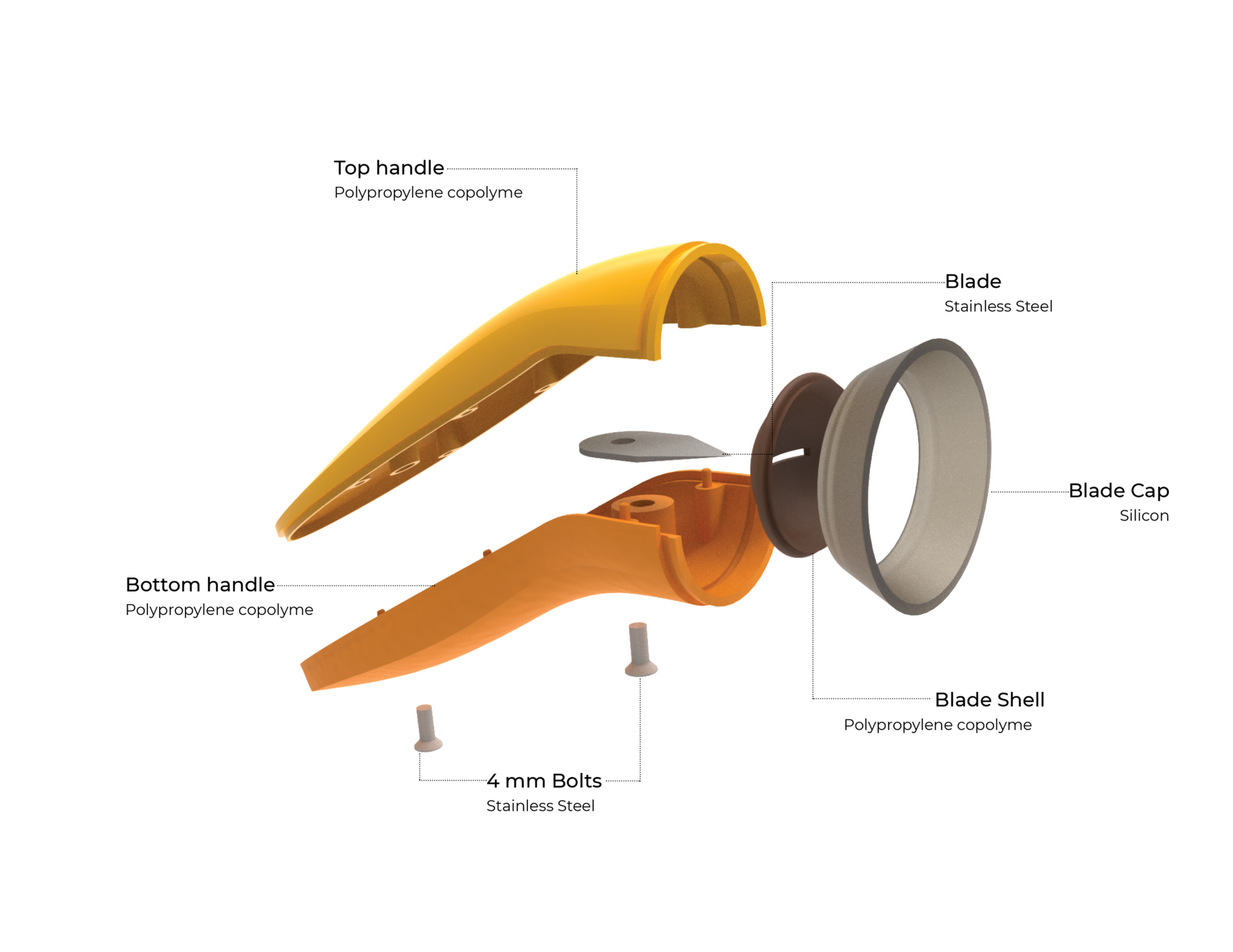
Exploded view of product with number of parts and material explained.
The walnut cracking device is created to provide household users with a safe, efficient, and user-friendly solution for opening walnuts without damaging the kernel inside. Unlike traditional nutcrackers that often crush or break the edible part, this design uses a precision-insert blade and a twisting action to split the shell cleanly into two halves, preserving the kernel’s shape and quality.
The operation is simple — the user positions the walnut so the blade enters the top section, applies a gentle twist, and the shell opens effortlessly. This controlled cracking process ensures minimal force is needed, reducing strain on the hands and preventing accidental injury.
The product’s ergonomic handle is shaped for comfortable grip and ease of use, making it accessible for people of all ages. Its lightweight construction allows for convenient handling while maintaining durability. Made from high-quality plastic combined with a stainless steel blade, it offers both safety and long service life.
Versatile in application, the device accommodates walnuts of various sizes and can also be used for similar nuts. By combining precision, comfort, and safety, this design turns the often tedious task of cracking walnuts into a quick, enjoyable, and mess-free experience for everyday use.
The project followed a structured, user-centered design approach to develop a market-ready walnut cracking device. It began with identifying everyday problems faced by household users, particularly kernel breakage, safety issues, and excessive effort with traditional nutcrackers. Initial research included studying existing products, understanding user behavior, and defining clear design requirements. Concept ideation explored multiple mechanisms, focusing on controlled cracking and ease of use. Selected concepts were refined through sketches, CAD modeling, and material selection, keeping manufacturing feasibility in mind. Prototypes were developed and tested to evaluate performance, ergonomics, and safety. User feedback played a key role in refining the form, grip comfort, and cracking efficiency. The final design balances functionality, simplicity, and cost-effectiveness, resulting in a lightweight, ergonomic, and reliable product suitable for household use and ready for market introduction.
The final outcome of the project is a functional, user-friendly walnut cracking device designed specifically for household use. The product effectively cracks walnuts by splitting the shell into two clean halves while preserving the kernel intact. It features a lightweight, ergonomic form that ensures comfort, safety, and ease of use with minimal effort. The design accommodates walnuts of various sizes and is developed using materials suitable for mass manufacturing. The project output includes a refined design concept, working prototype, material and manufacturing considerations, and a clear product positioning, making it a practical and market-ready kitchen tool.
Awards
- CEPT Gujral Foundation Award CEPT EXCELLENCE AWARDS Spring 2025 CEPT University
- jehat g mathai
Gallery
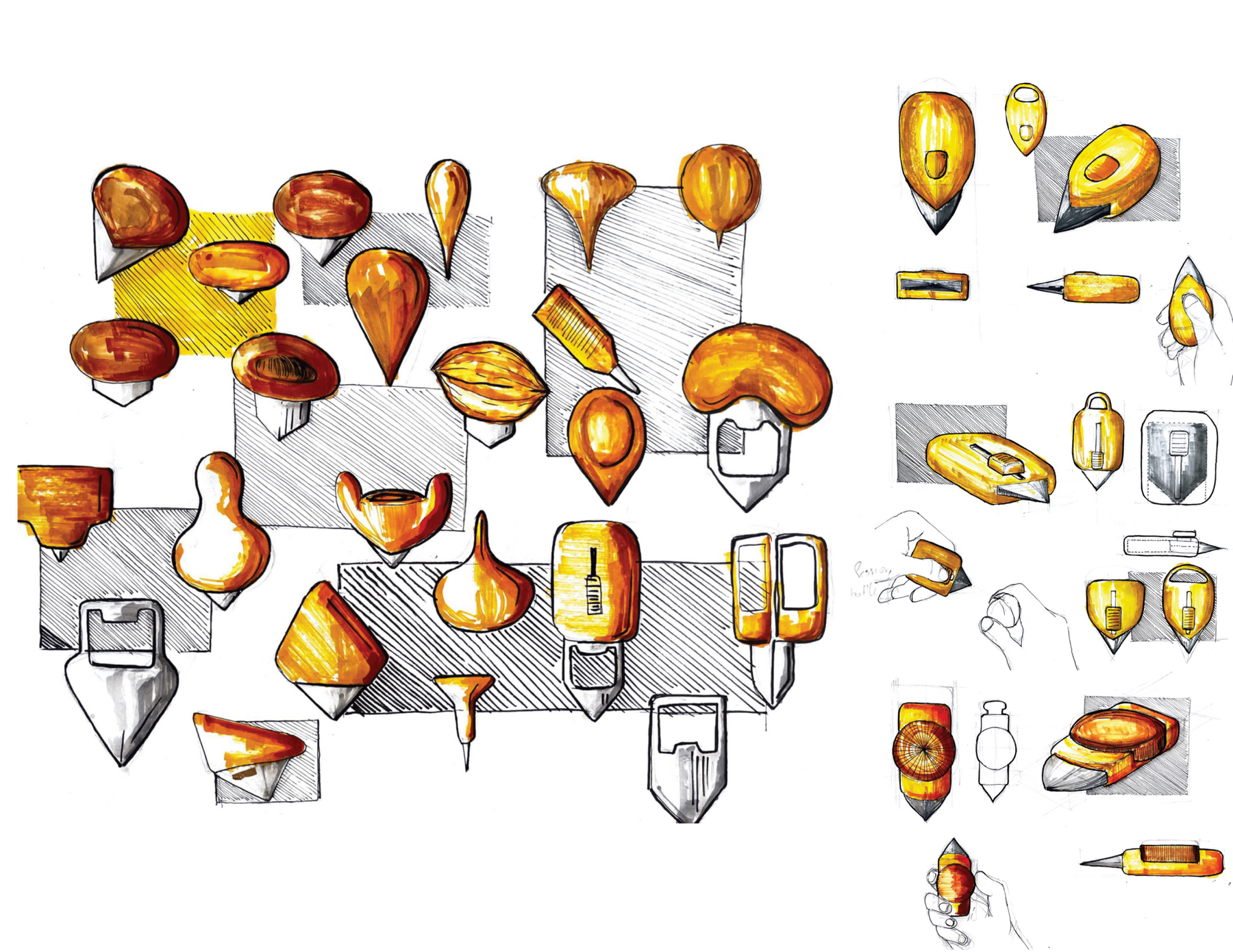
First concept ideation variation of the product
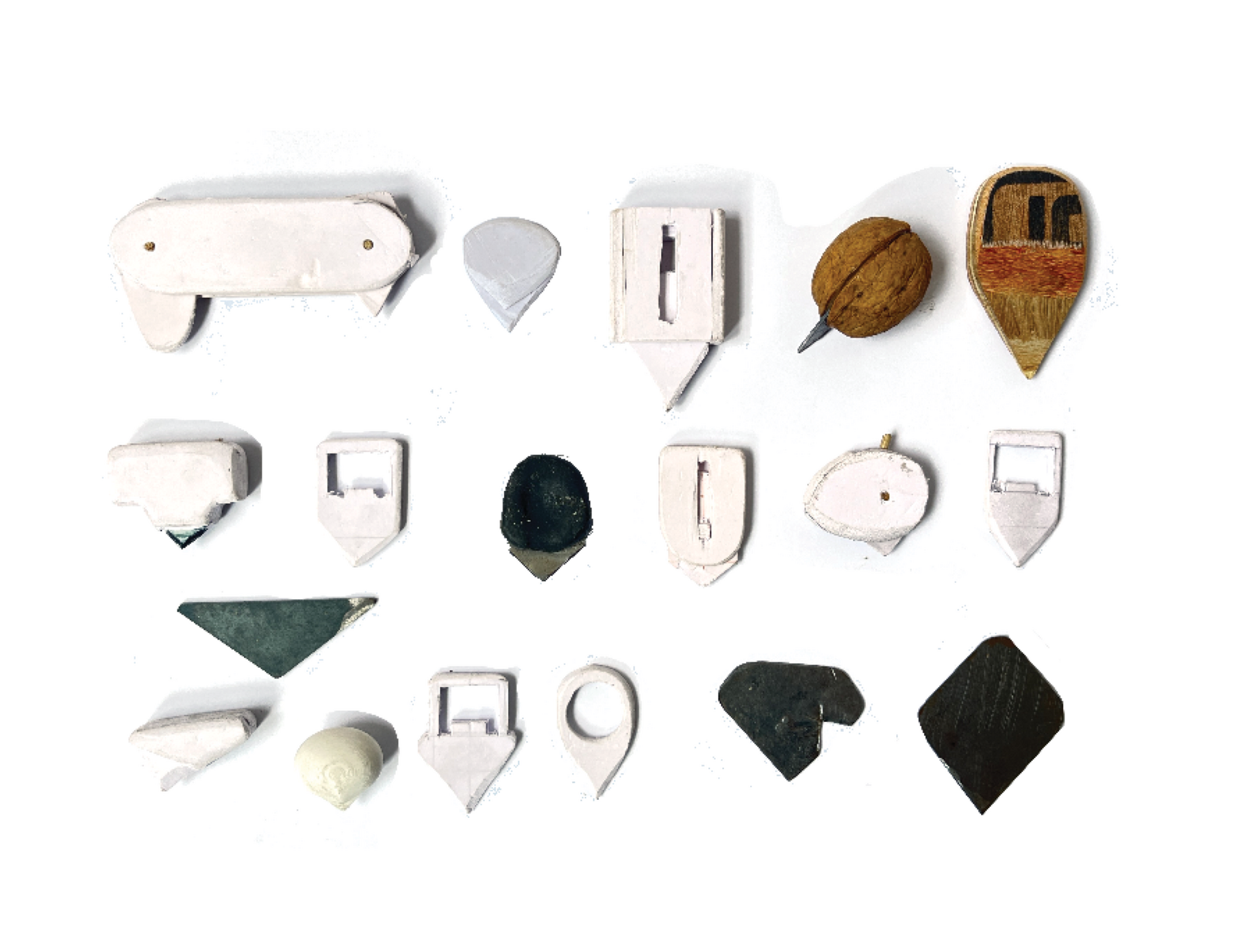
Concept 1 rapid Prototyping
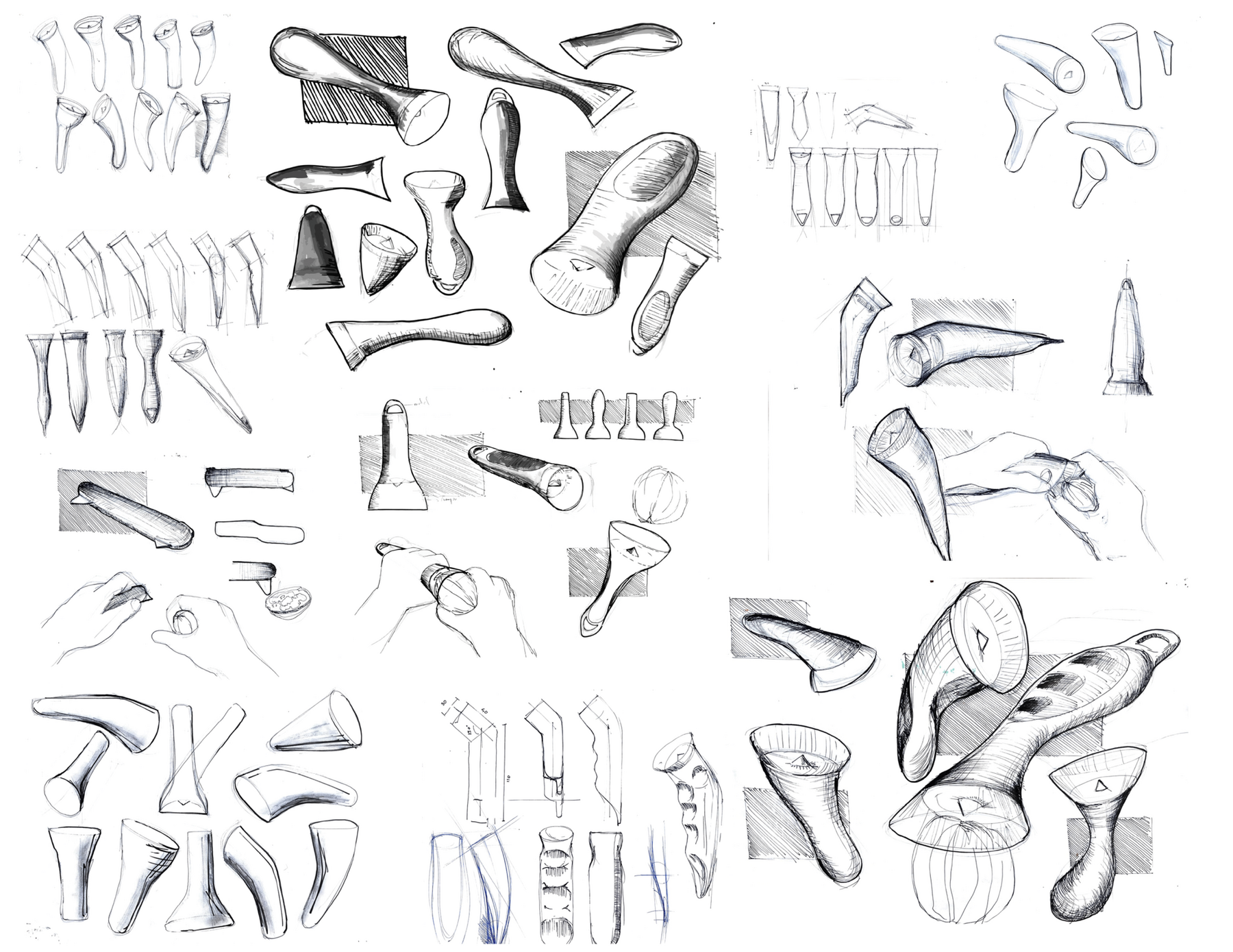
Ideation of the final concept sketches
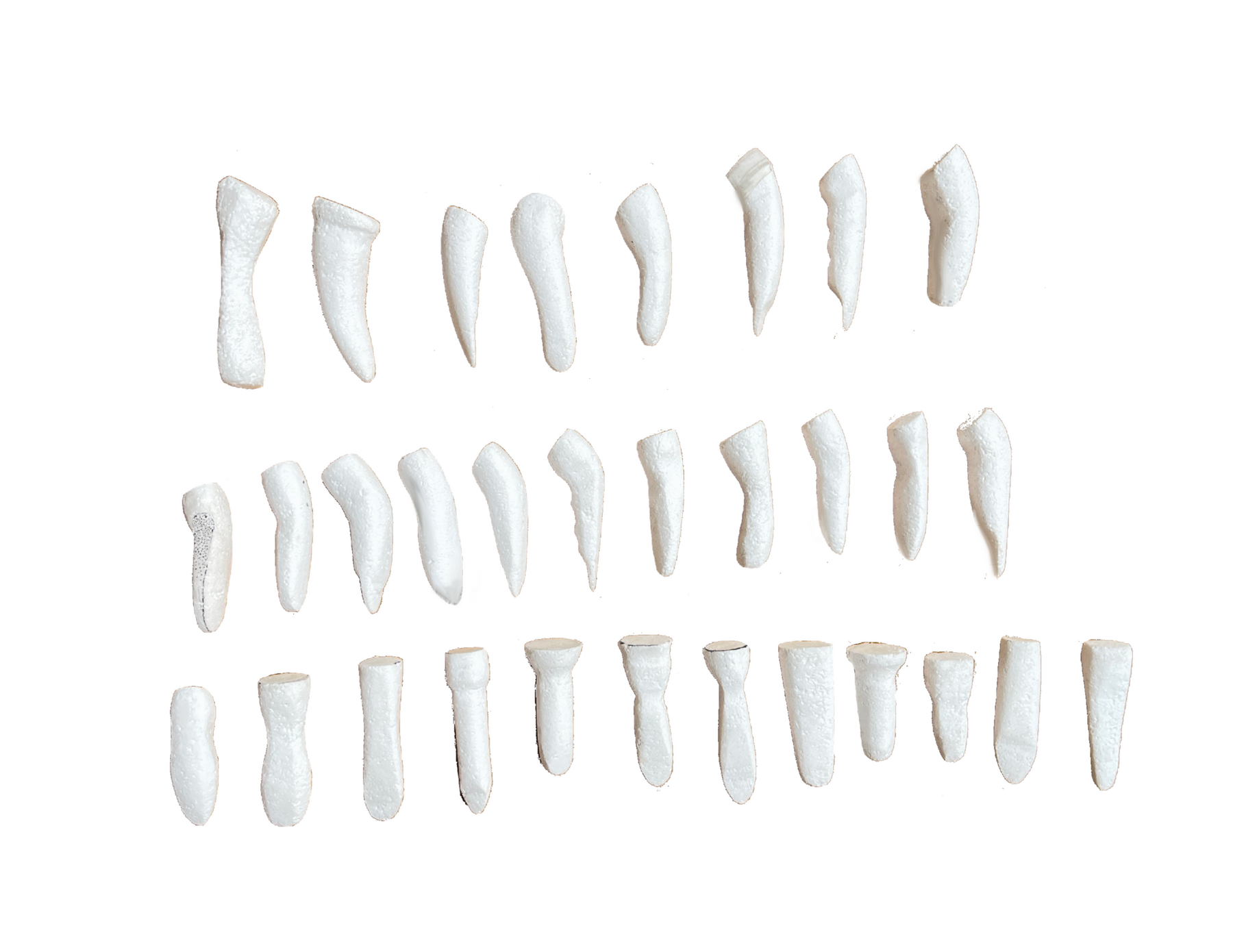
Form Iteration of final concept model
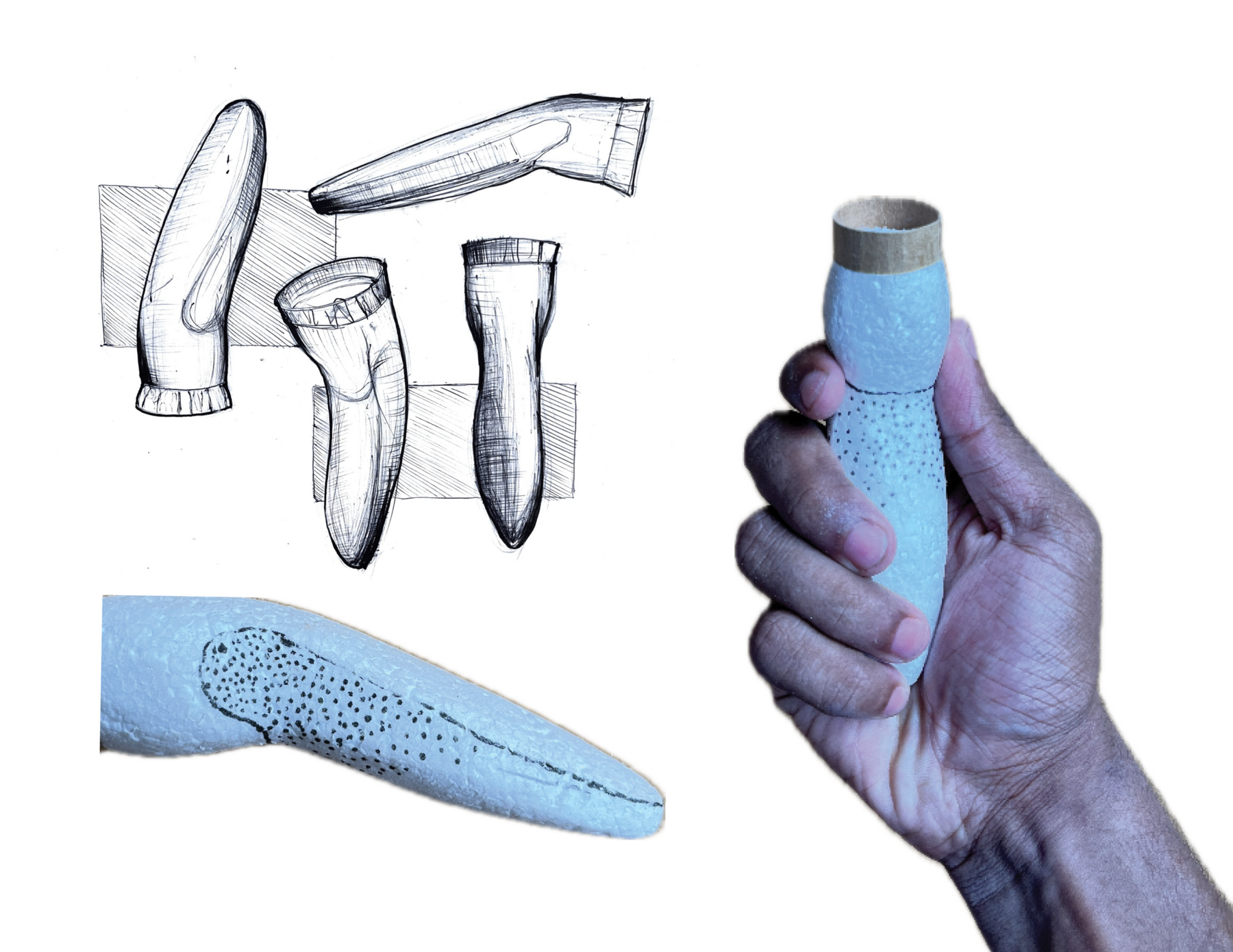
Final sketch and Form model
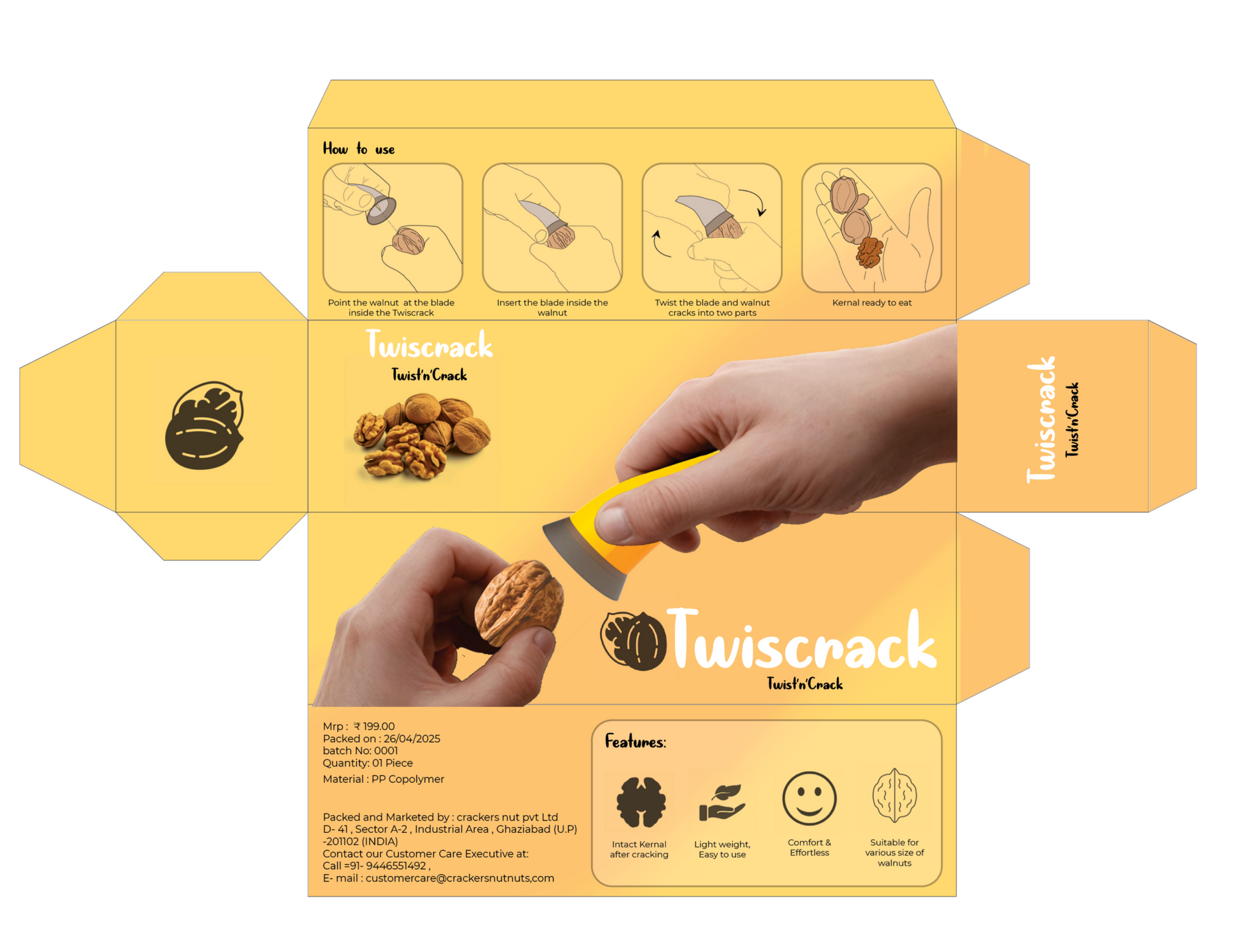
Final Packaging design of the product
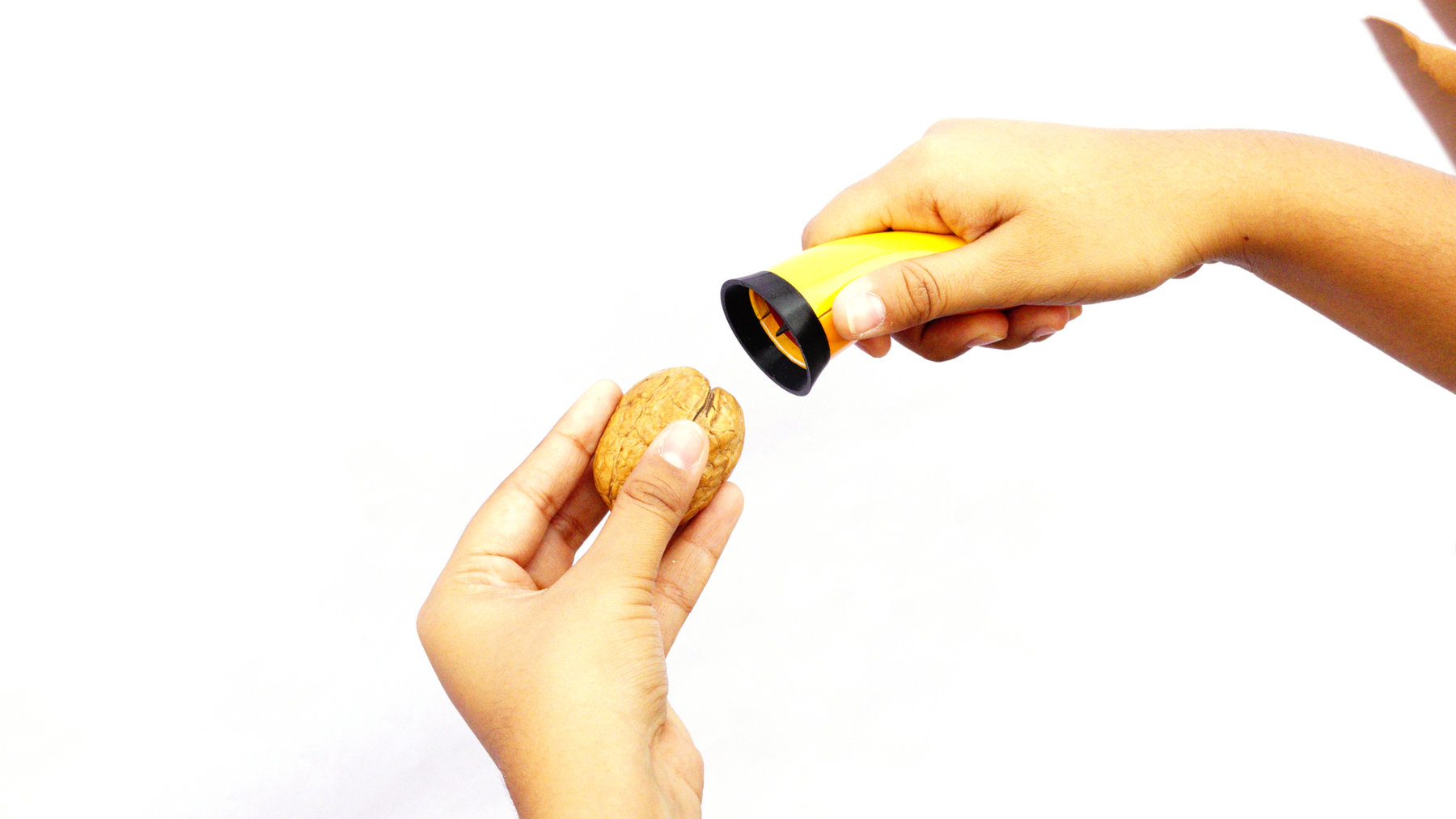
STEP 1 (Point the walnut at the blade inside the Twiscrack)
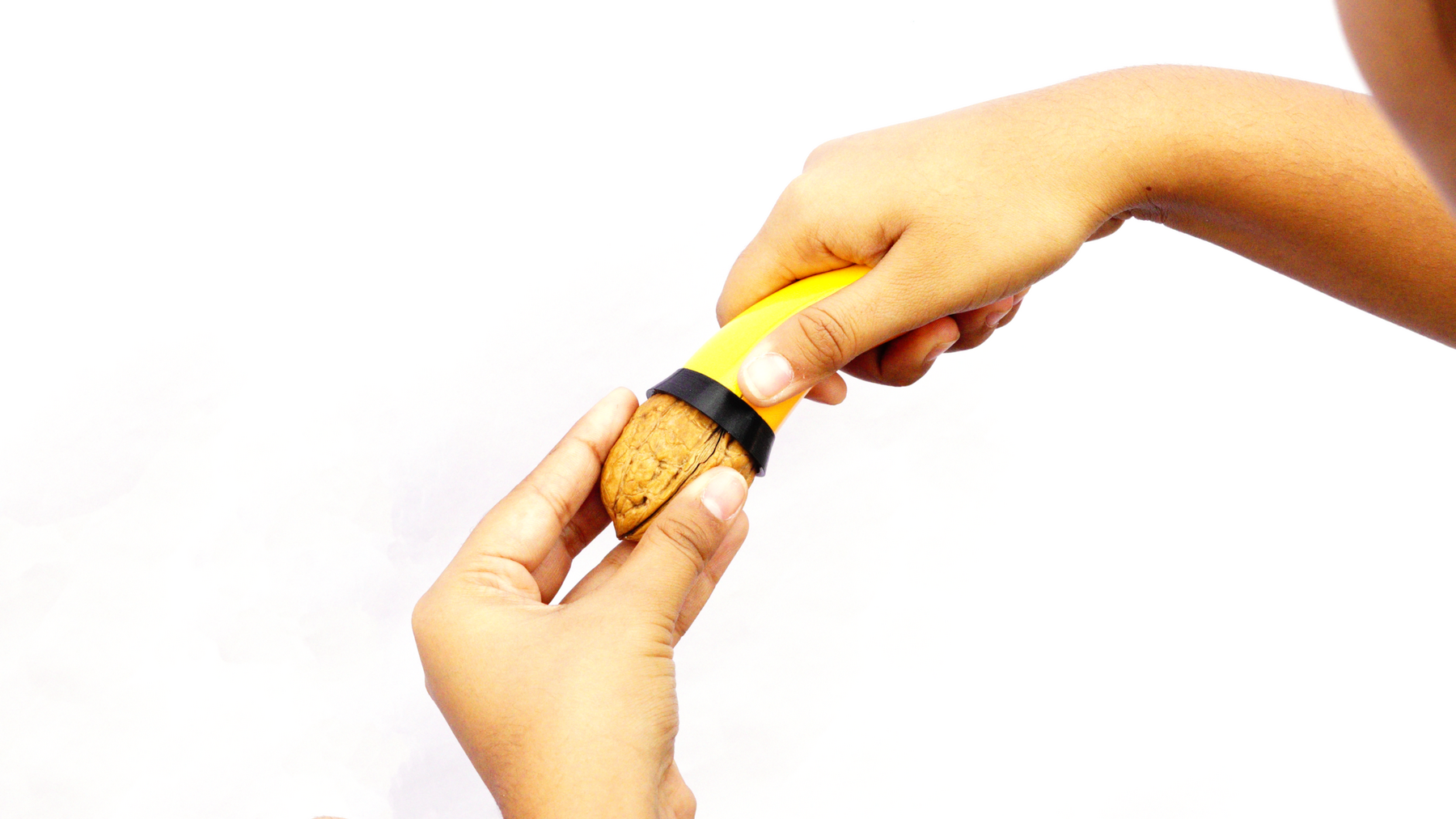
STEP 2 (Insert the blade inside the walnut)
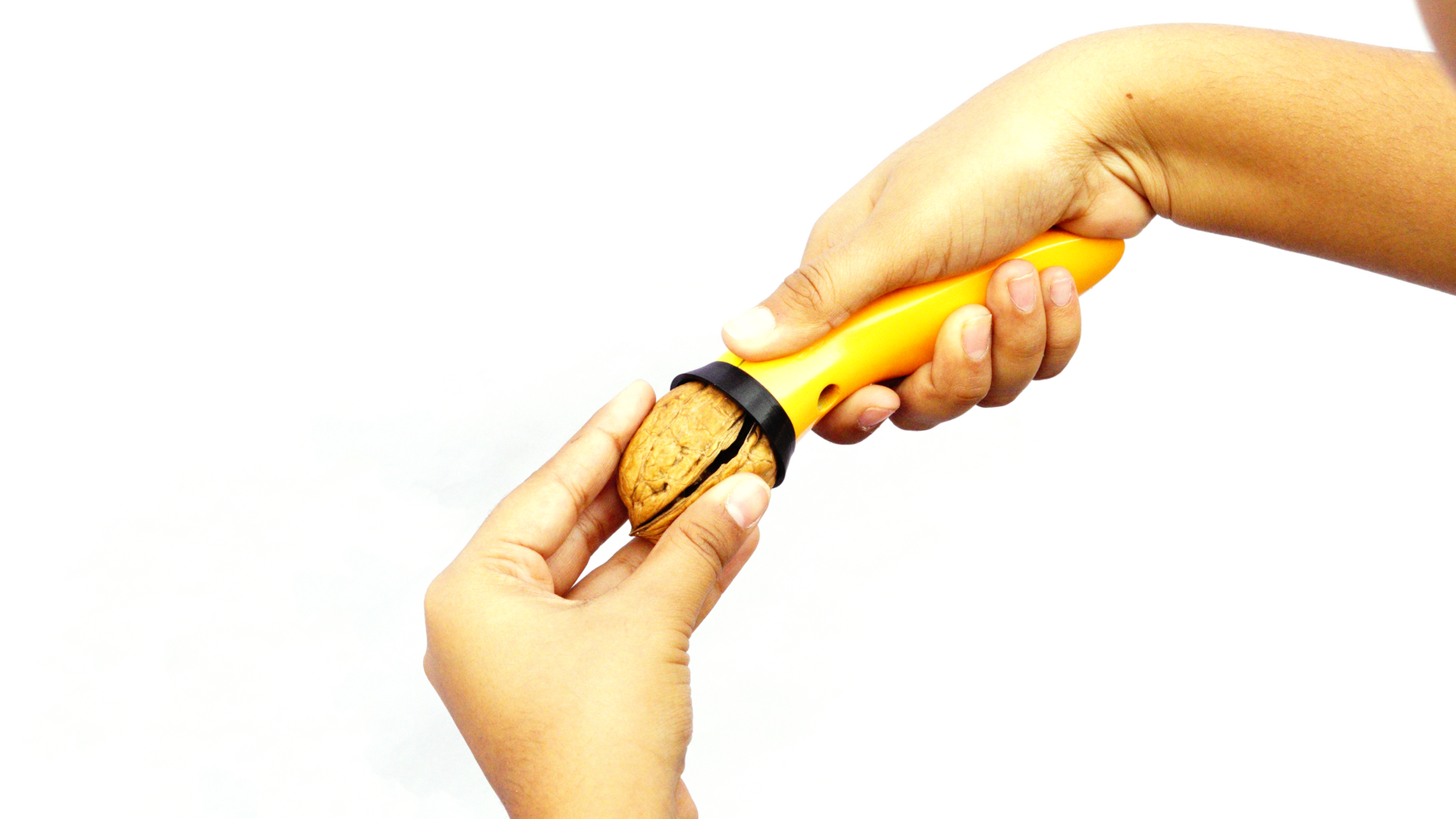
STEP 3 (Twist the blade and walnut cracks into two parts )
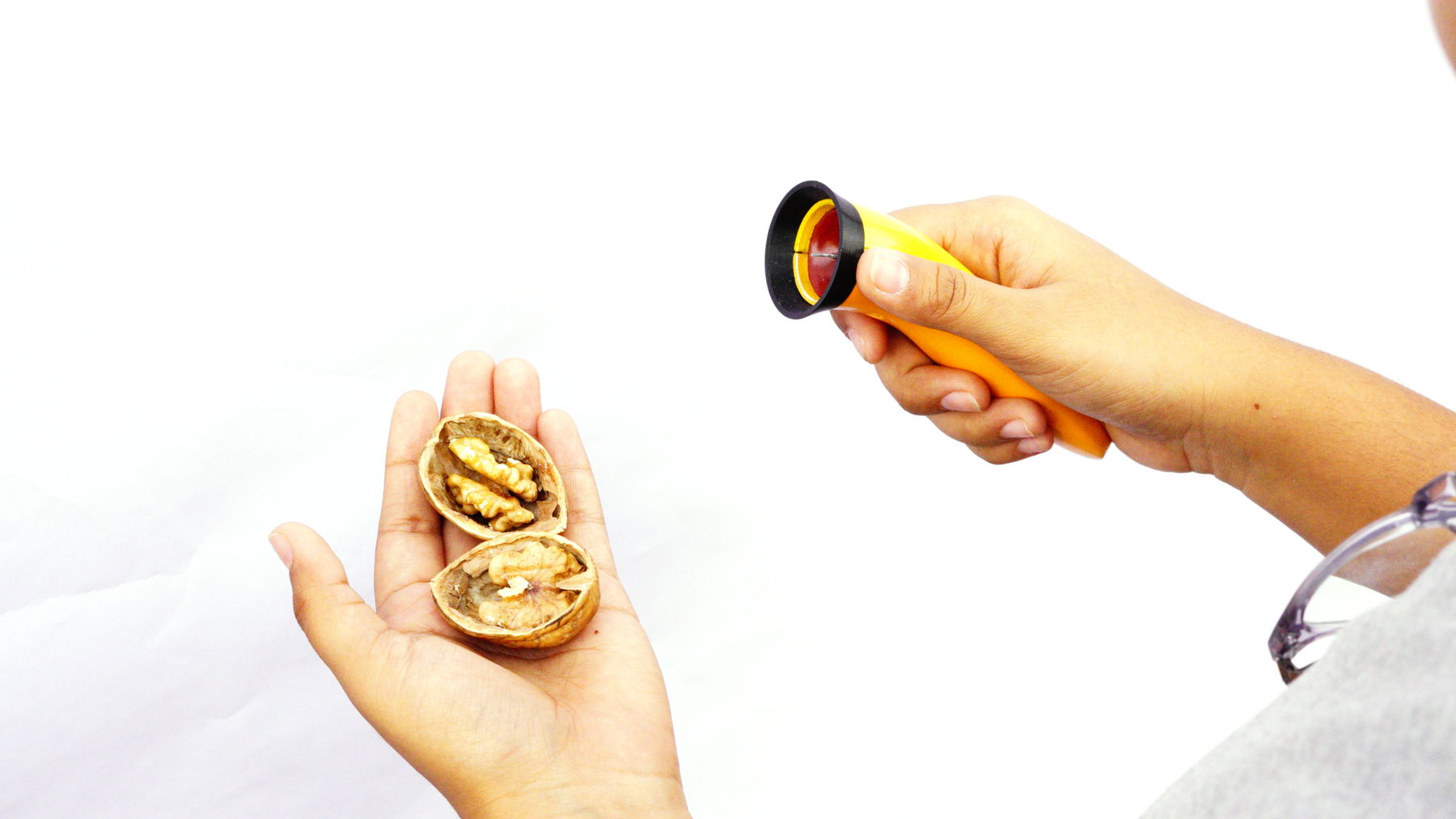
STEP 4 (Kernel ready to eat)
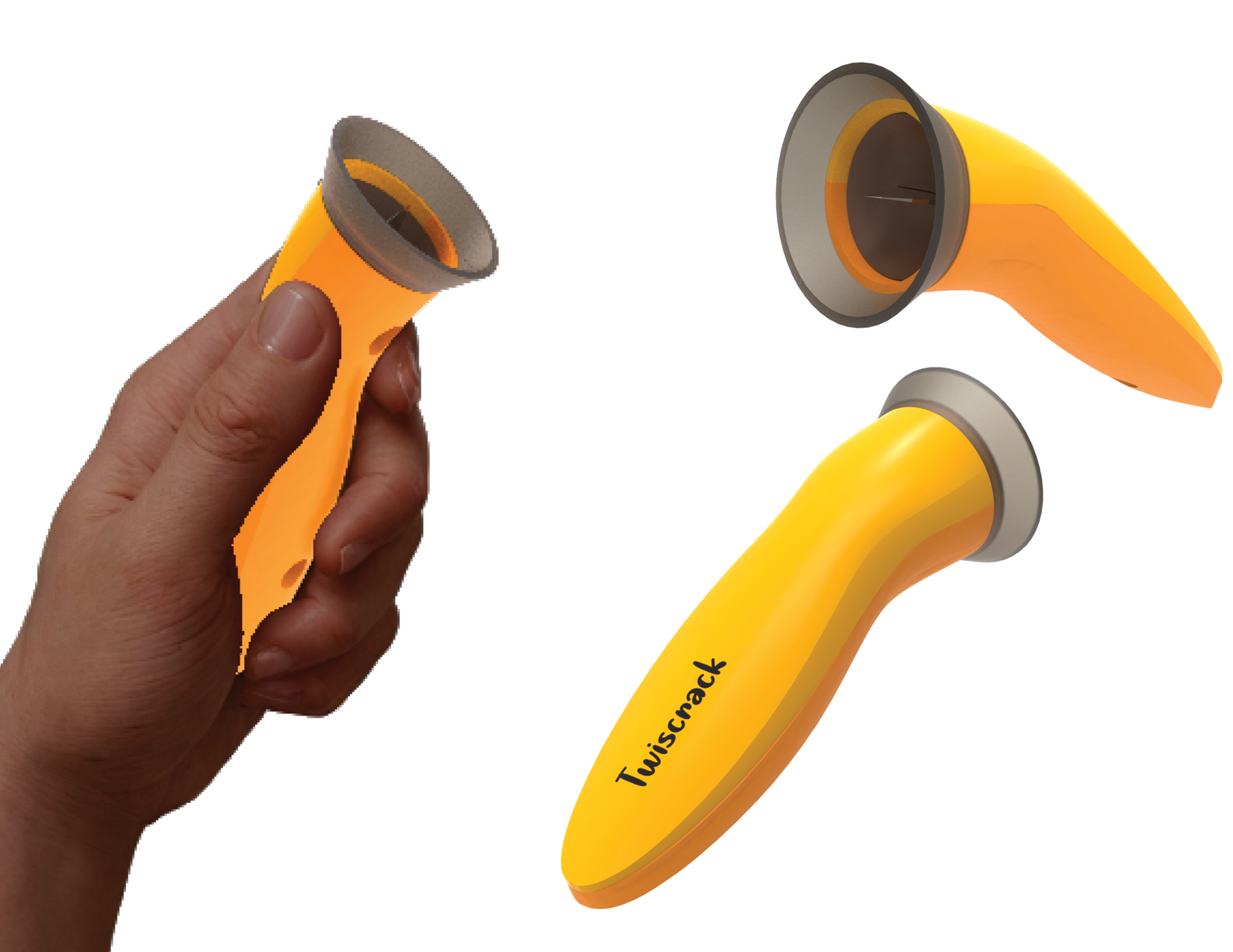
3D renders of the product.
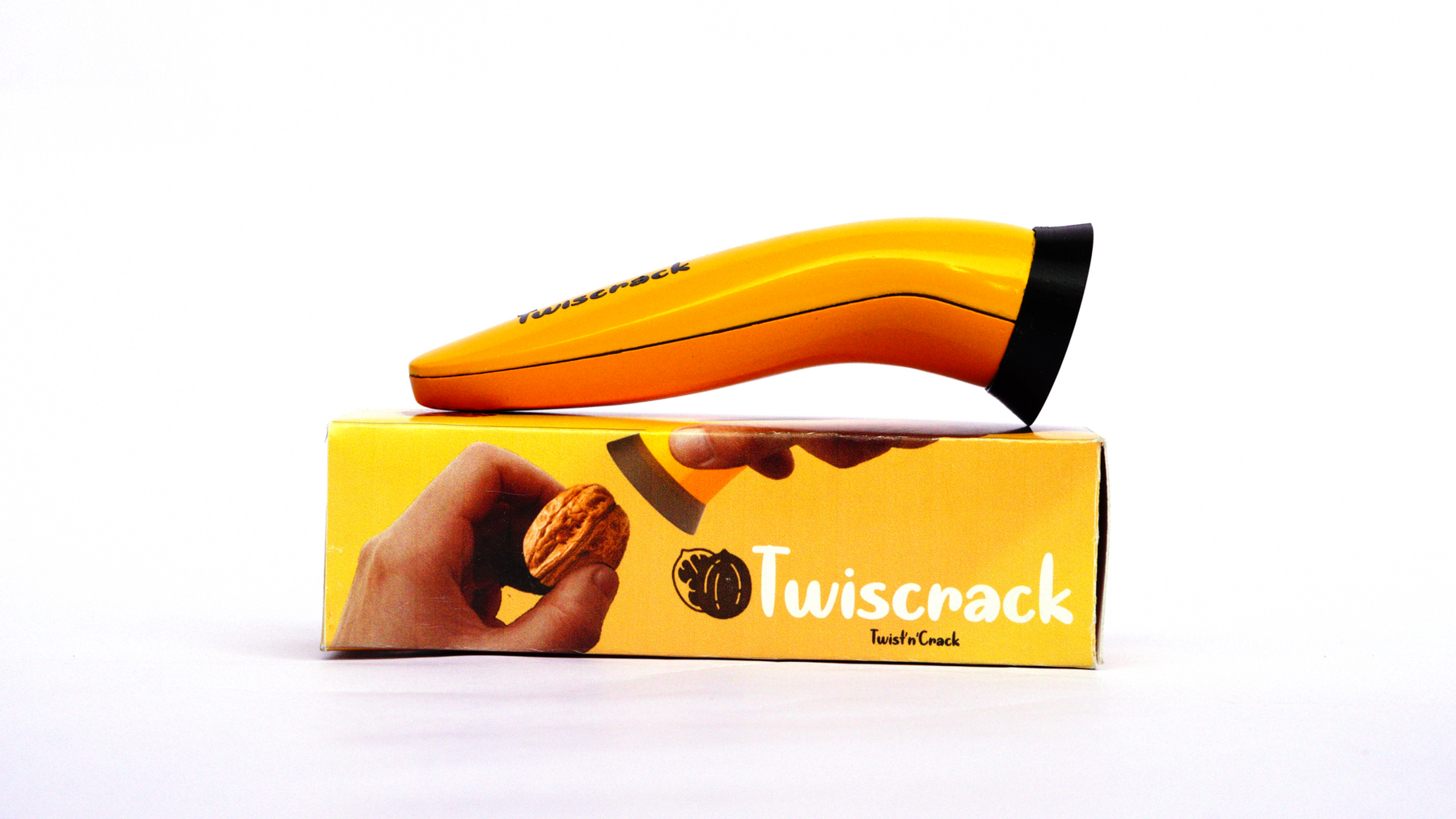
Product showcasing with packaging.
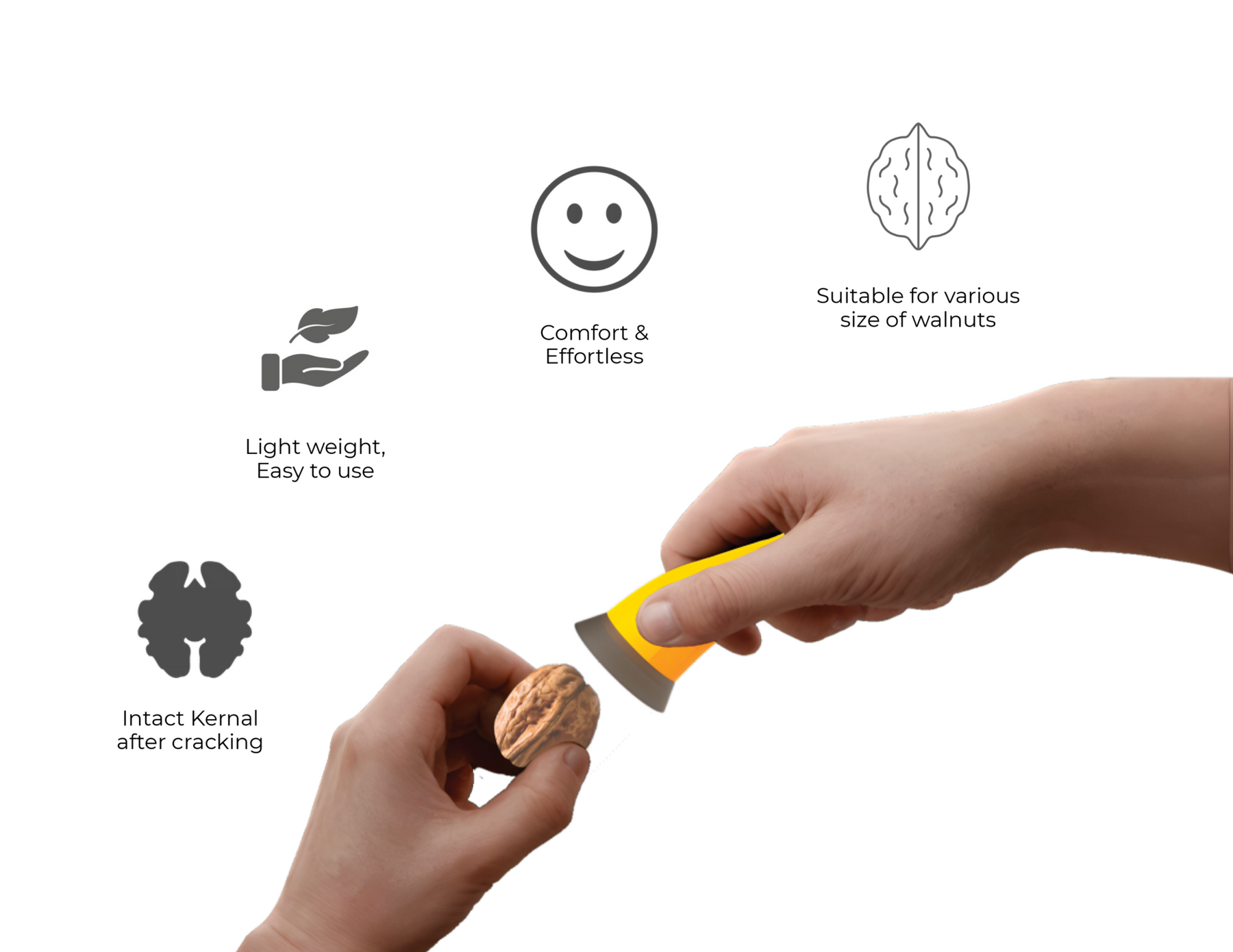
Features of the product.