Designing the unobstructed exhibition space from bamboo

- diya chaudhary
- vrushti shah
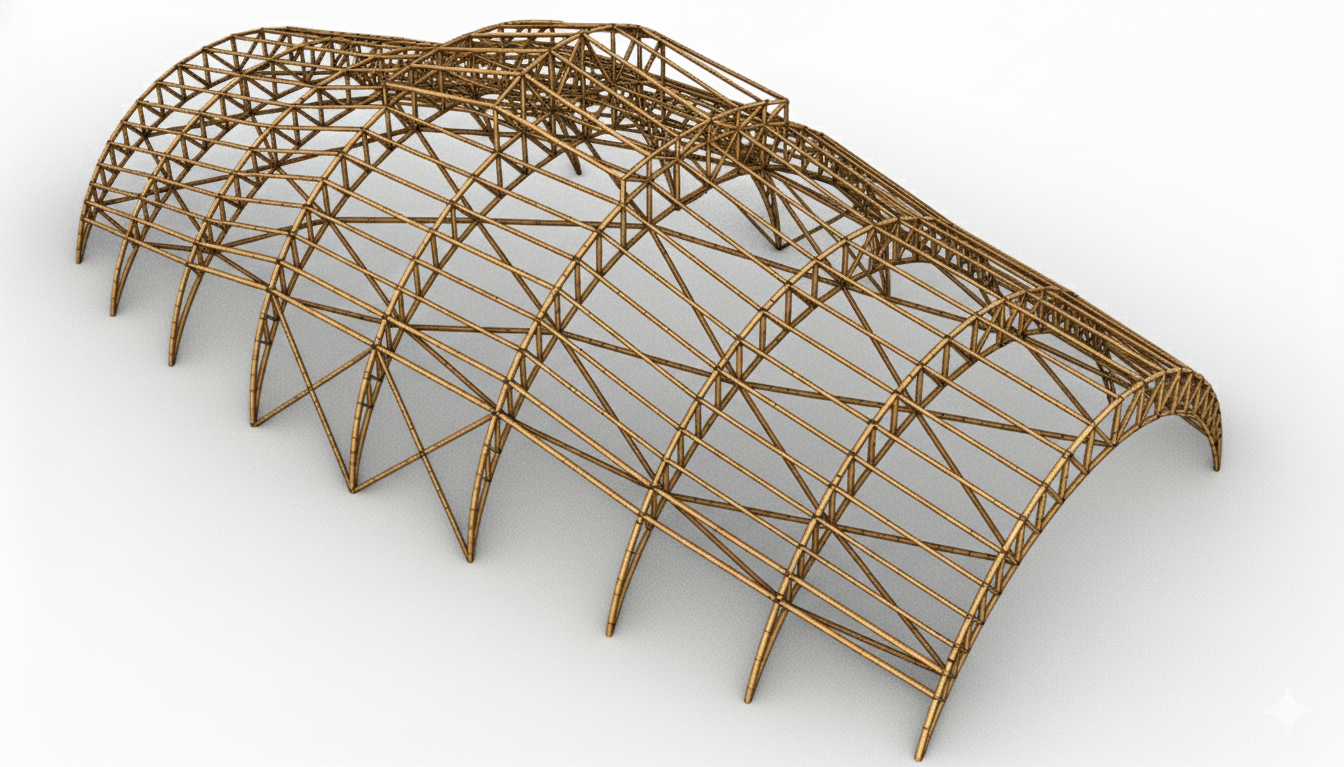
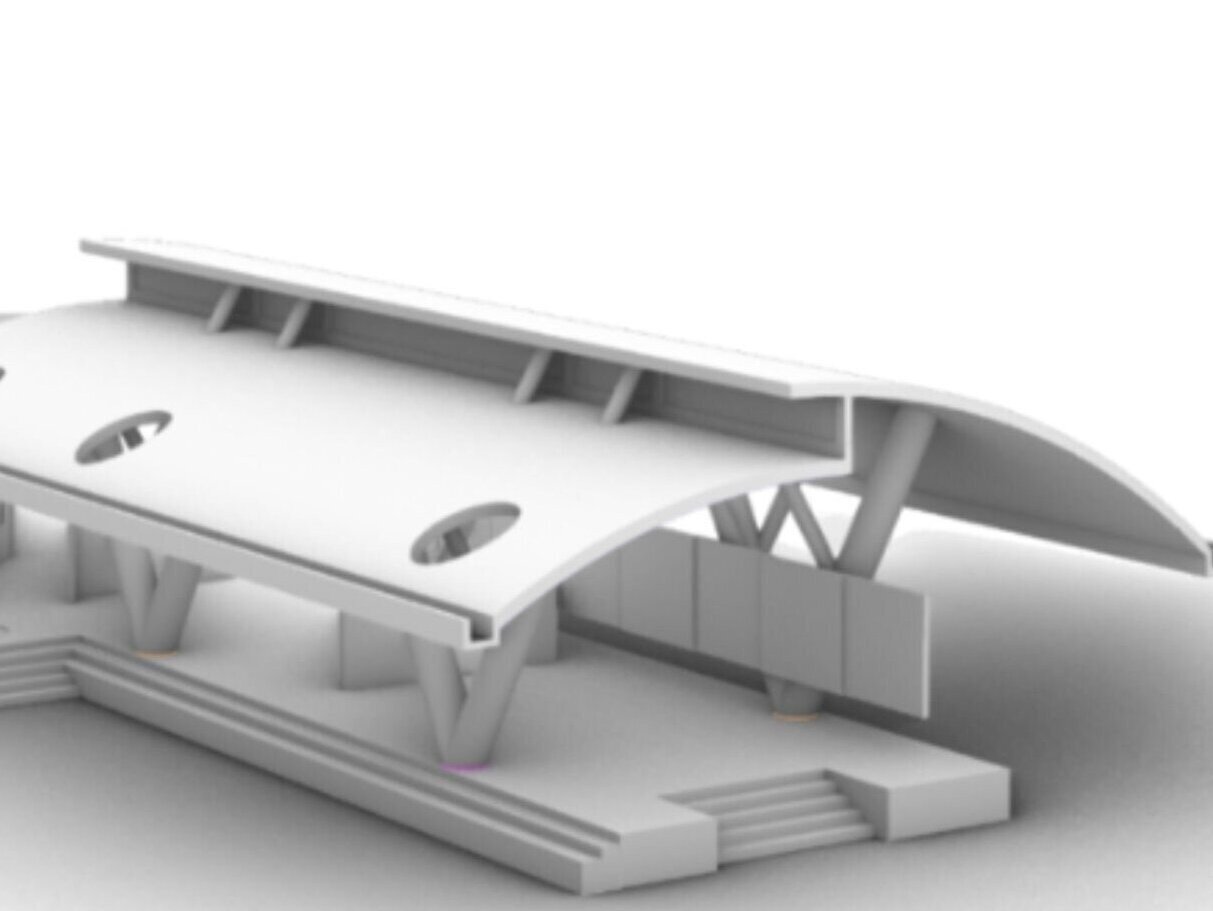
Isometric view of the structure
About the project
The project was conceptualized considering the future requirement of smaller semi-open spaces due to upcoming commonwealth games and a push toward encouraging sustainable structural engineering. A 520m2 obstruction free exhibition area was to be planned, designed and detailed from Bamboo (Bambusa bambos) as a primary material. The iterative process related to integrated systems of arches and trusses resulted in finalization of configuration giving a 14m clear span and 6.5m high structure. This studio gave opportunity to explore bamboo as a sustainable material for future structures and uncover its immense potential by experimenting with various configurations such as bundled bamboo tubes and trussed arch system. The exhibition space is designed not only considering the engineering requirements but also emphasizing on the user’s perspective in terms of day light, spatial flow and overall ambience of the space.
Approach
The project was set up with a goal of adapting bamboo as a structural material, which called for understanding its properties, codal regulations and constructability processes. The laboratory tests conducted at CEPT confirmed its material properties and the design guidelines were followed for analyzing the structure under various loading conditions. The final design was fixed through the multiple iterative processes in terms of configuration and the structure’s response under the given loadings and every value falling under the prescribed limit. This allowed a student to explore the limitations and versatility of bamboo in terms of bundling the members, co-existence of arch and truss as a structural system and also developing measures to stiffen the structure to make it safe as per the prescribed norms. The student was also guided to plan and design the configuration considering user’s perspective in terms of day light, spatial flow and overall ambience of the space. The entire process trained the student to design and deliver a structure that reflects sensitivity in planning and creativity in designing the optimized space. In the end, the solution proposed is the absolute seamless blend of architectural design and structural engineering.
Output
The proposed structure meets all the required structural guidelines in terms of permissible stresses and strains that reflect the journey and through understanding of the loads, material properties and integrated system behaviour.The final output is in form of iterative drawings and details that culminate into a creative and robust structural system. Overall, the design achieves a balance between structural safety, material efficiency, and architectural expression, showcasing bamboo’s viability as a sustainable alternative for large-span exhibition structures.
- diya chaudhary
- vrushti shah
Gallery
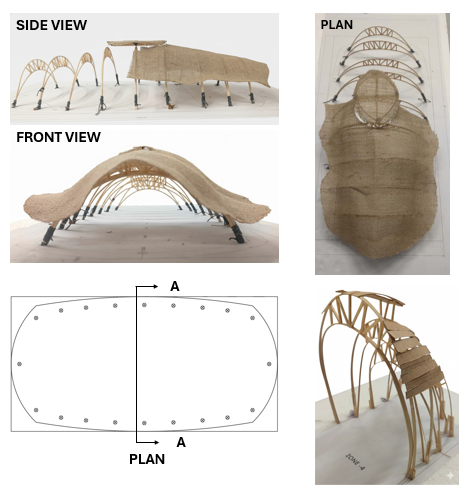
Form development exercise
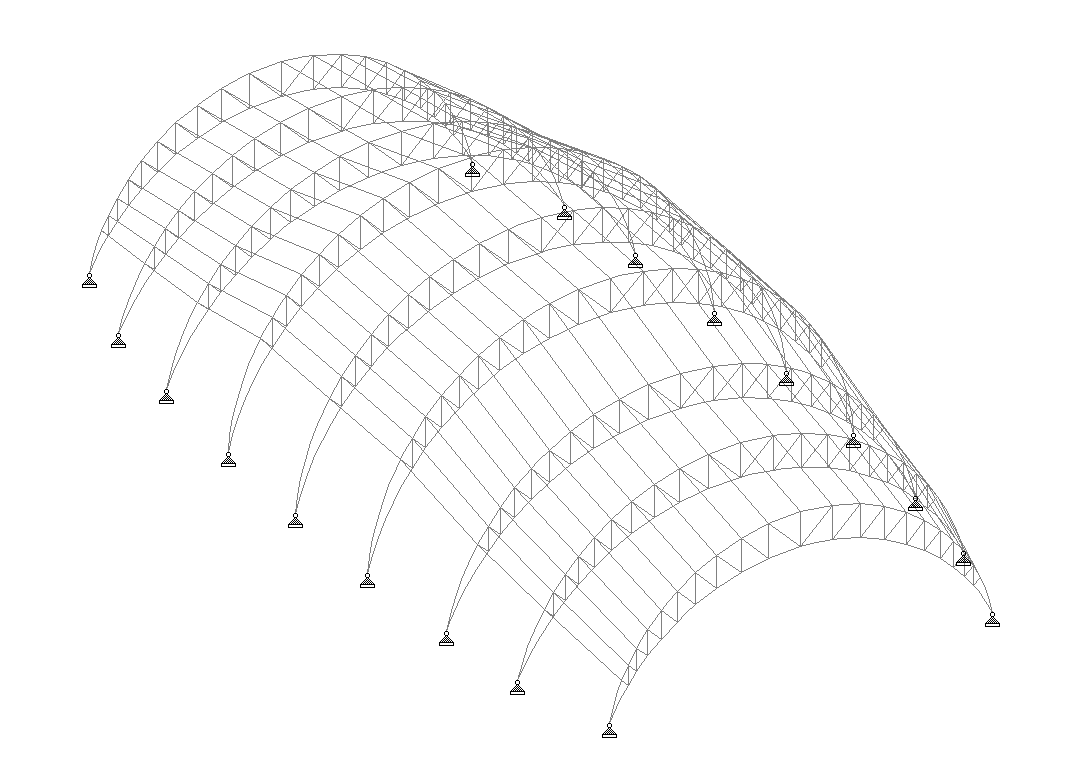
Modelling a structure in analysis software
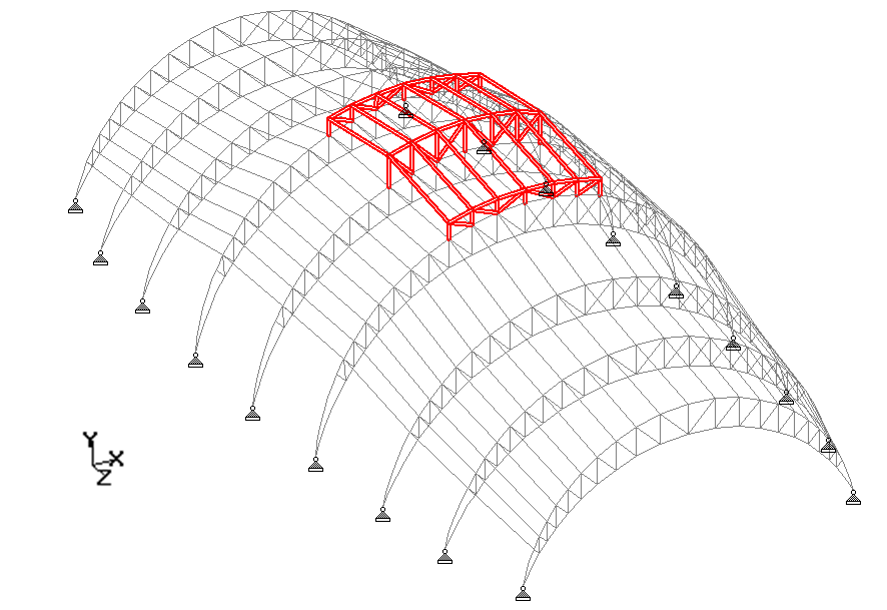
Modification in structure — Addition of skylight
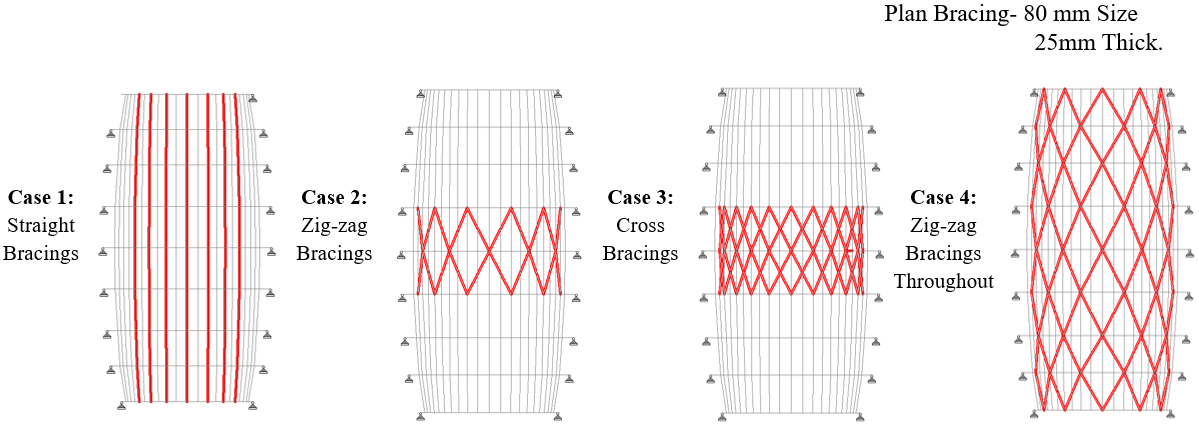
Modification in Structure – Plan Bracing in Bottom Chord
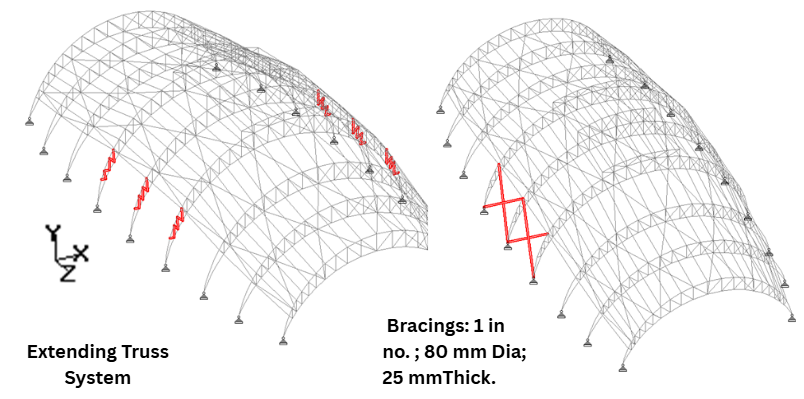
Modification in Structure – Extending trusses and adding side bracings
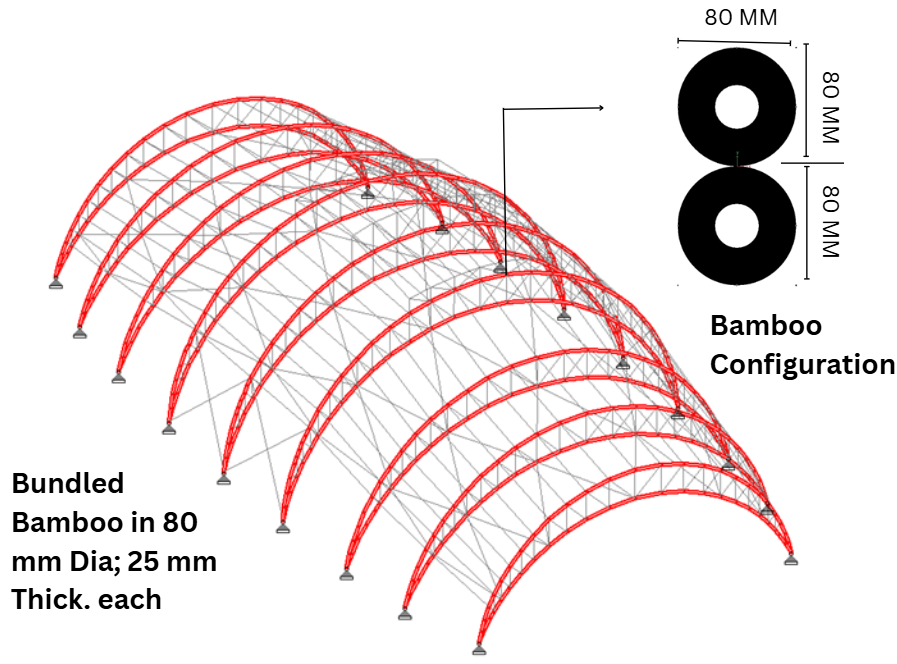
Modification in Structure – Using bundled bamboo
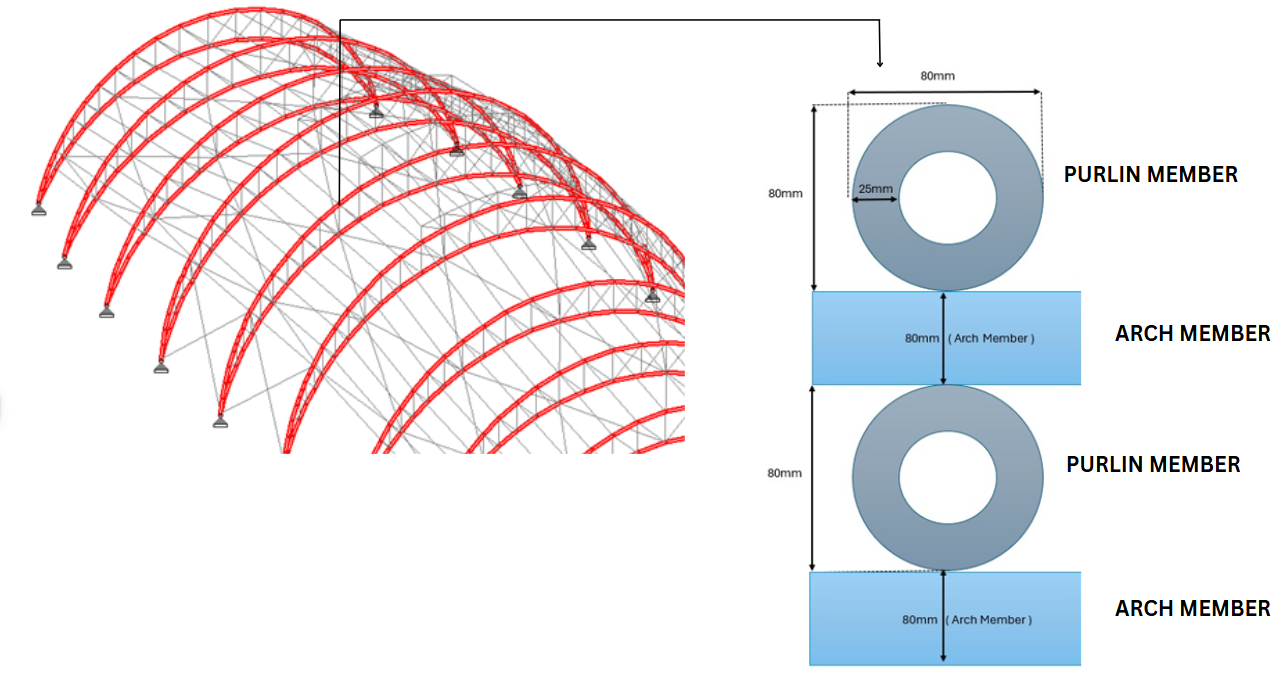
Modification in Structure – Increasing moment of inertia of the section
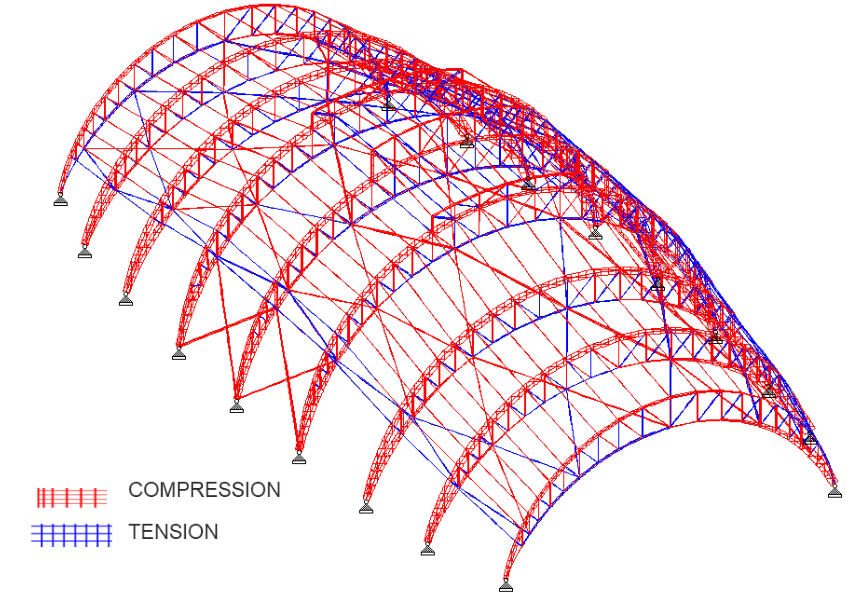
Behaviour of members under loads
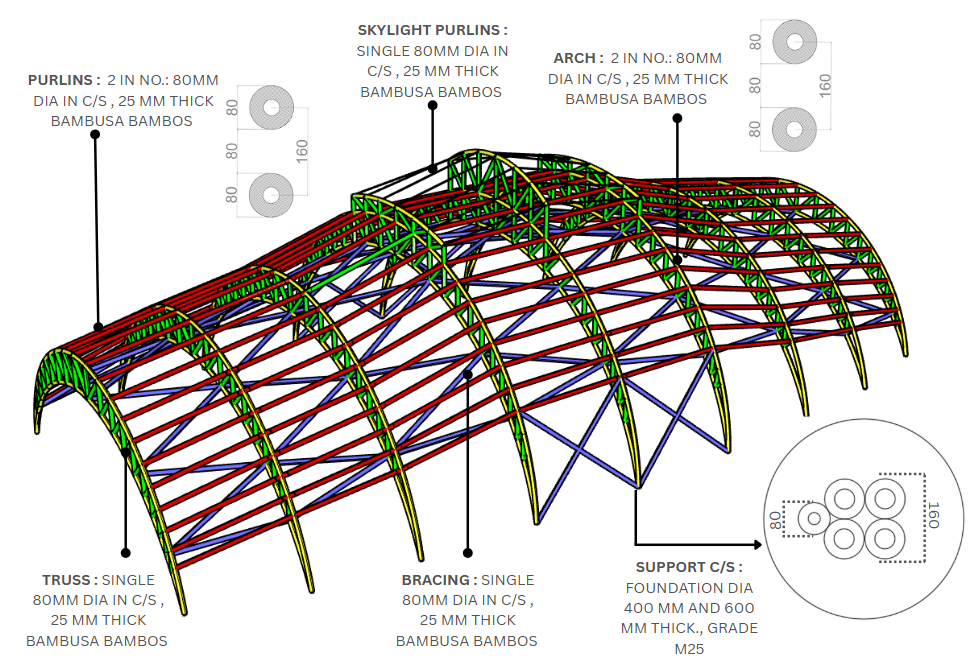
Proposed Structure with sizes
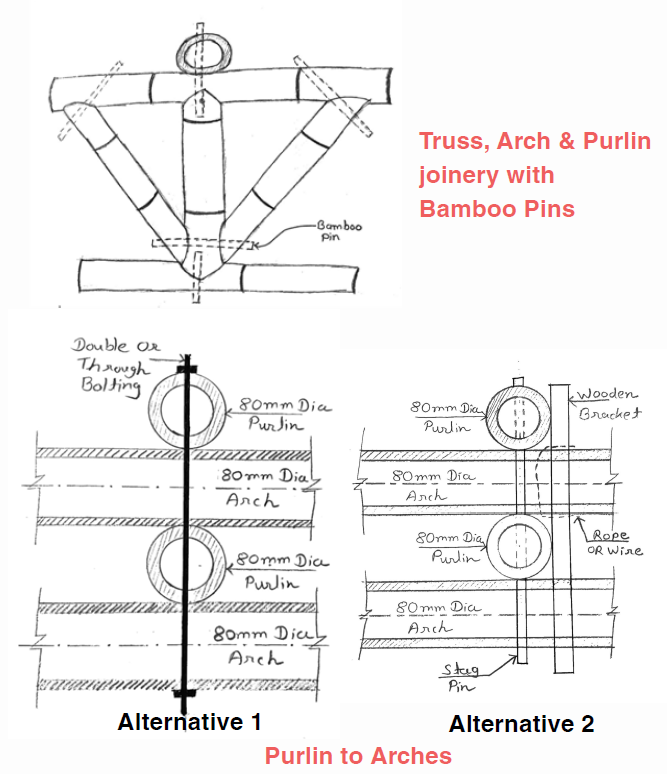
Proposed joinery details